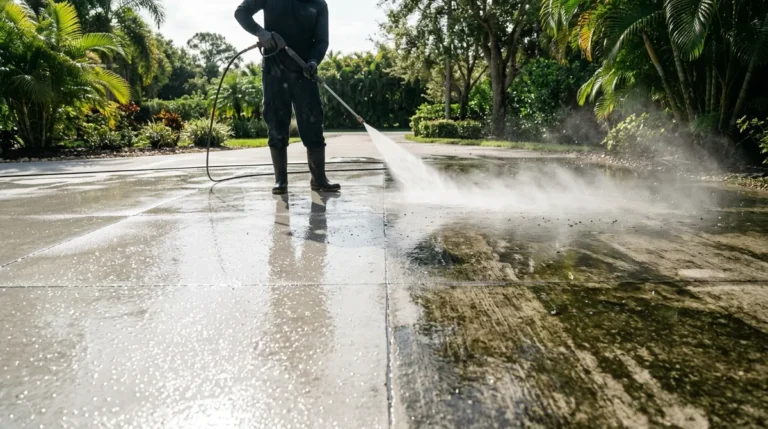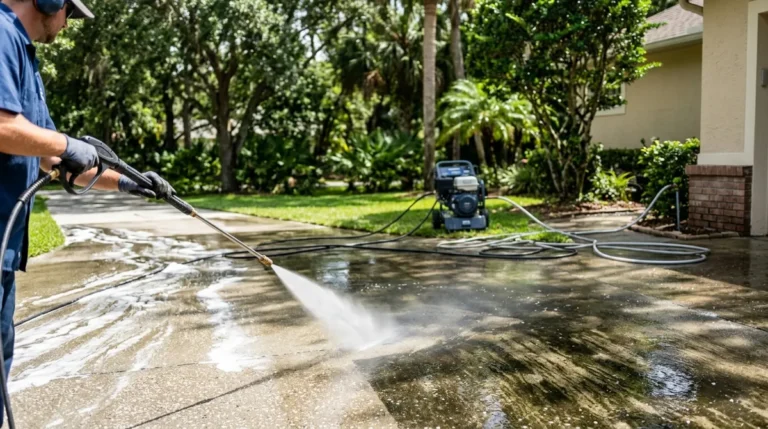
Key Takeaways
-
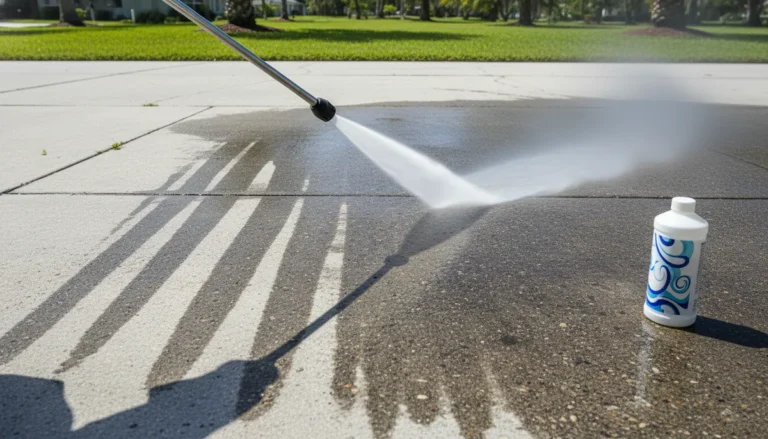
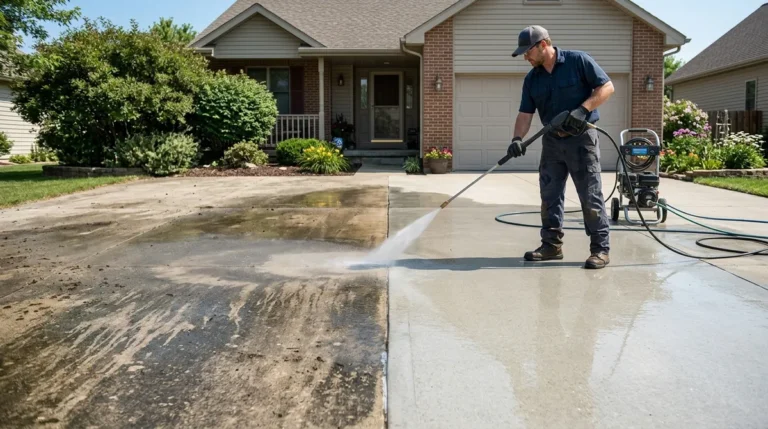
Use 3,000-4,000 PSI for concrete surfaces; lower pressure won’t remove stubborn stains while higher pressure risks surface damage if not carefully controlled.
-
Pre-treat stains with appropriate detergent and let it soak 5-10 minutes before pressure washing to loosen grime and improve cleaning effectiveness significantly.
-
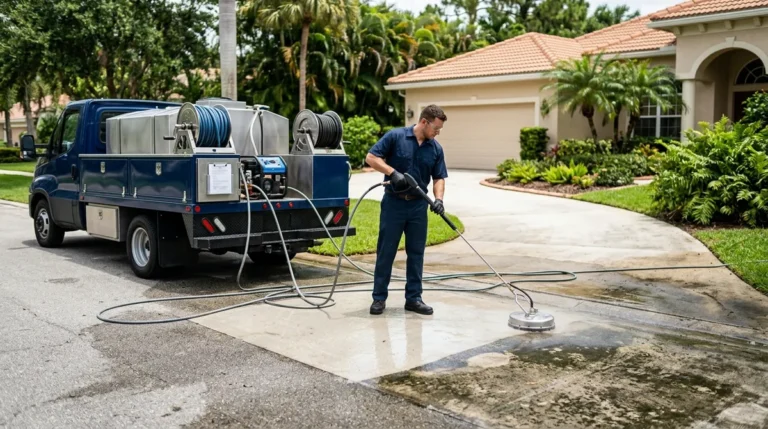
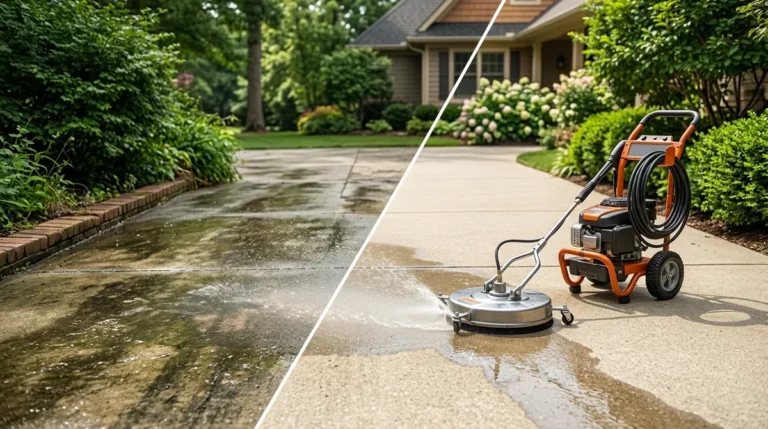
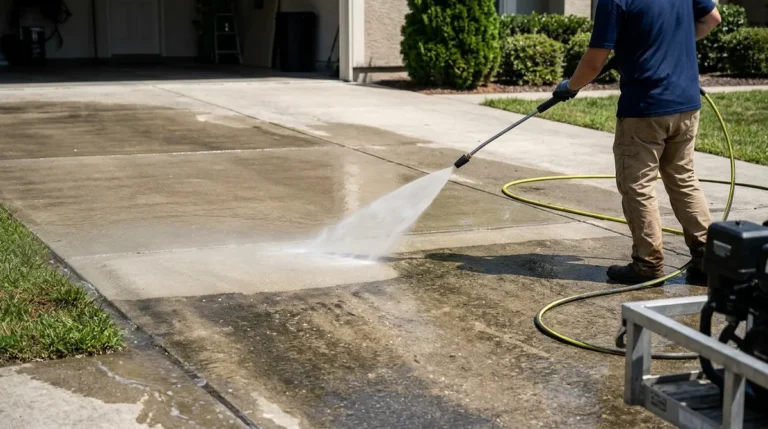
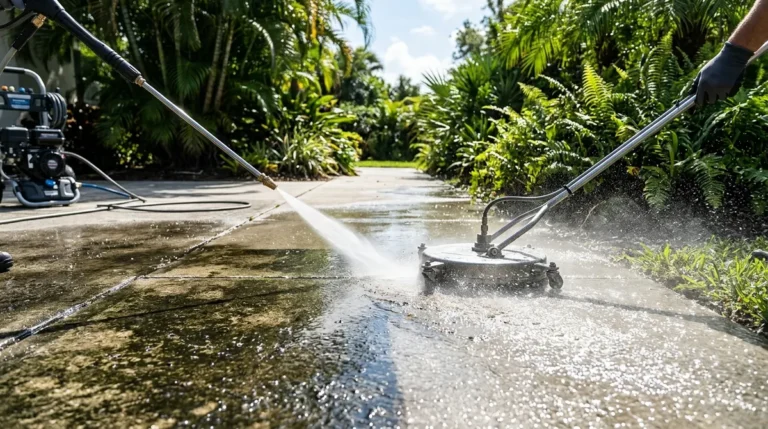
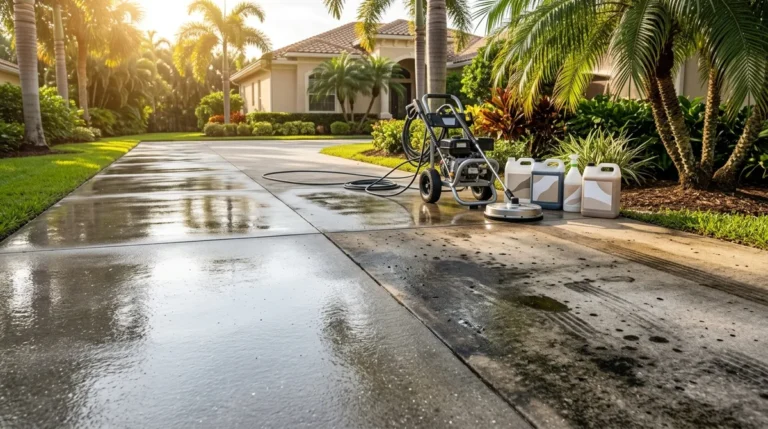
Use a surface cleaner attachment or rotating turbo nozzle for even pressure distribution and streak-free results, covering large driveways in half the time of a wand alone.
-
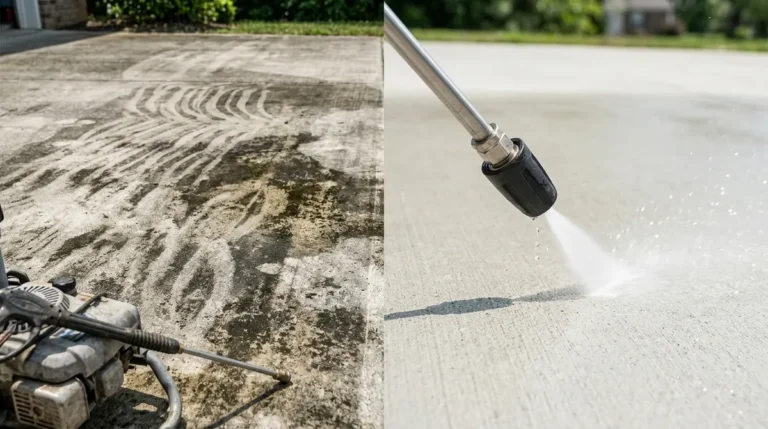
Maintain 6-12 inches distance from concrete and keep the wand moving constantly in steady strokes to prevent etching, surface damage, and unsightly wand lines.
-
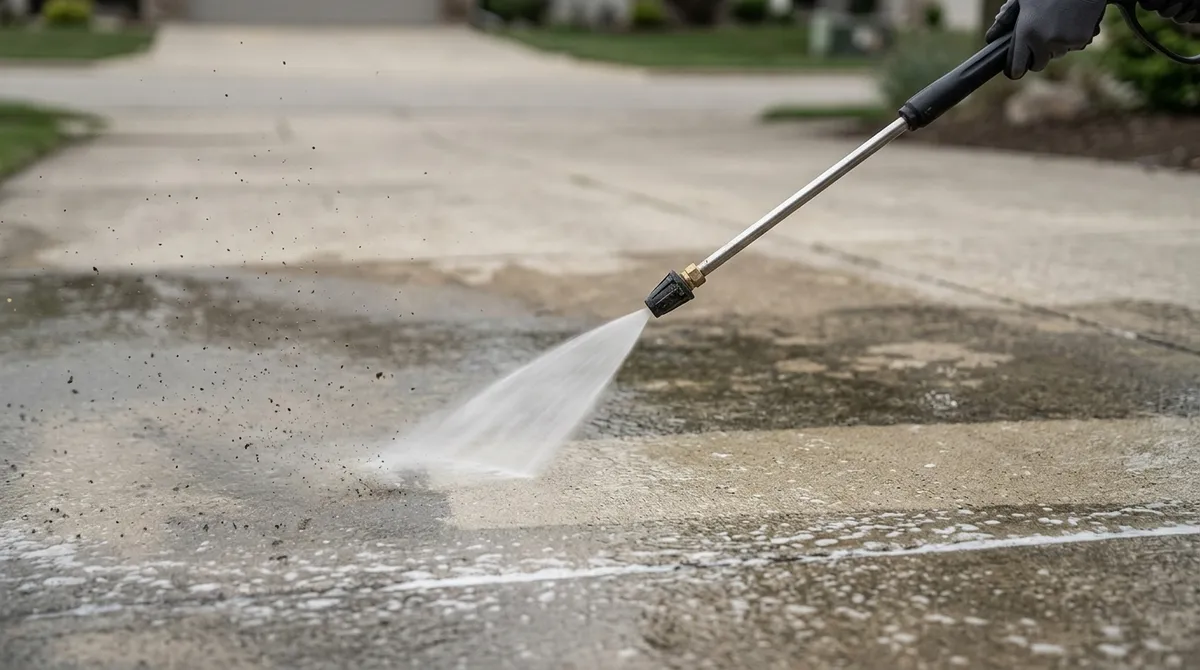
Select the correct nozzle angle: yellow (15°) for tough stains, green (25°) for general cleaning, and avoid red (0°) which damages concrete on most jobs.
-
Power wash concrete at least once yearly in Florida’s climate; twice yearly for shaded areas, and address stains immediately before they set into porous concrete.
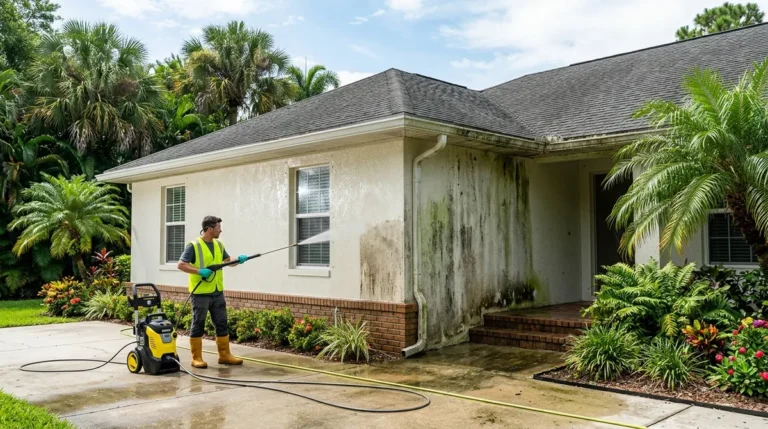
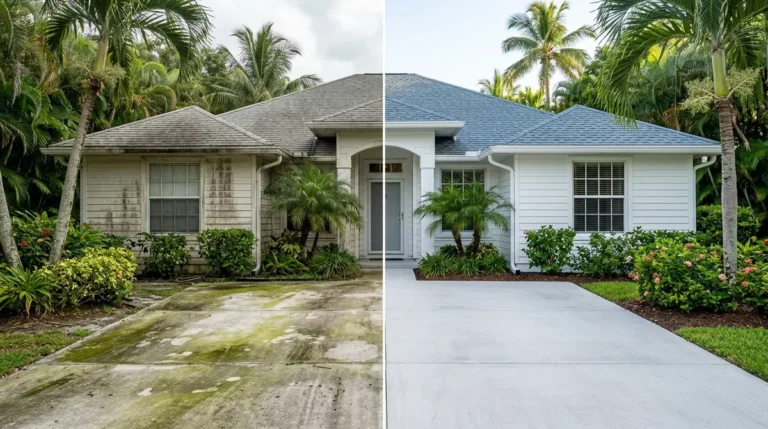
If your driveway, patio, or walkway looks dingy and stained, you’re not alone. Florida’s heat, humidity, and frequent rain create the perfect storm for mold, algae, and grime on concrete surfaces. The good news? A concrete power washer can transform those surfaces from embarrassing to eye-catching in just a few hours. Whether you’re a busy Hillsborough County homeowner trying to keep your property looking sharp or an HOA resident trying to stay compliant, this guide has everything you need to know. We’ll walk through 12 practical tips that actually deliver results — so you can decide whether to tackle it yourself or call in the pros.
Why Concrete Needs Regular Power Washing
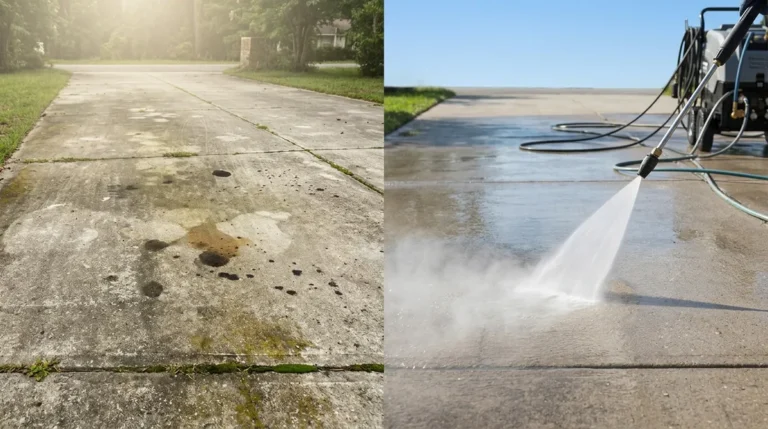
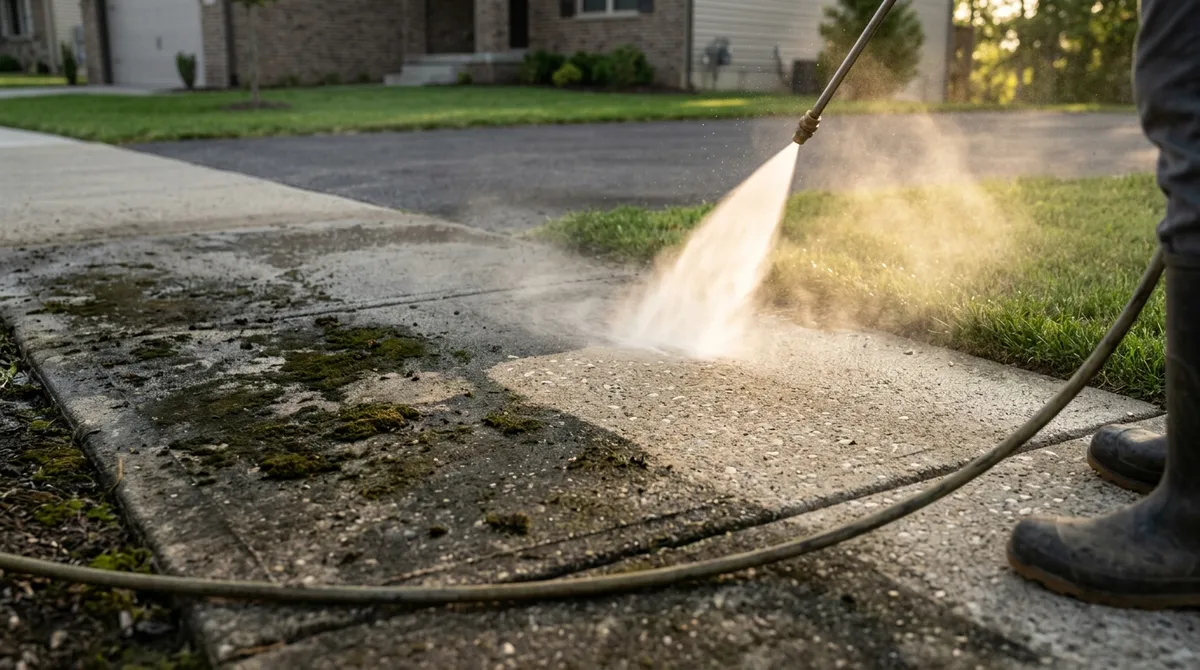
Concrete might look tough, but it’s actually quite porous. That means it soaks up oil, algae, mold, and dirt over time. In Florida’s subtropical climate, this happens faster than almost anywhere else. Without regular cleaning, those stains become harder to remove and can even damage the surface.
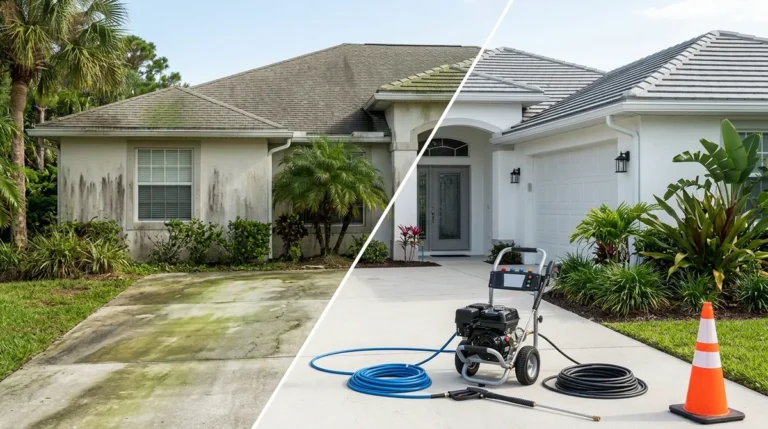
Regular Driveway & Concrete Cleaning keeps your home looking its best and protects the structural integrity of your surfaces. It also boosts curb appeal, which matters a lot whether you’re selling your home or just want to be the envy of the neighborhood.
12 Concrete Power Washer Tips That Actually Work
1. Choose the Right PSI for Concrete
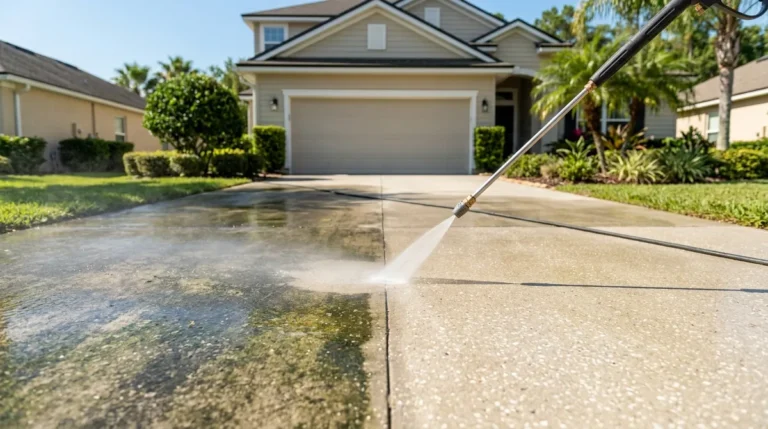
Not all pressure is created equal. For concrete surfaces, you generally want a machine delivering between 3,000 and 4,000 PSI. Lower pressure may not cut through stubborn stains. Higher pressure can damage the surface if not used carefully. Matching the PSI to the job is the first step to great results.
2. Use the Correct Nozzle
Nozzle selection matters just as much as pressure. Here’s a quick guide:
- Red (0°): Too intense for most concrete — can cause damage
- Yellow (15°): Good for tough stains and heavy buildup
- Green (25°): Best for general concrete cleaning
- White (40°): Great for light rinsing and finishing
- Black (65°): Low pressure for applying detergent
Most professional driveway pressure washing jobs use a rotating turbo nozzle or a surface cleaner attachment for the most even, efficient results on flat concrete.
3. Pre-Treat Stains Before Washing
Don’t just start blasting away. Pre-treating stains with the right detergent loosens grime before you apply pressure. This step makes the entire job easier and more effective. Oil stains, rust marks, and mold all respond better to a pre-treatment soak of 5–10 minutes.
4. Always Work in Sections
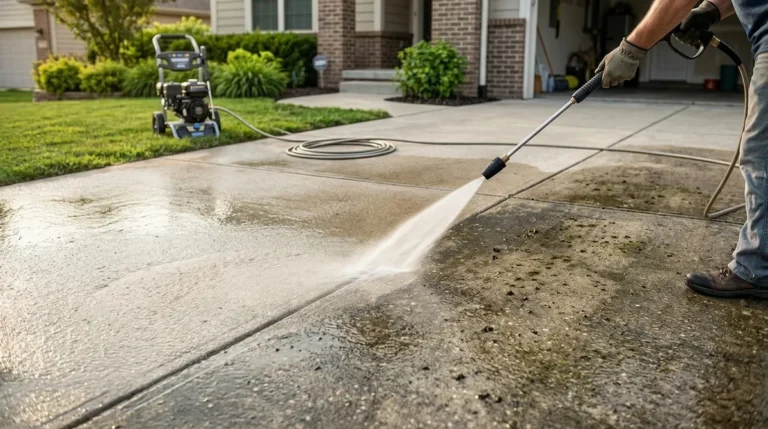
Trying to clean your entire driveway all at once leads to uneven results. Instead, divide the surface into manageable sections. Work in overlapping, consistent strokes within each section. This prevents streaking and ensures no spots are missed. It’s one of the most overlooked driveway pressure washing secrets pros use.
5. Keep the Wand Moving
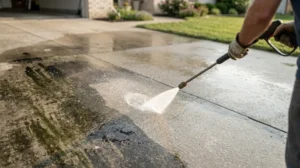
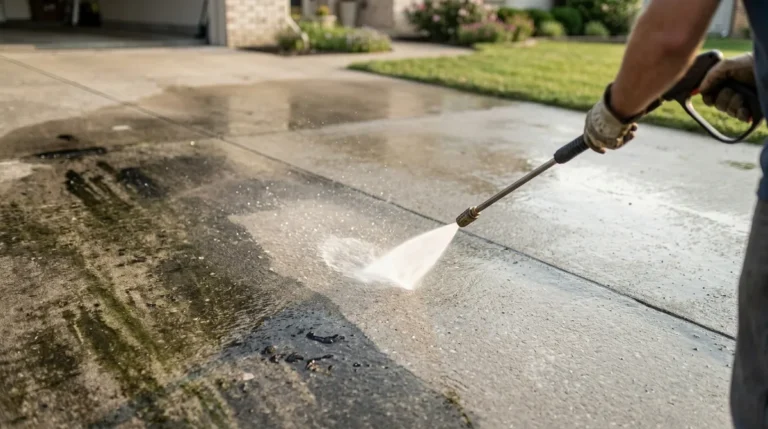
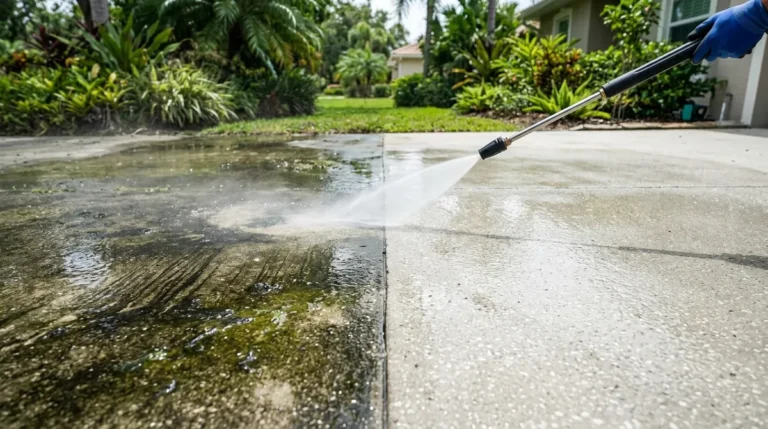
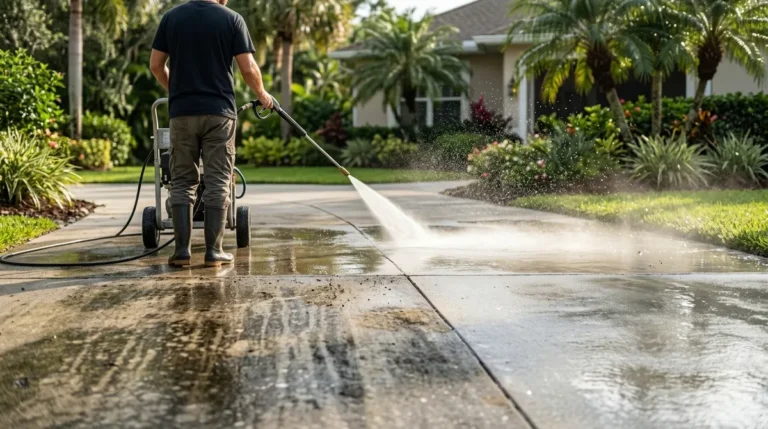
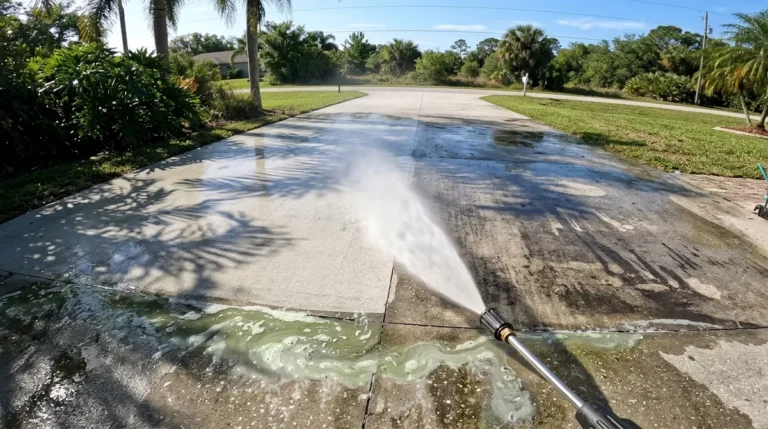
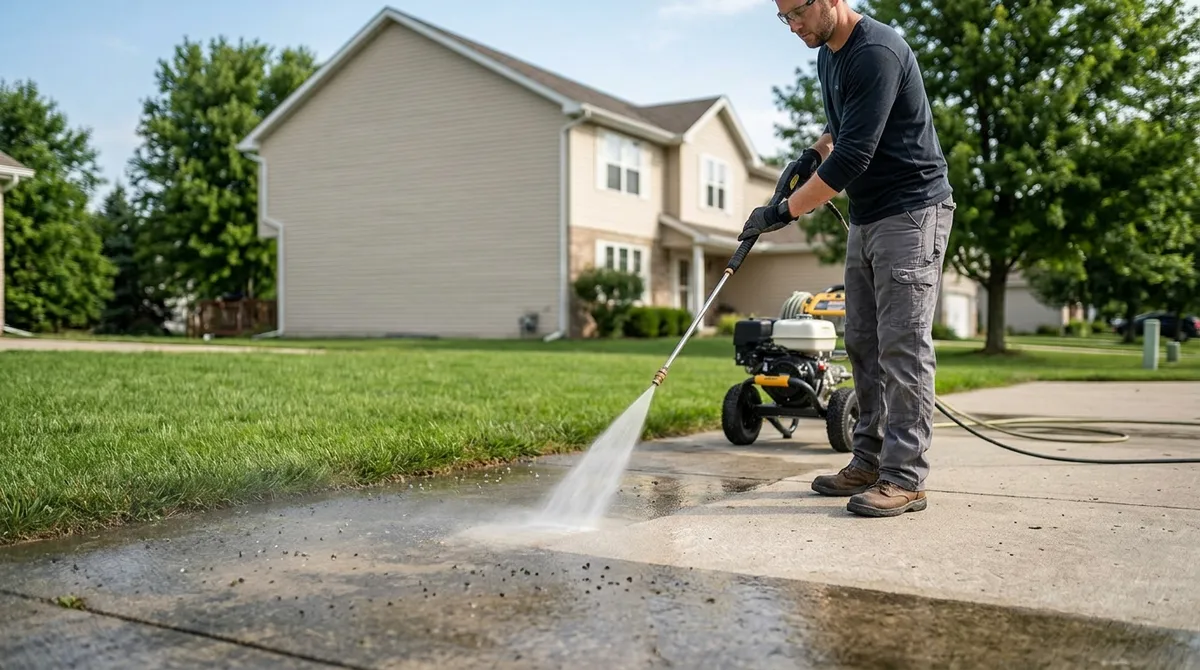
Holding the wand in one spot is a recipe for surface damage. Always keep the spray moving in a steady, sweeping motion. Slow, deliberate passes are better than rushing. Consistent movement also prevents those telltale wand lines that can make your driveway look worse than before you started.
6. Maintain the Right Distance
Too close and you risk etching the concrete. Too far and you lose cleaning power. For most concrete surfaces, 6–12 inches from the surface is the sweet spot. Start farther away and move closer only if the stain needs more power. This simple adjustment makes a huge difference in results.
7. Use a Surface Cleaner Attachment
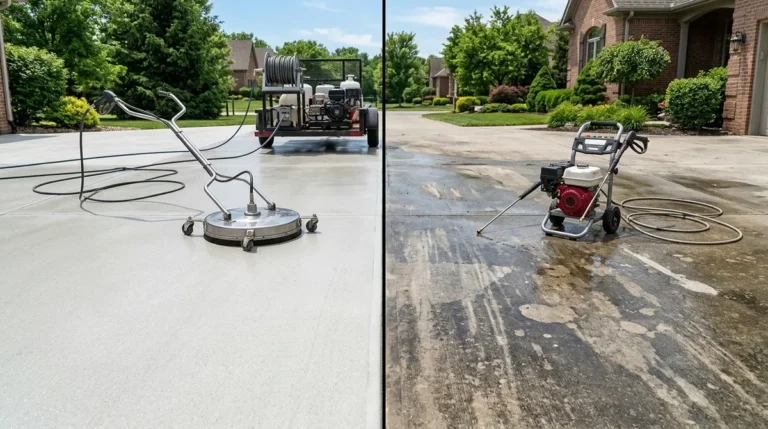
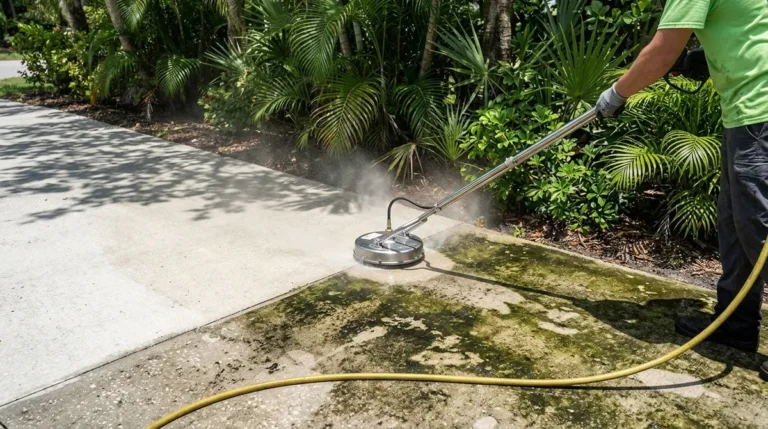
A surface cleaner attachment is a flat, spinning disc that connects to your pressure washer. It distributes pressure evenly across a wide path and eliminates streaking. Professionals almost always use one for driveways and patios. It also speeds up the job significantly — covering a large driveway in half the time of a wand alone.
8. Apply Detergent from the Bottom Up
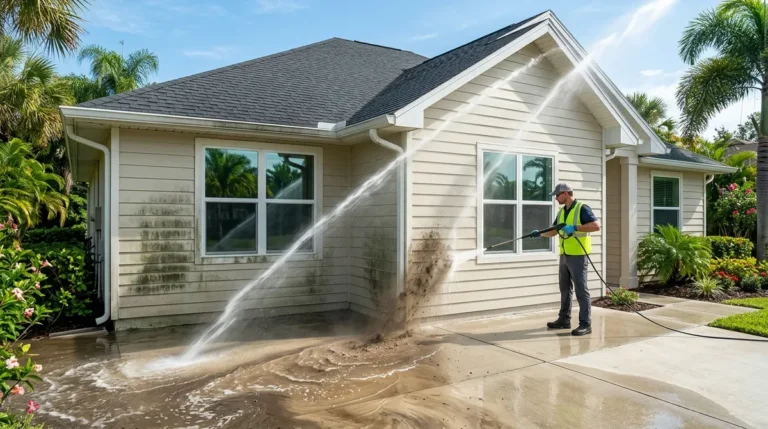
When applying cleaning solution to vertical concrete surfaces like retaining walls, start from the bottom and work up. This prevents streaking caused by dirty water running down over untreated areas. For flat surfaces like driveways, just apply evenly and allow it to dwell before rinsing. It’s a small detail that makes a big difference in the final look.
9. Rinse Thoroughly
Leftover detergent residue can leave a hazy film on your concrete after it dries. Always rinse completely with clean water after cleaning. Work from one end of the surface to the other in a systematic pattern. A thorough rinse is what separates a professional-looking result from a so-so one.
10. Be Careful Around Cracks
High-pressure water can widen existing cracks in concrete. Before you start, inspect the surface for damage. Avoid directing the spray directly into cracks. If your concrete has significant damage, it’s worth understanding the risks of pressure washing a damaged driveway before proceeding.
11. Consider Sealing After Cleaning
A freshly cleaned concrete surface is the perfect time to apply a sealer. Sealing protects against future staining, moisture intrusion, and mold growth. It also gives your driveway a polished, like-new appearance. Many homeowners combine cleaning and sealing for a complete driveway restoration. Learn more about driveway cleaning and sealing near you to see if it’s the right option for your home.
12. Know When to Call a Pro
Sometimes DIY just doesn’t cut it. Heavily stained concrete, large surface areas, or stubborn organic growth often require professional equipment and expertise to truly restore. Professionals use commercial-grade concrete power washers that far exceed what’s available at a rental shop. If you want guaranteed results without spending your weekend on your hands and knees, hiring a pro is the smart move.
DIY vs. Professional Concrete Power Washing
Not sure whether to tackle it yourself or hire out? Here’s a side-by-side look:
| Factor | DIY Power Washing | Professional Service |
|---|---|---|
| Equipment Quality | Consumer-grade (1,500–2,500 PSI) | Commercial-grade (3,000–4,000+ PSI) |
| Time Required | Several hours + setup/cleanup | 1–2 hours total |
| Results Quality | Moderate — may leave streaks | Excellent — even, streak-free |
| Risk of Damage | Higher (user error is common) | Low (trained technicians) |
| Detergents Used | Store-bought (variable quality) | Professional-grade, eco-friendly |
| Convenience | Requires time and effort | Hands-free for homeowner |
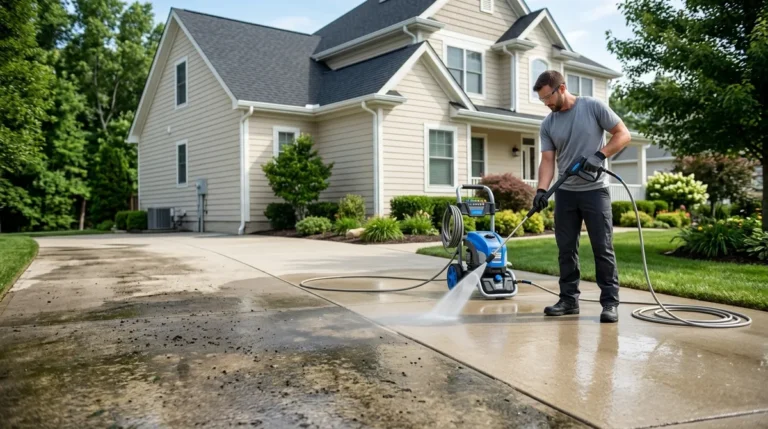
For most Hillsborough County homeowners, the professional route wins on time, results, and peace of mind. You can explore the full DIY driveway pressure washer vs. pro service comparison to make the best decision for your situation.
Common Concrete Stains and How to Treat Them
Different stains require different approaches. Here’s a quick reference for the most common concrete problems in Florida homes:
| Stain Type | Cause | Best Treatment |
|---|---|---|
| Green/Black Algae | Moisture and shade | Degreaser + high-pressure wash |
| Oil/Grease | Vehicle leaks | Degreaser pre-treatment + hot water |
| Rust Stains | Metal contact or water minerals | Oxalic acid treatment + pressure wash |
| Tire Marks | Vehicle use | Commercial degreaser + turbo nozzle |
| Mold/Mildew | Humidity and organic debris | Bleach-based solution + thorough rinse |
In Florida’s humid climate, algae and mold are by far the most common issues. A professional concrete power washer uses commercial detergents designed specifically to eliminate these organic growths at the root — not just wash them away temporarily. Check out this helpful resource on how to remove algae from your home’s exterior surfaces for more details.
How Often Should You Power Wash Concrete?
Most Hillsborough County homeowners benefit from power washing their concrete at least once a year. Here’s a simple schedule to follow:
- Annual cleaning: Minimum recommended for all driveways and walkways in Florida’s climate
- Twice a year: Ideal for homes in shaded areas or near trees where algae growth is accelerated
- After storms: Post-hurricane or heavy rain cleaning helps prevent mold from taking hold quickly
- Before selling: Always clean concrete before listing your home to maximize curb appeal and perceived value
- When stains appear: Don’t wait — address oil spills and organic stains quickly before they set deep into the concrete pores
Staying on a regular schedule keeps cleaning jobs manageable and prevents the buildup that makes even professional cleaning harder. You can get a free instant quote and book a cleaning before the grime has a chance to dig in deeper.
Why Hillsborough County Concrete Needs Extra Attention
Florida’s climate is brutal on outdoor surfaces. High humidity, intense sun, frequent rain, and warm temperatures create ideal conditions for biological growth on concrete year-round. Algae and mold don’t take a winter break here the way they might in northern states.
Homes in shaded neighborhoods or those with mature tree coverage face even faster buildup. The pollen count here is also consistently high, which contributes to surface discoloration. These factors combined mean that Florida homeowners — especially in Hillsborough County — need to stay more proactive about concrete maintenance than most.
At Buckhorn Power Wash, we understand the unique demands of Florida’s climate and bring the right equipment and expertise to every concrete cleaning job. Our team serves homeowners across Hillsborough County, from Tampa to Brandon, Riverview, Valrico, and beyond. You can check out our work in the project gallery or see what happy customers are saying by visiting us on Yelp and Facebook.
Signs Your Concrete Needs Power Washing Now
Not sure if it’s time to schedule a cleaning? Watch for these warning signs:
- Green or black streaks running across the surface
- A slippery feeling underfoot (a sign of algae buildup)
- Dark discoloration that doesn’t wash off with rain
- Visible oil or tire stains near the garage
- HOA notices or warnings about driveway appearance
- You’re preparing your home for sale or an appraisal
If any of these sound familiar, it’s time to act. You can read more about signs you need a pressure washing company today to know for certain whether it’s time to schedule service.
The Real Benefits of Professional Concrete Power Washing
Beyond just aesthetics, hiring a professional for your concrete power washing brings some serious practical benefits:
- Property value protection: Clean, well-maintained concrete signals a cared-for home to buyers and appraisers
- Slip and fall prevention: Removing algae and mold makes wet surfaces far safer for your family
- Surface longevity: Regular cleaning prevents biological growth from breaking down concrete over time
- HOA compliance: Stay on the right side of neighborhood regulations without lifting a finger
- Time savings: Reclaim your weekend instead of spending it on a hot Florida driveway with a rented machine
Want to dig deeper into why professional service is worth it? The article on what makes professional pressure washing services worth it is a great read. You can also visit us on Google — Buckhorn Power Wash to read real reviews from local homeowners just like you.
Wrap-Up: Get Your Concrete Looking Like New
Concrete power washing doesn’t have to be complicated. With the right pressure, nozzle, and technique — or the right professional team — you can have a driveway or patio that looks completely refreshed in just a few hours. Florida’s climate demands regular attention, but the results are absolutely worth it.
Whether you follow these 12 tips on your own or decide it’s time to bring in reinforcements, the key is not to wait until the grime becomes a serious problem. Regular maintenance is always easier, more effective, and more affordable than trying to restore a heavily neglected surface. For Hillsborough County homeowners who want expert results without the hassle, request your free quote from Buckhorn Power Wash today and see how easy it is to get your concrete looking its absolute best.
FAQs
Q: What PSI should a concrete power washer use on driveways?
A: For most residential concrete driveways, a PSI of 3,000 to 4,000 works best — it’s strong enough to blast away mold, algae, and stains without damaging the surface. If you’re renting a machine, look for one in that range, and always start farther from the surface before moving closer to test the pressure.
Q: How often should I power wash concrete in Florida?
A: Florida’s heat and humidity mean concrete gets dirty faster than in most other states, so at least once a year is the minimum for most Hillsborough County homes. If your driveway is shaded or near trees, twice a year is even better to keep algae and mold from taking hold.
Q: Can a concrete power washer remove oil stains from my driveway?
A: Yes! Oil stains respond really well to a concrete power washer when you pair it with the right degreaser pre-treatment. Apply the degreaser, let it soak for 5–10 minutes, then use a turbo nozzle or surface cleaner attachment with hot water for the best results. Older, set-in stains may require a second treatment.
Q: Is it worth hiring a professional for concrete power washing instead of doing it myself?
A: For most homeowners, absolutely — professionals use commercial-grade equipment that delivers far better results than rental machines, and they get the job done in a fraction of the time. You also avoid the risk of accidentally etching or damaging your concrete, which is easier to do than you might think.
Q: What’s the difference between power washing and pressure washing concrete?
A: The main difference is water temperature — power washing uses heated water, which is especially effective at cutting through grease, oil, and organic growth on concrete. Pressure washing uses cold water at high force and works great for most general concrete cleaning jobs. Both methods deliver excellent results when used correctly by a trained professional.