Key Takeaways
-
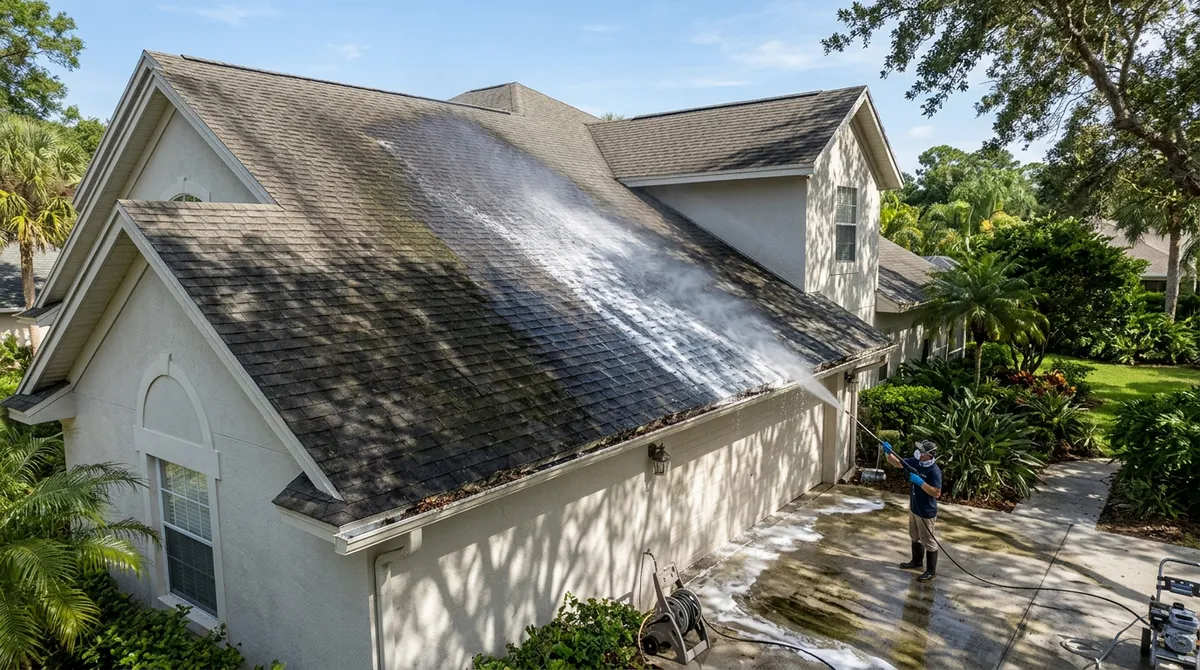
Florida's warm, humid climate creates ideal conditions for algae growth on roofs, driveways, and siding; soft washing roofs and pressure washing concrete prevents surface damage while effectively removing algae.
-
Roof algae (Gloeocapsa magma) feeds on limestone in asphalt shingles and reduces roof lifespan, making professional soft wash cleaning essential to avoid costly replacement.
-
Pre-treat stubborn algae with biodegradable, eco-friendly detergents before washing to break down growth at the source, then rinse thoroughly to prevent faster regrowth.
-
Schedule algae removal at least once yearly, or every six months for shaded homes; trim trees, clean gutters, and apply algae-resistant treatments like zinc strips to prevent recurrence.
-
Professional algae removal avoids safety risks from ladders and roofs, prevents surface damage from incorrect pressure settings, and delivers thorough, long-lasting results.
-
Contact professionals immediately if algae covers large areas, you notice soft roof spots, surfaces become dangerously slippery, or DIY methods fail repeatedly.
If you’ve noticed dark streaks on your roof, green fuzz on your driveway, or a slippery film on your siding, you’re not alone. Algae is one of the most common problems homeowners in Hillsborough County deal with — especially in Florida’s warm, humid climate. It spreads fast, looks terrible, and can actually damage your home if left untreated. The good news? Algae removal doesn’t have to be a headache. Whether you’re a busy parent, a proud homeowner trying to maintain curb appeal, or someone in an HOA community trying to avoid fines, this guide has everything you need to know. We’ll walk you through why algae shows up, how to get rid of it, and how to keep it from coming back.
Why Does Algae Grow on Your Home’s Exterior?
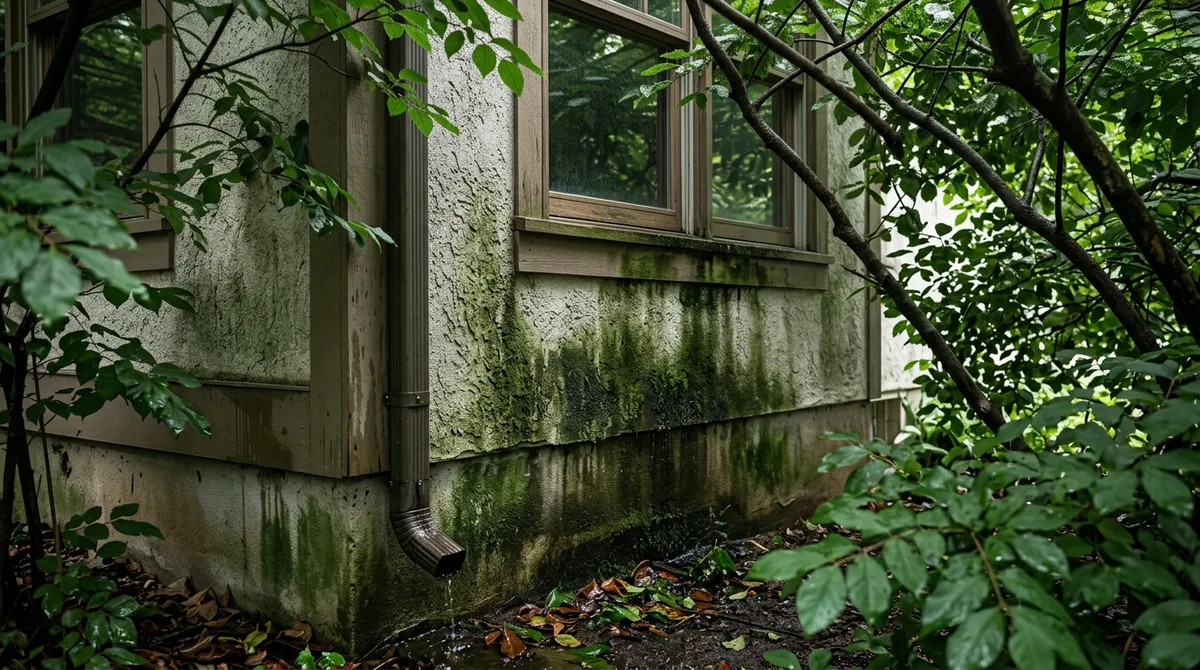
Florida is basically a paradise — for people and for algae. The combination of heat, humidity, and frequent rain creates the perfect breeding ground for algae to thrive on outdoor surfaces. It doesn’t discriminate either. Algae can show up on your roof, driveway, siding, pool deck, and even your fence.
Understanding why it grows helps you fight it more effectively. Here are the most common reasons algae takes hold on your home:
- High humidity and moisture: Florida’s climate keeps surfaces damp, giving algae the water it needs to grow.
- Shade and tree coverage: Shaded areas dry out slowly, making them prime spots for algae growth.
- Organic debris: Leaves, dirt, and pollen feed algae and help it spread.
- Porous surfaces: Concrete, asphalt shingles, and stucco absorb moisture easily, encouraging growth.
- Poor drainage: Standing water around your home gives algae a place to thrive.
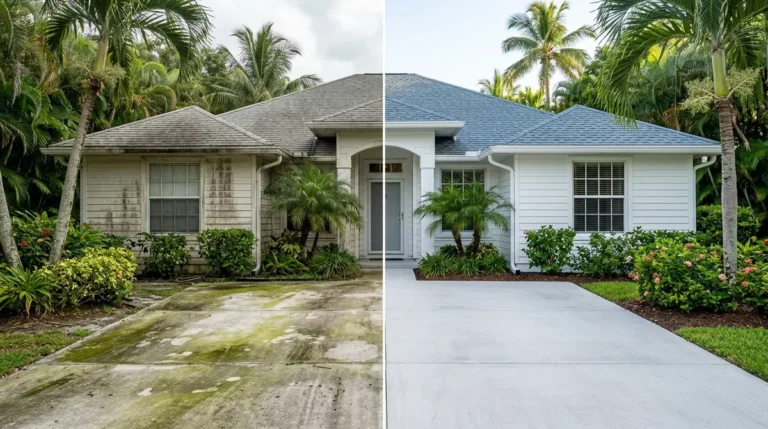
The most notorious type you’ll see on roofs is Gloeocapsa magma, a cyanobacteria that shows up as black or dark gray streaks. On driveways and concrete, you’ll typically find green or black algae patches. Left unchecked, algae can cause surface deterioration, create slip hazards, and tank your home’s curb appeal.
How to Identify Algae vs. Other Stains
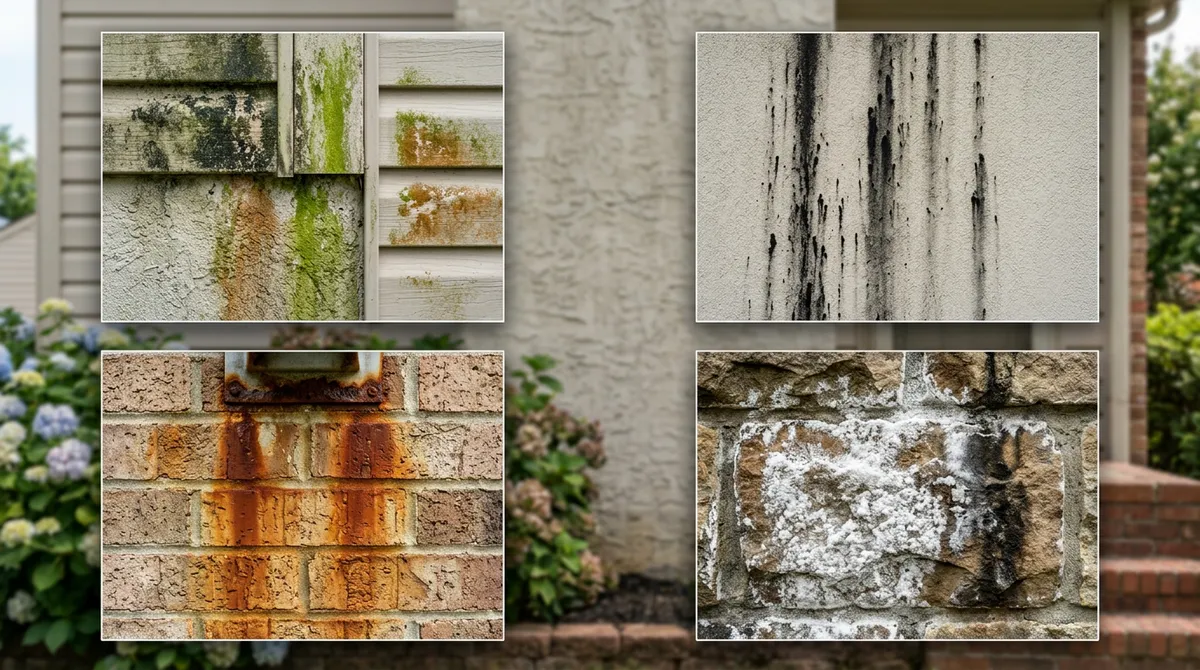
Not every discoloration is algae. Before jumping into removal, it helps to know what you’re dealing with. Here’s a quick comparison to help you identify the problem:
| Stain Type | Appearance | Common Surfaces | Best Removal Method |
|---|---|---|---|
| Algae | Green, black, or dark streaks | Roof, driveway, siding, pool deck | Soft wash or pressure wash |
| Mold | Dark patches, fuzzy texture | Siding, wood, concrete | Soft wash with detergent |
| Mildew | Gray or white flat patches | Fences, painted surfaces | Soft wash with detergent |
| Rust | Orange or brown stains | Concrete, driveways | Chemical treatment |
| Efflorescence | White chalky residue | Brick, concrete block | Pressure washing |
If you’re unsure what you’re looking at, a professional can assess it quickly and recommend the right treatment. You can also browse the full range of cleaning services to get a sense of what each situation calls for.
Step-by-Step Guide to Algae Removal
Ready to tackle algae head-on? Here’s a clear, step-by-step process that professionals follow for effective algae removal on residential properties.
Step 1: Assess the Surface and Severity
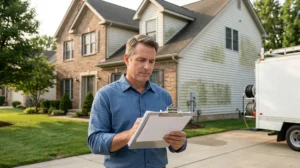
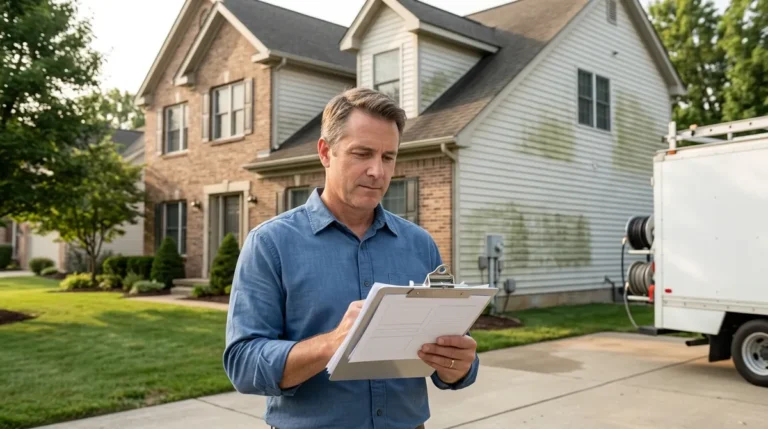
Start by walking around your property and noting where algae is present. Check your roof, siding, driveway, pool deck, and fences. Take note of how thick the growth is and whether the surface appears damaged. This helps you choose the right cleaning method.
Step 2: Choose the Right Cleaning Method
Not all surfaces can handle the same treatment. Using the wrong pressure or technique can cause serious damage. Here’s a simple guide:
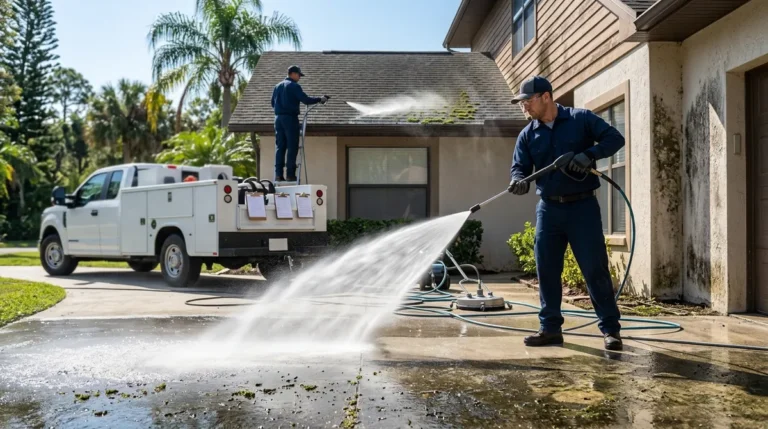
- Soft washing for roofs and siding: Low pressure combined with eco-friendly detergents gently lifts algae without harming shingles or paint. This is the gold standard for delicate surfaces. Learn more about soft wash vs pressure wash for Florida homes.
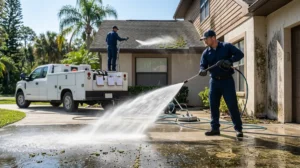
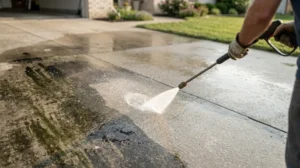
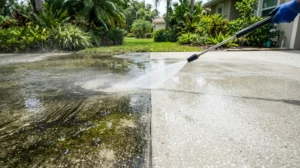
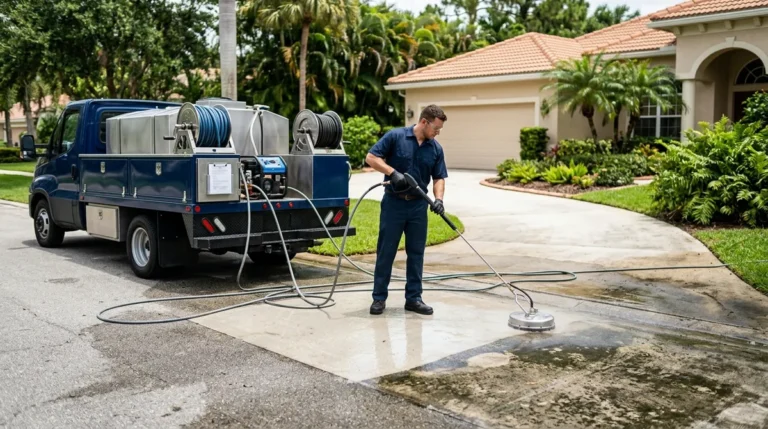
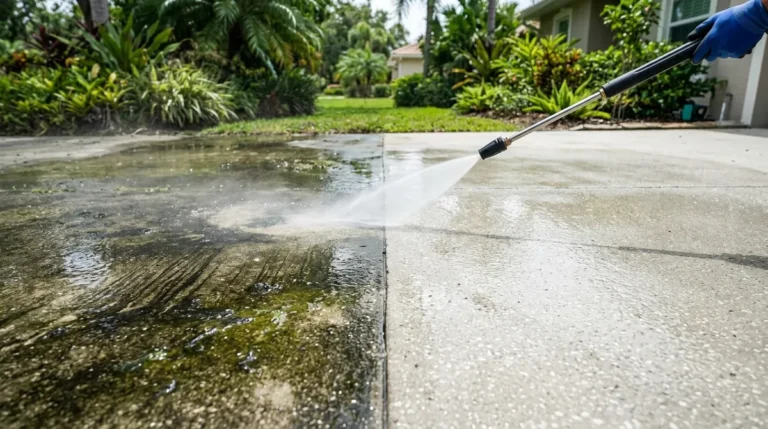
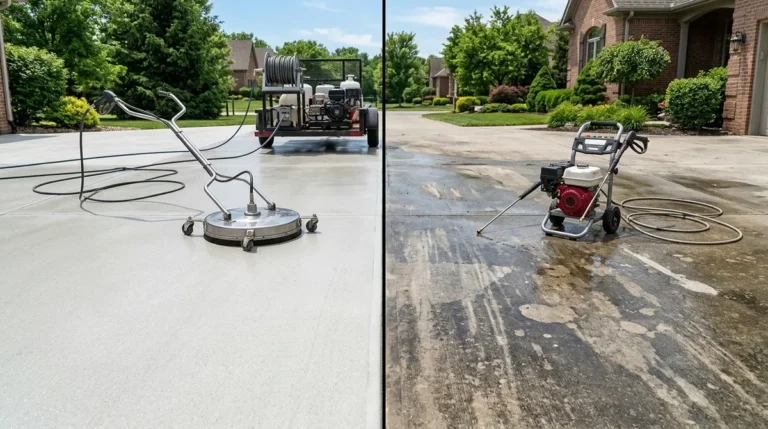
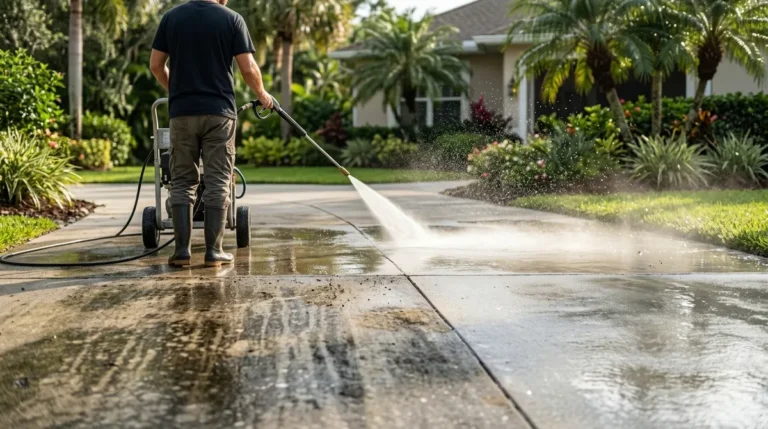
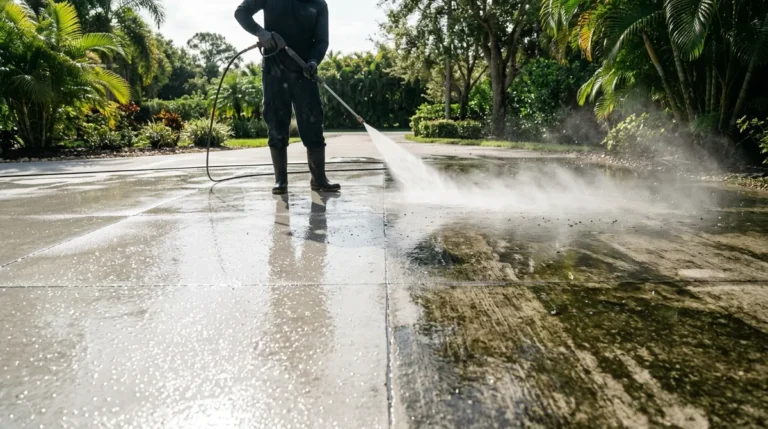
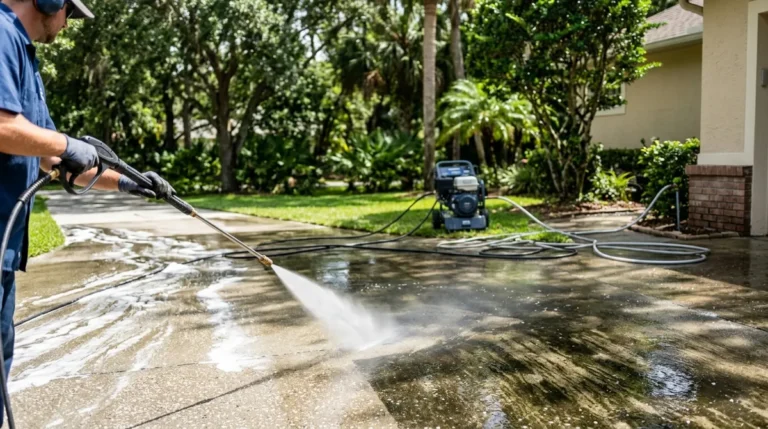
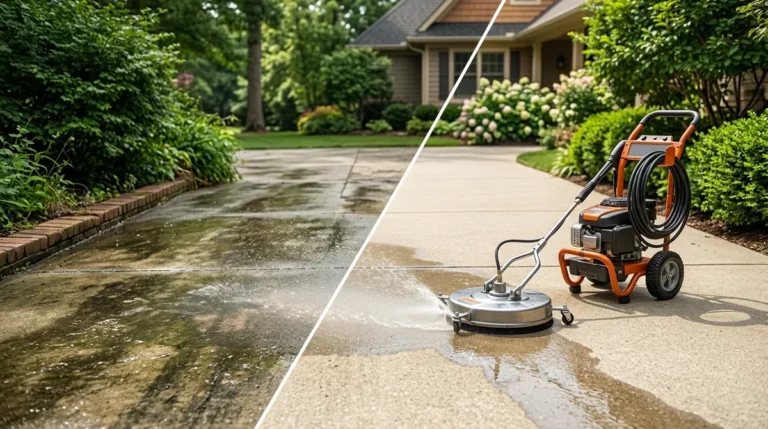
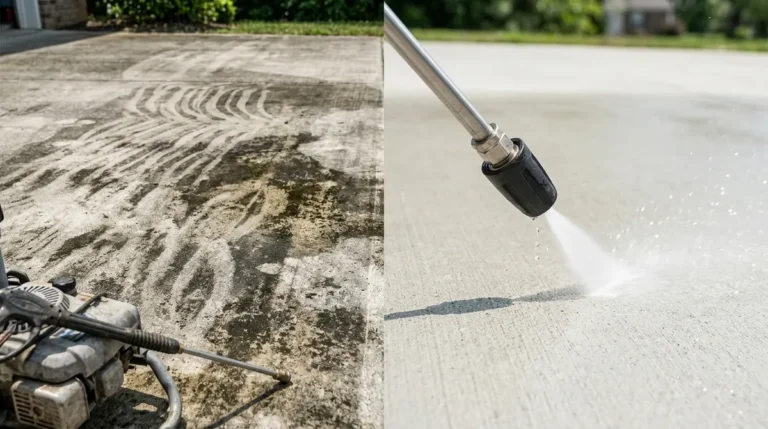
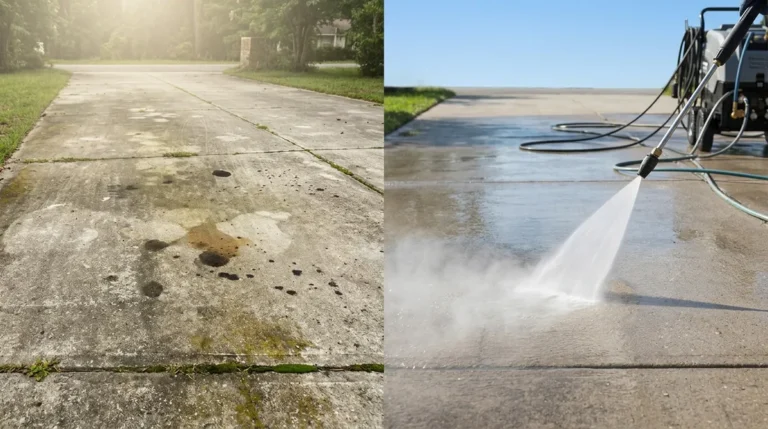
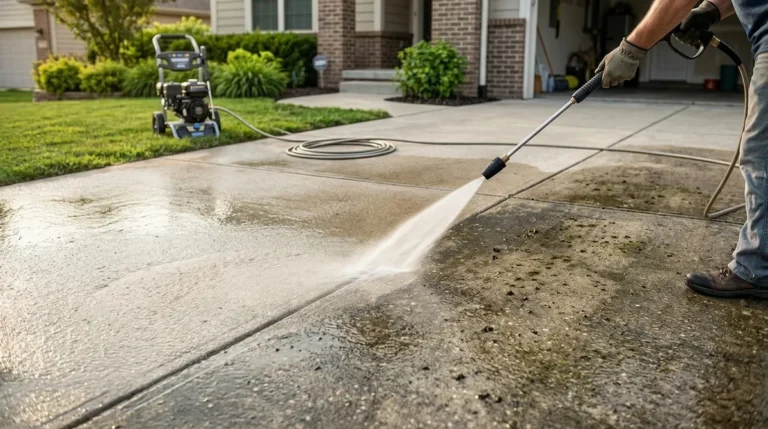
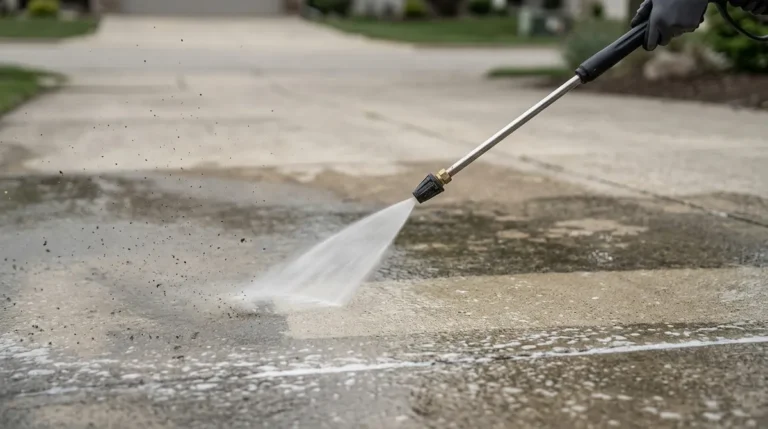
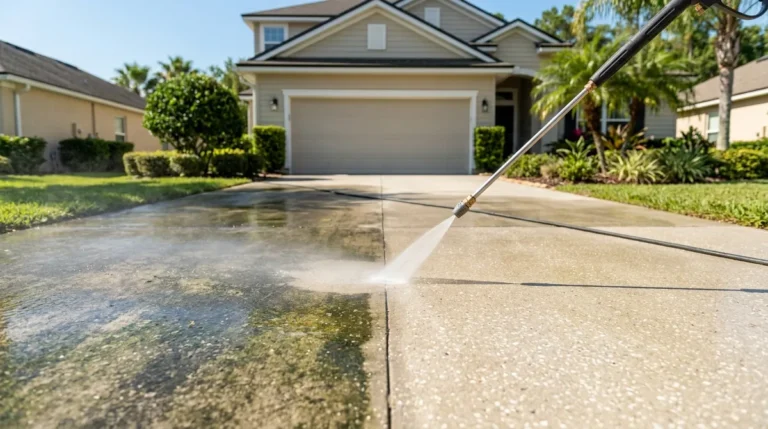
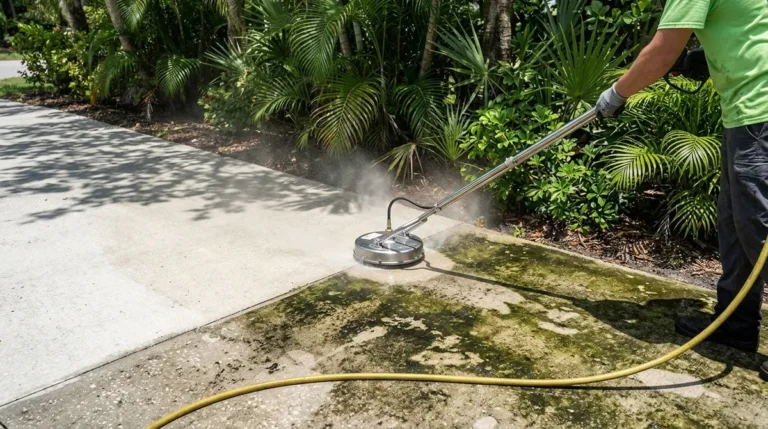
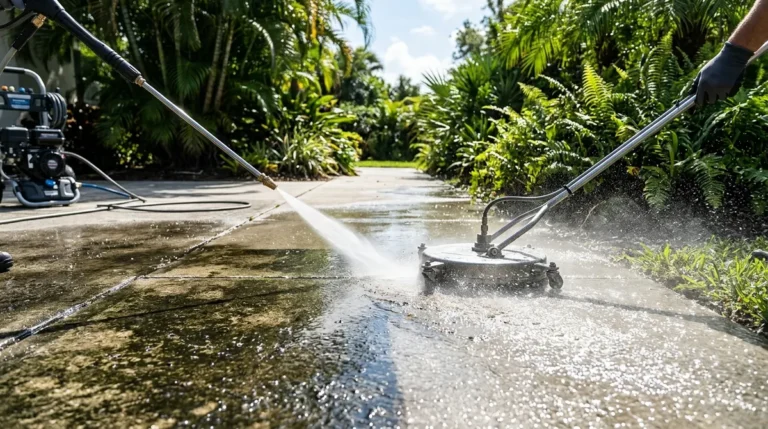
- Pressure washing for concrete and driveways: High-pressure water is perfect for hard surfaces like driveways and sidewalks. It blasts away algae, mold, and grime efficiently.
- Combination approach: Some jobs benefit from using both methods — soft wash first to treat the algae, then pressure washing to rinse and deep clean.
Step 3: Pre-Treat With a Cleaning Solution
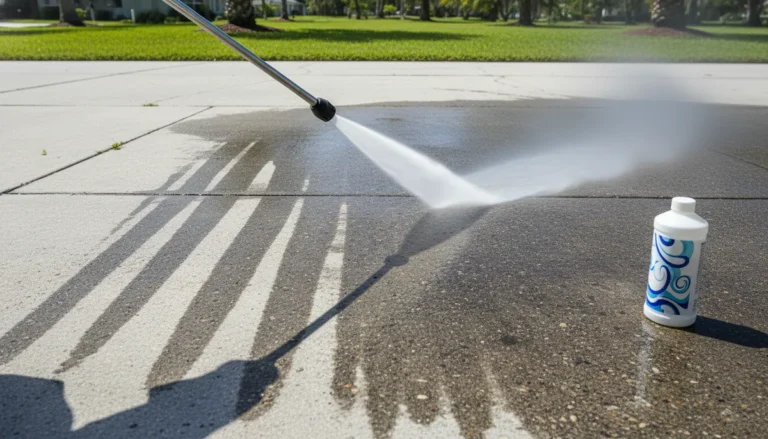
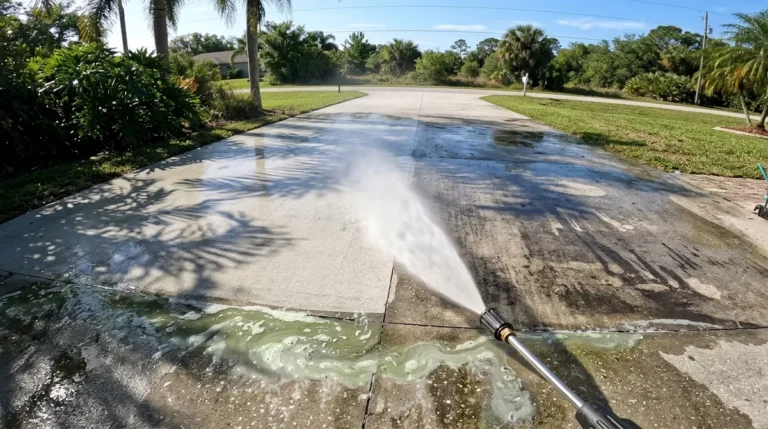
For stubborn algae, applying a cleaning solution before washing makes a big difference. Professionals use biodegradable, eco-safe detergents that break down algae at the source. These solutions soak in and loosen the growth, making it much easier to rinse away. This is especially important for roof cleaning, where pressure alone can damage shingles.
Step 4: Wash and Rinse Thoroughly
Apply your chosen cleaning method and work systematically — top to bottom on siding, and following the surface’s natural slope on roofs. Make sure you rinse completely to remove all detergent and loosened algae residue. Leaving solution behind can attract new growth faster.
Step 5: Inspect and Repeat If Needed
After the surface dries, inspect your work. Heavy algae growth sometimes requires a second treatment. If you’re dealing with recurring issues, it’s worth looking at preventive solutions like zinc strips on roofs or sealants on driveways.
Algae Removal by Surface Type
Different surfaces need different care. Here’s what you should know about algae removal on the most common areas of your home.
Roof Algae Removal
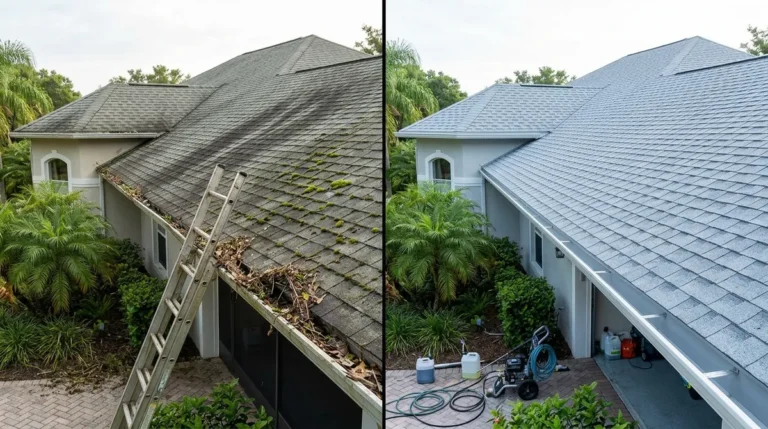
Roof algae is one of the most damaging types because it eats away at shingles over time, reducing their lifespan. Those black streaks you see? They’re actually living organisms feeding on your roof. The safest way to remove roof algae is with a gentle soft wash process. Professional roof cleaning uses low-pressure rinses with specially formulated solutions that kill algae without voiding your roof warranty. You can also read more about why your roof needs professional washing every year.
Driveway and Concrete Algae Removal
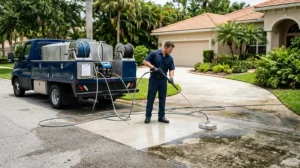
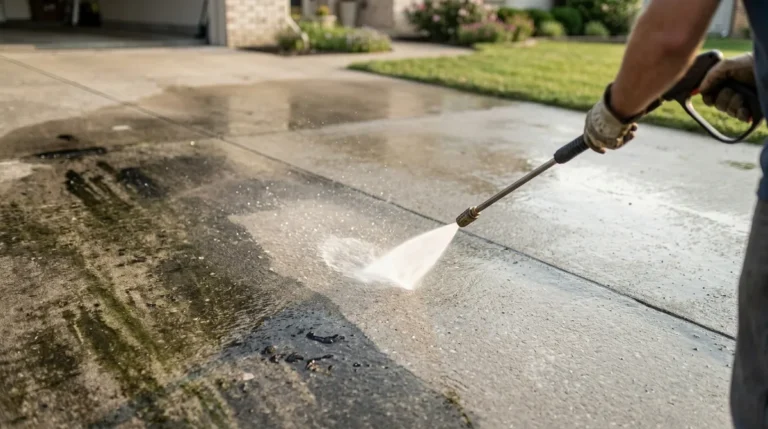
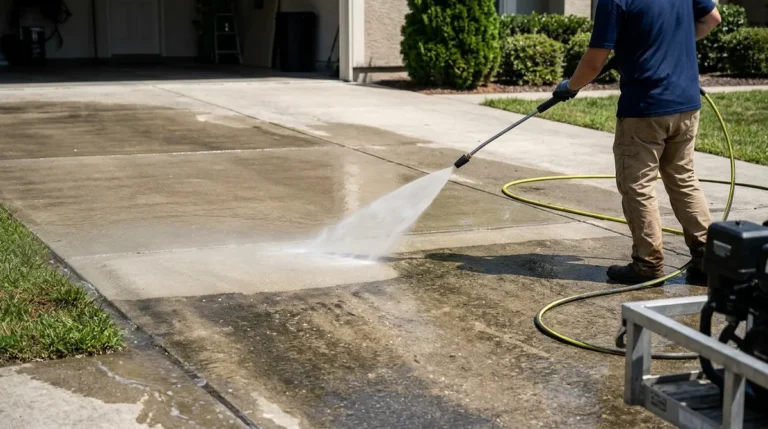
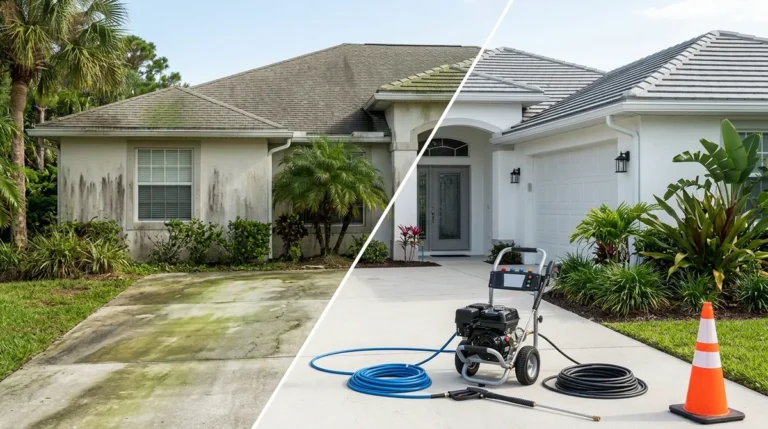
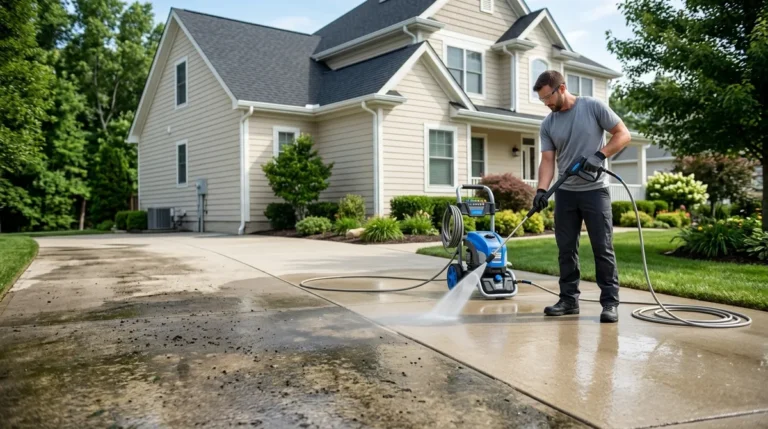
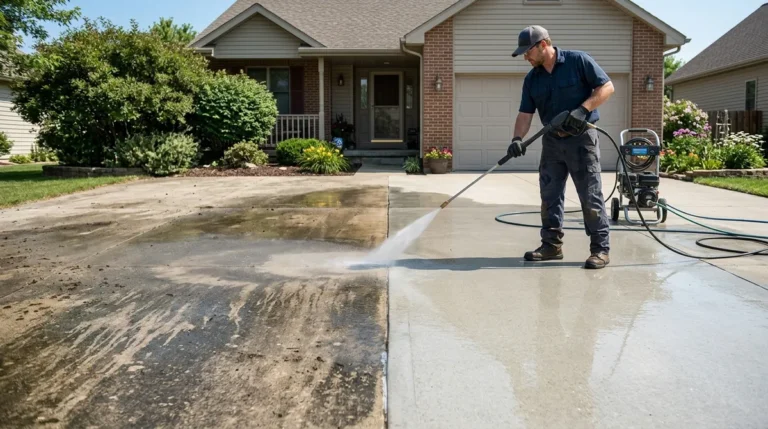
Algae on your driveway creates a slippery, unsafe surface — especially when wet. It also looks unsightly and can make your whole property look neglected. Driveway and concrete cleaning with high-pressure washing is highly effective here. The force of the water physically removes algae, along with embedded dirt and tire marks, leaving your driveway looking fresh and clean. For more information, check out this helpful guide on pressure washing your driveway.
House Siding Algae Removal
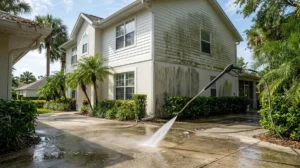
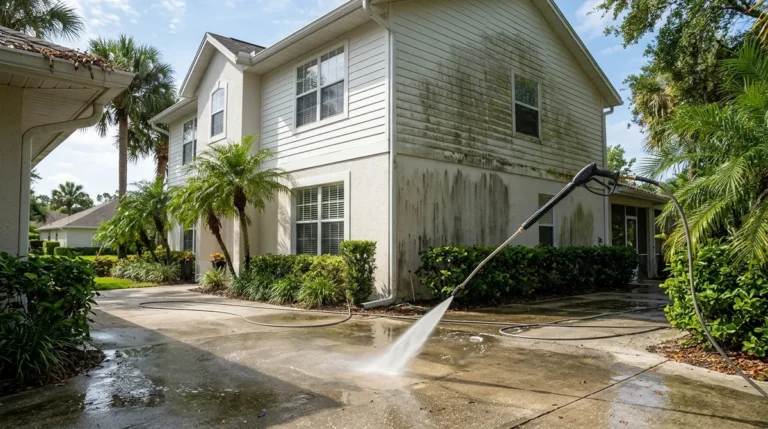
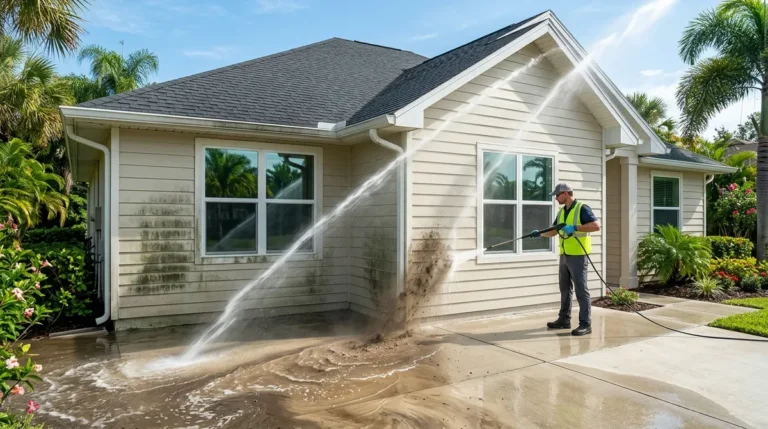
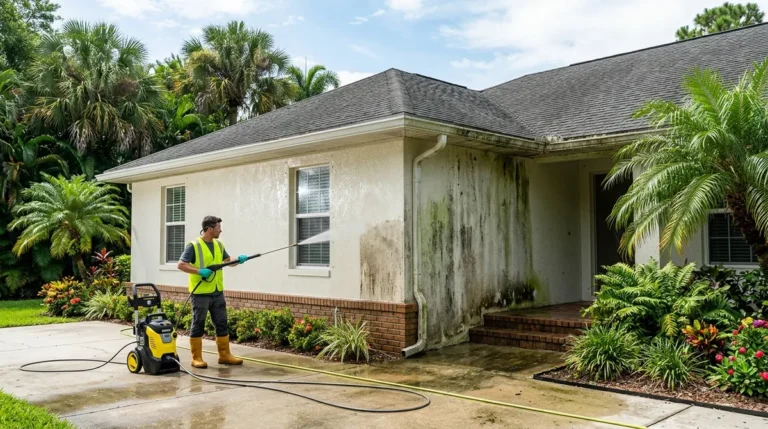
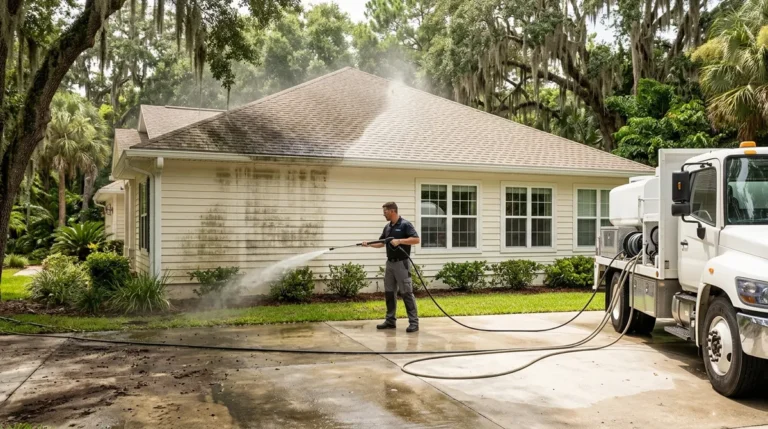
Algae on siding can make even a well-maintained home look dingy. It tends to start in shaded corners and spread. House washing with a soft wash method is ideal here — especially for vinyl, stucco, or painted surfaces. High pressure on siding can force water behind the panels and cause moisture damage inside your walls.
Pool Deck Algae Removal
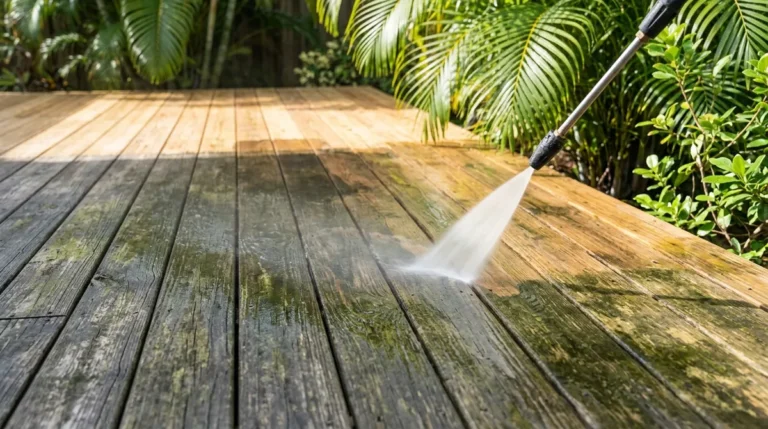
A pool deck covered in algae is a safety hazard and an eyesore. The wet environment around pools makes algae growth almost inevitable without regular cleaning. Professional pool deck cleaning restores the surface’s texture, which is important for preventing slips and falls.
Fence Algae Removal
Wood, vinyl, and metal fences are all vulnerable to algae and mildew. Gentle pressure washing removes the buildup without damaging the material. Regular fence cleaning also extends the life of the fence significantly.
DIY vs. Professional Algae Removal
You might be tempted to rent a pressure washer and handle algae removal yourself. It seems simple enough, right? But there are some real risks involved that are worth considering.
| Factor | DIY Approach | Professional Service |
|---|---|---|
| Safety | Risk of injury on ladders or roofs | Trained professionals with proper equipment |
| Surface damage | High risk with wrong pressure setting | Correct technique for each surface |
| Results | Often incomplete or temporary | Thorough, long-lasting clean |
| Time | Full day or more | Fast, efficient service |
| Equipment | Rental cost + learning curve | Professional-grade tools included |
For most homeowners, hiring a professional saves time, prevents damage, and delivers better results. If you’re curious about whether professional services are worth it, this article on what makes professional pressure washing worth it is a great read.
How to Prevent Algae From Coming Back
Removing algae is only half the battle. Preventing it from returning is just as important. Here are the most effective prevention tips:
- Schedule regular cleanings: Aim for at least once a year, more often if your home is shaded or near trees.
- Trim back trees and shrubs: More sunlight and airflow means surfaces dry faster and algae struggles to establish itself.
- Keep gutters clean: Clogged gutters cause water to overflow and pool near your home’s exterior. Gutter cleaning is a simple way to prevent this.
- Apply algae-resistant treatments: Zinc strips on roofs or sealants on concrete can help deter future algae growth.
- Improve drainage: Make sure water flows away from your home’s foundation and exterior surfaces.
- Act quickly: Catch algae early before it spreads. Small patches are much easier to clean than full-blown infestations.
Signs You Need Professional Help Right Away
Sometimes algae removal is beyond a quick DIY fix. Here are clear signs it’s time to call in the pros:
- Algae covers a large portion of your roof or siding
- You notice soft or spongy spots on your roof decking
- Your driveway has become dangerously slippery
- You’ve tried DIY methods and the algae keeps coming back
- You have an HOA inspection or property sale coming up
- The algae has spread to multiple surfaces around your home
If any of those sound familiar, don’t wait. You can learn more about 7 signs you need a pressure washing company today to help you decide when to reach out for professional help.
Why Florida Homeowners Trust Professional Algae Removal
Living in Hillsborough County means dealing with algae year-round. The warm, wet weather never really lets up, so staying ahead of exterior cleaning is just part of homeownership here. That’s why so many local homeowners turn to trusted professionals rather than fighting the battle alone.
Buckhorn Power Wash has built a strong reputation serving homeowners across Hillsborough County — from Tampa and Brandon to Valrico, Riverview, and Lithia. With a focus on safe techniques, eco-friendly products, and reliable results, they’ve become a go-to resource for algae removal and exterior cleaning throughout the area. You can check out real customer experiences on the Buckhorn Power Wash Yelp page or visit our Google Business Profile to see reviews from your neighbors.
You can also follow along for tips, before-and-after results, and updates on the Buckhorn Power Wash Facebook page. It’s a great way to stay connected and see the kind of results that are possible with professional exterior cleaning.
Conclusion
Algae is one of those problems that sneaks up on you slowly — until one day you look at your roof or driveway and wonder how it got so bad. The good news is that effective algae removal is absolutely within reach, especially with the right approach and the right team behind you. Whether it’s your roof, siding, driveway, or pool deck, addressing algae quickly protects your home’s value, keeps your family safe, and makes your property look its best.
Don’t let algae take over another season. If you’re ready to restore your home’s exterior to its best condition, request your free quote today and see how easy it is to get professional results without lifting a finger. You can also explore the full list of pressure washing services available for Hillsborough County homeowners. Your clean, algae-free home is just a call away!
FAQs
Q: How often should I have algae removed from my home’s exterior?
A: For most Hillsborough County homes, once a year is a great starting point — but if your home is heavily shaded or surrounded by trees, you may benefit from cleaning every six months. Staying ahead of algae growth makes each cleaning faster, easier, and more effective!
Q: Is algae on my roof really that serious?
A: Absolutely — it’s more than just an eyesore! Roof algae actually feeds on the limestone filler in asphalt shingles, breaking them down over time and shortening your roof’s lifespan. Getting it removed promptly can save you from a very costly roof replacement down the road.
Q: Can I use bleach to remove algae myself?
A: While a diluted bleach solution can kill surface algae, using it incorrectly can damage your plants, stain your siding, and harm the environment. Professionals use biodegradable, eco-friendly solutions that are safer for your home and yard while still being highly effective.
Q: Will pressure washing damage my roof when removing algae?
A: High-pressure washing on a roof can actually loosen and damage shingles, which is why the soft wash method is the preferred approach for roof algae removal. It uses low pressure combined with specialized cleaning solutions to safely eliminate algae without voiding your warranty.
Q: How long does algae removal take for an average home?
A: Most professional algae removal jobs can be completed in just a few hours, depending on the size of your home and the severity of the buildup. It’s fast, efficient, and incredibly satisfying — you’ll love the results when you see your clean, refreshed exterior!