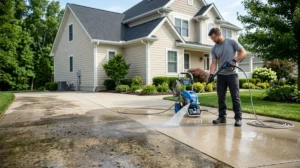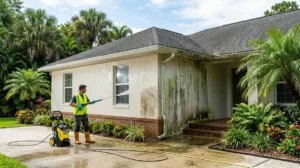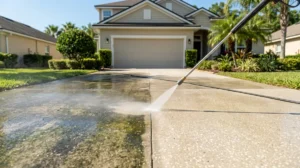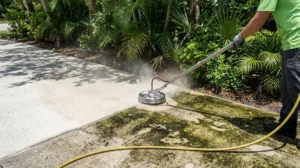
Key Takeaways
-
Choose a pressure washer with 3,000-4,000 PSI for concrete driveways to effectively remove stubborn dirt and grime without causing damage.
-
Prepare your driveway by removing loose debris, protecting nearby plants, and pre-treating tough oil stains with degreaser before pressure washing.
-
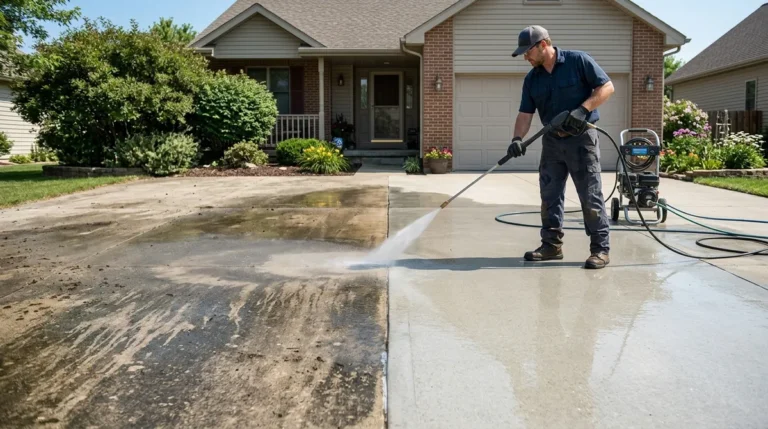
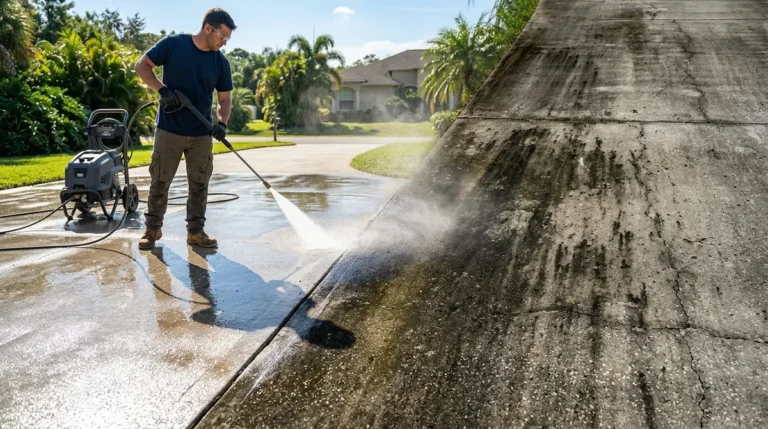
Use smooth, overlapping sweeping motions when pressure washing, keeping the nozzle 8-12 inches from the surface and constantly moving to prevent etching.
-
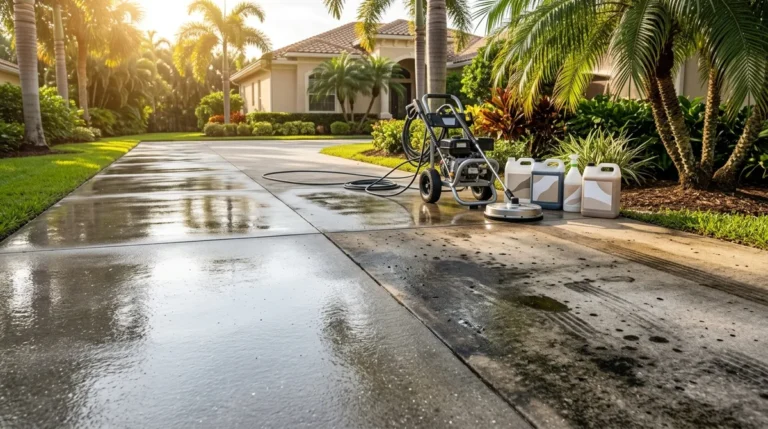
Consider using a surface cleaner attachment for more even cleaning and to avoid creating uneven 'zebra stripes' on your driveway.
-
In humid climates like Florida, pressure wash your driveway every 1-2 years to prevent algae growth and maintain its appearance.
-
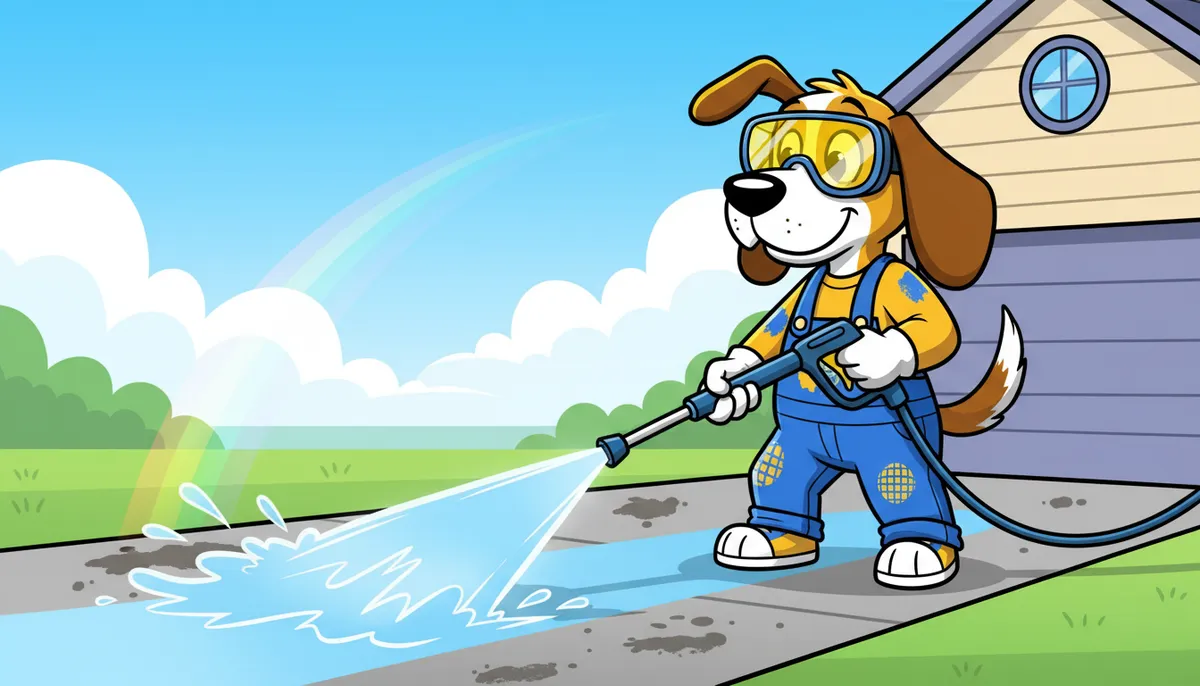
Always wear proper safety gear like safety glasses, gloves, and closed-toe shoes when operating a pressure washer to prevent potential injuries.
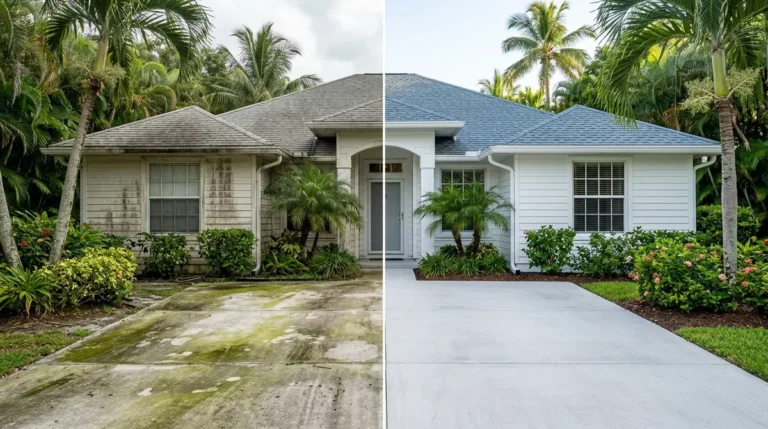
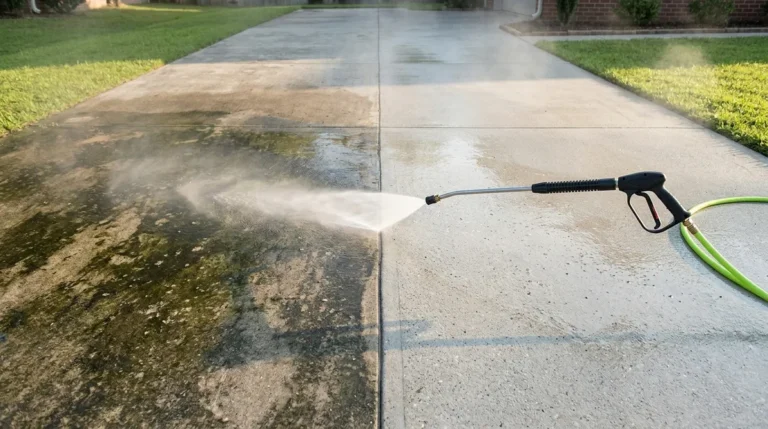
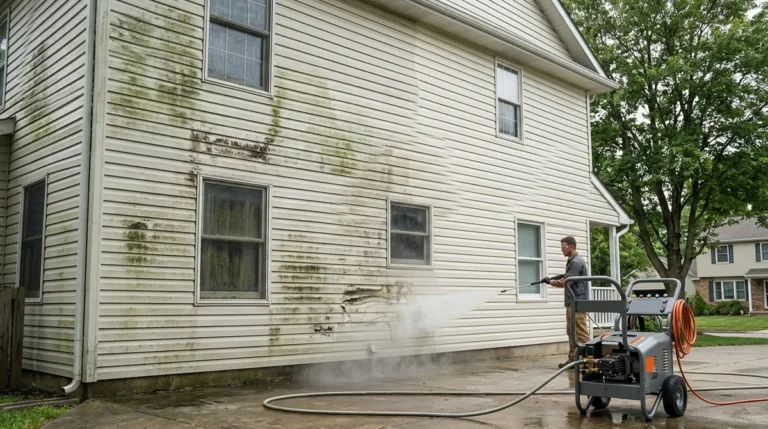
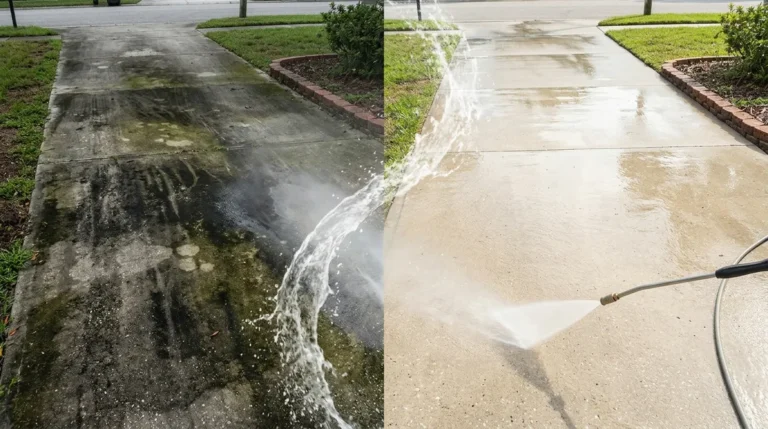
Your driveway takes a beating every single day. Cars roll over it, rain soaks it, and the Florida sun bakes dirt and grime right into the surface. Over time, oil stains, tire marks, algae, and mildew turn your once-clean driveway into an eyesore. The good news? Pressure washing your driveway can bring it back to life, making your whole home look better from the curb.
Whether you’re planning to tackle this project yourself or hire professionals, understanding the right way to pressure wash a driveway makes all the difference. In this guide, we’ll walk through everything you need to know, from choosing the right equipment to avoiding common mistakes that can damage your concrete or asphalt.
Let’s dive in and get your driveway looking spotless again.
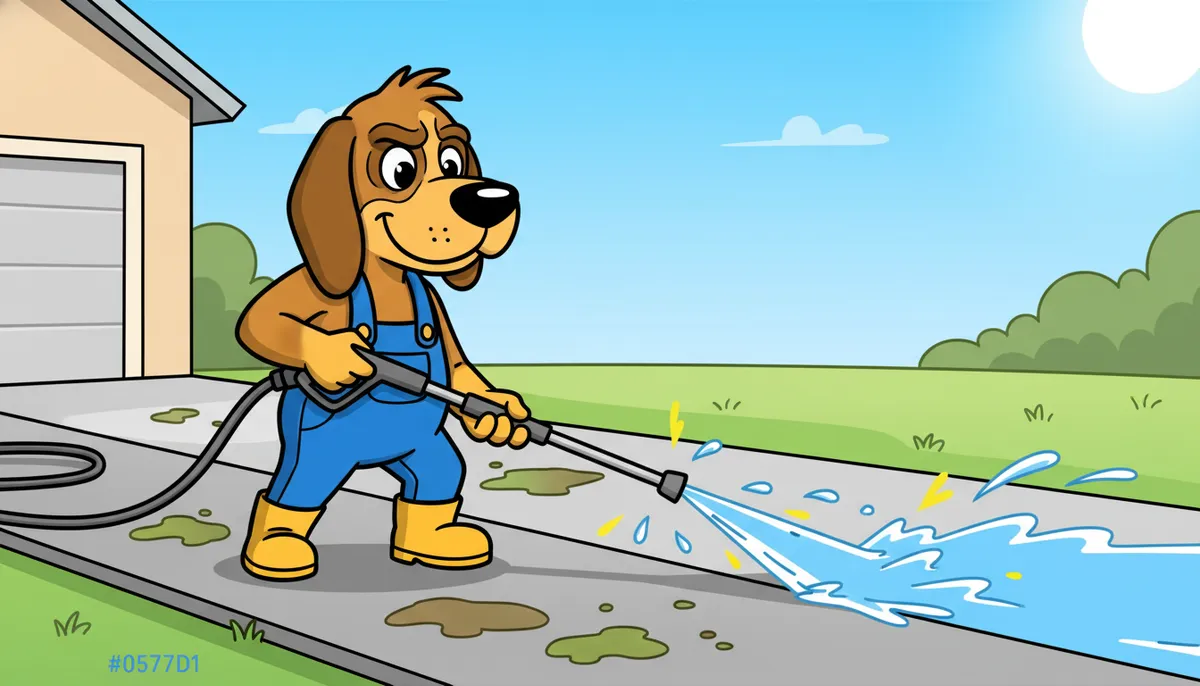
Why Pressure Washing Your Driveway Matters
A dirty driveway doesn’t just look bad. It actually affects your property in several ways. First, it lowers your home’s curb appeal. When potential buyers or guests pull up, your driveway is one of the first things they notice. Dark stains and green algae growth send the wrong message.
Second, built-up grime and organic growth can damage your driveway over time. Algae and moss hold moisture against the surface, which can lead to cracks and deterioration, especially in concrete. Regular cleaning extends the life of your driveway and protects your investment.
Here are the main benefits of pressure washing your driveway:
- Removes stubborn oil stains, tire marks, and rust spots
- Eliminates slippery algae and mold that create safety hazards
- Prevents long-term damage from organic growth
- Boosts your home’s overall appearance and value
- Prepares the surface for sealing or coating
- Keeps your property looking well-maintained and cared for
For homeowners in Hillsborough County, regular driveway cleaning is especially important. Our humid climate creates perfect conditions for algae, mold, and mildew to thrive on outdoor surfaces.
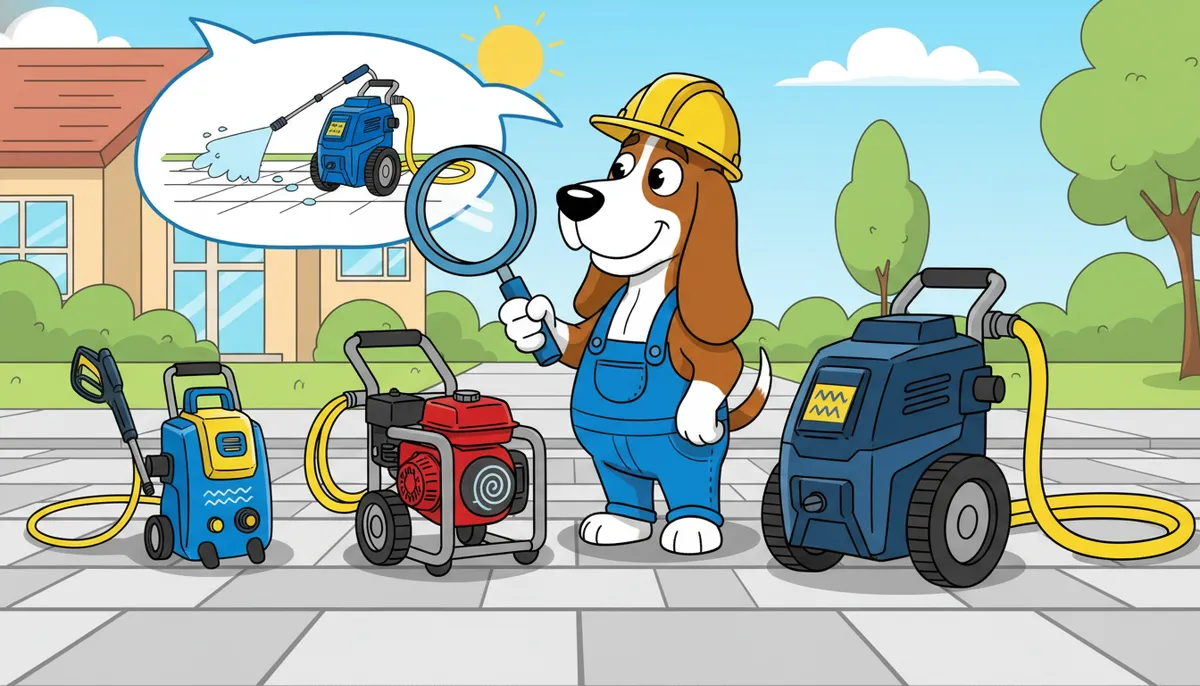
Choosing the Right Pressure Washer for Your Driveway
Not all pressure washers are created equal. Using the wrong equipment can either waste your time or damage your driveway. The key specifications you need to understand are PSI (pounds per square inch) and GPM (gallons per minute).
For concrete driveways, you’ll want a pressure washer with at least 2,500 PSI and 2.5 GPM. Most professionals recommend between 3,000-4,000 PSI for concrete surfaces. This range provides enough power to blast away years of buildup without etching or damaging the concrete.
PSI Requirements by Surface Type
| Surface Type | Recommended PSI | Best Nozzle |
|---|---|---|
| Concrete Driveway | 3,000-4,000 PSI | 15-25 degree |
| Asphalt Driveway | 2,500-3,000 PSI | 25 degree |
| Pavers or Brick | 1,500-2,500 PSI | 25-40 degree |
| Stamped Concrete | 2,000-3,000 PSI | 25 degree |
Asphalt driveways need a gentler approach. Stick to 2,500-3,000 PSI to avoid damaging the softer surface. Using too much pressure can actually strip away the top layer of asphalt.
The GPM rating matters too. A higher GPM means more water flow, which helps rinse away dirt and detergent faster. Look for at least 1.65-2.5 GPM for driveway cleaning.
Hot Water vs. Cold Water Pressure Washers
Most homeowners use cold water pressure washers, which work fine for general cleaning. However, hot water pressure washers (above 200°F) excel at removing oil and grease stains. The heat breaks down petroleum-based stains much faster than cold water alone.
Professional services like Buckhorn Power Wash often use hot water systems for tough jobs. If you’re tackling heavy oil stains yourself, you might want to consider renting a hot water unit for the day.
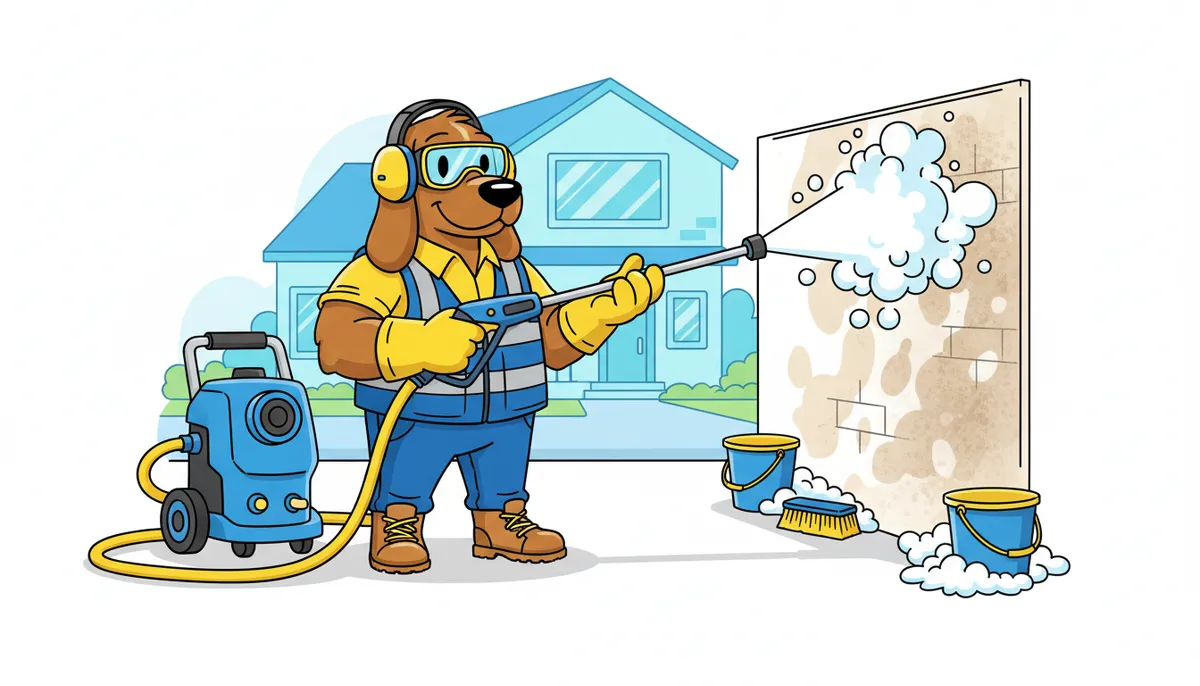
Essential Equipment and Safety Gear
Beyond the pressure washer itself, you’ll need a few other tools to do the job right. Having everything ready before you start saves time and frustration.
Here’s your complete equipment checklist:
- Pressure washer with appropriate PSI rating (2,500-4,000 PSI)
- Surface cleaner attachment for even coverage on large areas
- Extension wand for reaching corners and edges
- Various nozzle tips (15, 25, and 40 degree angles)
- Driveway cleaning detergent or degreaser
- Stiff bristle brush for pre-treating tough stains
Safety should be your top priority. Pressure washers are powerful tools that can cause serious injuries if mishandled. The high-pressure water stream can cut skin, break glass, and send debris flying.
Always wear these safety items:
- Safety glasses or goggles to protect your eyes from debris
- Waterproof gloves to maintain grip and protect your hands
- Closed-toe shoes with good traction (steel toe boots are even better)
- Long pants to shield your legs from splashback
- Ear protection if using a gas-powered pressure washer
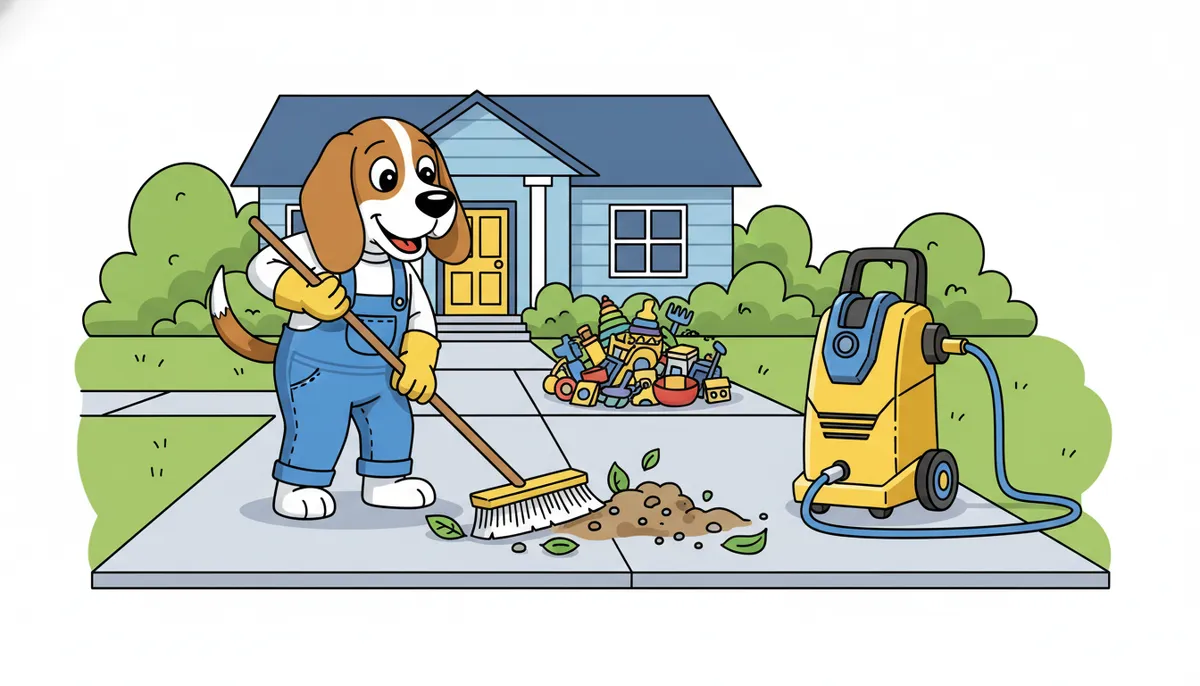
Preparing Your Driveway for Pressure Washing
Good preparation makes the actual washing go much faster and produces better results. Don’t skip these important steps.
Start by removing all vehicles, bikes, toys, and other items from your driveway. You need clear access to the entire surface. Then sweep away loose dirt, leaves, and debris. This prevents the pressure washer from just pushing around surface grime.
Next, protect nearby plants, grass, and landscaping. The detergents and high-pressure water can damage delicate plants. Cover them with plastic sheeting or spray them down with plain water before and after washing to dilute any chemicals.
Pre-Treating Stubborn Stains
Oil stains, rust spots, and tire marks need special attention. Apply a concrete degreaser or driveway cleaner to these areas before you start pressure washing. Let the cleaner sit for 10-15 minutes to break down the stains.
For really stubborn oil stains, try this process:
- Sprinkle cat litter or cornstarch on fresh oil to absorb excess
- Apply a concentrated degreaser directly to the stain
- Scrub with a stiff bristle brush in circular motions
- Let the degreaser sit for 15-20 minutes
- Rinse with the pressure washer using hot water if possible
Close all doors and windows near the driveway. The spray can force water into unexpected places. Also cover outdoor electrical outlets and lights with plastic bags and tape.
Step-by-Step Pressure Washing Process
Now you’re ready for the main event. Following the right technique prevents damage and gives you professional-looking results.
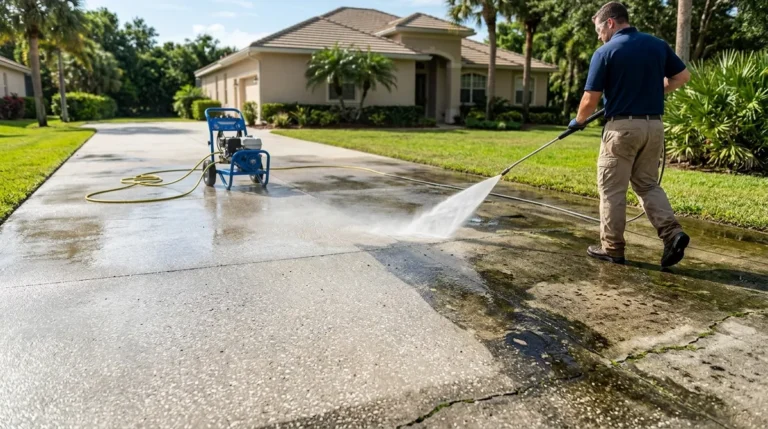
Start by testing your pressure washer on a small, inconspicuous area. This lets you check that the pressure and nozzle angle won’t damage your specific driveway surface. Begin with a wider nozzle angle (25-40 degrees) and work your way to narrower angles if needed.
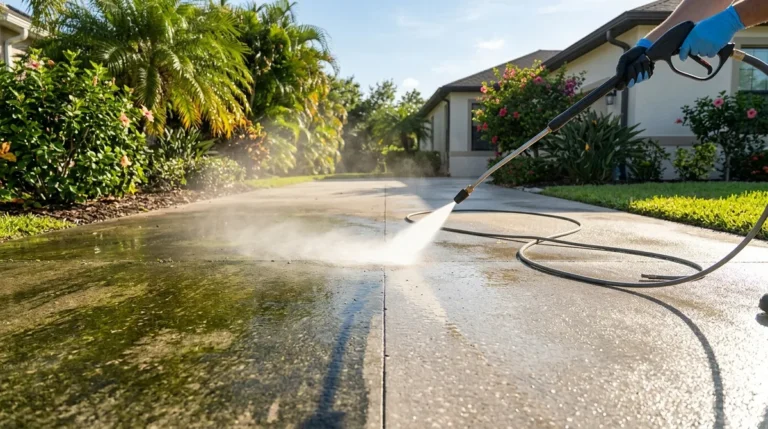
Hold the nozzle 8-12 inches from the surface. This distance provides strong cleaning power without risking damage. Getting too close can etch concrete or create gouges in asphalt.
The Right Washing Technique
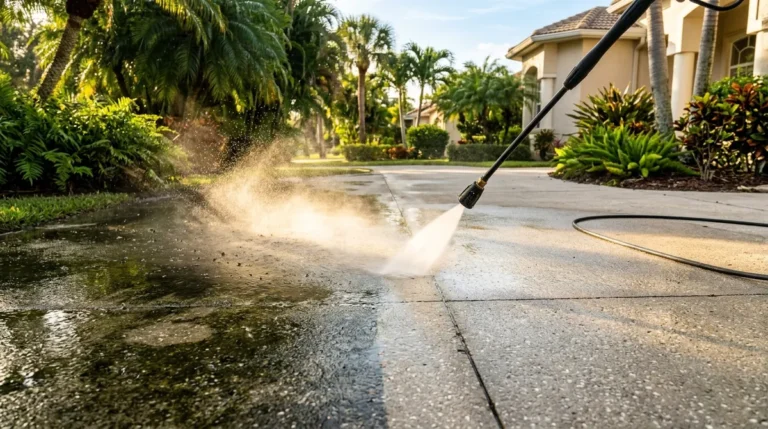
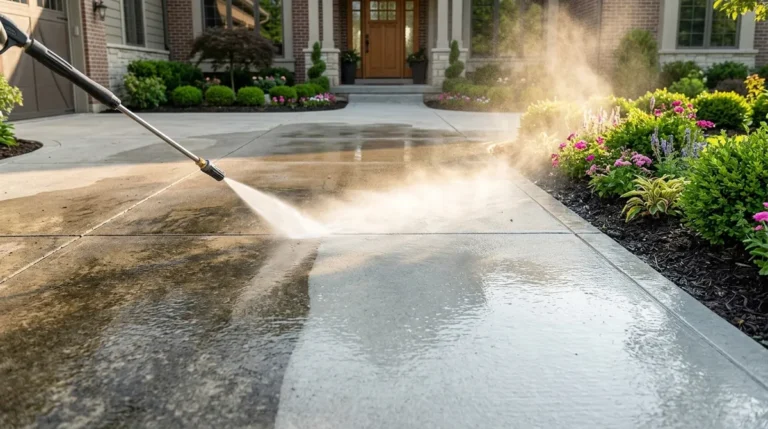
Use smooth, overlapping sweeping motions. Move the wand in consistent passes, like mowing a lawn. Never let the spray linger in one spot, as this creates uneven cleaning and potential damage.
Here’s the best approach:
- Start at the highest point of your driveway (usually near the garage)
- Work your way backward toward the street so you don’t walk on cleaned areas
- Use overlapping side-to-side sweeping motions
- Maintain consistent speed and distance from the surface
- Work in sections about 3-4 feet wide
- Keep the nozzle moving at all times
For driveways with significant slope, always work from top to bottom. This uses gravity to help rinse away dirt and cleaning solution.
Using a Surface Cleaner Attachment
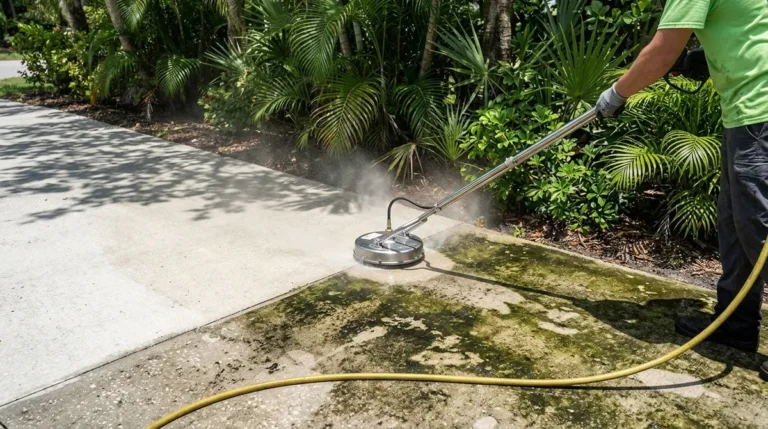
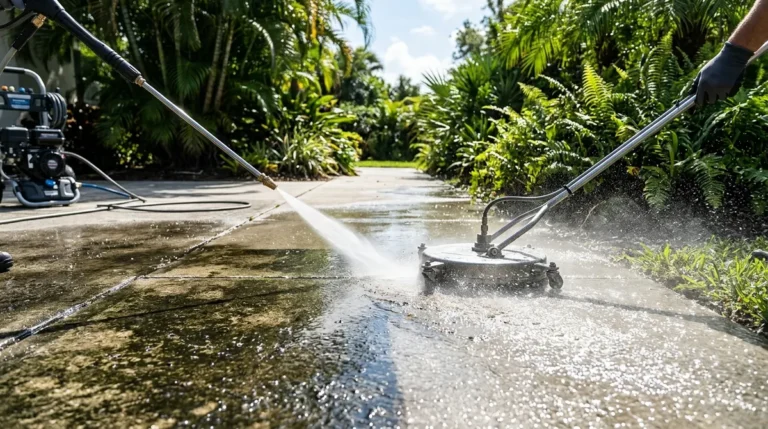
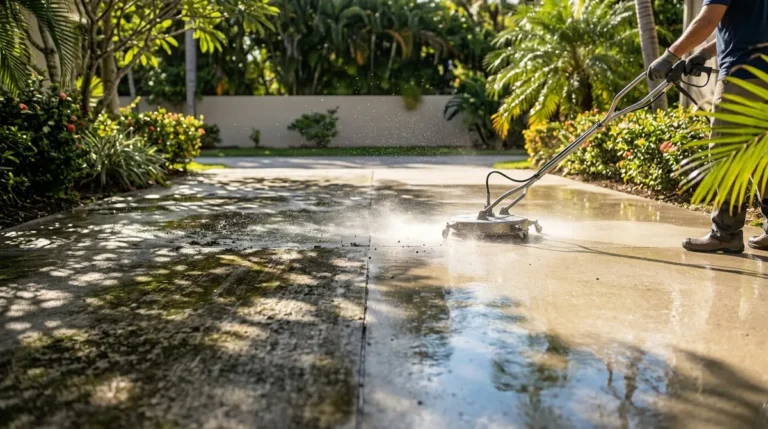
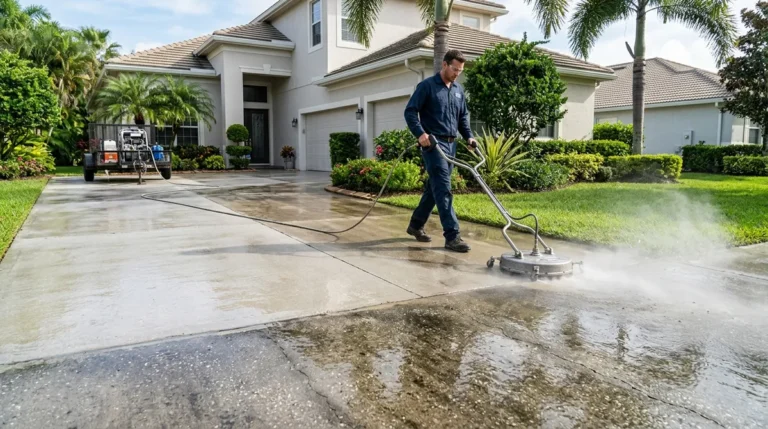
Surface cleaner attachments are game-changers for driveway cleaning. These circular tools have rotating spray nozzles under a housing that glides across the surface. They clean faster and more evenly than a standard wand, eliminating the zebra stripes that can happen with handheld washing.
Surface cleaners provide consistent pressure and coverage, making them the secret weapon of professional services. If you’re doing this yourself, renting or buying one is worth the investment for large driveways.
Common Mistakes to Avoid
Even with the best equipment, certain mistakes can ruin your results or damage your driveway. Here are the biggest pitfalls to watch out for.
First, don’t use too much pressure. While it’s tempting to crank up the PSI for stubborn stains, excessive pressure can etch concrete, create pits, or strip the surface layer. Stick to the recommended pressure ranges for your surface type.
Avoid washing in direct sunlight on hot days. The heat causes the cleaning solution to dry too quickly, leaving streaks and water spots. It also makes the detergent less effective. Early morning or cloudy days provide the best conditions.
Don’t neglect to rinse thoroughly. Any cleaning solution left on the surface can attract dirt or leave a hazy film. Make sure to rinse each section completely before moving on.
Here are more mistakes to avoid:
- Starting with the narrowest nozzle angle without testing first
- Holding the wand too close to the surface
- Letting the spray linger in one spot
- Washing against the grain of brushed or textured concrete
- Forgetting to protect plants and landscaping from chemicals
- Not sealing the driveway after cleaning
Dealing with Specific Stain Types
Different stains require different approaches. Understanding what you’re dealing with helps you choose the right cleaning method.
Oil and Grease Stains
These are the most common and stubborn driveway stains. As mentioned earlier, hot water pressure washing works best for oil. If you’re using cold water, invest in a high-quality concrete degreaser. Apply it generously, let it sit, scrub with a brush, then pressure wash.
For old, set-in oil stains, you might need to repeat the process several times. Some deep stains may never completely disappear, but you can significantly lighten them.
Rust Stains
Rust stains often come from metal furniture, plant stands, or even iron content in your water. Regular pressure washing won’t remove rust. You need a rust remover product specifically designed for concrete. Apply according to the product directions, then rinse with your pressure washer.
Tire Marks
Fresh tire marks usually come off easily with standard pressure washing. For older marks, use a degreaser or a concrete cleaner with mild acid. Let it sit for a few minutes before pressure washing.
Algae and Mold
Green or black stains are typically algae, mold, or mildew. These respond well to pressure washing with a cleaning solution. Many professionals use a diluted bleach solution or commercial algae remover. The soft wash method works great for this type of organic growth.
In Hillsborough County’s humid climate, algae and mold growth is a constant battle. That’s why many homeowners opt for professional driveway cleaning services that include treatments to slow regrowth.
Post-Washing Care and Maintenance
Your work isn’t quite done once the driveway is clean. A few finishing touches ensure the best results and longest-lasting cleanliness.
After pressure washing, inspect your driveway for any cracks or damage that might have been hidden under the dirt. Now is the perfect time to make repairs before sealing.
Speaking of sealing, applying a concrete sealer after cleaning protects your driveway and makes future cleaning easier. Sealers prevent stains from penetrating the surface and provide a barrier against moisture, oil, and chemicals. Wait at least 24-48 hours after washing before applying sealer so the surface is completely dry.
How Often Should You Pressure Wash Your Driveway?
Most driveways need pressure washing every 1-2 years for maintenance. However, this varies based on several factors:
- Climate and weather conditions
- Amount of shade (shaded driveways develop algae faster)
- Traffic and use patterns
- Proximity to trees that drop sap or leaves
- Whether the driveway is sealed
In Florida’s humid environment, you might need to clean more frequently, especially if your driveway gets a lot of shade. Some homeowners prefer annual cleaning to keep everything looking fresh.
DIY vs. Professional Pressure Washing
Deciding whether to tackle this yourself or hire professionals depends on several factors. Let’s look at both options honestly.
DIY pressure washing can save money upfront, especially if you already own or can borrow equipment. It gives you control over timing and lets you work at your own pace. However, there are real costs beyond just the equipment.
Renting a quality pressure washer costs $50-100 per day. You’ll also need to buy detergents, maybe rent a surface cleaner, and invest several hours of your weekend. There’s also a learning curve, and mistakes can damage your driveway or cause injuries.
Benefits of Hiring Professionals
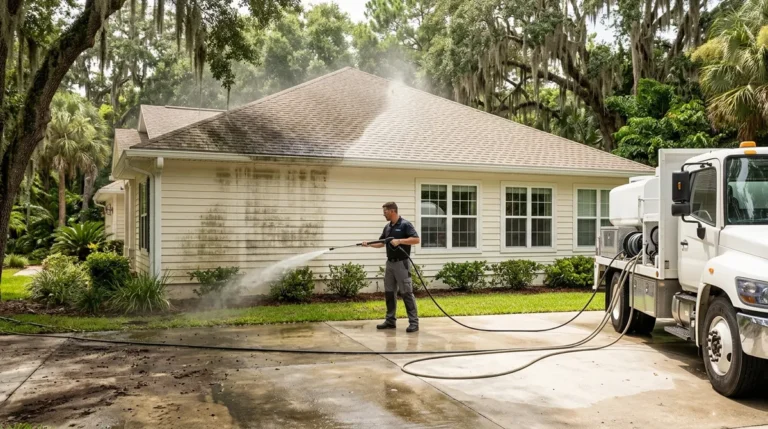
Professional pressure washing services bring experience, commercial-grade equipment, and efficiency. Companies like Buckhorn Power Wash use truck-mounted systems with 100-500+ gallon tanks and hoses extending up to 300 feet. This means faster cleaning with better results.
Professionals also know exactly which cleaning solutions work best for different stains and surfaces. They can spot potential problems and adjust their approach to prevent damage. Plus, they carry insurance in case anything goes wrong.
Consider professional service if:
- You lack the time or physical ability to do it yourself
- Your driveway has extensive staining or damage
- You’re preparing your home for sale and need perfect results
- You live in an HOA community with strict appearance standards
- You prefer to spend your weekends on activities you actually enjoy
Many Hillsborough County homeowners find that professional cleaning every year or two, with light maintenance in between, provides the best value and results. Connect with local pressure washing experts to discuss your specific needs.
Environmental Considerations
Responsible pressure washing protects our local environment. The water runoff from your driveway carries dirt, chemicals, and whatever else was on the surface straight into storm drains, which flow to our rivers, lakes, and bays.
Choose eco-friendly, biodegradable cleaning solutions whenever possible. Many effective driveway cleaners are now available in environmentally safe formulas. Avoid harsh chemicals like muriatic acid unless absolutely necessary for specific stains.
Capture and contain runoff when using heavy degreasers or chemical cleaners. Some professionals use vacuum recovery systems to collect contaminated water. For serious oil stains, you might want to hire a service with proper containment and disposal methods.
Water conservation matters too. While pressure washing uses less water than you might think (thanks to the high pressure), being mindful helps. Surface cleaners use water more efficiently than open wands. Only clean when needed, and don’t rinse more than necessary.
Frequently Asked Questions About Pressure Washing Driveways
Before we wrap up, let’s address some common questions homeowners have about pressure washing their driveways.
Understanding these details helps you make informed decisions about maintaining your property. Whether you choose to DIY or hire professionals, knowing what to expect leads to better outcomes.
For more specific answers about your situation, many homeowners find it helpful to check out reviews and recommendations from others in their area who’ve tackled similar projects.
Get Your Driveway Looking Like New Again
Pressure washing your driveway makes a dramatic difference in your home’s appearance. With the right equipment, proper technique, and attention to safety, you can remove years of built-up grime and stains. The process isn’t complicated, but it does require knowledge and care to avoid damage.
Whether you decide to rent equipment and do it yourself or hire experienced professionals, regular driveway cleaning protects your investment and keeps your property looking its best. In Hillsborough County’s humid climate, staying ahead of algae, mold, and stains prevents bigger problems down the road.
Remember these key points:
- Use 2,500-4,000 PSI for concrete driveways
- Keep the nozzle 8-12 inches from the surface
- Work in overlapping sweeping motions
- Pre-treat stubborn stains before pressure washing
- Consider a surface cleaner for even, streak-free results
- Seal your driveway after cleaning for lasting protection
If tackling this project yourself feels overwhelming, or if you simply want professional results without the hassle, Buckhorn Power Wash is here to help. Our experienced team serves homeowners throughout Hillsborough County with affordable, professional pressure washing services. We use the right equipment and techniques to safely restore your driveway without damage.
Request your free quote today and see how easy it is to get pricing for your driveway cleaning project. You can also give us a call at 813-244-4753 to discuss your specific needs. Don’t forget to check out our reviews on Google to see what your neighbors are saying about our services.
Your driveway doesn’t have to stay stained and dingy. With the right approach, it can look amazing again. Take action today and enjoy the curb appeal boost that comes with a spotlessly clean driveway.
FAQs
Q: What PSI pressure washer do I need for a concrete driveway?
A: For concrete driveways, you’ll want a pressure washer with 3,000-4,000 PSI and at least 2.5 GPM for best results. This pressure range is strong enough to remove years of buildup without damaging or etching the concrete surface. If you’re working with asphalt, stick to 2,500-3,000 PSI since it’s a softer material that can be damaged by excessive pressure.
Q: How do I avoid damaging my driveway while pressure washing?
A: Keep the nozzle 8-12 inches from the surface and use smooth, overlapping sweeping motions without lingering in one spot. Start with a wider angle nozzle (25 degrees) and test in an inconspicuous area first. Never hold the spray in one place, as this can etch concrete or gouge asphalt, creating permanent damage that’s difficult to repair.
Q: Should I use hot water or cold water for pressure washing my driveway?
A: Cold water works fine for general driveway cleaning, but hot water (above 200°F) is much better for removing oil and grease stains. The heat breaks down petroleum-based stains faster and more thoroughly. If you have significant oil staining, consider renting a hot water pressure washer or hiring professionals who have this equipment readily available.
Q: How often should I pressure wash my driveway?
A: Most driveways need pressure washing every 1-2 years for general maintenance. In Florida’s humid climate, especially in shaded areas, you might need to clean annually to prevent algae and mold buildup. After cleaning, applying a concrete sealer helps protect the surface and extends the time between cleanings.
Q: Can I pressure wash my driveway myself or should I hire professionals?
A: You can definitely DIY pressure wash your driveway if you have the right equipment and follow proper techniques. However, professionals have commercial-grade equipment, experience with different stain types, and insurance protection. If your driveway has extensive staining, if you’re short on time, or if you want guaranteed results, hiring a professional service is often the better choice.