Key Takeaways
-
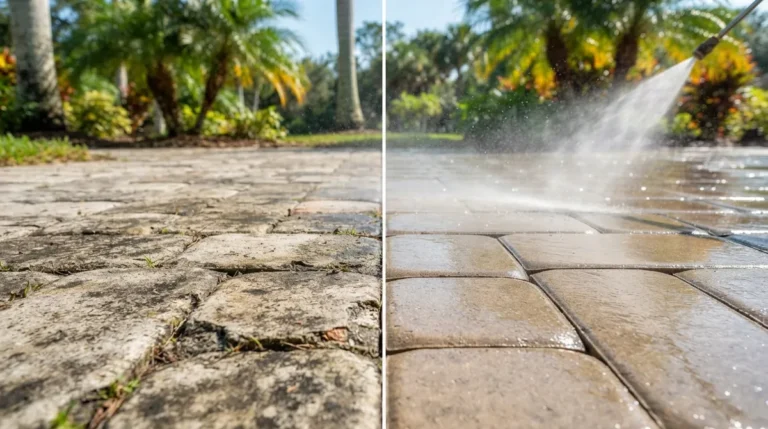
Power washing with heated water at 2,500+ PSI effectively removes tough oil stains, dirt, and grime from driveways, restoring their appearance and protecting your investment.
-
Proper preparation is crucial: sweep debris, cover nearby plants, pre-wet the surface, and apply cleaning solution to stained areas before power washing.
-
Always prioritize safety by wearing protective gear like safety goggles, closed-toe shoes, and work gloves, and maintain a safe 6-12 inch distance from the surface.
-
Use systematic overlapping strokes starting from the highest point of the driveway, and consider using a surface cleaner attachment for more even and efficient cleaning.
-
Regular maintenance, including annual power washing and immediate stain treatment, helps preserve your driveway’s appearance and prevents long-term damage.
-
Choose eco-friendly, pressure washer-specific cleaning products that break down stains effectively without harming your landscaping or local environment.
Your driveway takes a beating every single day. Cars drip oil, tires leave marks, and Mother Nature sends mold, algae, and grime your way. Over time, that once-bright concrete or asphalt starts looking tired and dingy. The good news? Power washing your driveway can bring it back to life, boosting your home’s curb appeal and protecting your investment. Whether you’re tackling this project yourself or considering professional help, this guide walks you through everything you need to know about power washing your driveway in 2026.
If you’re a busy homeowner in Hillsborough County, you know that keeping up with exterior cleaning can feel like a never-ending battle. Between work, family, and everything else on your plate, finding time to scrub your driveway probably isn’t high on your list. That’s exactly why understanding the power washing process—and when to call in the pros—matters so much.
What Makes Power Washing Different from Pressure Washing?
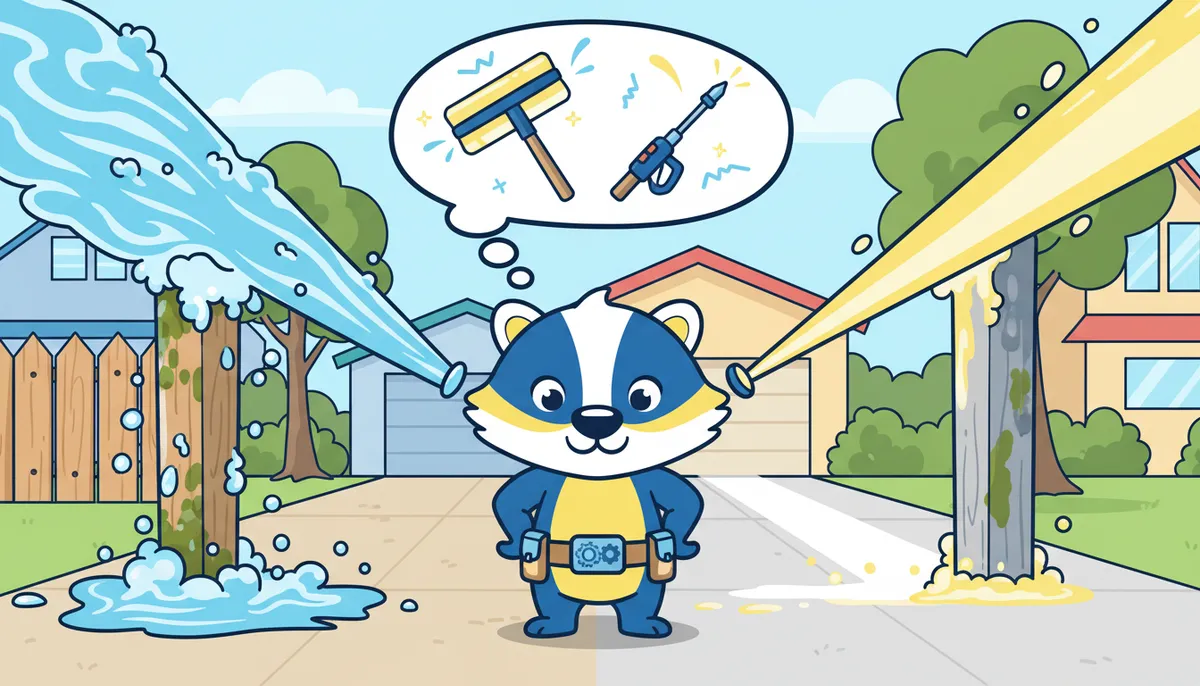
You’ve probably heard these terms used like they mean the same thing, but there’s actually a key difference. Power washing uses heated water to blast away dirt and grime, while pressure washing relies on cold water at high pressure. The hot water in power washing makes it especially good at cutting through tough oil stains and sticky residue on driveways.
That said, for most residential driveways, a quality pressure washer with at least 2,500 PSI and 2.5 GPM can handle the job beautifully. The pressure (PSI) determines how forceful the water spray is, while the flow rate (GPM) shows how much water moves through the system. Together, they determine how quickly and effectively you can clean your driveway.
Here’s what you need to know about choosing the right equipment:
- Gas-powered washers typically offer more PSI and GPM than electric models
- Electric washers work great for light cleaning and smaller driveways
- Commercial-grade equipment delivers faster results but costs more to rent or buy
- Surface cleaner attachments create even coverage and reduce cleaning time significantly

Gathering Your Power Washing Supplies
Before you fire up that pressure washer, you’ll want to gather everything you need. Being prepared saves time and frustration. Here’s your essential supply list:
| Item | Purpose | Why It Matters |
|---|---|---|
| Pressure Washer (2,500+ PSI) | Main cleaning tool | Provides the force needed to remove tough stains |
| Surface Cleaner Attachment | Even cleaning coverage | Prevents streaking and speeds up the process |
| Driveway Cleaner/Degreaser | Breaks down oil and stains | Makes stubborn spots easier to remove |
| Safety Goggles | Eye protection | Prevents debris and water from hitting your eyes |
| Closed-Toe Shoes | Foot protection | Shields feet from high-pressure water spray |
| Work Gloves | Hand protection | Protects hands from chemicals and debris |
One important note: skip the bleach. While it might seem like a good idea for killing mold and algae, bleach corrodes pressure washer equipment and can harm your plants and lawn. Stick with cleaners designed specifically for pressure washing instead.
Preparing Your Driveway for Power Washing
Preparation makes all the difference between okay results and amazing ones. Think of it like prepping a wall before painting—the better you prep, the better the outcome.
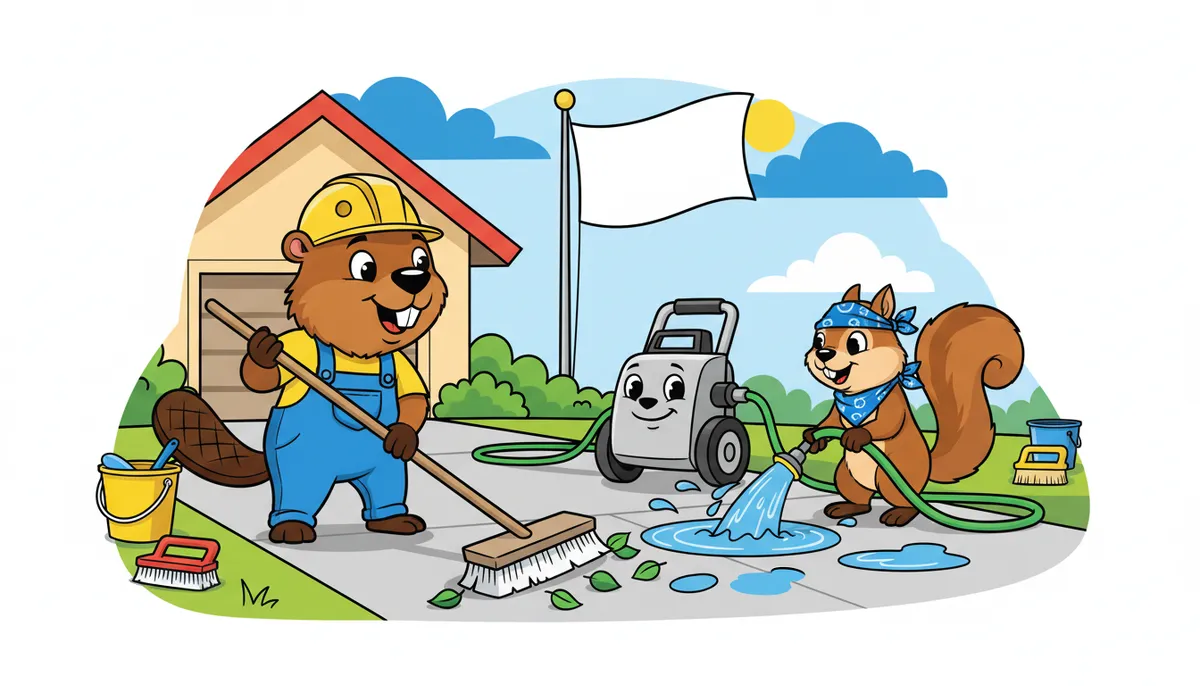
Start by moving your cars out of the driveway and into the street or garage. Next, grab a broom and sweep away loose debris like leaves, sticks, and dirt. This prevents clogs in your pressure washer and helps you spot problem areas that need extra attention.
If you have plants or grass bordering your driveway, cover them with plastic sheeting or tarps. The cleaning solution can be harsh on vegetation, even if it’s labeled as eco-friendly. Take a few minutes to protect your landscaping, and you’ll be glad you did.
Here’s your step-by-step prep checklist:
- Move all vehicles away from the driveway completely
- Sweep or blow away loose dirt, leaves, and debris
- Cover nearby plants, grass, and landscaping with tarps
- Close windows and doors near the work area
- Pre-wet the driveway surface with a garden hose
- Apply cleaning solution to oil stains and heavily soiled areas
- Let the cleaner sit for 5-10 minutes (follow product instructions)
That pre-wetting step might seem unnecessary, but it actually helps the cleaning solution spread evenly and prevents it from soaking too deep into porous concrete.
Safety First: Protecting Yourself During Power Washing
Power washers are incredibly useful tools, but they’re also powerful enough to cause serious injuries if you’re not careful. A 2,500 PSI stream of water can easily cut skin or cause bruising. That’s why safety gear isn’t optional—it’s essential.
Always wear safety goggles or protective glasses. Debris, dirt, and water will fly everywhere, and you don’t want any of it in your eyes. Closed-toe shoes with good traction protect your feet from the high-pressure spray and help you keep your footing on wet surfaces. Work gloves shield your hands from chemicals and give you better grip on the spray wand.
Never point the pressure washer spray at people, pets, or windows. The force can shatter glass and cause serious harm. Keep the nozzle pointed down toward the surface you’re cleaning, and maintain a safe distance of 6-12 inches from the driveway.
Here are the most important safety rules:
- Never spray your feet, hands, or any body part—the pressure can penetrate skin
- Keep children and pets at least 25 feet away from the work area
- Use both hands to control the spray wand for better stability
- Stand on stable, non-slip surfaces while operating the washer
- Turn off the machine before adjusting nozzles or attachments
- Test the spray on a small, hidden area first to check pressure settings
The Power Washing Process: Step-by-Step Guide
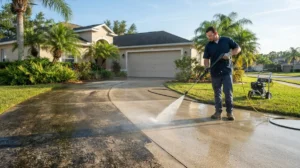
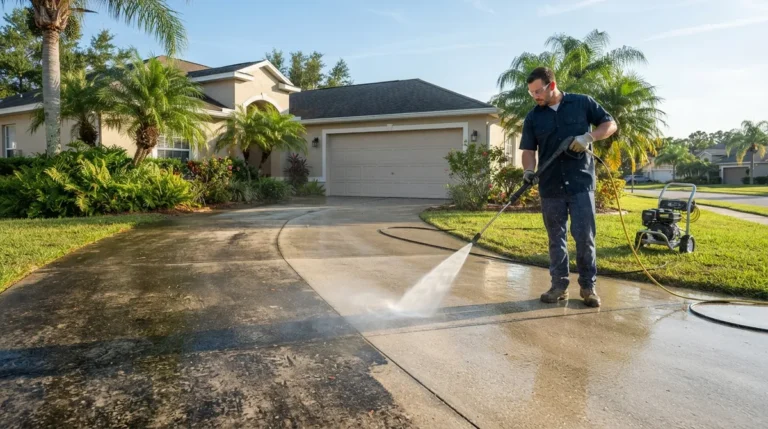
Now comes the satisfying part—actually cleaning your driveway. If you’ve done your prep work, this should go smoothly. Start at the highest point of your driveway (usually near the garage) and work your way down toward the street. This lets dirty water flow away from areas you’ve already cleaned.
Hold the spray wand at a 45-degree angle to the surface, about 6-12 inches away. This distance is the sweet spot—close enough to clean effectively but far enough to avoid damaging the concrete or asphalt. Use smooth, overlapping strokes, similar to mowing a lawn. This technique prevents striping and ensures even cleaning.
If you’re using a surface cleaner attachment (highly recommended), the process becomes even easier. These attachments have rotating nozzles enclosed in a housing that glides across the driveway. They clean faster and more evenly than a standard spray wand, and they contain the spray pattern so you get less splashing.
For stubborn oil stains, you might need to make multiple passes or apply additional degreaser. Don’t crank up the pressure too high, though. Going above 3,000 PSI on concrete can actually etch the surface, creating permanent damage. Patience works better than brute force.
Your power washing workflow should follow these steps:
- Start at the top of the driveway near your garage or house
- Hold the wand 6-12 inches from the surface at a 45-degree angle
- Use overlapping side-to-side strokes moving backward
- Work in sections about 4-6 feet wide for manageable progress
- Pay extra attention to stained areas with slower, deliberate passes
- Rinse thoroughly to remove all cleaner residue
- Inspect your work and re-clean any missed spots
Tackling Tough Stains and Problem Areas
Oil stains are the bane of every driveway owner’s existence. They don’t just look bad—they can also make surfaces slippery and dangerous. For these stubborn spots, apply a concentrated degreaser and let it sit for 10-15 minutes before power washing. The chemical needs time to break down the oil molecules.
Rust stains from lawn equipment or metal objects require a different approach. Look for rust removers specifically designed for concrete. Apply according to the product directions, usually letting it sit briefly before power washing.
Algae and mold love damp, shaded driveways. These green or black stains not only look terrible but can also make your driveway slippery when wet. A good cleaning solution designed to kill organic growth, combined with thorough power washing, should eliminate them. If you’re in a humid area like Hillsborough County, these issues pop up regularly, so staying on top of cleaning helps prevent buildup.
Professional vs. DIY: Making the Right Choice
So should you tackle this yourself or call in the professionals? It depends on several factors. DIY power washing can save money upfront, but it requires renting or buying equipment, spending your weekend on the project, and taking on the physical labor and risk.
Professional services like Driveway & Concrete Cleaning from Buckhorn Power Wash bring experience, commercial-grade equipment, and efficiency to the job. In 2026, the average cost to power wash a 600 square foot concrete driveway runs between $120 and $190, which many homeowners find reasonable considering the time and effort saved.
Here’s a comparison to help you decide:
| Factor | DIY Approach | Professional Service |
|---|---|---|
| Cost | Equipment rental $50-100/day | $120-$350 depending on size |
| Time Required | 4-8 hours for average driveway | 1-2 hours typically |
| Equipment Quality | Consumer-grade rentals | Commercial-grade (4+ GPM) |
| Risk of Damage | Higher without experience | Lower with trained technicians |
| Physical Effort | Significant labor required | None—you relax while they work |
| Results | Good with proper technique | Professional-quality finish |
For business owners starting a pressure washing company in 2026, investing in equipment with at least 4 GPM and quality surface cleaners makes sense. For homeowners who just want their driveway clean without the hassle, professional service often wins.
Common Power Washing Mistakes to Avoid
Even with the best intentions, it’s easy to make mistakes that can damage your driveway or lead to poor results. One of the biggest errors is using too much pressure. Yes, you want power, but 2,500 PSI is plenty for most residential driveways. Going higher risks etching concrete, which creates permanent scarring in the surface.
Another common mistake is holding the nozzle too close to the surface. Keeping it 6-12 inches away gives you cleaning power without the damage risk. Any closer and you might create visible grooves or blast away the top layer of concrete.
Don’t forget to rinse thoroughly after cleaning. Leaving soap or chemical residue on your driveway can attract more dirt and create slippery conditions. Plus, residual chemicals can harm your lawn and plants when it rains.
Watch out for these pitfalls:
- Skipping the test spray on a hidden area first
- Using the wrong nozzle tip for the job (0-degree tips are too concentrated for driveways)
- Working in random patterns instead of systematic overlapping strokes
- Power washing in direct sunlight, which causes cleaners to dry too quickly
- Neglecting to protect plants, windows, and outdoor furniture
- Forgetting to check for underground utilities before starting
Maintaining Your Driveway After Power Washing
You’ve just spent time and effort getting your driveway sparkling clean. Now how do you keep it that way? Regular maintenance extends the time between deep cleanings and protects your investment.
Sweep your driveway weekly to remove dirt, leaves, and debris before they have a chance to stain or encourage mold growth. Address oil spills immediately by covering them with cat litter or baking soda to absorb the oil, then sweeping it up and spot-cleaning the area.
Consider applying a concrete sealer after power washing. Sealers create a protective barrier that makes future cleaning easier and helps prevent stains from penetrating the surface. Most sealers need reapplication every 2-3 years.
In humid climates like Florida, algae and mold grow quickly. Plan to power wash your driveway at least once a year, or twice if you notice green or black staining between cleanings. Regular cleaning prevents buildup that becomes harder to remove over time.
How Often Should You Power Wash Your Driveway?
The frequency depends on your location, weather conditions, and how much your driveway gets used. Most experts recommend power washing your driveway once a year as a baseline. However, if you live in an area with high humidity, frequent rain, or lots of tree coverage, you might need to clean it twice a year.
Homeowners in HOA communities often need to maintain their driveways more frequently to meet community standards. If you notice your driveway starting to look dingy, develop stains, or show signs of mold and algae growth, don’t wait for your annual cleaning—tackle it sooner.
Here are signs it’s time for a power wash:
- Visible dirt, grime, or discoloration across the surface
- Green algae or black mold spots appearing in shaded areas
- Oil stains that have set into the concrete
- Tire marks that won’t come off with regular hosing
- Overall dull appearance that reduces curb appeal
- Slippery spots from organic growth buildup
Choosing the Right Cleaning Products
Not all cleaning solutions work the same way. For concrete driveways, look for alkaline-based degreasers that break down oil and grease without damaging the surface. These products are formulated to work with pressure washers and rinse away cleanly.
For eco-conscious homeowners, biodegradable cleaners offer effective cleaning without harsh environmental impact. These products use plant-based ingredients to cut through dirt and grime while being safer for your lawn, plants, and local waterways.
Avoid household cleaners not designed for pressure washers. These can create excessive foam, damage your equipment, or leave residue that’s hard to rinse. Stick with products specifically labeled for pressure washing use.
If you’re dealing with specific problems, choose targeted solutions:
- Oil and grease stains: Heavy-duty concrete degreasers
- Rust stains: Oxalic acid-based rust removers
- Mold and algae: Solutions with mildewcides or fungicides
- General cleaning: All-purpose pressure washer detergents
Environmental Considerations and Water Usage
Power washing uses a significant amount of water, but it’s actually more efficient than you might think. A garden hose running continuously uses about 10 gallons per minute, while a pressure washer with 2.5 GPM uses only one-quarter of that amount to clean more effectively.
Still, being mindful of water usage matters. Work efficiently to minimize waste, and consider collecting and filtering runoff if local regulations require it. Some areas have restrictions on when and how you can power wash due to water conservation efforts.
The cleaning chemicals you use matter too. Runoff containing harsh chemicals can harm grass, plants, and local waterways. Choose biodegradable, phosphate-free cleaners when possible, and avoid washing on windy days when overspray can drift onto plants and landscaping.
When to Call the Professionals
Sometimes DIY just doesn’t make sense. If your driveway has extensive oil staining, heavy mold growth, or years of built-up grime, professional equipment and expertise deliver better results. Professionals carry insurance to cover any accidental damage, giving you peace of mind that DIY can’t provide.
For busy professionals and families in Hillsborough County, outsourcing this task frees up your weekend for activities you actually enjoy. Instead of spending hours hunched over a pressure washer, you can relax while experts handle the hard work.
Professional services also have access to commercial-grade equipment with 4 GPM or higher flow rates, cleaning your driveway faster and more thoroughly than consumer-grade rentals. They know exactly what pressure settings and cleaning solutions work best for different surfaces and stains.
Companies like Buckhorn Power Wash serve all of Hillsborough County, from Tampa to Brandon, Valrico, Riverview, and Lithia, bringing professional results right to your door. You can check out their work and customer reviews on their Google Business Profile to see the quality they deliver.
Final Thoughts: A Clean Driveway Makes a Difference
Your driveway might seem like just a place to park your car, but it’s actually one of the first things people notice about your home. A clean, well-maintained driveway boosts curb appeal, protects your concrete investment, and creates a welcoming entrance to your property.
Whether you choose to tackle power washing yourself or hire professionals, the key is doing it regularly and correctly. Armed with the right knowledge, equipment, and techniques, you can keep your driveway looking fresh and clean year after year.
For homeowners who value their time and want guaranteed professional results, working with an experienced team makes perfect sense. The investment in professional pressure washing services pays off in saved time, better results, and the peace of mind that comes from knowing the job is done right.
Ready to transform your driveway from dingy to dazzling? Buckhorn Power Wash makes it easy with their instant online quoting tool. Just answer a few quick questions, and you’ll receive your personalized quote straight to your inbox—no home visit required. Get Your Free Quote Today and see how affordable professional driveway cleaning can be. You can also connect with them on Facebook or Yelp to learn more about their services and customer experiences.
FAQs
Q: How much does it cost to power wash a driveway in 2026?
A: For a standard 600 square foot concrete driveway, professional power washing typically costs between $120 and $190 in 2026. Larger driveways or those with heavy staining may cost up to $350. This price usually includes labor, equipment, and cleaning solutions, making it a worthwhile investment compared to renting equipment and doing it yourself.
Q: What PSI pressure washer do I need for my driveway?
A: You’ll want a pressure washer with at least 2,500 PSI and 2.5 GPM for effective driveway cleaning. This combination provides enough force to remove oil stains, dirt, and algae without damaging concrete or asphalt. Going above 3,000 PSI risks etching the surface, so stick within the recommended range for best results.
Q: Can I power wash my driveway myself or should I hire professionals?
A: You can definitely power wash your own driveway if you have the time, proper equipment, and follow safety guidelines. However, professionals bring commercial-grade equipment, experience, and insurance that protects against accidental damage. For busy homeowners or driveways with stubborn stains, professional service often delivers better results with less hassle.
Q: How often should I power wash my driveway?
A: Most driveways benefit from power washing once a year as a baseline. If you live in a humid climate like Florida with frequent rain and tree coverage, you might need to clean twice a year to prevent mold and algae buildup. Clean sooner if you notice visible staining, discoloration, or slippery spots from organic growth.
Q: What’s the difference between power washing and pressure washing?
A: Power washing uses heated water to blast away dirt and grime, making it especially effective for cutting through tough oil stains and sticky residue. Pressure washing uses cold water at high pressure. For most residential driveways, either method works well when you have equipment with at least 2,500 PSI and proper cleaning solutions.