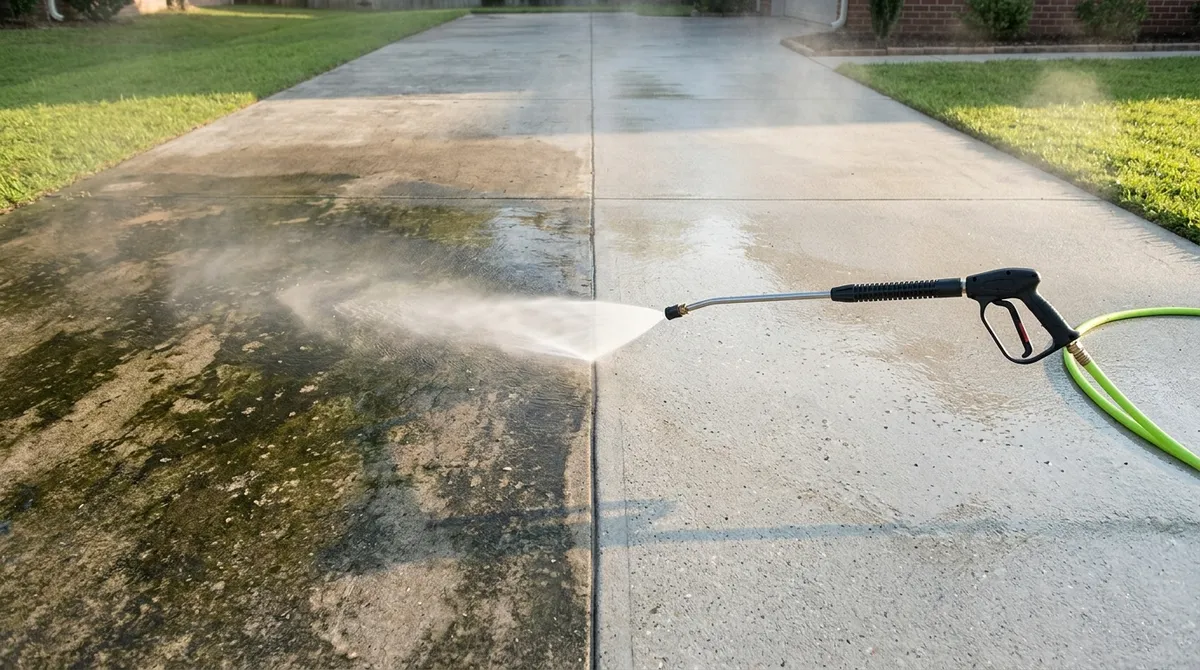
Key Takeaways
-
Use 1,500-2,500 PSI for general driveway cleaning; higher PSI risks surface etching and damage to standard concrete, which is a common DIY mistake.
-
Apply eco-friendly detergent pre-treatment and let it dwell for several minutes before pressure washing to break down oil, algae, and stubborn stains effectively.
-
In Florida's humid climate, pressure wash driveways once or twice yearly to prevent fast-growing algae, mildew, and organic buildup that creates slipping hazards.
-
Different stains require specific treatments: oil needs degreasing pre-treatment, black algae needs chemical treatment, and rust stains need specialized removers before pressure washing.
-
Professional pressure washing saves time (30 minutes to 1 hour vs. 2-4+ hours DIY), delivers consistent deep cleaning, and protects concrete from damage caused by improper technique.
-
A clean driveway improves curb appeal, boosts property value perception, enhances safety by removing slip hazards, and extends concrete longevity by preventing organic deterioration.
Your driveway takes a beating every single day. Cars roll over it, rain pounds it, and Florida’s humidity lets mold and algae move right in. After a while, that once-clean concrete starts looking like it belongs to an abandoned property. Sound familiar? You’re not alone — this is one of the most common complaints we hear from homeowners across Hillsborough County.
The good news? Driveway & Concrete Cleaning with a pressure washer is one of the fastest ways to restore your home’s curb appeal. But how does the process actually work, and is it something you should tackle yourself or leave to the pros? Let’s walk through everything you need to know — in plain, simple language.
Why Driveways Get So Dirty So Fast
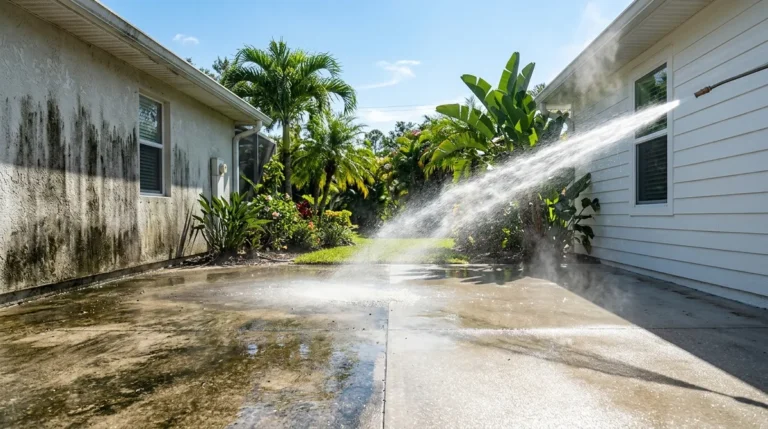
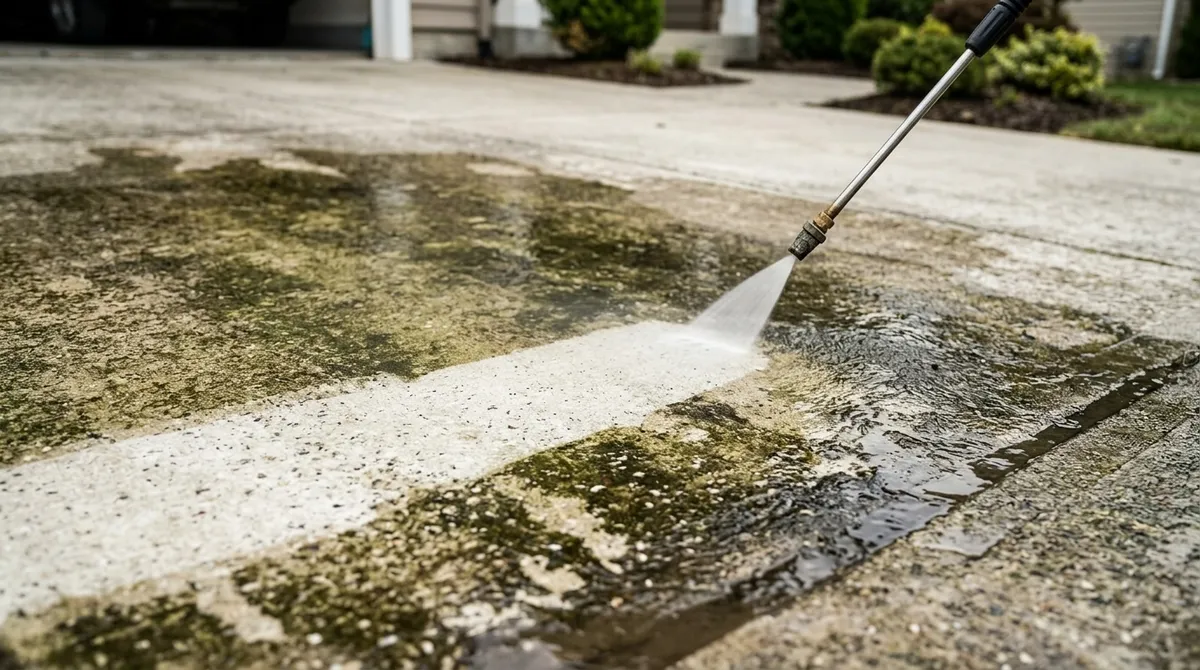
Concrete is porous. That means it soaks up everything — oil drips, rainwater, dirt, pollen, and organic material. In Florida’s warm, wet climate, that moisture becomes a breeding ground for mold, mildew, and algae. These organisms spread fast and grip the surface tightly. A garden hose simply won’t cut it.
Here are the most common culprits that leave driveways looking grimy:
- Motor oil and fluid leaks from vehicles
- Black algae and green mildew growth
- Tire marks and rubber scuffs
- Leaf and organic stain buildup
- Rust and mineral deposits from irrigation systems
- Dirt and mud tracked in from the yard
When left untreated, these stains don’t just look bad — they can make your driveway slippery and even speed up surface deterioration. If you’ve noticed your driveway getting worse each season, it’s time to take action. You might also want to check out why driveway cleaning matters more than you think to understand the full impact.
What Happens During Pressure Washer Driveway Cleaning
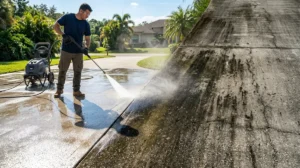
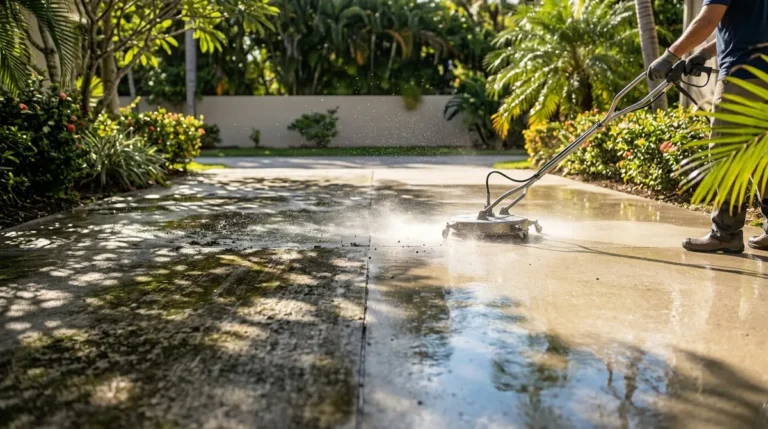
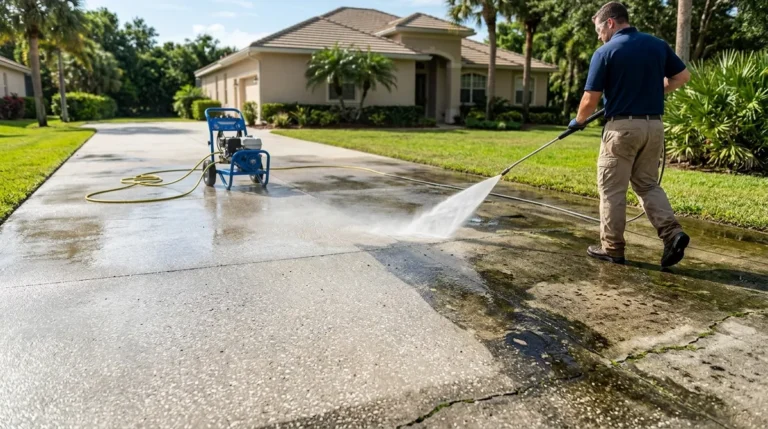
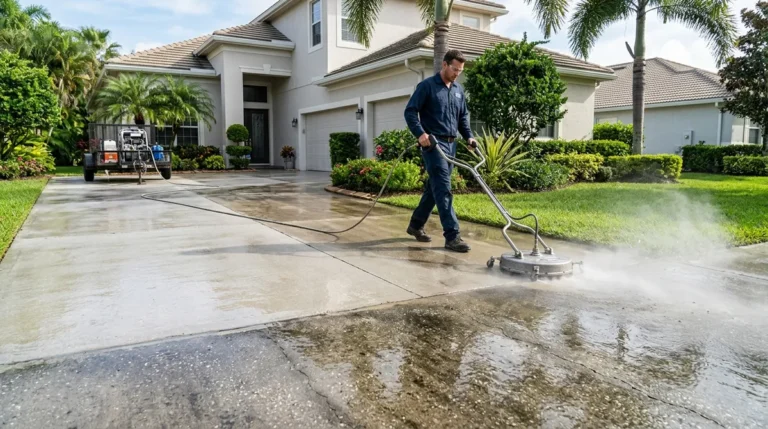
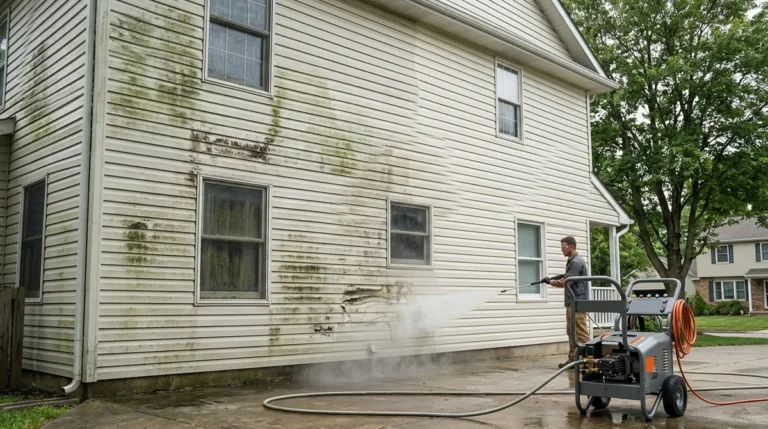
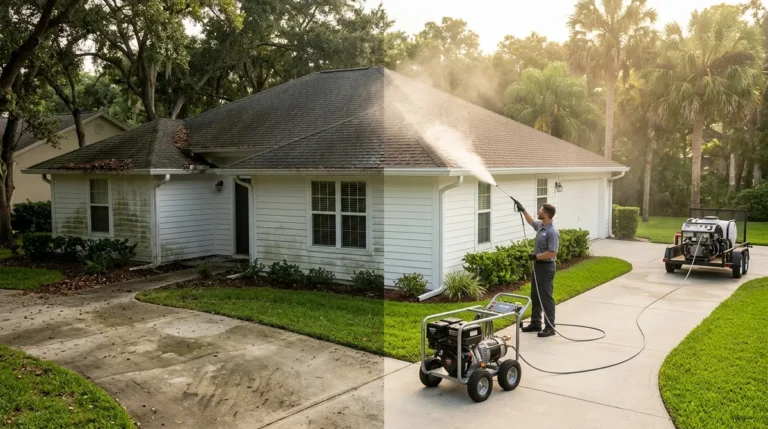
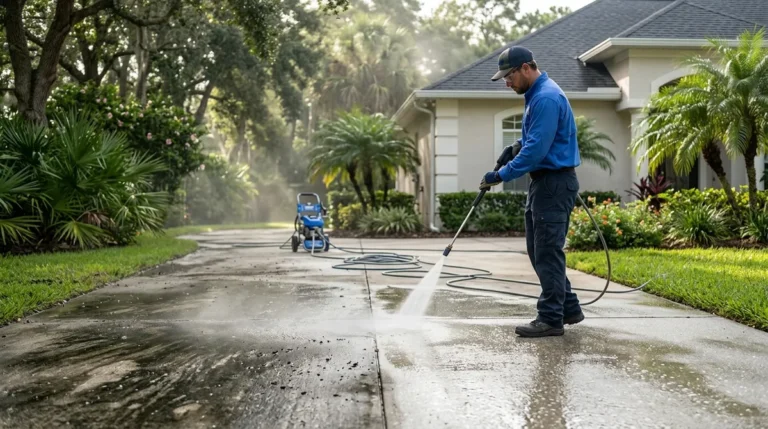
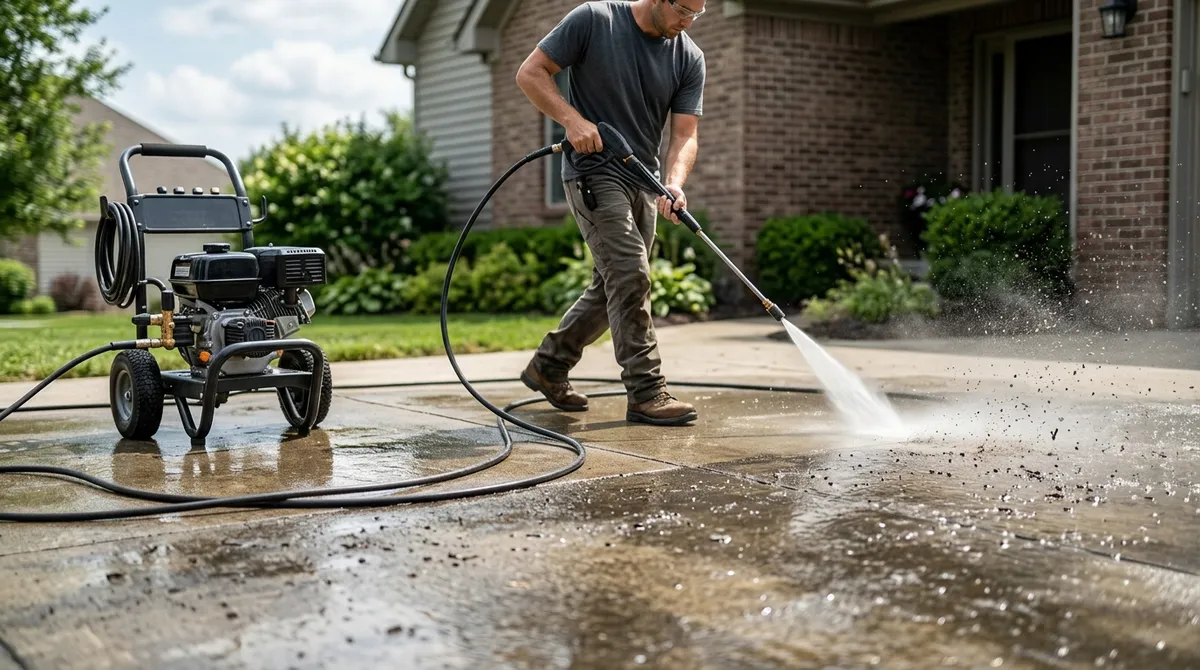
Cleaning a driveway with a pressure washer isn’t just pointing a hose and pulling a trigger. There’s a real process involved, especially when done professionally. Here’s a step-by-step look at how it works:
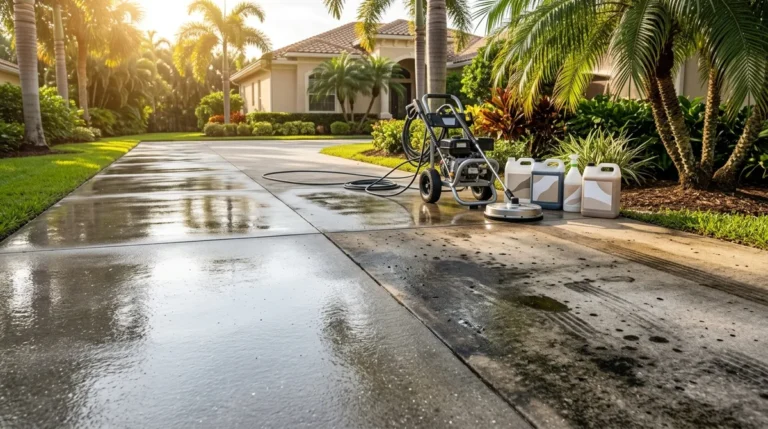
- Pre-treatment with detergent: A cleaning solution is applied to the driveway surface. This breaks down oil, algae, and grime before any water is used. Eco-friendly detergents work deep into the concrete pores.
- Dwell time: The detergent sits on the surface for several minutes. This loosens stubborn stains and makes them easier to blast away.
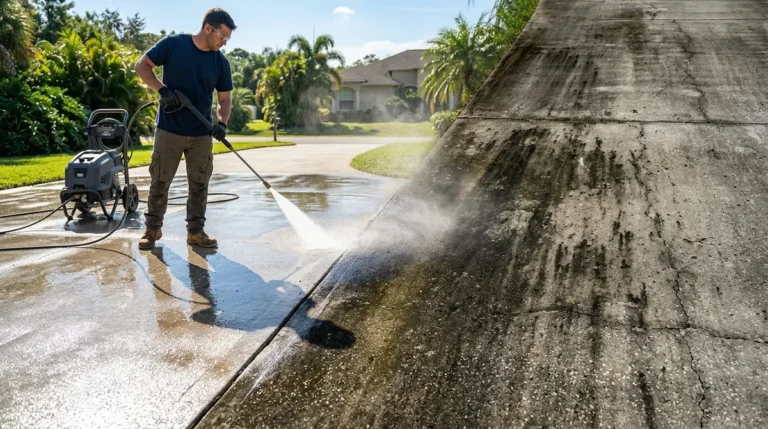
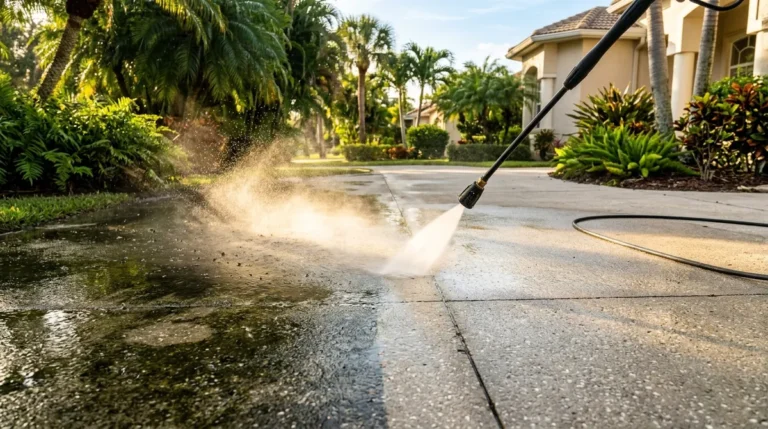
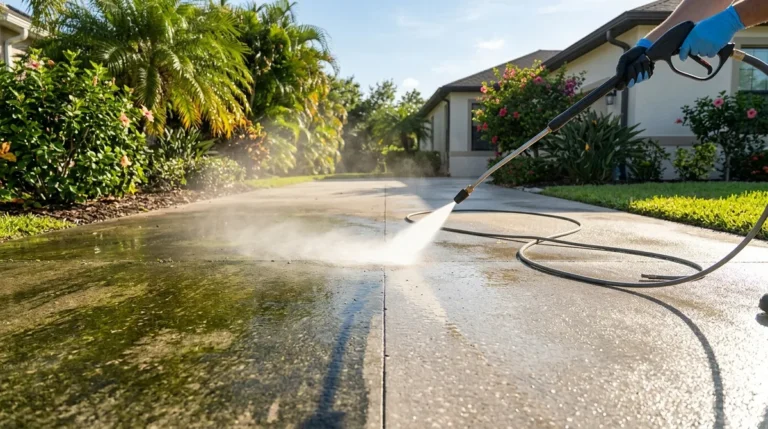
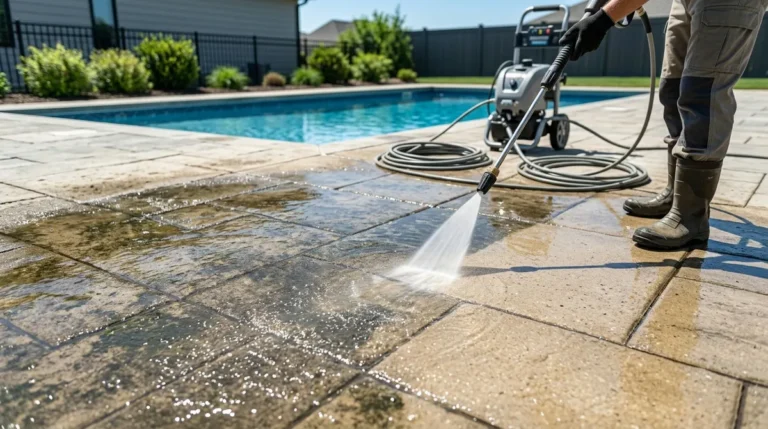
- High-pressure rinse: A pressure washer delivers a concentrated stream of water at high PSI (pounds per square inch). This physically removes all the loosened dirt and debris from the surface.
- Surface scrubbing (if needed): For heavy oil stains or deep discoloration, targeted scrubbing may be applied before the final rinse.
- Post-rinse inspection: A final pass ensures no streaks, missed spots, or residue are left behind.
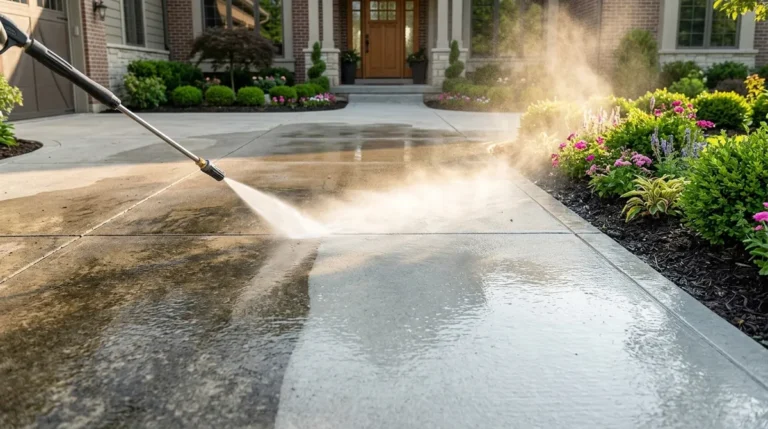
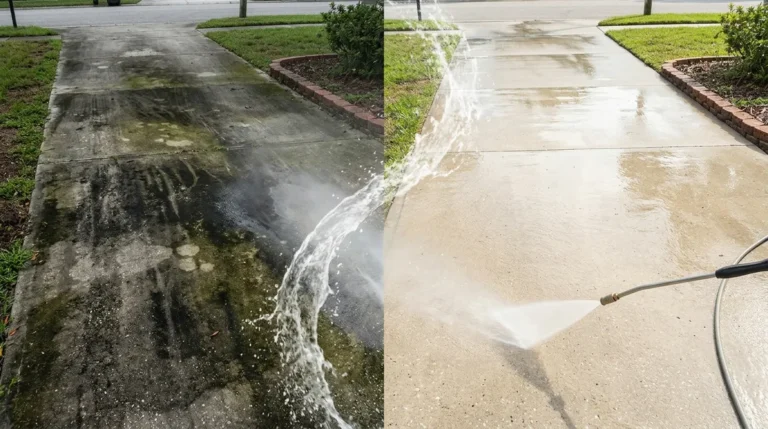
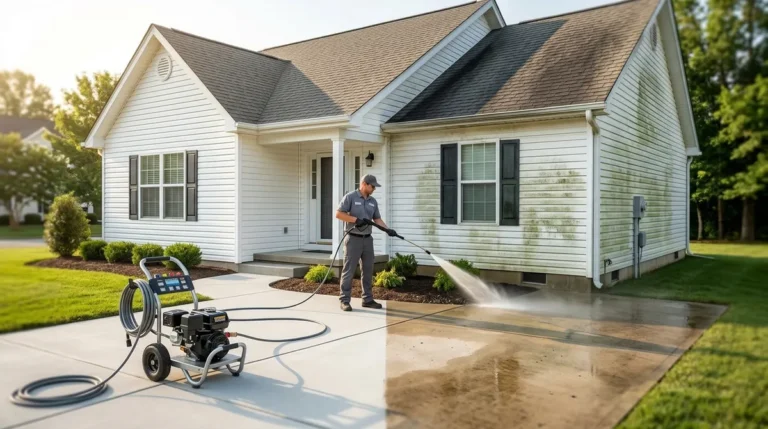
When done correctly, cleaning concrete with a pressure washer the right way can make a driveway look almost brand new. The difference is dramatic — and fast.
Pressure Washer Settings: What Matters for Driveways
Not all pressure washers are created equal. Using the wrong settings on concrete can cause surface etching or uneven cleaning patterns. Here’s a quick comparison of key settings and their effects:
| PSI Level | Best For | Risk Level |
|---|---|---|
| 1,000–1,500 PSI | Light rinsing, painted surfaces | Low |
| 1,500–2,500 PSI | General driveway cleaning | Low to Medium |
| 2,500–3,500 PSI | Heavy stains, aged concrete | Medium |
| 3,500+ PSI | Industrial surfaces only | High — can damage standard concrete |
Getting the PSI wrong is one of the most common DIY mistakes homeowners make. If you want to avoid costly damage, learn the 7 mistakes to avoid when using a power washer to clean concrete before you start.
DIY vs. Professional Driveway Pressure Washing
A lot of homeowners wonder whether they should rent a pressure washer and do it themselves or hire a professional. Both options have their place, but they’re not equal. Here’s an honest breakdown:
| Factor | DIY | Professional Service |
|---|---|---|
| Equipment quality | Rental or consumer-grade | Commercial-grade, high-performance |
| Results | Moderate — may miss deep stains | Deep clean with consistent results |
| Time required | 2–4+ hours including setup | Fast, efficient turnaround |
| Risk of damage | Higher without training | Low — trained technicians |
| Detergent knowledge | Limited | Right chemicals for each surface |
For busy homeowners and working professionals in Hillsborough County, spending a Saturday wrestling with a rented pressure washer just isn’t worth it. DIY driveway pressure washing vs. pro service is a comparison that almost always tips in favor of hiring experts — especially when results and surface safety matter.
Common Driveway Cleaning Problems and How Pros Solve Them
Not every driveway stain responds the same way to pressure washing. Here are some of the trickiest problems and how professional cleaners handle them:
- Oil stains: Require a degreasing pre-treatment before pressure washing. Hot water pressure washers work best here.
- Black algae: This stubborn growth needs the right chemical treatment plus high-pressure rinsing to fully remove.
- Rust stains: Specialized rust removers are applied first. Pressure washing alone won’t remove rust discoloration.
- Tire marks: Often need targeted scrubbing with a strong detergent before the final wash.
- Uneven discoloration: Multiple passes at the right angle and distance ensure an even, streak-free finish.
Professionals also know when high-pressure cleaning isn’t the right tool. Some surfaces near the driveway — like landscaping beds or painted curbs — need to be protected during the wash. That’s experience you simply can’t rent. You can also read more about what a professional driveway cleaner actually does to get a better picture of the full service.
How Often Should You Pressure Wash Your Driveway
This is one of the most common questions homeowners ask. The answer depends on a few factors:
- Climate: In Florida’s humid environment, driveways tend to grow algae and mildew faster — often requiring cleaning once or twice a year.
- Tree coverage: Homes surrounded by trees will see more organic staining from leaves, sap, and debris.
- Vehicle use: If multiple cars park on the driveway daily, oil and fluid buildup accelerates.
- HOA requirements: Some Hillsborough County communities have specific appearance standards that require regular exterior cleaning — including driveways.
A good rule of thumb? If you notice discoloration, dark patches, or slippery spots forming on your driveway, it’s time to schedule a cleaning. Waiting too long allows stains to set deeper and makes the job harder. If you’re in an HOA community, staying ahead of cleaning keeps you compliant and fine-free.
The Benefits of Keeping Your Driveway Clean
Beyond just looking good, a clean driveway offers real, tangible benefits for homeowners. Here’s why regular pressure washing is a smart investment:
- Curb appeal: A clean driveway instantly makes your home look more welcoming and well-maintained.
- Property value: Clean exteriors signal a cared-for home and can boost perceived value when selling.
- Safety: Algae and mildew on concrete create slipping hazards, especially when wet. Cleaning removes these risks.
- Surface longevity: Regular cleaning prevents organic growth from breaking down the concrete over time.
- Pest deterrent: Organic buildup attracts insects. A clean surface is less inviting to unwanted guests.
Thinking about the bigger picture? Curb appeal mistakes that make your home look neglected is a helpful read if you want to protect your property’s image and value from the outside in.
Why Choose a Local Professional in Hillsborough County
When it comes to cleaning a driveway with a pressure washer, working with a local expert makes a real difference. A local pro knows the specific challenges of Florida’s climate — the humidity levels, the types of algae that thrive here, and the best approach for your specific driveway surface.
Buckhorn Power Wash serves homeowners throughout Hillsborough County, including Tampa, Brandon, Valrico, Riverview, and Lithia. Their team uses professional-grade equipment and eco-friendly detergents to deliver a deep, thorough clean safely and efficiently. You can visit Buckhorn Power Wash on Google to read real customer reviews and see what your neighbors are saying about their results.
For more inspiration, check out the before-and-after gallery to see what professional driveway cleaning actually looks like. The transformations are pretty incredible. You can also see what current and past clients are saying on the Buckhorn Power Wash Yelp page and follow along with their latest work on the Buckhorn Power Wash Facebook page.
Speaking of local services — if you take care of your smile as carefully as you take care of your home, you’ll love knowing that Smile District is a great local option for dental care right here in the area. And if you’re curious about how this article found you online, that’s the work of SEO Rocket, a smart digital marketing platform helping local businesses grow their visibility.
Ready to Give Your Driveway a Fresh Start?
Cleaning a driveway with a pressure washer is one of the best things you can do for your home’s appearance and longevity. Whether you’re preparing for guests, trying to stay HOA-compliant, or simply want to feel proud pulling into your own driveway — professional pressure washing delivers fast, stunning results with zero hassle on your end.
Don’t spend your weekend fighting stubborn stains with a rented machine. Instead, let the experts handle it safely and efficiently. You can also explore why hiring a professional driveway cleaner is worth it to feel fully confident in your decision. And if you want to see your complete service options all in one place, visit the full Buckhorn Power Wash services page.
Your driveway deserves better than a quick rinse. Request your free quote today and see how easy it is to get a spotless driveway without lifting a finger. It only takes a few minutes — and the results last for months.
FAQs
Q: How long does it take to clean a driveway with a pressure washer?
A: For a standard two-car driveway, professional cleaning usually takes between 30 minutes to an hour. That includes pre-treatment, washing, and a final rinse — way faster than a DIY afternoon project! The exact time depends on the size of the driveway and how stubborn the stains are.
Q: Will pressure washing damage my concrete driveway?
A: When done correctly, pressure washing is very safe for concrete driveways. The key is using the right PSI level and the correct nozzle — which is exactly what trained professionals know how to do. DIY mishaps like holding the wand too close or using too much pressure can cause surface etching, so it’s always best to trust an expert.
Q: Can pressure washing remove oil stains from a driveway?
A: Yes! Oil stains can be tackled effectively with a combination of degreasing detergent and high-pressure washing. The pre-treatment step is the real secret — it breaks down the oil so the pressure washer can lift it cleanly. Older, deeply set stains may need more than one treatment.
Q: How often should I have my driveway pressure washed in Florida?
A: In Florida’s warm, humid climate, most homeowners benefit from cleaning their driveways once or twice a year. The heat and moisture create the perfect conditions for algae and mildew to grow quickly, so staying on a regular schedule keeps your driveway looking great and safe year-round.
Q: Is professional driveway pressure washing worth the cost?
A: Absolutely — especially when you factor in your time, the cost of equipment rental, and the risk of accidentally damaging your surface. Professional pressure washing delivers a deeper, more consistent clean and protects your driveway’s long-term condition. It’s one of the smartest, most affordable ways to boost your home’s curb appeal.