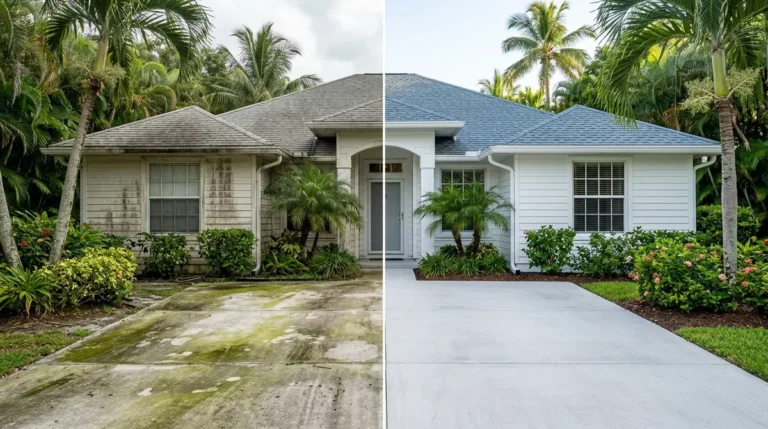
Key Takeaways
-
Wrong pressure settings, nozzles, and techniques can permanently etch concrete, erode paver joints, and destroy specialty coatings—causing repairs that cost far more than professional cleaning.
-
Pool decks require surface-specific approaches: cool deck coatings need 500-800 PSI soft wash, travertine needs pH-neutral cleaners at 500-1,000 PSI, and stamped concrete needs 1,000-1,500 PSI with surface cleaner attachments.
-
Washing toward the pool instead of away pushes dirty water, algae, and chemicals directly into pool water, disrupting chemistry and potentially staining the pool interior permanently.
-
Algae and mold won't die from pressure alone—they require chemical pre-treatment that dwell for 5-10 minutes before washing, or they'll regrow within weeks despite your effort.
-
Florida's chlorine exposure breaks down surface sealers and leaves mineral deposits that trap dirt, while slip resistance must be maintained for safety—making DIY mistakes both expensive and dangerous.
-
Professional equipment like surface cleaner attachments with rotating nozzles and variable-pressure washers deliver consistent, even results without the streaking and damage that single-nozzle DIY approaches cause.
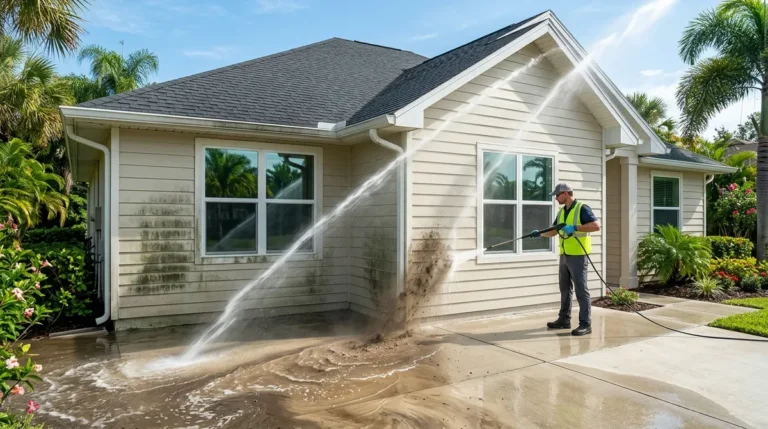
That green film creeping across your pool deck isn’t just unsightly—it’s turning your backyard oasis into a slip hazard that could send someone to the emergency room. Algae, mold, and mildew thrive in Florida’s humid climate, especially around pool areas where moisture never fully dries. And here’s the thing: most homeowners unknowingly make the problem worse when they try to clean it themselves.
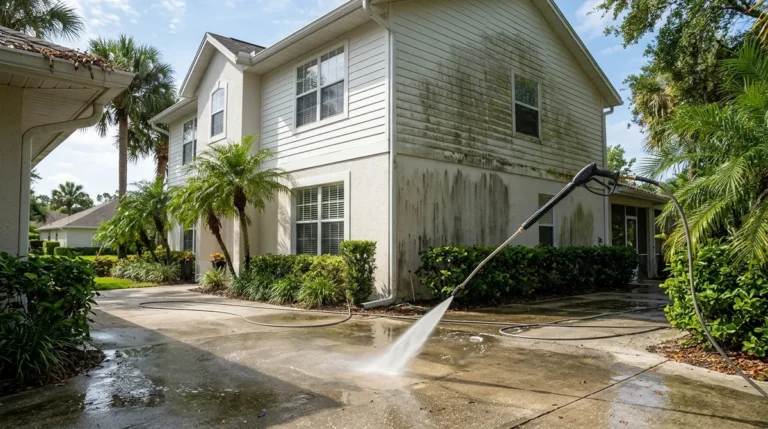
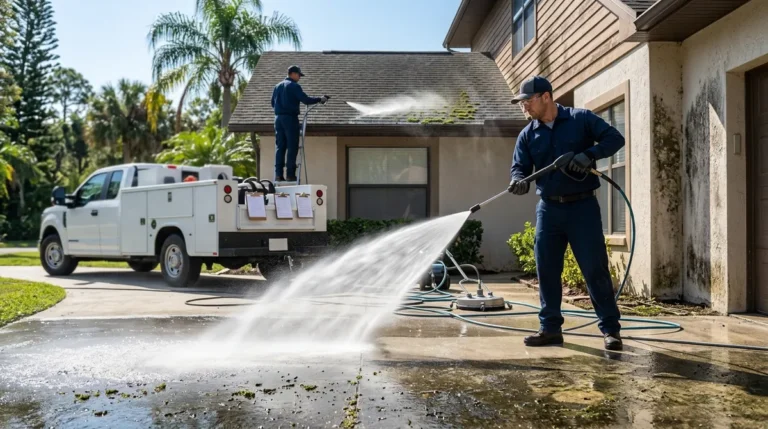
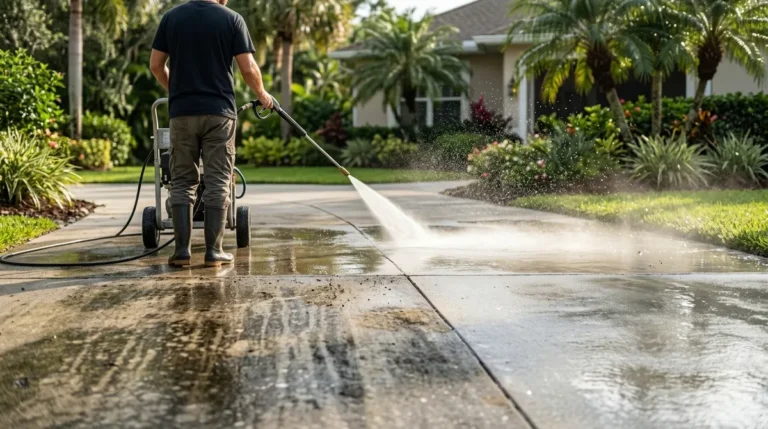
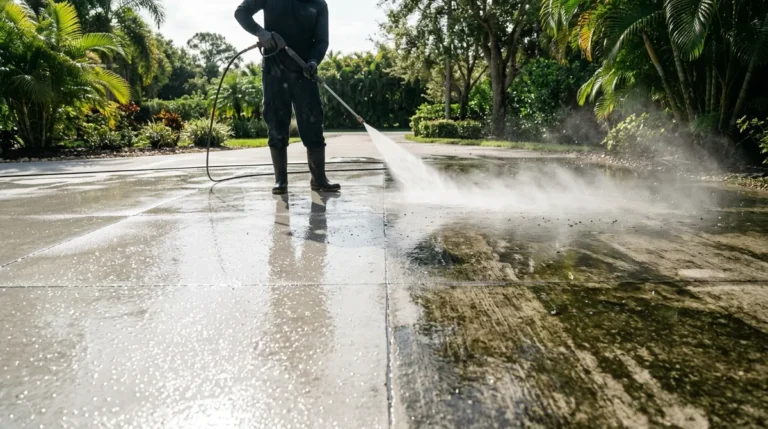
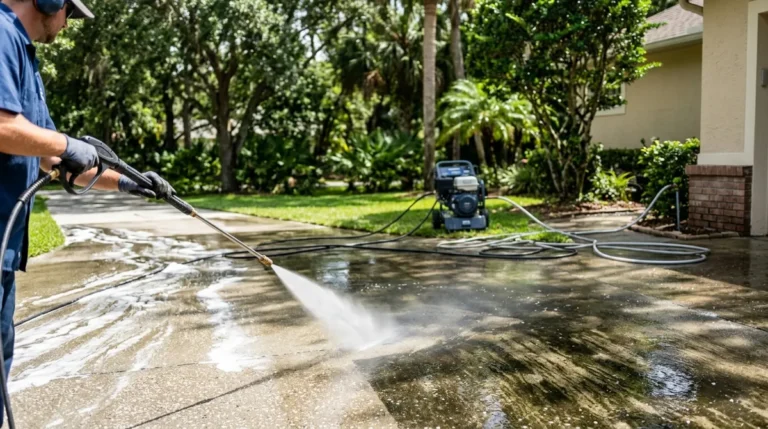
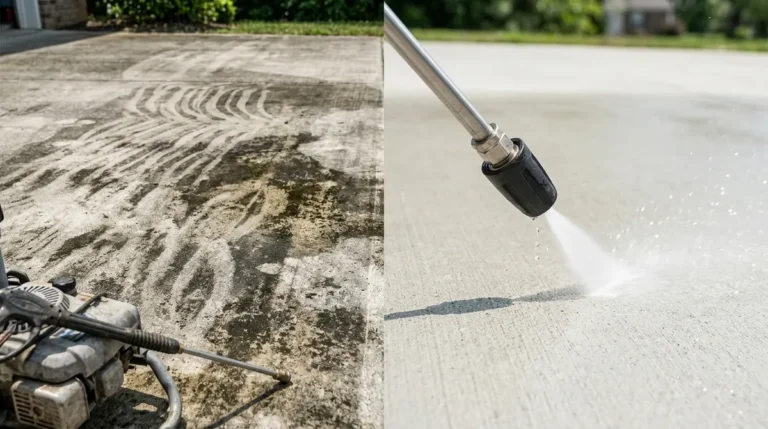
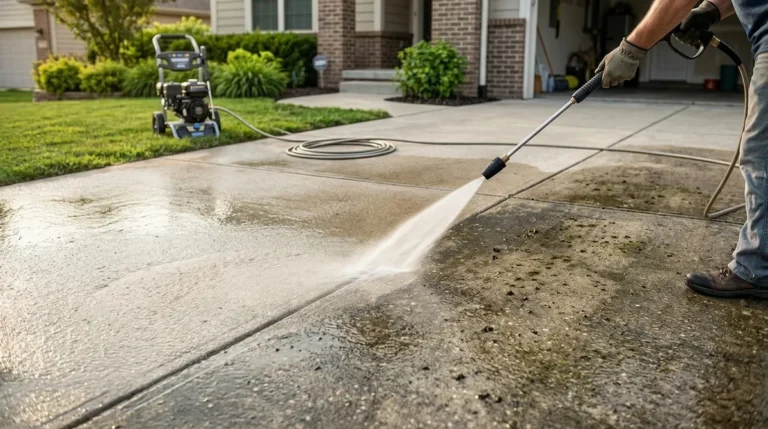
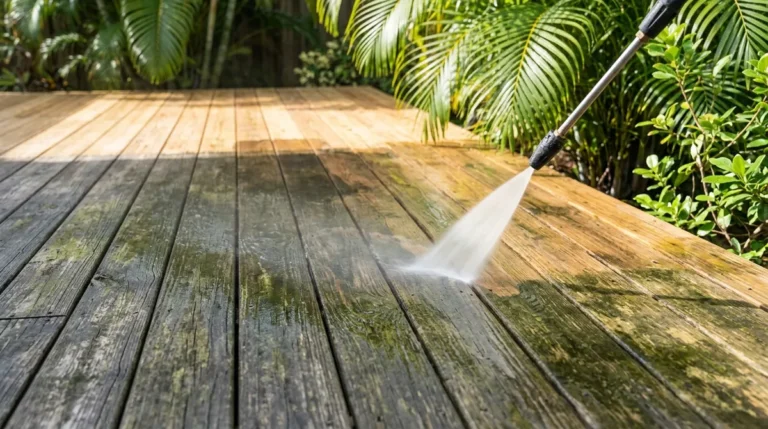
Pool deck pressure washing sounds simple enough. Grab a machine, point, and spray, right? Not quite. The truth is that using the wrong technique, pressure setting, or cleaning solution can etch your concrete, erode paver joint sand, or destroy specialty coatings—causing damage that costs far more to repair than a professional cleaning ever would.
This guide walks you through the 14 most common pool deck pressure washing mistakes, how to avoid them, and what a proper cleaning process actually looks like. Whether you’re considering DIY or thinking about hiring a pro, this information will help you make the smartest choice for your pool deck and your wallet.
Why Pool Decks Need Different Pressure Washing Techniques
Pool decks aren’t like driveways or sidewalks. They face a unique set of challenges that require a more thoughtful approach to cleaning. Understanding these differences is the first step toward protecting your investment.
Unique challenges of chlorinated water exposure mean your deck absorbs chemicals daily. Chlorine and other pool treatments break down surface sealers over time and leave behind mineral deposits. These deposits create a rough, discolored surface that traps dirt and makes future cleaning harder.
Pool chemicals affect deck materials differently. Concrete may develop white efflorescence. Natural stone can become pitted. Pavers may lose their color. Each material reacts uniquely to chemical exposure, which is why a one-size-fits-all pressure washing approach simply doesn’t work here.
Slip resistance is a safety requirement, not just a preference. Pool decks must maintain texture so wet feet don’t slide. High-pressure washing or harsh chemicals can strip away the texture that keeps your family safe. A proper cleaning actually restores slip resistance rather than eliminating it.
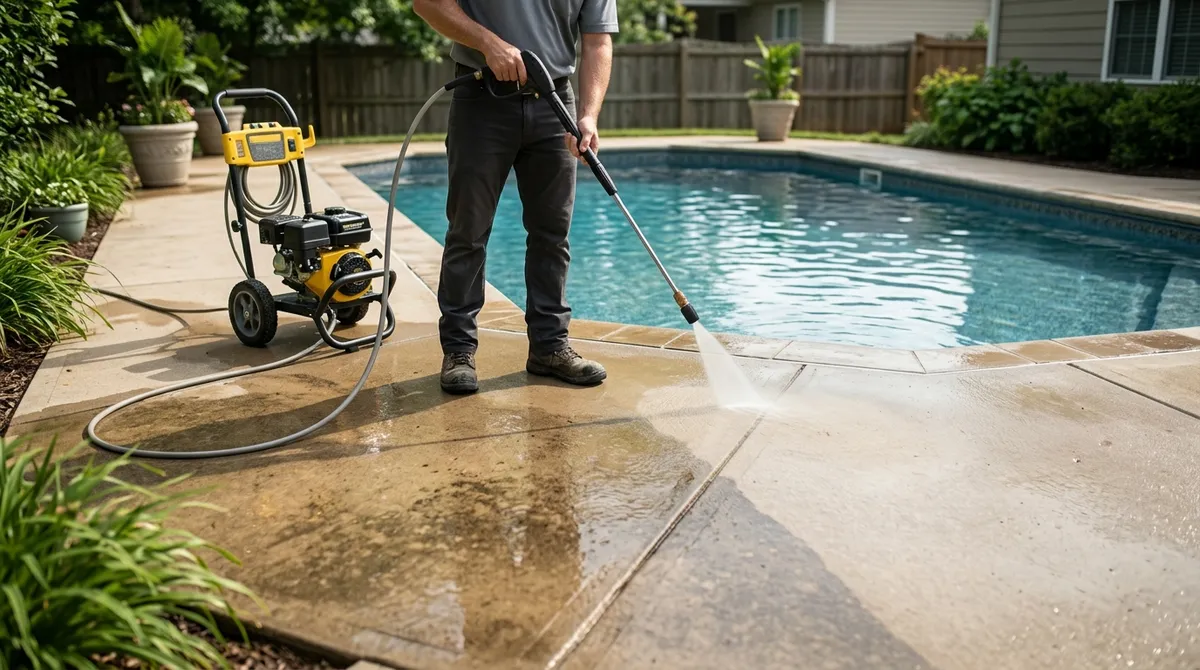
Drainage patterns around pool perimeters also matter. Water—and anything mixed into it—flows toward or away from the pool. If you’re using cleaning chemicals, improper rinsing direction can push contaminants directly into your pool water, throwing off the chemical balance and potentially damaging your pool’s finish. Understanding when to use soft washing versus pressure washing is essential for pool deck care.
The 14 Most Damaging Pool Deck Cleaning Mistakes
Here are the mistakes homeowners make most often—and why each one can cause serious, lasting damage to your pool deck.
- Using maximum pressure on textured surfaces. High PSI blasts away the texture that makes your deck safe and beautiful. Textured finishes require lower, controlled pressure to clean without stripping.
- Ignoring proper nozzle distance guidelines. Holding the nozzle too close concentrates pressure into a damaging beam. Most surfaces need the nozzle at least 12 inches away.
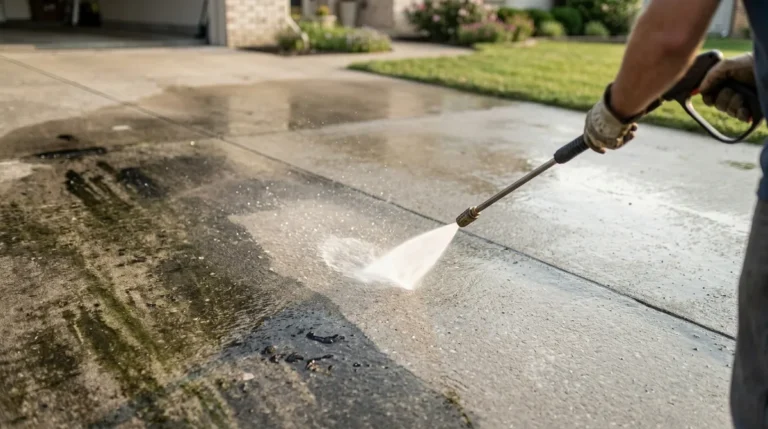
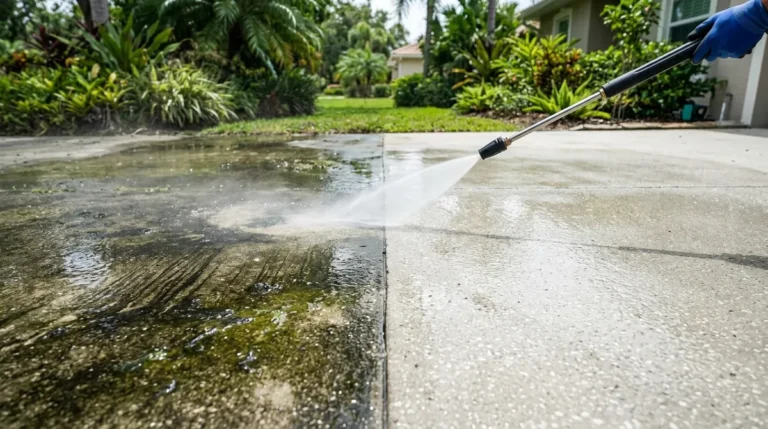
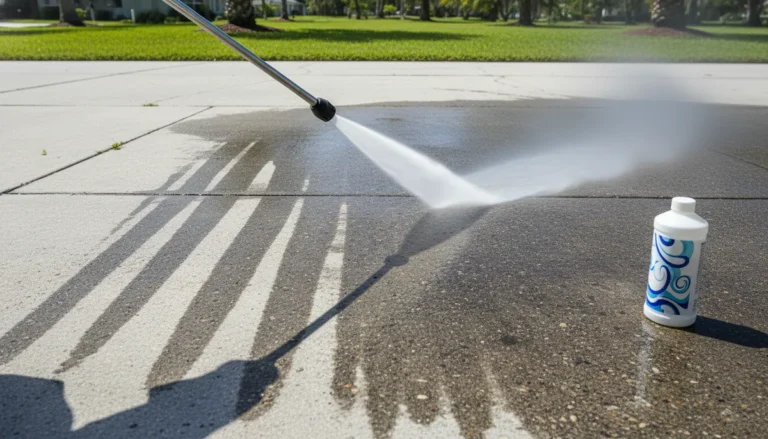
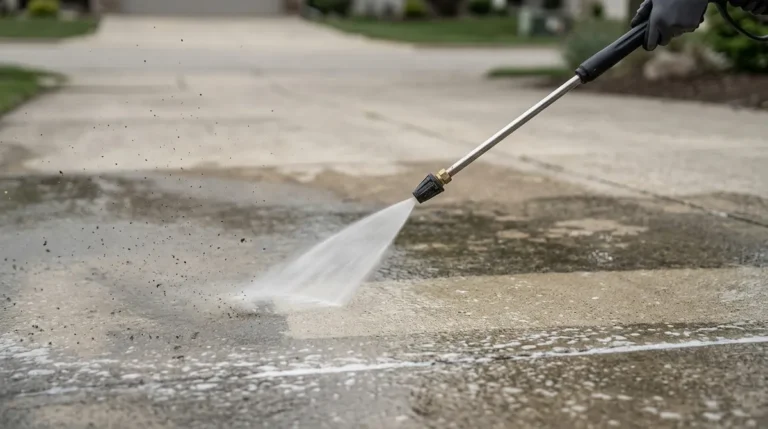
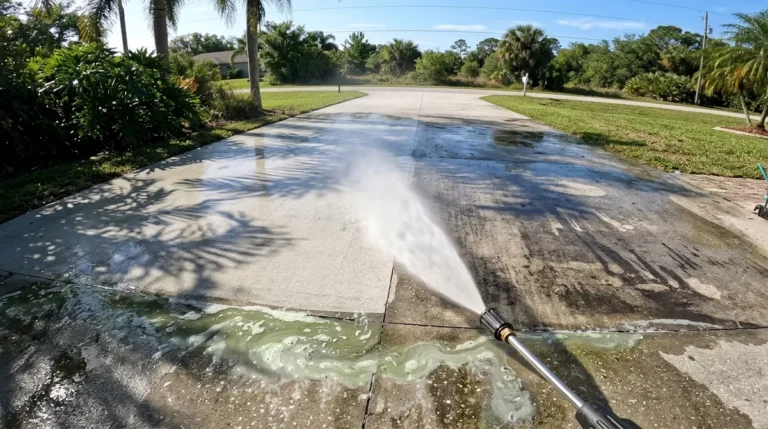
- Skipping pre-treatment for algae buildup. Pressure alone won’t kill algae spores. Without a chemical pre-treatment, you’re just spreading them around. They’ll regrow within weeks.
- Washing toward the pool instead of away. This pushes dirty water, algae, and cleaning chemicals directly into your pool, disrupting water chemistry and potentially staining the pool interior.
- Neglecting expansion joint protection. Expansion joints absorb movement in your deck. High-pressure water can erode the filler material, leaving gaps that allow water intrusion and cracking.
- Using a zero-degree nozzle. The red tip focuses pressure into a single, damaging point. It’s almost never appropriate for pool deck surfaces.
- Skipping a test patch. Every deck is different. Testing a hidden corner first helps you avoid discovering the hard way that your surface can’t handle your chosen settings.
- Not removing furniture and debris first. Cleaning around chairs and pots leaves dirty outlines and misses critical areas where mold hides.
- Applying sealer to a wet surface. Rushing to seal before the deck is fully dry traps moisture underneath, causing bubbling and peeling within months.
- Using the wrong detergent. Harsh chemicals can bleach colored concrete, damage stone, or react poorly with pool water. Always use pool-area-safe cleaning solutions.
- Cleaning in direct sunlight. Hot surfaces cause cleaning solutions to dry too fast, leaving streaks and residue that are difficult to remove.
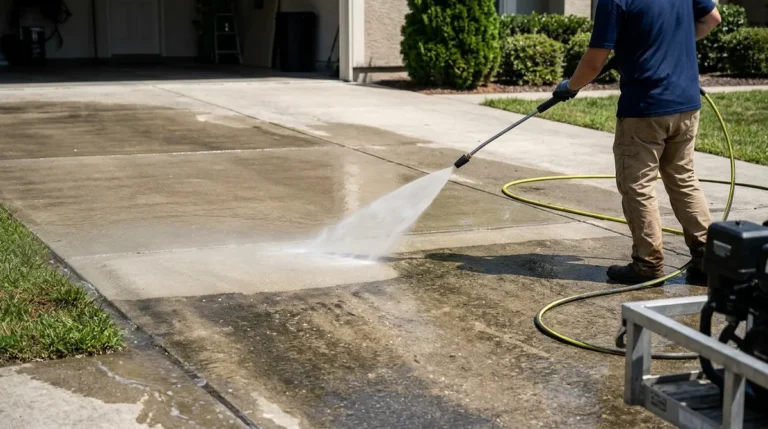
- Overlapping spray patterns inconsistently. Uneven cleaning leaves visible lines and patches. A consistent, overlapping pattern is essential for uniform results.
- Forgetting to rinse thoroughly. Leftover detergent residue attracts dirt faster and can irritate skin if people walk barefoot across the deck.
- Skipping regular maintenance between deep cleans. Letting algae and grime build up makes each cleaning more damaging and more expensive. Regular light maintenance extends the time between aggressive cleanings.
Avoiding these mistakes is exactly why professional pressure washing services deliver results that DIY efforts rarely match.
Identifying Your Pool Deck Material Before Cleaning
Before any water touches your deck, you need to know exactly what it’s made of. The material determines every decision—from pressure settings to cleaning solutions.
Stamped concrete vs regular concrete is a critical distinction. Stamped concrete has a decorative pattern pressed into it during installation. That texture and any color treatments are vulnerable to high pressure. Regular concrete is more forgiving, but it still has limits. Both benefit from a surface cleaner attachment rather than a direct nozzle spray.
Natural stone pressure tolerance levels vary widely. Travertine is soft and porous, requiring very low pressure (500–800 PSI) and pH-neutral cleaners. Slate and granite are harder and more durable. Using pressure that’s appropriate for concrete on travertine will cause pitting and etching that cannot be reversed.
Paver joint sand preservation is often overlooked. Polymeric sand between pavers holds them in place and prevents weeds. High-pressure washing blows this sand out of the joints, creating an unstable surface that shifts and wobbles. Pros use lower pressure and carefully directed spray angles to preserve this material.
Cool deck coatings are a special case common in Florida. This textured, spray-applied coating keeps bare feet comfortable on hot days. It’s also fragile. High-pressure washing strips it completely. Cool deck surfaces need very gentle, low-pressure cleaning—closer to soft washing than traditional pressure washing. Learn more about driveway and concrete cleaning techniques that apply to pool deck surfaces as well.
Professional Equipment That Makes the Difference
The equipment used for pool deck cleaning matters just as much as the technique. Here’s what separates professional results from DIY attempts.
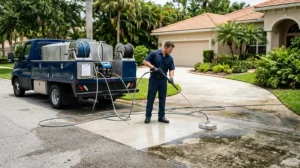
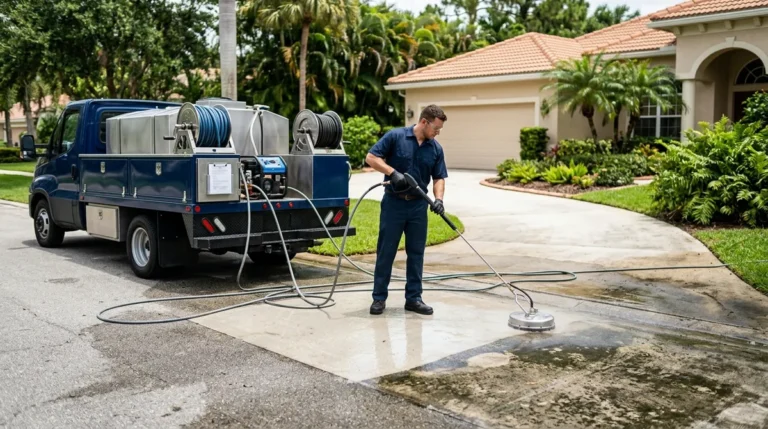
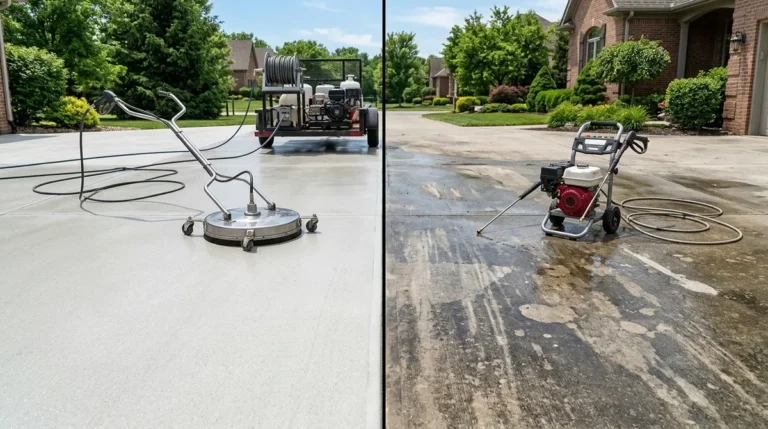
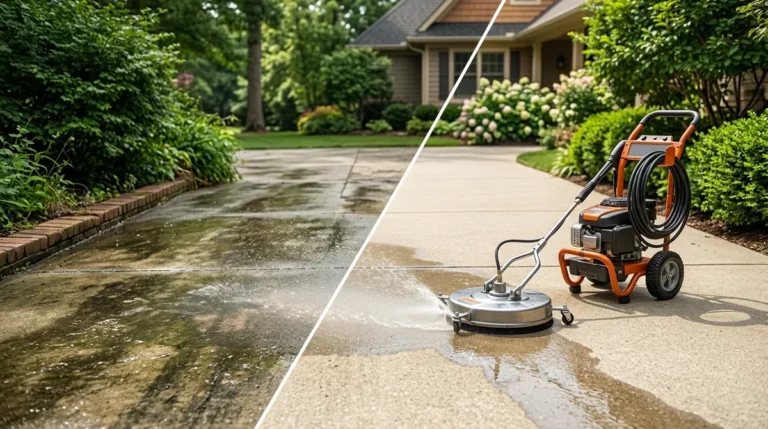
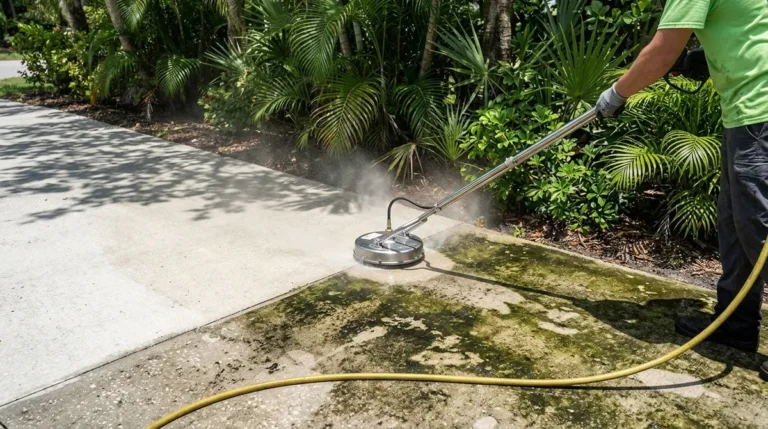
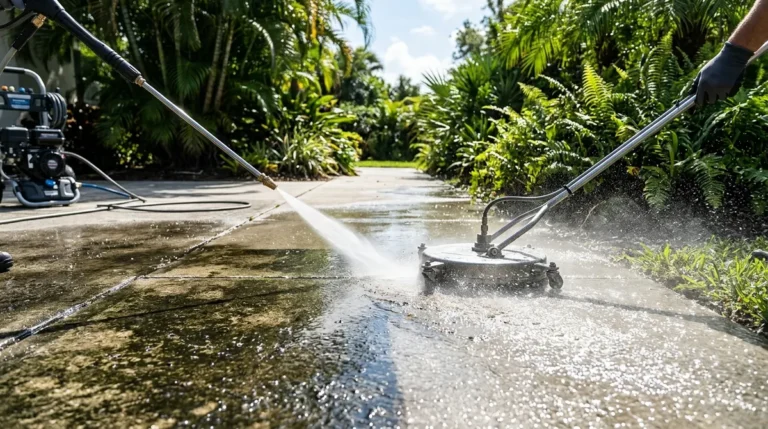
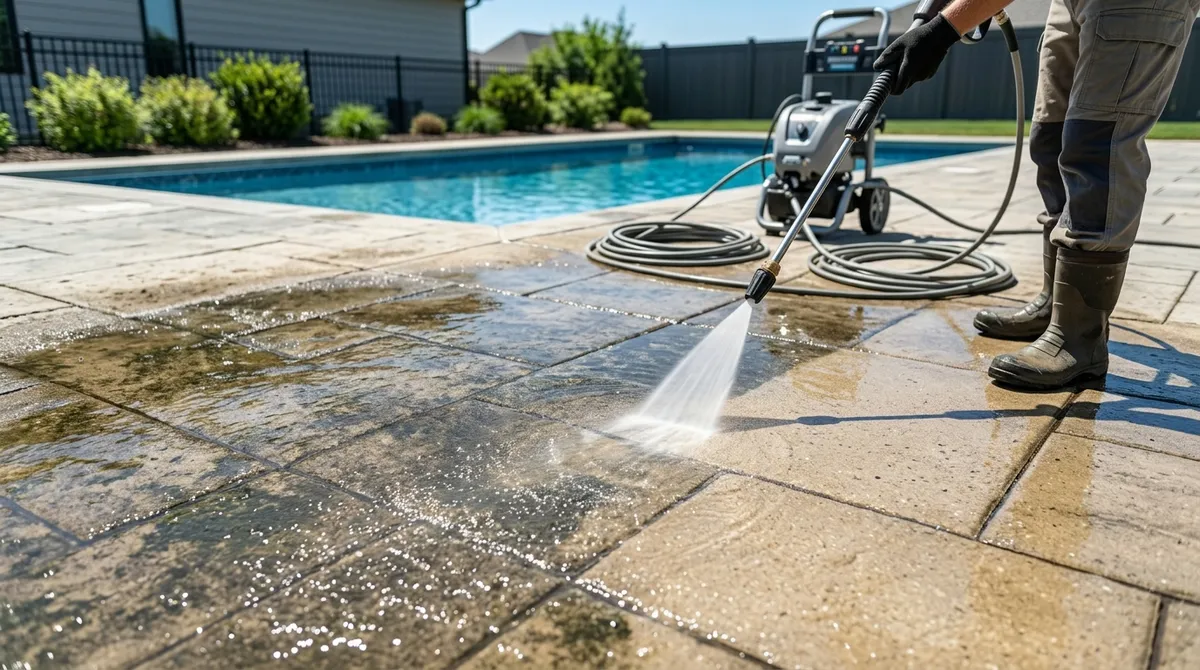
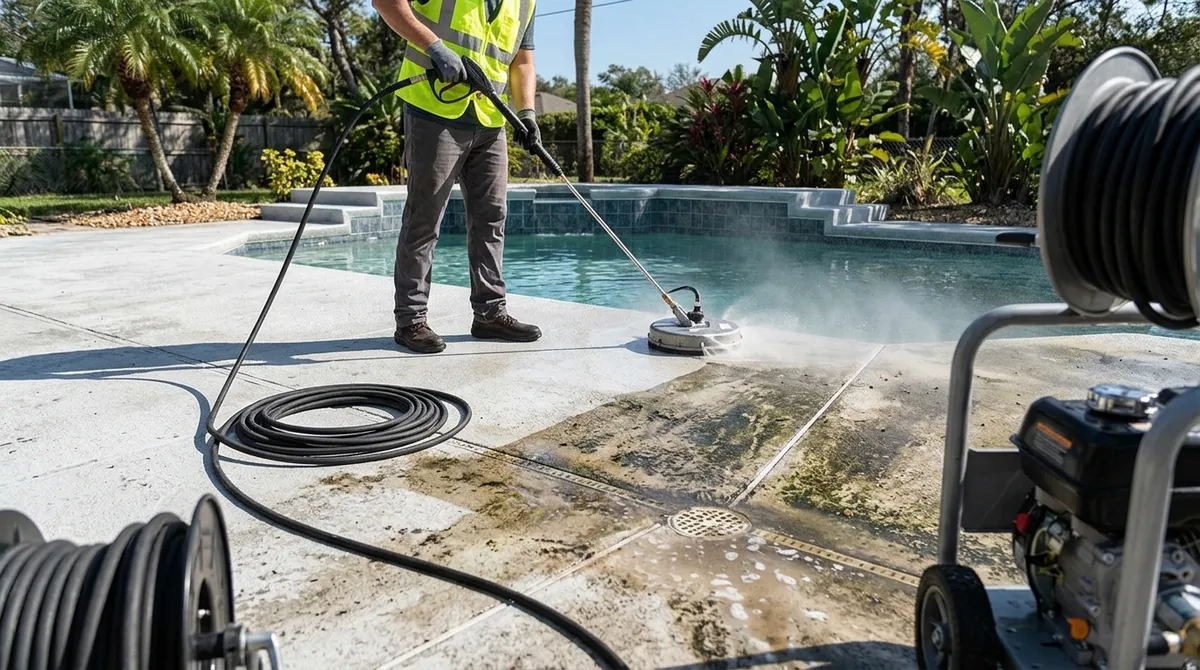
Surface cleaner attachments are game changers. Instead of a single nozzle, these disc-shaped attachments house two rotating nozzles under a dome. They deliver even, consistent cleaning without streaking—exactly what you need for large flat surfaces like pool decks. They also reduce water splashback, keeping more dirty water away from your pool.
Variable pressure washers vs fixed models make a huge difference in versatility. Fixed-pressure machines lock you into one setting. Professional variable-pressure units allow technicians to dial in the perfect PSI for each surface material and soil level. This flexibility protects delicate coatings while still powering through tough stains.
| Surface Type | Recommended PSI Range | Best Cleaning Method |
|---|---|---|
| Cool Deck Coating | 500–800 PSI | Soft wash with low pressure rinse |
| Travertine / Natural Stone | 500–1,000 PSI | Low pressure with pH-neutral cleaner |
| Stamped Concrete | 1,000–1,500 PSI | Surface cleaner attachment |
| Standard Concrete | 1,500–2,500 PSI | Surface cleaner with pre-treatment |
| Pavers | 1,000–1,500 PSI | Wide fan nozzle, careful joint protection |
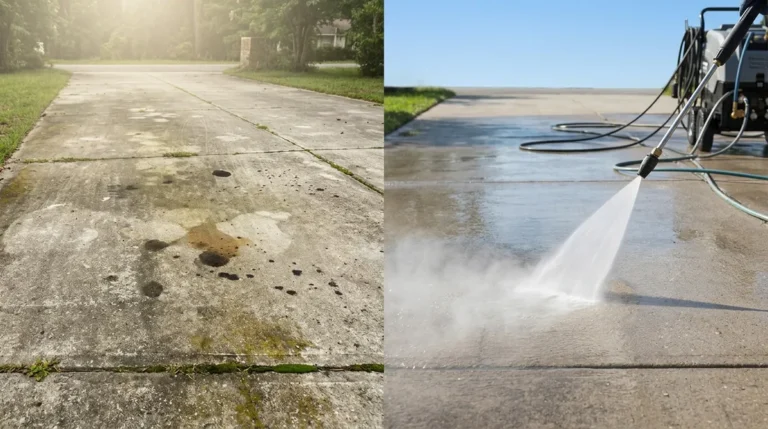
Hot water benefits for oil stains are significant. Hot water pressure washers break down grease, sunscreen residue, and oil-based stains far more effectively than cold water alone. For pool decks that see heavy sunscreen and food traffic, hot water cleaning gets genuinely better results.
Eco-friendly detergent options for pools are essential. Any runoff near a pool must be safe for swimmers and pool chemistry. Professional-grade, biodegradable detergents clean effectively without disrupting your pool’s pH balance or harming surrounding landscaping. This is especially important for eco-conscious homeowners seeking safe soft washing services.
Step-by-Step Pool Deck Cleaning Process
A proper pool deck cleaning follows a clear sequence. Skipping steps leads to poor results and potential damage.
- Pre-cleaning debris and furniture removal. Remove all furniture, potted plants, toys, and decorations. Sweep or blow off loose debris—leaves, dirt, and grass clippings. This prevents the pressure washer from grinding debris into the surface and ensures you clean every inch evenly.
- Cover or protect your pool. Use a pool cover or tarp to minimize dirty water and cleaning solution runoff into the pool. Check your pool’s chemical levels before and after cleaning to make any necessary adjustments.
- Chemical application timing and coverage. Apply your chosen cleaning solution evenly across the deck surface. Allow it to dwell for 5–10 minutes—long enough to break down algae and organic matter, but not so long that it dries on the surface. Work in sections on larger decks to maintain proper dwell time.
- Systematic cleaning pattern techniques. Start at the far end of the deck and work toward the drain or away from the pool. Use consistent, overlapping passes with your surface cleaner or nozzle. Maintain the same distance and angle throughout to avoid uneven lines. Never spray directly at expansion joints.
- Thorough rinsing. Rinse the entire deck with clean water, again working away from the pool. Make sure all detergent residue is removed. Check that drainage channels are clear and water is flowing properly.
- Post-cleaning sealer application benefits. Once the deck is completely dry—typically 24–48 hours—consider applying a penetrating sealer. Sealer protects against future staining, reduces algae regrowth, and makes your next cleaning much easier. It also enhances color in decorative concrete and stone.
Following this process consistently delivers clean, safe, beautiful results every time. For other hard surfaces around your home, the same careful approach applies to driveway pressure washing as well.
When to Call Professionals vs DIY Cleaning
Some jobs are genuinely DIY-friendly. Pool deck pressure washing often isn’t—especially in Florida’s climate. Here’s how to decide.
Signs of deep staining requiring expertise include rust stains from metal furniture legs, dark organic stains from leaves or algae that have penetrated the surface, and efflorescence (white mineral deposits) that keeps coming back. These conditions require specific treatments that go beyond a simple pressure wash. Attempting them incorrectly can set the stain deeper or etch the surface.
Cost comparison of rental vs service often surprises homeowners. Equipment rental fees, cleaning solution costs, your time, and the risk of damage can quickly exceed the cost of a professional service. And if you make one of the 14 mistakes above, the repair bill could dwarf both options combined.
Consider these situations where professional help is clearly the better choice:
- Your deck has cool deck coating or specialty finishes
- You’re seeing recurring algae that won’t stay gone
- There are deep rust, oil, or mineral stains
- The deck hasn’t been cleaned in more than a year
- You’re unsure of the surface material or its condition
- You want sealer applied after cleaning for long-term protection
Insurance and damage liability considerations are real. If you rent equipment and accidentally damage your deck, you’re responsible for repairs. Professional pressure washing companies carry liability insurance that protects you if anything goes wrong. That peace of mind has genuine value.
Time investment for proper cleaning is another factor. Doing the job right takes 3–5 hours for an average pool deck, plus drying time before sealer application. That’s a full weekend day gone. For busy families in Hillsborough County, that time has real cost.
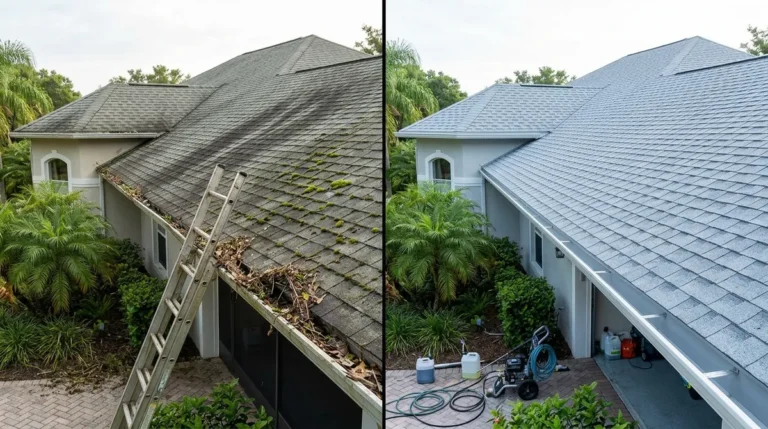
Buckhorn Power Wash specializes in residential pool deck and exterior cleaning throughout Hillsborough County. Their team understands Florida’s unique climate challenges and uses the right equipment and techniques for every surface. You can check out their reviews on Google to see what satisfied customers are saying. They also offer house washing and roof cleaning to keep your entire property looking its best year-round.
You can also see their work in action through their project gallery, or read more about what makes professional pressure washing services worth it for Hillsborough County homeowners. Customers have also shared their experiences on Yelp and Facebook—worth checking before making your decision.
Not sure which service is right for your property? Read about the 7 signs you need a pressure washing company today to help you decide.
Protect Your Pool Deck the Right Way
Your pool deck takes a beating every single day—sun, chlorine, bare feet, and Florida’s relentless humidity. Keeping it clean isn’t just about appearances. It’s about safety, longevity, and protecting the value of your home. The 14 mistakes in this guide are entirely avoidable with the right knowledge and approach.
Whether you’re a busy parent who wants the job done safely and quickly, or a homeowner who simply wants their backyard to look its best, professional pool deck pressure washing delivers results that DIY cleaning rarely matches. Don’t let one wrong pressure setting undo years of investment in your outdoor space.
Ready to get your pool deck looking clean, safe, and beautiful again? Request your free quote from Buckhorn Power Wash today and see your price in minutes—no home visit required.
FAQs
Q: How often should I pressure wash my pool deck in Florida’s climate?
A: In Florida’s warm, humid climate, most pool decks benefit from a thorough cleaning every 6 to 12 months. Algae and mold grow quickly in this environment, so more frequent light maintenance between deep cleans helps keep buildup manageable and your deck looking great all year long.
Q: Can pressure washing remove rust stains from pool furniture?
A: Pressure washing alone typically won’t fully remove rust stains—those stubborn orange marks usually need a specialized rust-removing chemical treatment applied before washing. A professional can apply the right product to break down the rust safely without damaging your deck surface.
Q: What PSI setting is safe for stamped concrete pool decks?
A: Stamped concrete does best with pressure in the 1,000 to 1,500 PSI range, paired with a surface cleaner attachment for even results. Higher pressure can erode the stamped texture and any color sealers, so staying on the lower end of that range is always the safer choice.
Q: Should I drain my pool before pressure washing the deck?
A: You don’t need to drain your pool, but you should cover it with a pool cover or tarp to minimize runoff from cleaning solutions entering the water. After cleaning, check your pool’s chemical levels and make any adjustments needed to restore balance.
Q: How long after pressure washing can we use the pool area?
A: For a basic pressure wash without sealer, you can typically use the pool area again once the deck surface is dry—usually within 1 to 2 hours on a warm Florida day. If sealer is applied after cleaning, allow a full 24 to 48 hours of drying time before foot traffic returns.