Key Takeaways
-
Use a pressure washer with at least 3,000 PSI and 3-4 GPM flow rate, paired with a 25-degree green nozzle or surface cleaner attachment for optimal results without damaging concrete.
-
Pre-treat stubborn stains by applying concrete-safe degreaser and letting it soak for 5-10 minutes, then scrub with a stiff brush before pressure washing to significantly improve cleaning results.
-
Keep the pressure washer nozzle 6-12 inches from the surface and maintain steady, overlapping strokes moving downward to avoid etching concrete or missing dirt—moving too slowly damages surface, moving too fast leaves dirt behind.
-
Clean your driveway 1-2 times yearly in Florida's humid climate; increase to every 3-4 months if your property has tree cover or HOA requirements, and immediately after spotting green/black algae or mold growth.
-
Protect nearby landscaping by moving all items off the driveway and covering flower beds with tarps, as high-pressure water can strip mulch and damage delicate plants.
-
Always test pressure washer on a small inconspicuous area first, wear eye protection and non-slip shoes, and never point the nozzle at people or pets—pressure washers can cause serious injury in seconds.
Your driveway takes a beating every single day. Oil drips, tire marks, mold, algae, and years of Florida’s intense humidity leave behind stubborn stains that regular rinsing just won’t fix. If your concrete looks dark, slippery, or just plain grimy, it might be time to learn how to clean a driveway with a pressure washer — or better yet, let a professional handle it for you. Either way, this guide walks you through the entire process so you know exactly what’s involved. Whether you’re a busy homeowner in Hillsborough County looking for a weekend DIY project or someone who’d rather skip the hassle and call an expert, we’ve got you covered. Let’s dive in and get that driveway looking fresh again!
Why Driveway Cleaning Matters More Than You Think
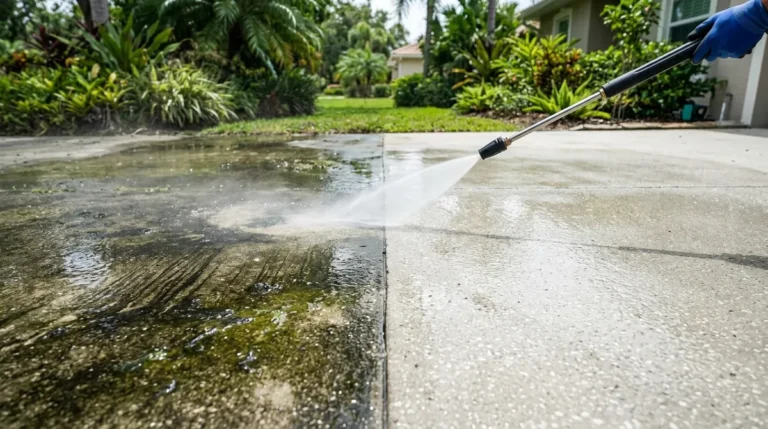
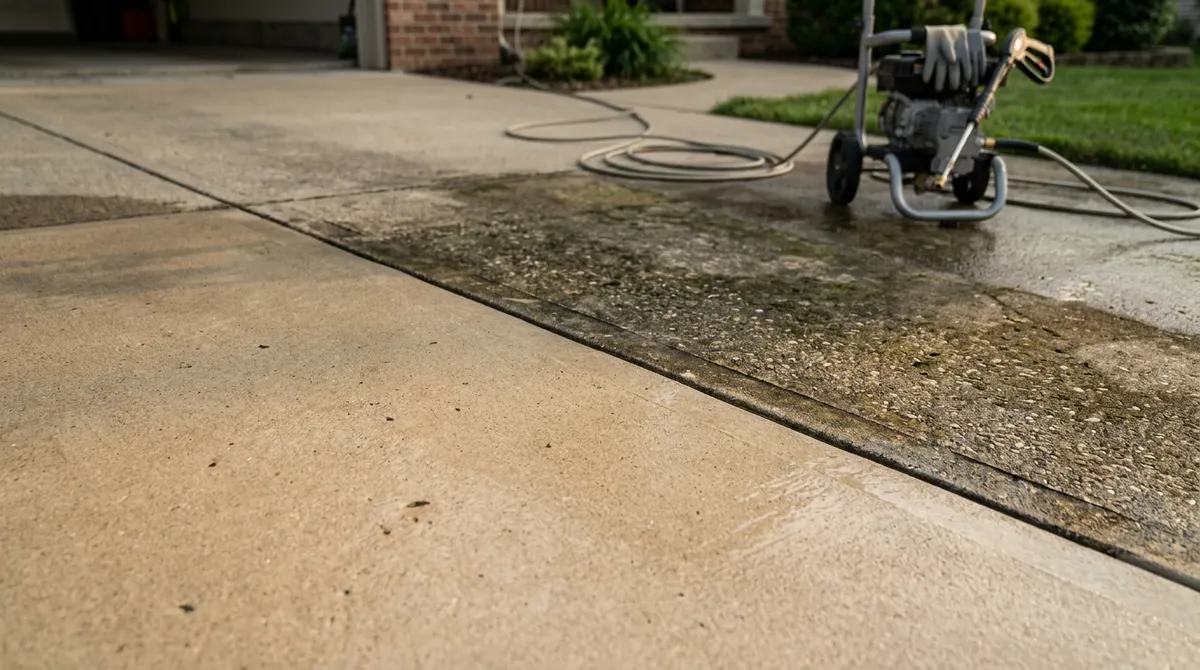
A clean driveway does more than boost curb appeal. It protects your property’s value, prevents slip hazards, and keeps mold and algae from spreading to other surfaces. In Florida’s hot and humid climate, organic growth on concrete happens fast. Left untreated, it can cause permanent staining and surface damage.
HOA communities in Hillsborough County often require regular exterior cleaning. A grimy driveway can earn you a violation notice before you even realize there’s a problem. Staying on top of driveway maintenance keeps your home looking sharp and avoids those frustrating fines.
What You Need Before You Start
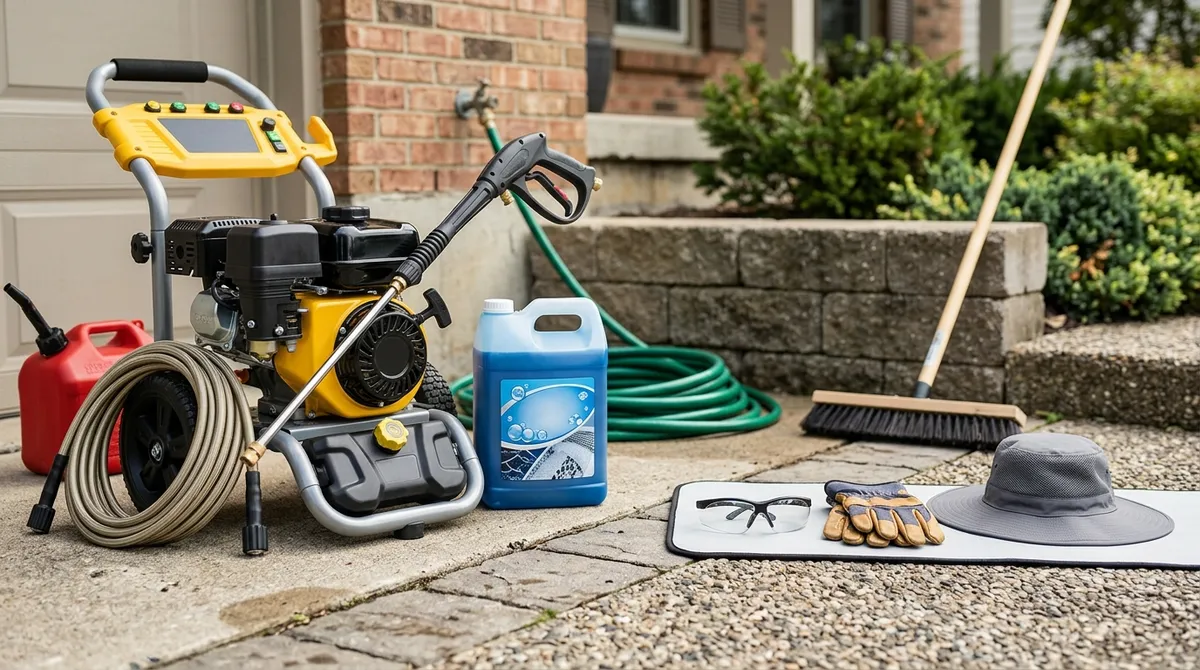
Before you grab a pressure washer and start blasting, a little preparation goes a long way. Having the right tools and supplies makes the job faster, safer, and more effective.
Essential Equipment and Supplies
- A gas or electric pressure washer (minimum 3,000 PSI for concrete)
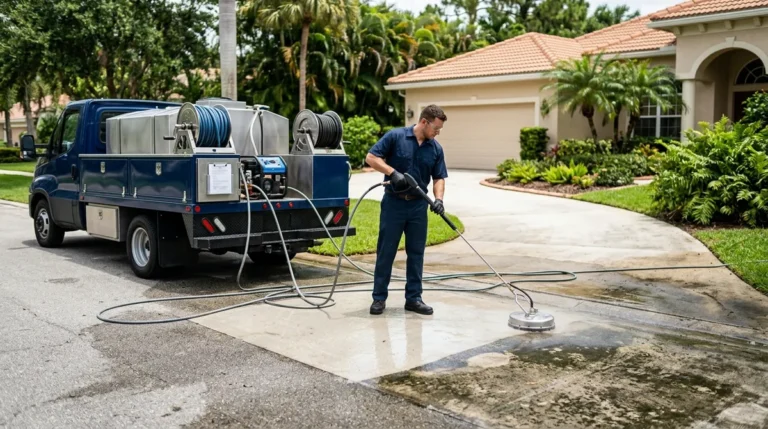
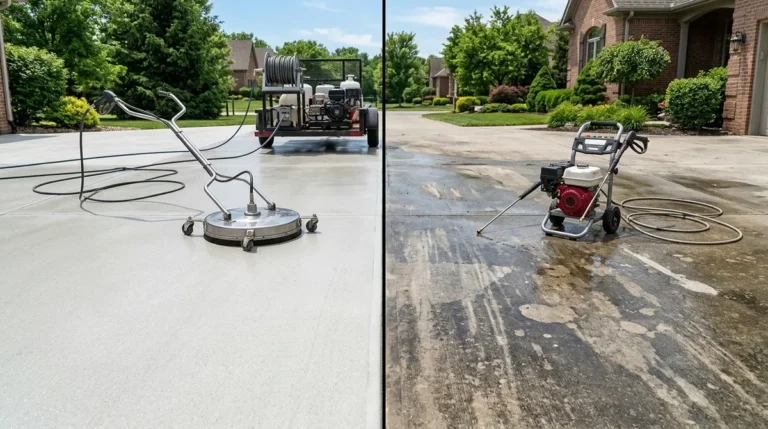
- A surface cleaner attachment for even, streak-free results
- Concrete-safe degreaser or detergent
- Safety goggles and waterproof gloves
- Closed-toe shoes with good grip
- A stiff-bristle brush for pre-treating stubborn stains
- Garden hose for rinsing nearby plants and landscaping
If you’re renting a pressure washer, ask the rental company for a unit rated at least 3,000 PSI with a flow rate of 3–4 GPM. This combination delivers enough power to cut through concrete buildup without taking forever. You can learn more about the difference between equipment types in this helpful guide on soft wash vs pressure wash for Florida homes.
Step-by-Step: How to Clean a Driveway With a Pressure Washer
Follow these steps in order. Skipping steps — especially prep — is the most common reason DIY driveway cleaning leaves streaks or misses stubborn stains.
Step 1: Clear the Driveway
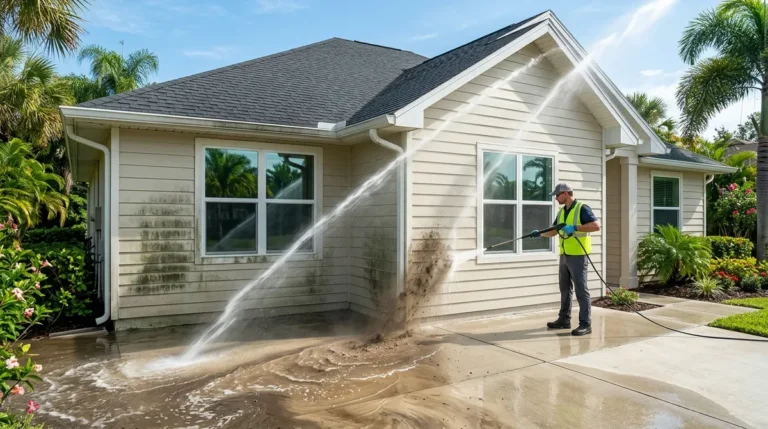
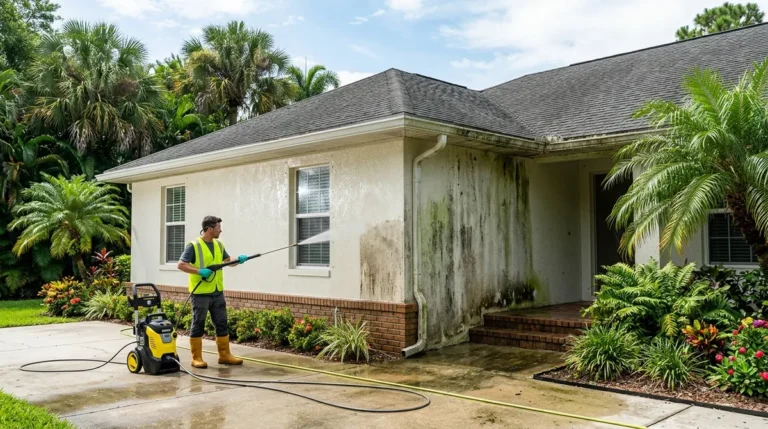
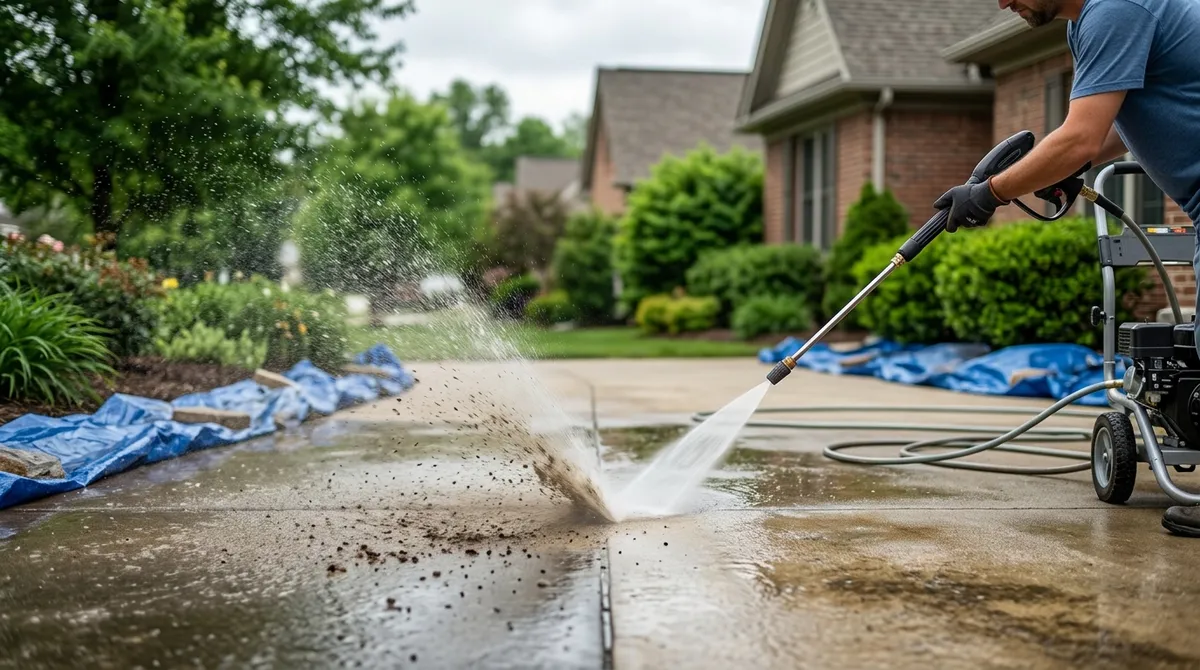
Move all vehicles, toys, furniture, and potted plants off the driveway. Cover any nearby flower beds or landscaping with a tarp. High-pressure water can strip mulch, damage delicate plants, and send debris flying in unexpected directions.
Step 2: Pre-Treat Stains
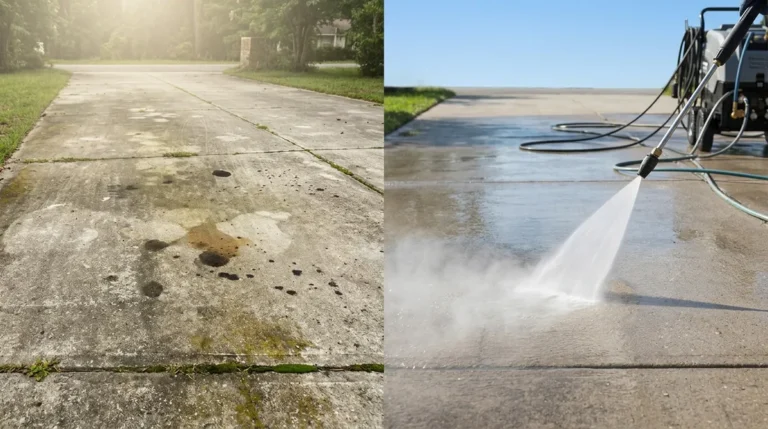
Apply a concrete degreaser or detergent to oil stains, tire marks, and mold patches. Let it sit for 5–10 minutes. For particularly stubborn spots, scrub with a stiff-bristle brush before washing. Pre-treating makes a huge difference in the final result.
Step 3: Set Up Your Pressure Washer
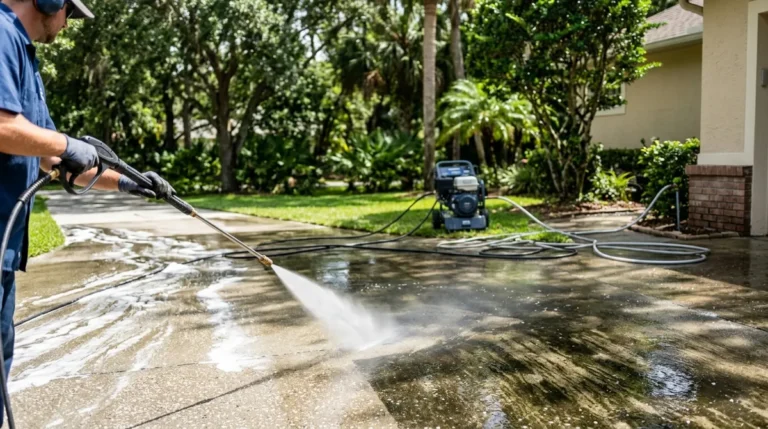
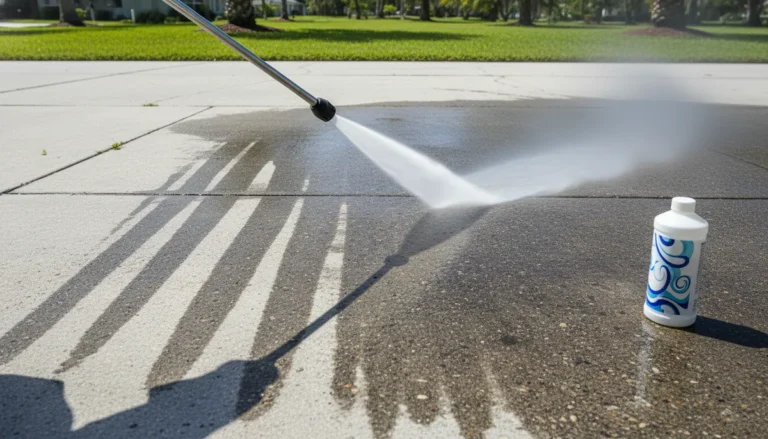
Connect your garden hose, attach the surface cleaner or a 25-degree nozzle, and start the machine according to the manufacturer’s instructions. Always test on a small, inconspicuous area first to confirm the pressure won’t etch or damage your concrete.
Step 4: Apply Detergent (Optional but Recommended)
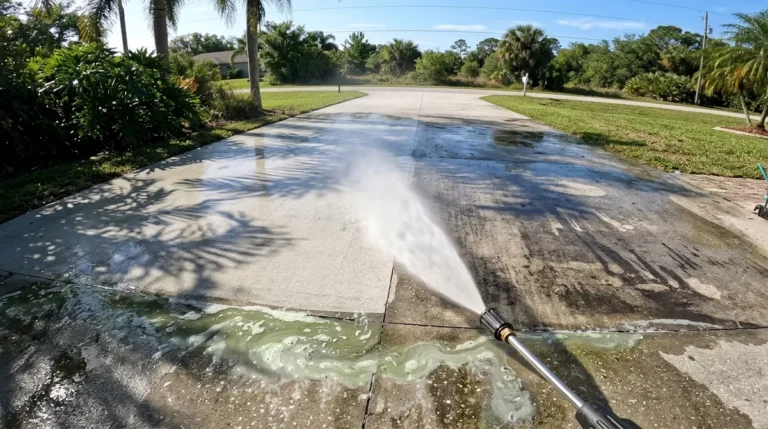
Switch to the low-pressure soap nozzle and apply your detergent evenly across the entire driveway surface. Work in sections so the soap doesn’t dry before you rinse. Detergent lifts grease, organic matter, and grime that water pressure alone can’t fully remove.
Step 5: Pressure Wash the Surface
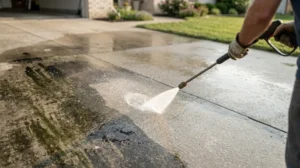
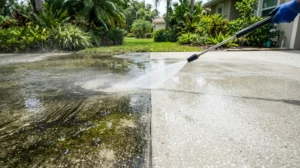
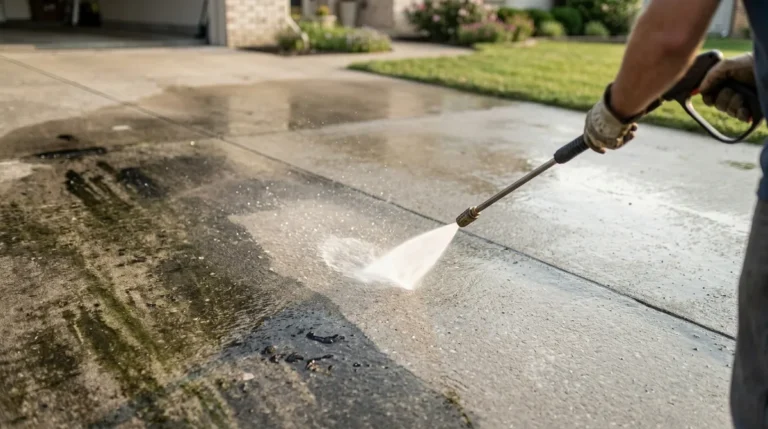
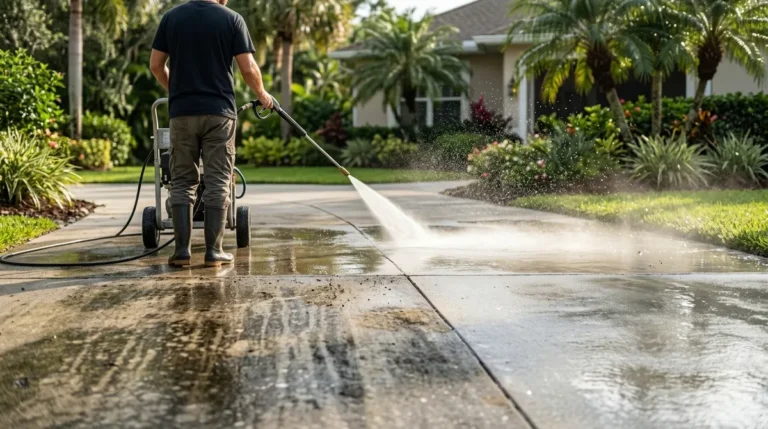
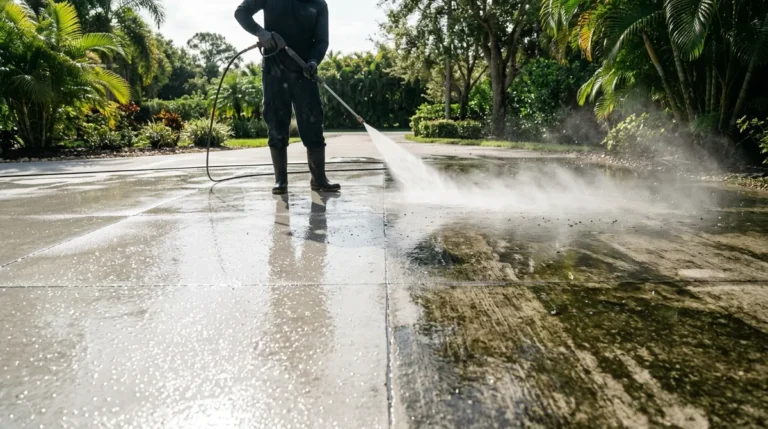
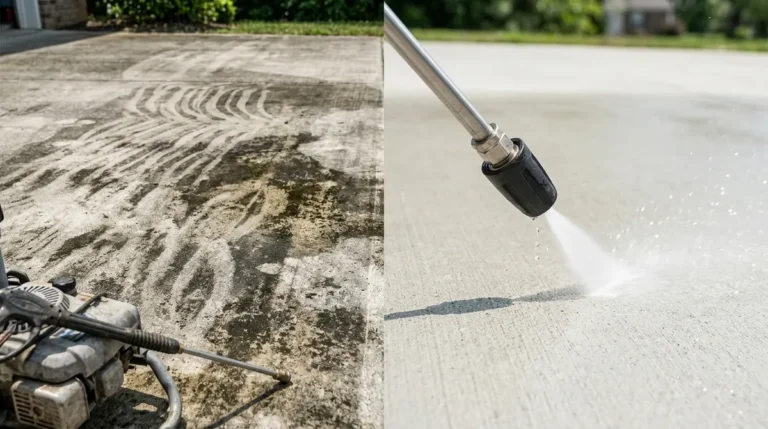
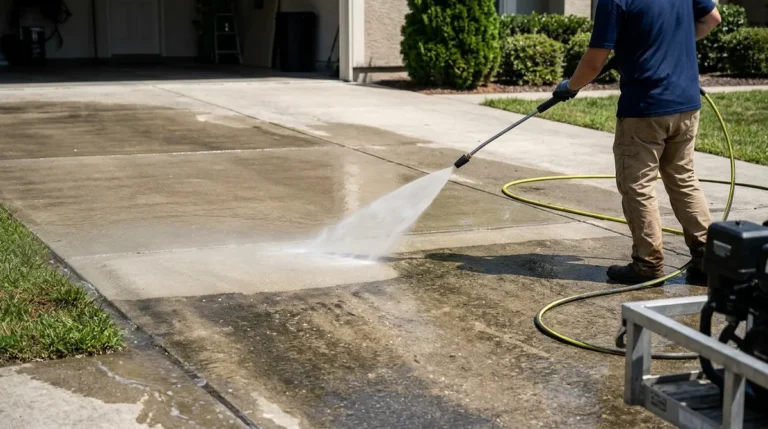
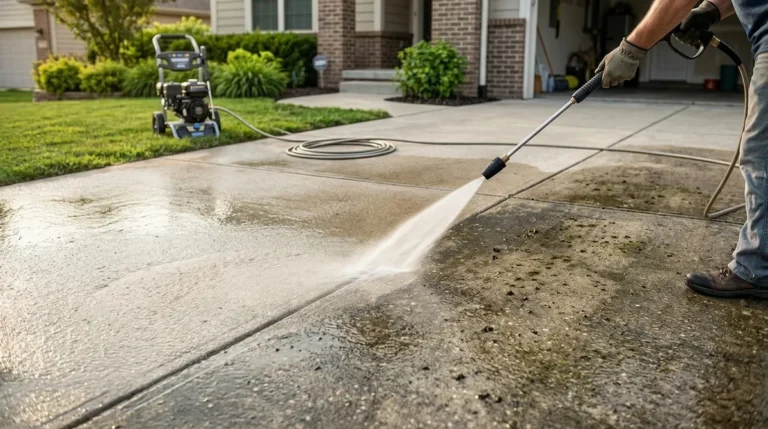
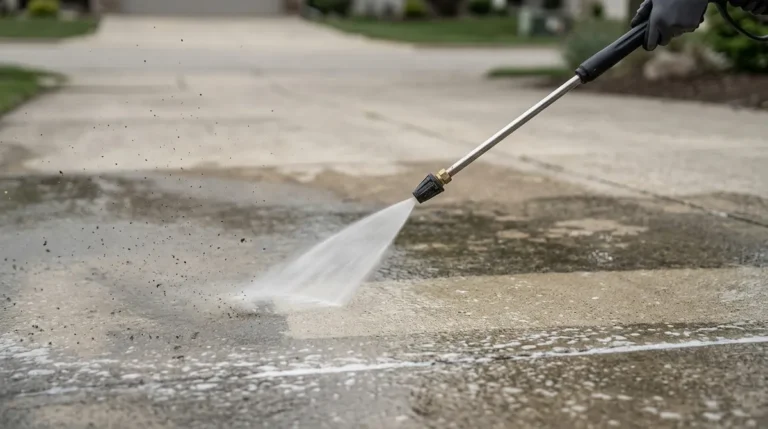
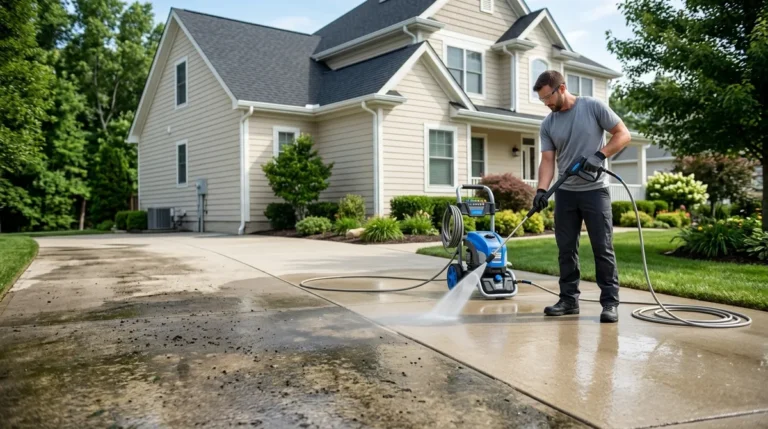
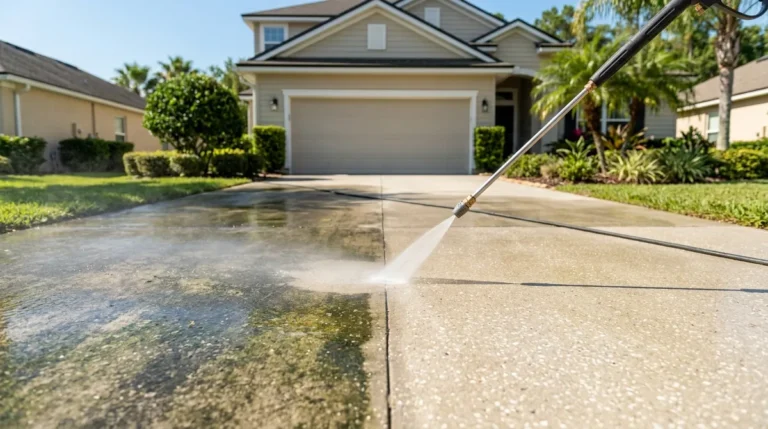
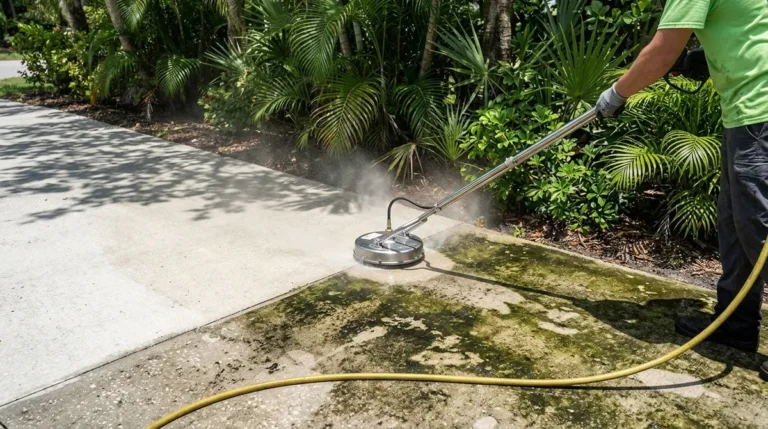
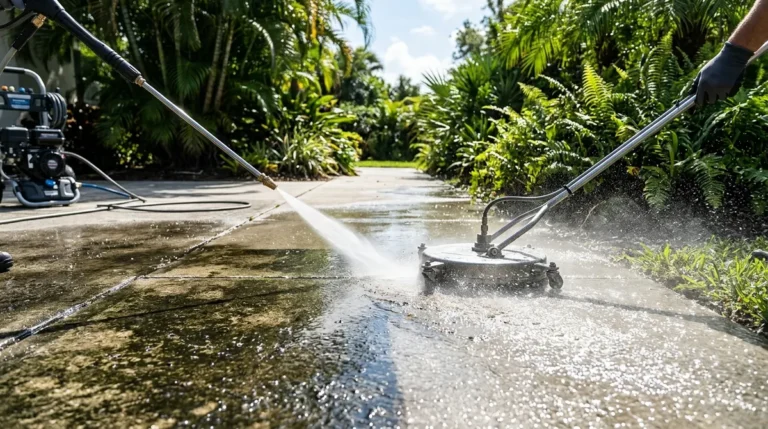
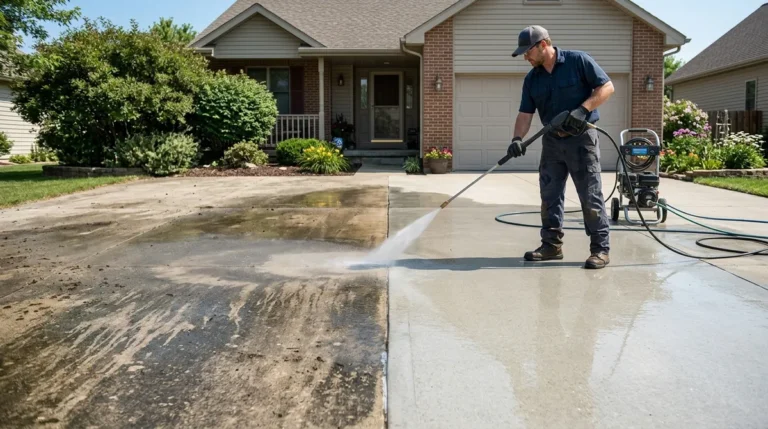
Switch back to your high-pressure nozzle or surface cleaner. Work in overlapping, consistent strokes moving from the top of the driveway toward the street. Keep the nozzle 6–12 inches from the surface and maintain a steady pace. Moving too slowly can etch the concrete; moving too fast leaves dirt behind.
Step 6: Rinse Thoroughly
Do a final rinse across the entire driveway to clear away any loosened debris and detergent residue. Pay extra attention to corners and edges where dirt tends to collect. Once done, let the surface dry completely before parking on it.
Step 7: Inspect and Repeat if Needed
Walk the driveway once it’s dry and check for any remaining stains. Stubborn oil stains may need a second treatment. If large areas still look dull or discolored, a professional cleaning service may be the best next step. Check out our driveway and concrete cleaning service for expert-level results without the effort.
Pressure Washer Nozzle Guide for Driveways
Choosing the wrong nozzle is one of the most common DIY mistakes. Here’s a quick reference to help you pick the right one for each task:
| Nozzle Color | Spray Angle | Best Use for Driveways |
|---|---|---|
| Red | 0° | Avoid — too powerful, will damage concrete |
| Yellow | 15° | Heavy stain removal, use with caution |
| Green | 25° | General driveway washing — best all-around choice |
| White | 40° | Final rinse and light surface cleaning |
| Black | 65° | Applying detergent at low pressure |
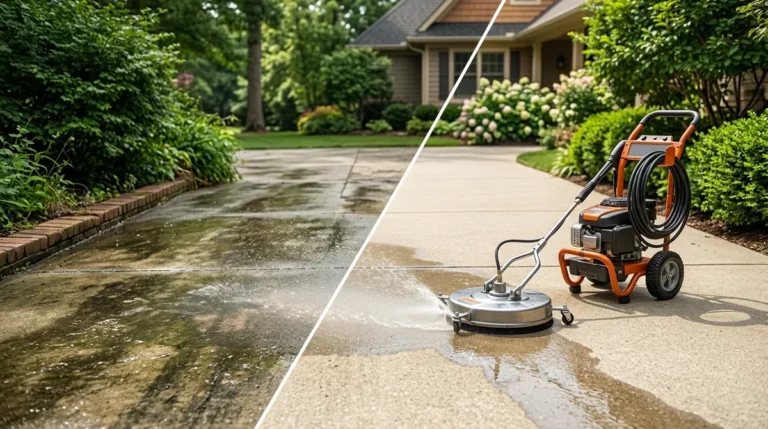
For most residential driveways in Hillsborough County, the green 25-degree nozzle combined with a rotary surface cleaner attachment gives the best and most even results. If you’re unsure about nozzle selection, it’s always smart to consult with a professional pressure washing service before you start.
Common Driveway Stains and How to Tackle Them
Not all driveway stains respond to the same treatment. Here’s a quick breakdown of the most common culprits and the best approach for each:
- Oil and grease stains: Use a dedicated concrete degreaser. Let it soak for at least 10 minutes before pressure washing.
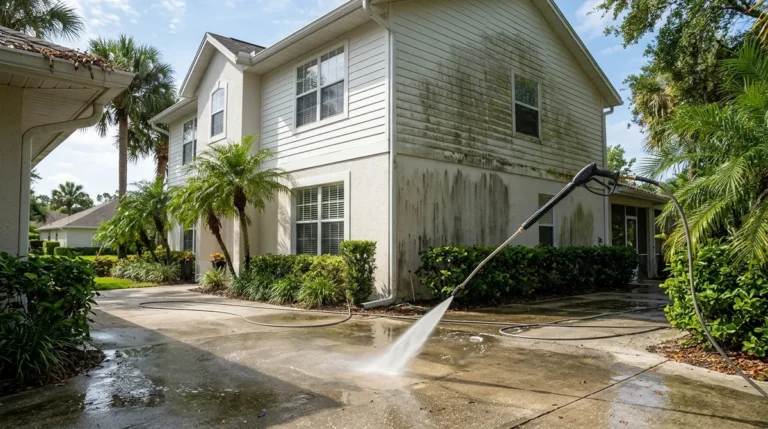
- Mold and algae: Apply a biodegradable detergent or diluted bleach solution. These organic stains are extremely common in Florida’s humid climate.
- Tire marks: Pre-scrub with a stiff brush and degreaser before applying high pressure.
- Rust stains: Use a specialized rust remover made for concrete. Standard pressure washing alone won’t remove rust discoloration.
- Dirt and general buildup: Regular pressure washing with detergent handles this easily without any pre-treatment.
DIY vs. Professional Driveway Cleaning: How Do They Compare?
DIY pressure washing can be a satisfying project, but it’s not always the best fit for everyone. Here’s an honest look at both options to help you decide:
| Factor | DIY Pressure Washing | Professional Service |
|---|---|---|
| Time Required | 2–4 hours including prep and cleanup | Under 1 hour in most cases |
| Equipment Needed | Rental or purchase required | Fully equipped team arrives ready |
| Risk of Damage | Higher — improper technique can etch concrete | Low — trained technicians know every surface |
| Results Quality | Good with practice | Consistent, deep-clean results every time |
| Physical Effort | Significant — bending, lifting, standing for hours | None required from the homeowner |
For time-poor professionals and busy families in Hillsborough County, hiring a professional often makes more sense than spending a Saturday wrestling with rental equipment. You can learn more about what makes professional pressure washing worth it before making your decision.
Safety Tips You Should Not Skip
Pressure washers are powerful tools that demand respect. Follow these safety guidelines every time you use one:
- Never point the nozzle at people, pets, or plants — the pressure can cause serious injury or plant damage in seconds.
- Always wear eye protection — debris can fly back toward you at high speed.
- Use two hands when holding the wand — the kickback from high-pressure machines can catch you off guard.
- Keep the power cord or fuel source away from the spray area — water and electricity are a dangerous mix.
- Start with lower pressure settings — you can always increase pressure, but you can’t undo etched or damaged concrete.
- Wear non-slip footwear — wet concrete gets slippery fast, and a fall while holding a pressure washer wand is a recipe for injury.
How Often Should You Clean Your Driveway?
In Florida’s climate, driveways accumulate mold, algae, and grime faster than in most other states. A good rule of thumb for Hillsborough County homeowners is:
- Standard residential driveways: Clean once or twice a year
- HOA-governed communities: Clean every 6 months to stay compliant
- High-traffic driveways or homes under tree cover: Clean every 3–4 months
- After major storm events: Clean as needed to remove debris and organic matter
If you’re noticing green or black discoloration forming between scheduled cleanings, that’s a sign of algae or mold growth. Don’t wait — organic stains become harder to remove the longer they sit. You can also check out 7 signs you need a pressure washing company today to know when it’s time to call in reinforcements.
Why Hillsborough County Homeowners Trust the Professionals
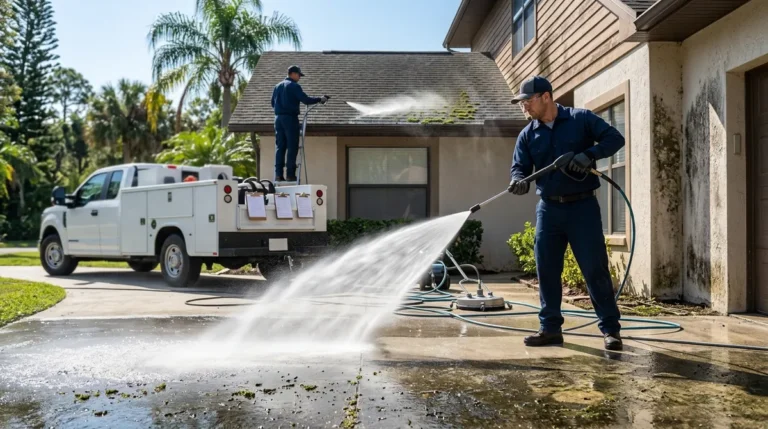
There’s a reason so many homeowners in Brandon, Valrico, Riverview, Lithia, and Tampa choose professional driveway and concrete cleaning over the DIY route. It saves time, protects their investment, and delivers results that last longer. At Buckhorn Power Wash, we use professional-grade equipment and proven techniques to deep-clean driveways and remove even the toughest stains — without damaging your concrete or wasting your weekend.
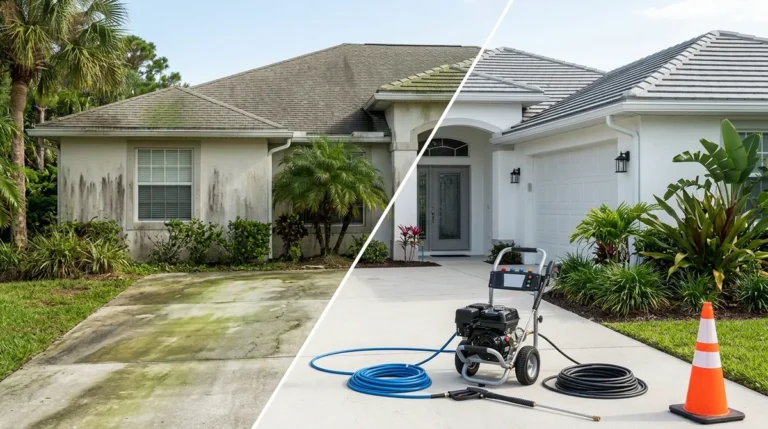
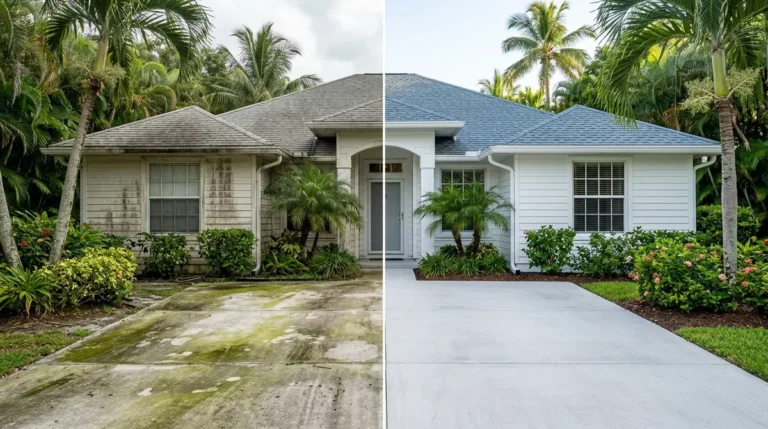
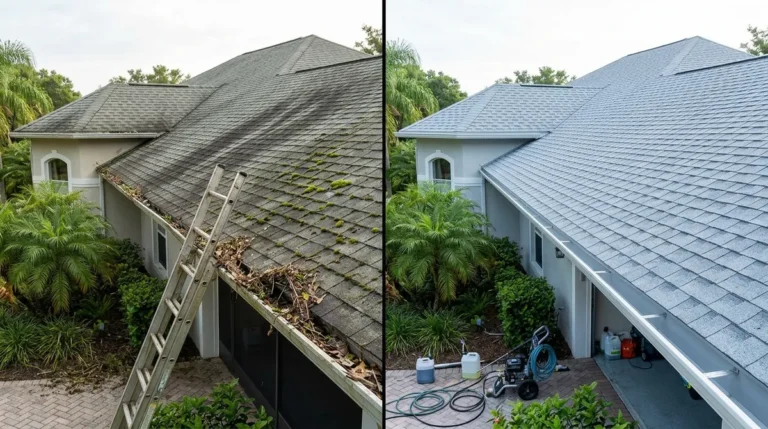
We also offer a full range of exterior cleaning services to keep your entire home looking great. From house washing to roof cleaning and gutter cleaning, we’ve got every corner of your property covered. You can browse our gallery to see real before-and-after results from homes just like yours across Hillsborough County.
Want to see what your neighbors are saying? Check out our reviews on Yelp and Facebook to see why homeowners keep coming back. You can also visit our Google Business Profile to read more reviews and find us easily.
Ready for a Spotless Driveway Without the Work?
Whether you tackle driveway cleaning yourself or decide to call in the pros, the most important thing is getting it done. A clean driveway protects your home, enhances curb appeal, and makes your whole property feel well-cared-for. If you’re in Hillsborough County and want a hassle-free experience with professional results, we’re here to help.
Skip the rental equipment, skip the Saturday labor, and skip the guesswork. Request your free driveway cleaning quote today and see your price in minutes — no home visit required. Or feel free to give us a call directly and we’ll be happy to answer any questions you have. Your driveway deserves to look its best, and we’re ready to make that happen!
FAQs
Q: What PSI do I need to clean a concrete driveway with a pressure washer?
A: For concrete driveways, you’ll want at least 3,000 PSI with a flow rate of 3–4 GPM for effective cleaning. Anything less may not cut through built-up mold, algae, and tire marks — especially in Florida’s humid climate where organic growth is a constant battle!
Q: Can pressure washing damage my driveway concrete?
A: Yes, it can if done incorrectly! Using a nozzle that’s too narrow (like a 0-degree red nozzle), holding it too close, or staying in one spot too long can etch or pit concrete. Stick to a 25-degree green nozzle and keep the wand moving at a steady pace to avoid damage.
Q: How do I remove oil stains from my driveway before pressure washing?
A: Apply a concrete-safe degreaser directly to the oil stain and let it soak for at least 10 minutes. Scrub with a stiff-bristle brush to break up the grease, then pressure wash the area. For really stubborn stains, you may need to repeat the process or call a professional.
Q: How often should I pressure wash my driveway in Florida?
A: In Hillsborough County’s humid climate, we recommend cleaning your driveway at least once or twice a year. Homes with heavy tree cover, HOA requirements, or high traffic may benefit from cleaning every 3–4 months to stay on top of mold and algae growth.
Q: Is it worth hiring a professional to pressure wash my driveway?
A: Absolutely, especially if you value your time or want consistent, damage-free results! Professionals bring commercial-grade equipment, the right detergents, and the experience to handle any stain safely. It’s a great option for busy homeowners who’d rather spend their weekends enjoying life than scrubbing concrete.