Key Takeaways
-
Pre-treat oil and grease stains with degreaser and let soak for 10-15 minutes before pressure washing to loosen grime effectively.
-
In Florida’s humid climate, clean your driveway every 6-12 months to prevent algae, mold, and mildew growth that degrades concrete over time.
-
Use a 25-degree nozzle or surface cleaner attachment at 2,000-3,000 PSI for concrete; excessive pressure can etch or damage surfaces.
-
Seal your driveway after cleaning to repel future stains, protect against moisture damage, and maintain cleanliness longer.
-
Different stains require different treatments: use detergent for algae/mold, rust removers for rust stains, and high-pressure washing for tire marks.
-
Neglecting driveway cleaning leads to surface degradation, reduced property value, potential HOA violations, and safety hazards from slippery algae growth.
Your driveway takes a beating every single day. Oil drips, tire marks, algae growth, and Florida’s relentless humidity all combine to leave your driveway looking dull, stained, and downright grimy. If you’ve been wondering how to properly clean a driveway and actually get lasting results, you’re in the right place.
The good news? A clean driveway doesn’t just look great — it protects your investment, boosts curb appeal, and even keeps your family safer by removing slippery algae and mold. Whether you’re a busy homeowner in Hillsborough County or someone who just wants their property to look its best, this guide walks you through everything you need to know.
Let’s dive in and get that driveway sparkling clean!
Why Cleaning Your Driveway Actually Matters
A lot of homeowners overlook the driveway when thinking about home maintenance. But here’s the thing — your driveway is one of the first things people notice about your home. A stained, mossy driveway sends the wrong message, whether you’re trying to sell your home or just take pride in how it looks.
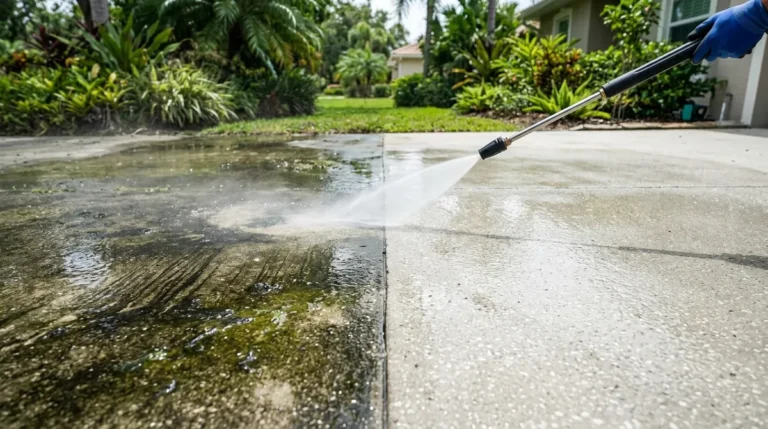
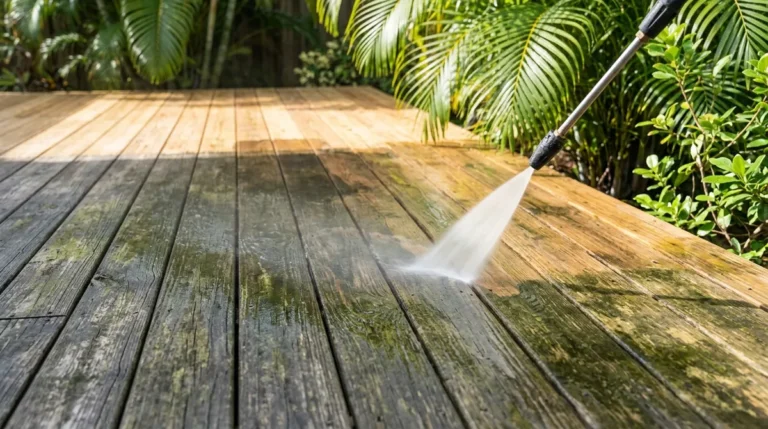
Beyond curb appeal, dirty driveways can cause real problems. Algae and mold create slippery surfaces that become a safety hazard. Left untreated, organic growth can also break down concrete and pavers over time, leading to costly repairs. Learning how to why driveway cleaning matters more than you think is the first step toward protecting your home.
In Florida’s warm, humid climate, driveways attract mold, algae, and mildew faster than almost anywhere else in the country. Regular cleaning isn’t a luxury — it’s a necessity for Hillsborough County homeowners.
What You’ll Need to Clean a Driveway Properly
Before you start, it helps to understand what tools and methods work best. Not every driveway is the same, and the right approach depends on your surface type and the level of grime you’re dealing with.
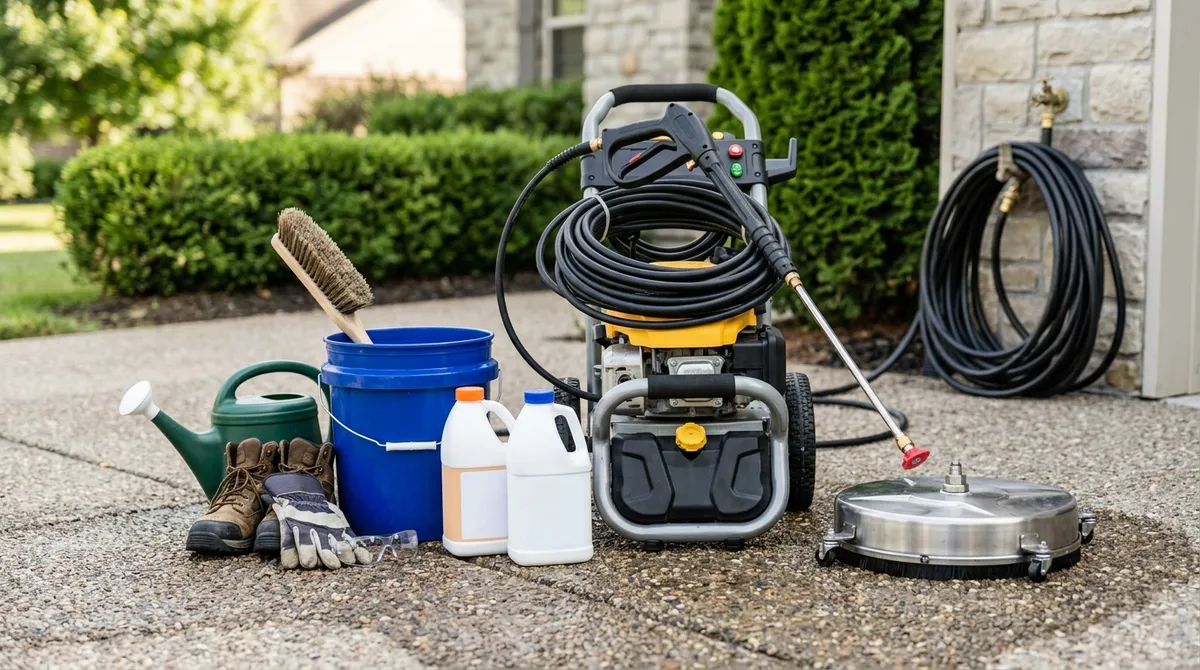
Tools and Equipment
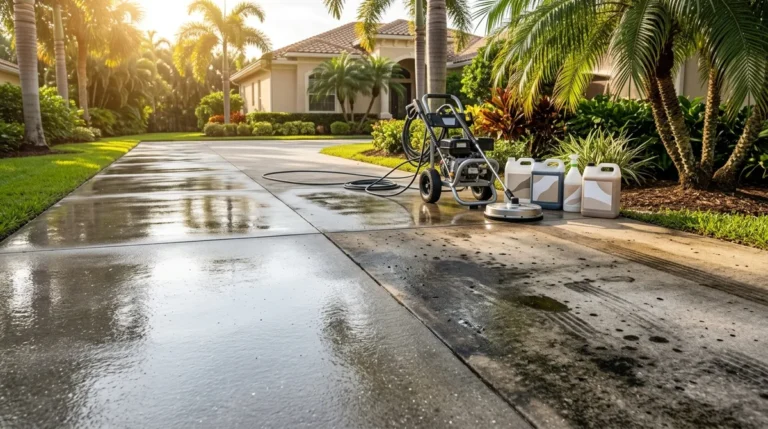
- Pressure washer — The most effective tool for deep cleaning concrete and pavers
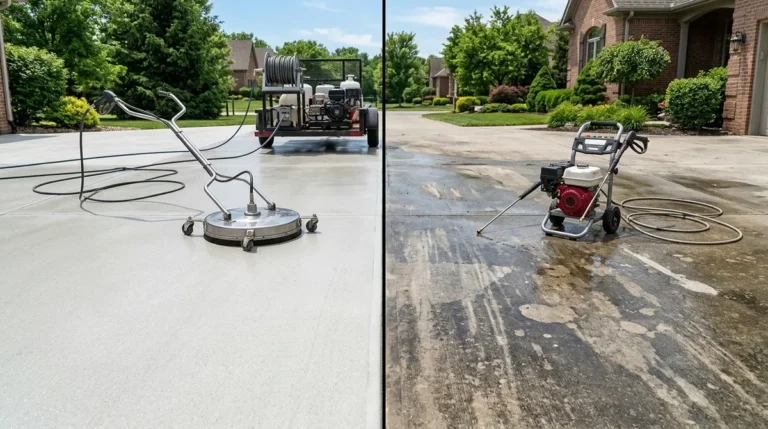
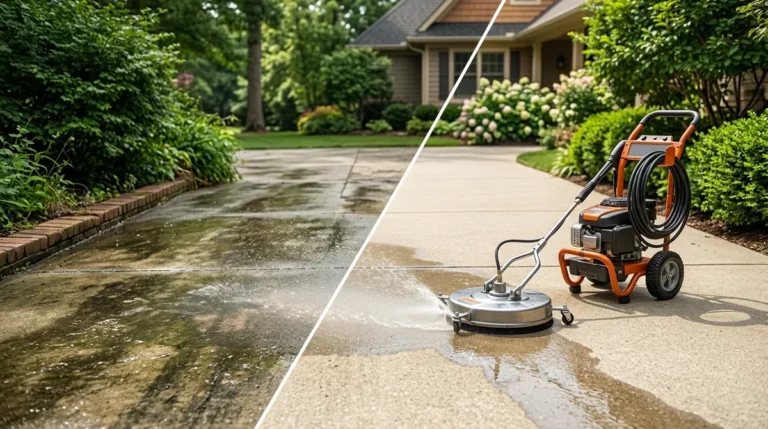
- Surface cleaner attachment — Creates even, streak-free results across large flat areas
- Garden hose — Useful for rinsing and pre-wetting the surface
- Stiff-bristle brush — Helpful for scrubbing stubborn stains before pressure washing
- Eco-friendly cleaning detergent — Breaks down oil, grease, and organic growth
- Safety goggles and closed-toe shoes — Always protect yourself when operating equipment
If you want to learn more about the right equipment and technique, check out this helpful guide on how to clean concrete with a pressure washer the right way.
Step-by-Step: How to Clean a Driveway With a Pressure Washer
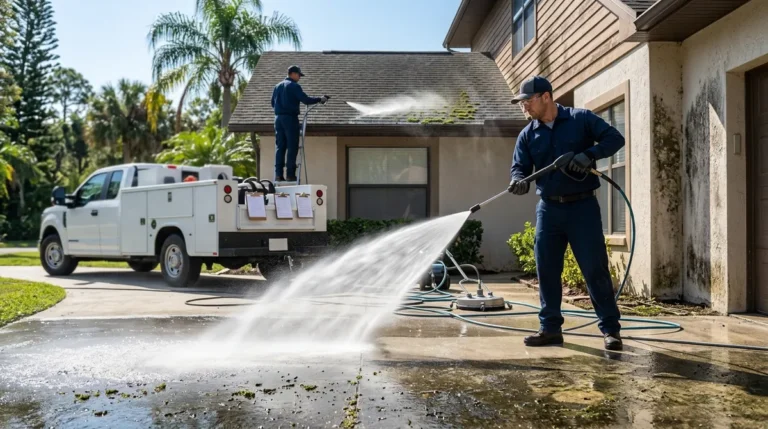
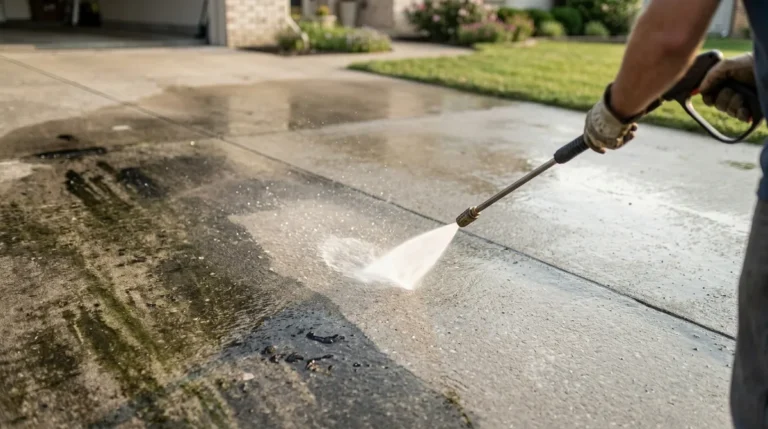
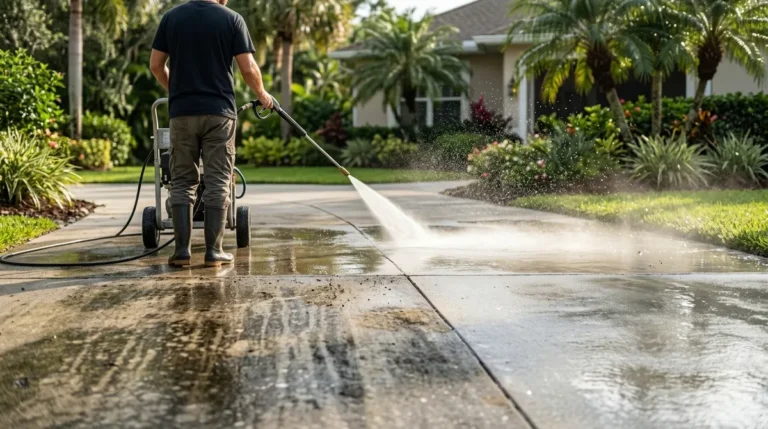
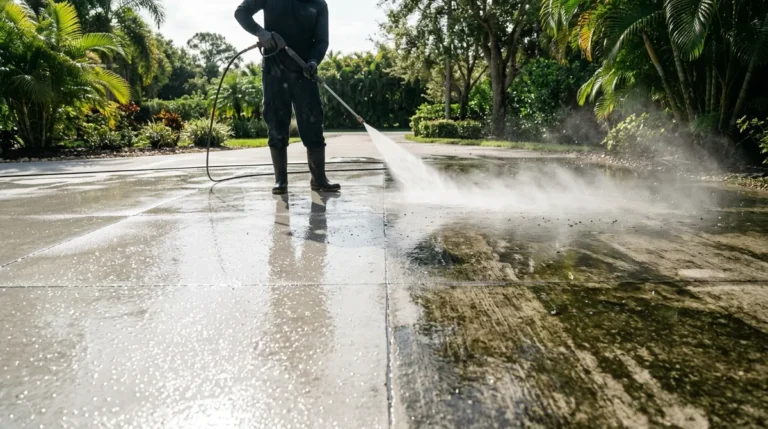
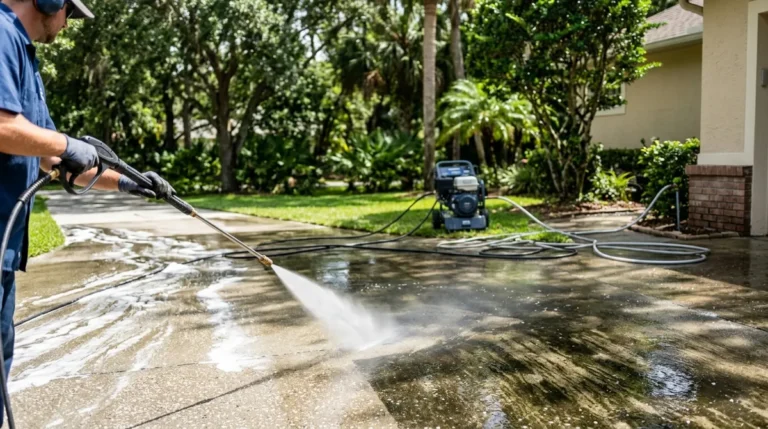
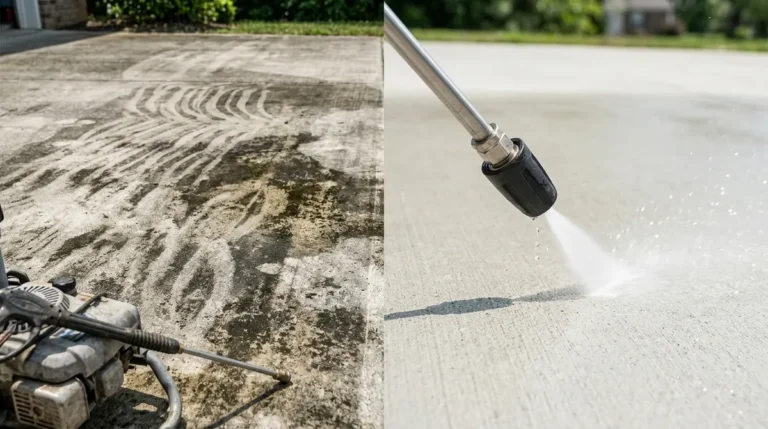
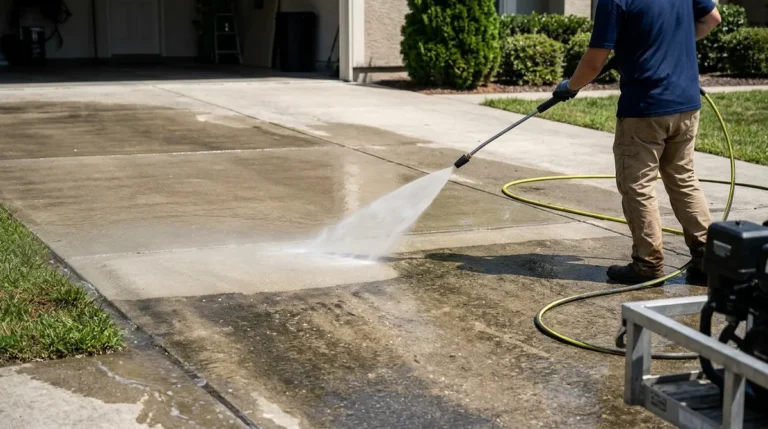
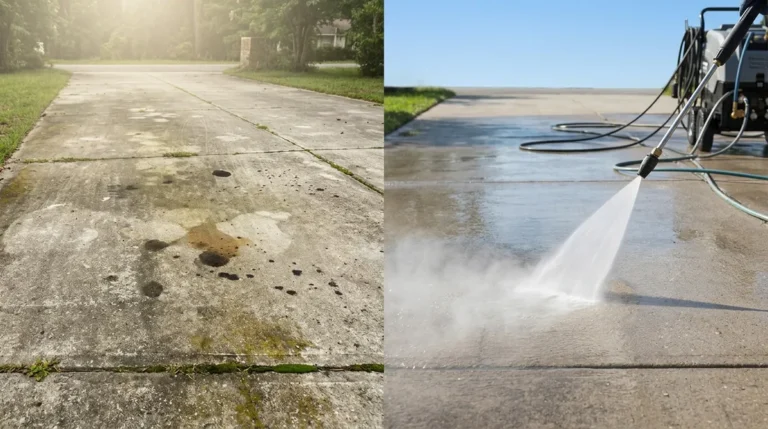
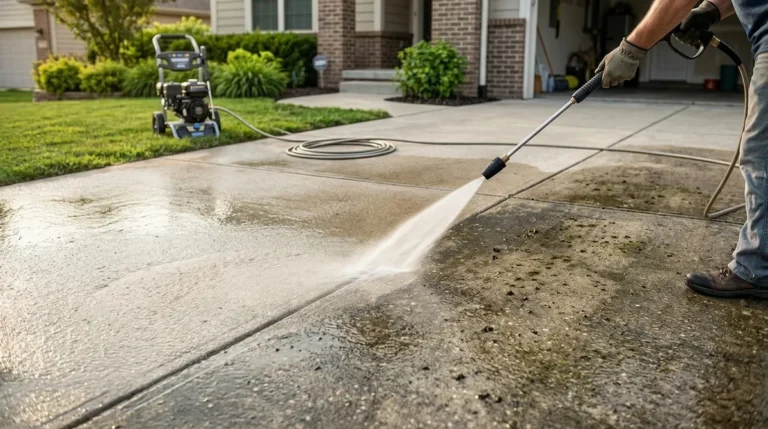
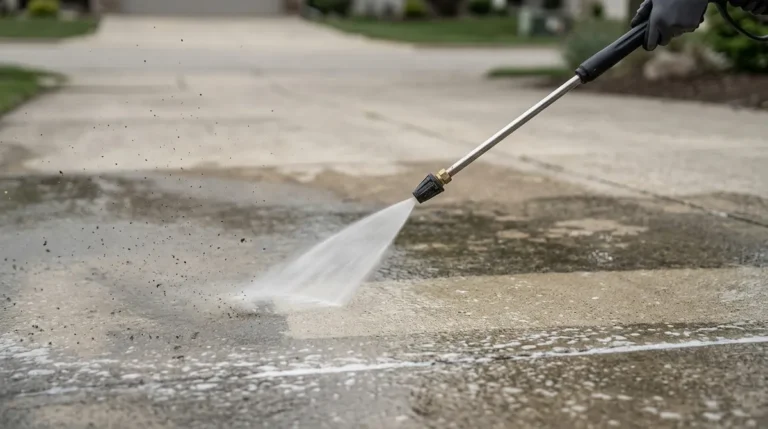
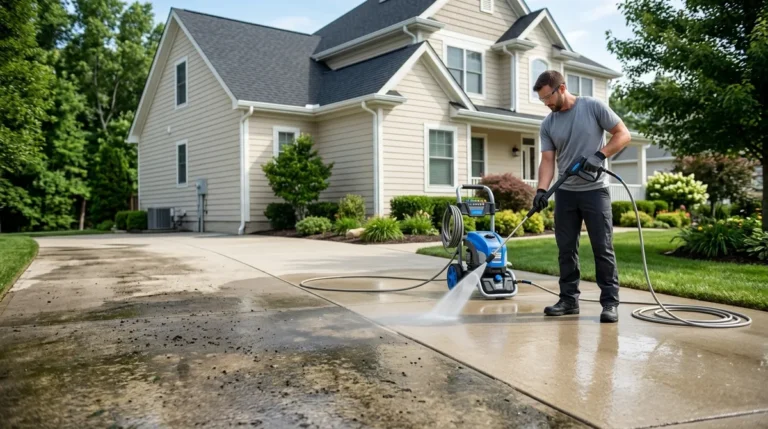
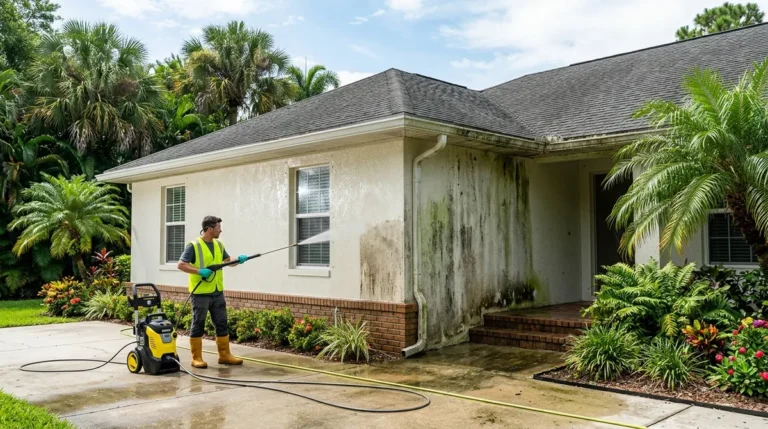
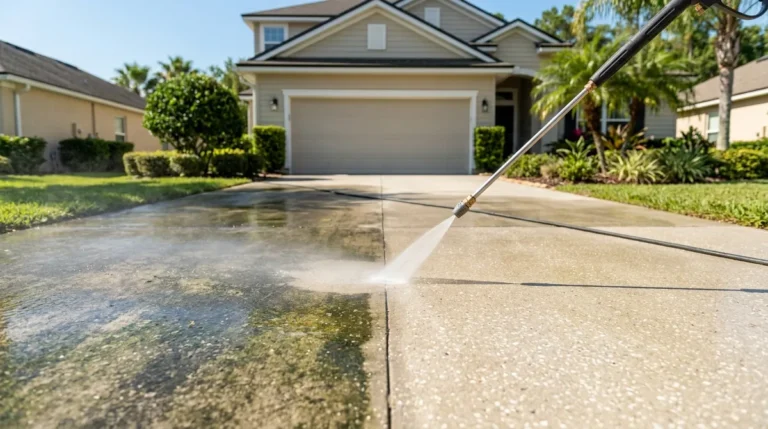
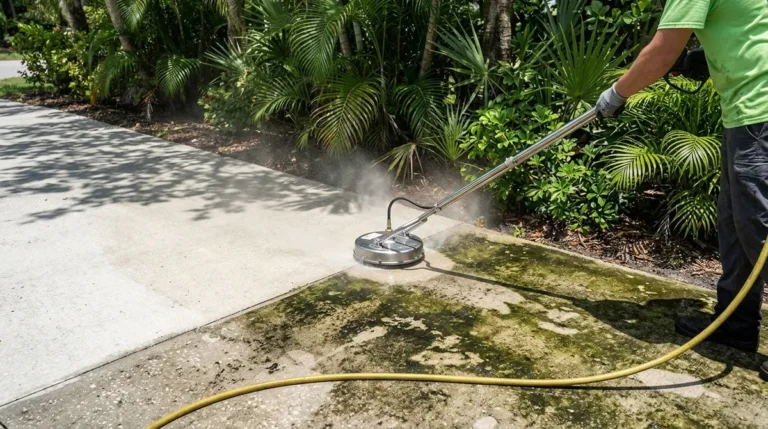
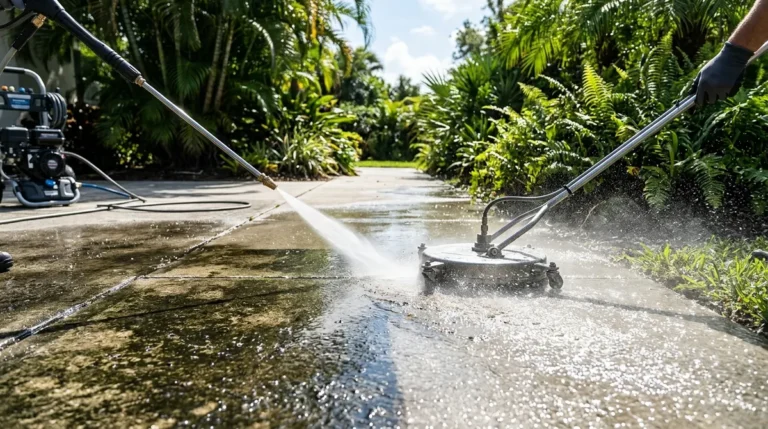
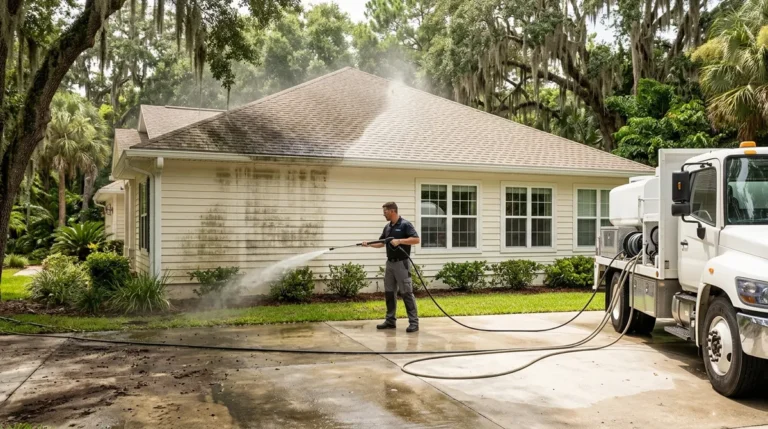
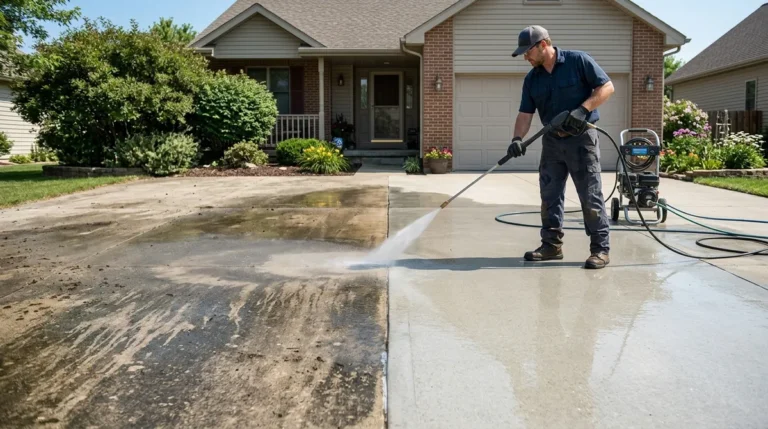
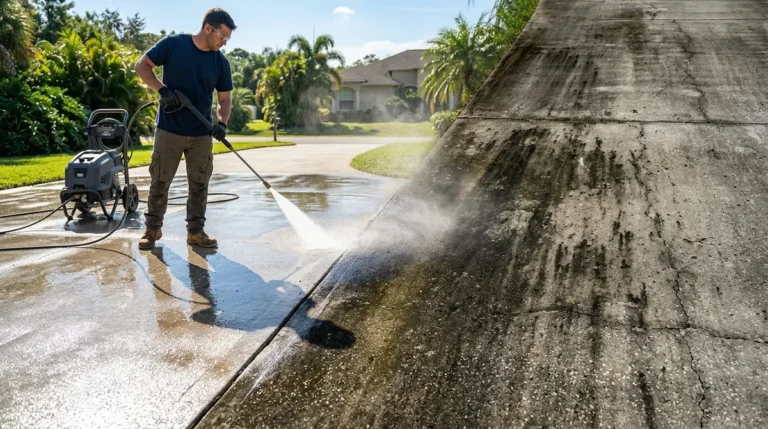
Pressure washing is by far the most effective way to clean a driveway. It removes years of built-up dirt, oil stains, tire marks, and algae in a fraction of the time it would take using traditional methods. Here’s exactly how it’s done:
The Process Explained
- Clear the driveway — Move vehicles, bikes, and any other items off the surface. You want a completely open area to work with.
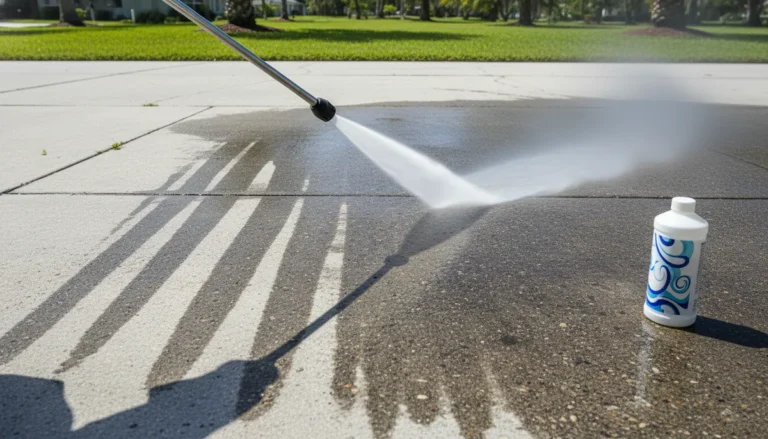
- Pre-treat stains — Apply a degreasing detergent to oil stains and let it soak for 10-15 minutes. This loosens the grime before washing begins.
- Rinse the surface — Lightly wet the entire driveway with a garden hose to remove loose debris and prepare the surface for cleaning.
- Set up your pressure washer — Use a 25-degree nozzle for general cleaning or a surface cleaner attachment for large areas. Keep pressure between 2,000-3,000 PSI for concrete.
- Work in overlapping passes — Start at the top and work downward. Overlap each pass by about 50% to avoid streaking.
- Rinse thoroughly — Do a final rinse to wash away all loosened dirt and detergent residue.
- Allow to dry completely — Give the driveway at least 24 hours to dry before sealing or applying any protective coatings.
You can explore more about this process with our detailed guide on how to clean your driveway with a pressure washer.
Common Driveway Stains and How to Tackle Them
Not all stains are created equal. Different types of grime require different approaches. Here’s a handy breakdown of the most common driveway stains and the best way to handle each one:
| Stain Type | Cause | Best Treatment | Difficulty Level |
|---|---|---|---|
| Oil/Grease | Vehicle leaks | Degreaser + high-pressure wash | Moderate |
| Algae/Mold | Moisture and shade | Detergent treatment + pressure washing | Easy |
| Tire Marks | Hot tires on concrete | Surface cleaner + hot water wash | Moderate |
| Rust Stains | Metal objects, fertilizer | Rust remover + gentle scrubbing | Hard |
| Dirt/Mud | General use and rain | Standard pressure wash | Easy |
| Organic Matter | Leaves, tree sap | Detergent soak + pressure wash | Easy |
Understanding what type of stain you’re dealing with makes the cleaning process much more effective. If you’re unsure about the right approach for your driveway, request a free quote from our team and we’ll point you in the right direction.
DIY vs. Professional Driveway Cleaning: Which Is Better?
This is the big question most homeowners wrestle with. Should you rent a pressure washer and tackle the job yourself, or hire a professional? Both options have their place — but the differences are important to understand.
DIY Driveway Cleaning
- Can save money upfront on smaller jobs
- Requires renting or owning the right equipment
- Risk of damage from using wrong pressure settings
- Time-consuming — a full driveway can take half a day or more
- May not fully remove deep stains or organic growth
Professional Driveway Cleaning
- Delivers deeper, more thorough results in less time
- Professionals use commercial-grade equipment and proper technique
- Eliminates risk of surface damage or injury
- Eco-friendly detergents used safely and correctly
- Saves your weekend for things you actually enjoy
For a deeper look at this comparison, read our article on DIY driveway pressure washer vs. pro service: which wins. Spoiler alert — for most Hillsborough County homeowners, the professional route delivers far better results with far less stress.
Curious about common errors people make when going DIY? Check out these 7 mistakes to avoid when using a power washer to clean concrete before picking up that pressure washer.
How Often Should You Clean a Driveway?
In Florida’s climate, driveways need more frequent attention than in cooler, drier states. Humidity, rain, and heat create the perfect breeding ground for algae, mold, and mildew year-round. Here’s a simple schedule to follow:
- Every 6-12 months — Deep clean using a pressure washer to remove all buildup, stains, and organic growth
- After major storms — Rinse away debris, mud, and organic material that storms deposit on your driveway
- Spot clean as needed — Treat fresh oil drips or spills quickly before they set into the concrete
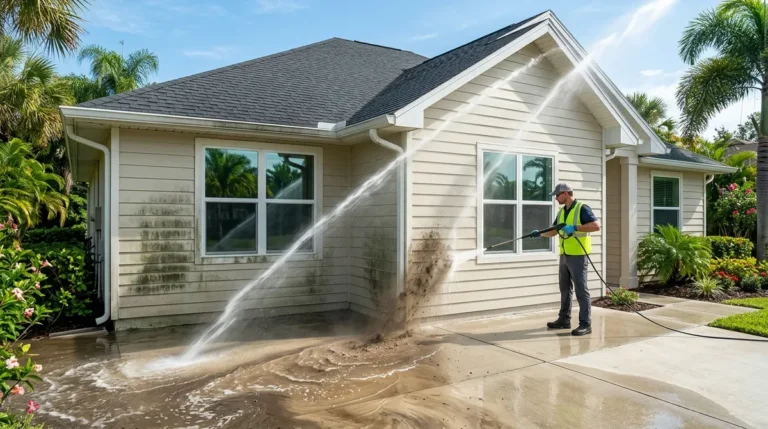
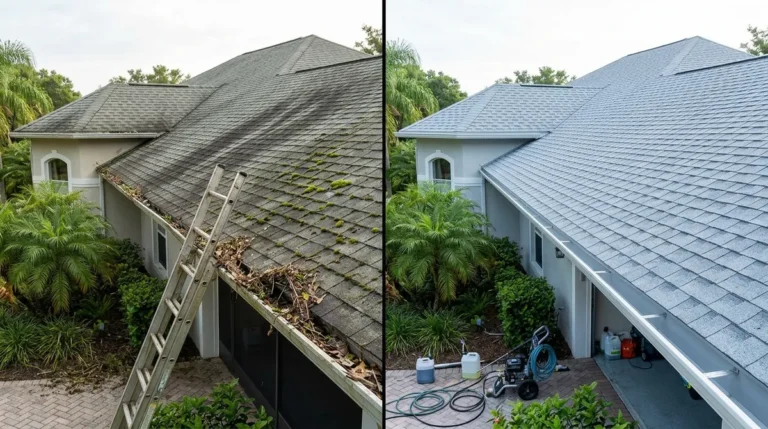
Staying on a regular cleaning schedule keeps your driveway looking great year-round and prevents long-term damage. Many homeowners in Hillsborough County pair their driveway cleaning with other exterior services like professional house washing and roof cleaning to keep everything looking sharp at the same time.
Tips for Getting the Best Results When You Clean a Driveway
Whether you’re doing it yourself or hiring a pro, these tips help ensure your driveway cleaning effort delivers the best possible outcome.
Pro Tips for a Spotless Driveway
- Always pre-treat stains before pressure washing — detergents do the heavy lifting so the pressure washer can finish the job
- Use a surface cleaner attachment for large driveways — it prevents the zebra-stripe effect from a standard wand nozzle
- Work with the grain on pavers and textured surfaces to avoid pushing dirt deeper into the joints
- Don’t use maximum pressure on all surfaces — too much PSI can etch concrete or damage pavers
- Seal after cleaning — applying a concrete sealer after your driveway is clean helps repel future stains and moisture
- Clean on an overcast day — direct sunlight dries detergent too quickly, reducing its effectiveness
For more expert-level insights, you’ll love reading about these driveway pressure washing secrets that pros use. These are the same strategies professional cleaning crews rely on to get outstanding results every time.
What Happens If You Skip Driveway Cleaning?
Skipping regular driveway cleaning might seem harmless, but the consequences add up quickly. Here’s what neglect looks like over time:
- Algae and mold spread — What starts as a small green patch spreads across your entire driveway within months in Florida’s climate
- Surface degradation — Organic growth and standing moisture break down concrete, leading to cracks and crumbling edges
- HOA violations — Many Hillsborough County communities have strict appearance standards, and a neglected driveway can result in fines
- Reduced property value — Poor curb appeal directly impacts what buyers and appraisers think your home is worth
- Slipping hazards — Algae-covered driveways become dangerously slippery when wet, putting your family and guests at risk
If you recognize any of these warning signs, it’s time to act. Don’t wait until the damage becomes expensive to fix. You can also read about curb appeal mistakes that make your home look neglected to see where most homeowners go wrong.
Why Buckhorn Power Wash Is Hillsborough County’s Trusted Choice
When it comes to getting a truly clean driveway, nothing beats working with a local team that knows Florida’s unique climate challenges. Buckhorn Power Wash’s driveway and concrete cleaning service uses professional-grade equipment and eco-friendly detergents to deep clean your driveway safely and effectively — without causing any damage to your surface.
Our team proudly serves homeowners across all of Hillsborough County, including Tampa, Brandon, Valrico, Riverview, and Lithia. We use proven techniques, commercial-grade equipment, and a friendly, professional approach that our customers love. You can see what happy clients are saying by checking out Buckhorn Power Wash reviews on Yelp, or visit us on Google — Buckhorn Power Wash to read more reviews from local homeowners just like you.
Our content and digital presence are powered in part by the team at Brain Buzz Marketing, helping us connect with homeowners across Hillsborough County who deserve professional cleaning they can trust.
We also make getting started incredibly easy. With our online quoting tool, you can get a free instant quote in just a few minutes — no home visit required. If you prefer to talk to a real person, feel free to give us a call and we’ll be happy to help.
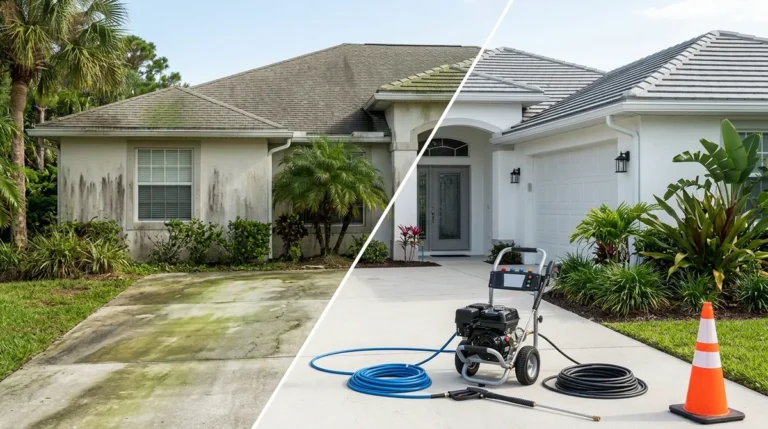
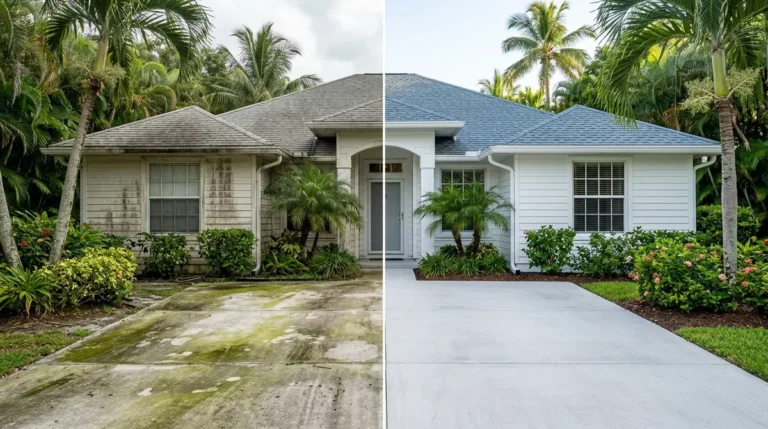
Want to see real before-and-after results? Browse our photo gallery to see what a professional driveway cleaning really looks like. You’ll be amazed at the difference!
You can also connect with us and see our latest work on our Buckhorn Power Wash Facebook page.
Conclusion: A Clean Driveway Is Closer Than You Think
Knowing how to properly clean a driveway — and doing it regularly — makes a bigger difference than most homeowners realize. From boosting curb appeal to preventing surface damage and avoiding safety hazards, a clean driveway is one of the smartest investments you can make in your home.
Whether you’re tackling a light cleanup or dealing with years of stubborn stains, the right approach and the right tools make all the difference. And when you’re ready for results that truly last, a professional team is always worth it.
Ready to give your driveway the deep clean it deserves? Request your free quote from Buckhorn Power Wash today and discover just how easy and affordable a spotless driveway can be. Your home — and your neighbors — will thank you!
FAQs
Q: How often should I clean a driveway in Florida?
A: In Florida’s warm and humid climate, we recommend cleaning your driveway at least once every 6 to 12 months. The heat and moisture create ideal conditions for algae, mold, and mildew to grow quickly, so staying on a regular schedule keeps your driveway looking great and prevents long-term surface damage.
Q: What is the best method to clean a driveway with stubborn stains?
A: Pressure washing combined with a pre-treatment degreaser is the most effective method for stubborn stains like oil, tire marks, and organic growth. Letting the detergent soak in for 10-15 minutes before washing breaks down the grime, making it much easier for the pressure washer to blast it away completely.
Q: Can pressure washing damage my concrete driveway?
A: Yes, it can — but only if done incorrectly. Using too much pressure or the wrong nozzle can etch or pit concrete surfaces. That’s why professional pressure washing services use the right equipment settings and technique for each surface type, giving you a deep clean without any damage.
Q: Is it better to clean a driveway myself or hire a professional?
A: While DIY cleaning is possible, hiring a professional delivers better results with less risk and effort on your end. Professionals use commercial-grade equipment, proper detergents, and proven techniques that remove deep stains and organic growth far more effectively than a rental machine can.
Q: Should I seal my driveway after cleaning it?
A: Absolutely — sealing your driveway after a thorough cleaning is a great idea! A concrete sealer helps repel future stains, protects against moisture damage, and keeps your driveway looking cleaner for longer. Just make sure the surface is completely dry before applying any sealer.