Key Takeaways
-
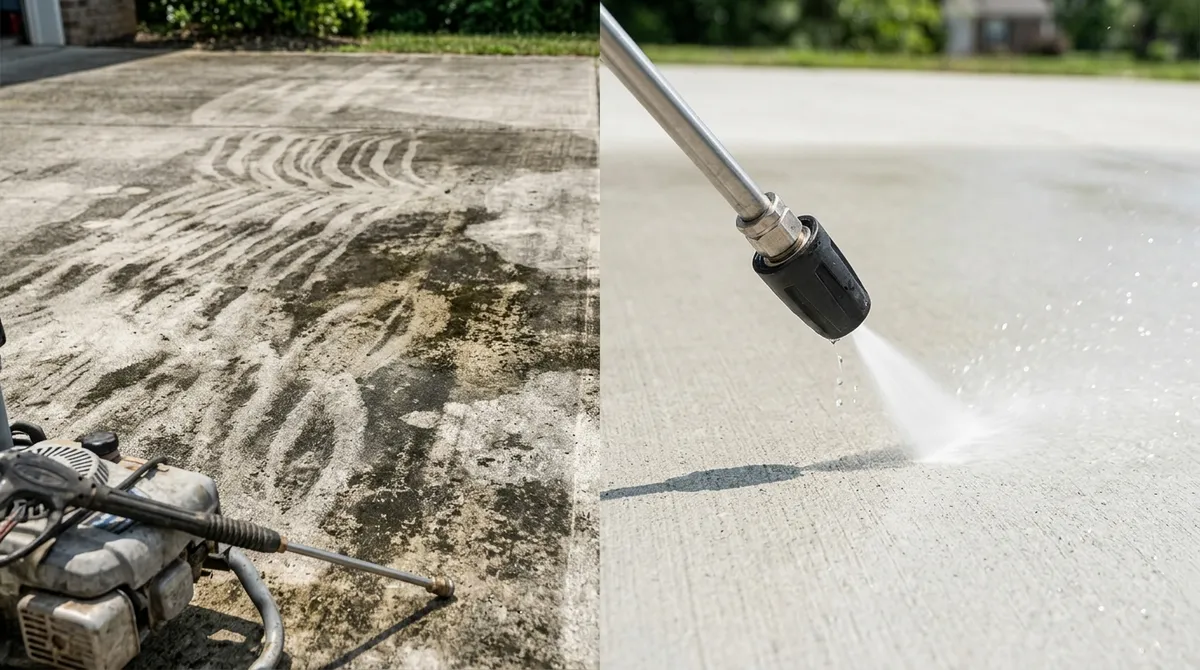
Use 2,500-3,000 PSI with a 25-degree nozzle on concrete to effectively remove contaminants without causing surface damage or etching.
-
Professional pressure washing removes deep-set mold, algae, and oil stains that DIY methods often fail to eliminate completely, preventing quick recontamination.
-
Heavy mold growth, large areas, or oil stains warrant professional service because they require commercial-grade equipment and specialized detergents homeowners lack.
-
Common DIY mistakes include incorrect nozzle selection, inconsistent pressure, and overlapping patterns that cause streaking and uneven results on concrete surfaces.
-
Professional pressure washing protects your home investment by preventing surface damage like etching and cracking while improving property value and curb appeal.
-
Most homeowners should schedule professional concrete pressure washing annually, or every 6-12 months in humid climates where mold and algae grow faster.
Your concrete driveway, walkway, or patio takes a beating every single day. Sun, rain, tire marks, mold, and algae all build up over time. At some point, you notice the grime and think: should I rent a pressure washer and tackle this myself, or call in a professional? It’s a great question, and you’re definitely not alone in asking it.
Both options have real merit. DIY cleaning can feel empowering and budget-friendly. Professional service offers convenience, safety, and results you simply can’t replicate with a rented machine. Let’s break both options down so you can make the smartest choice for your home and your weekend.
What Does Using a Pressure Washer on Concrete Actually Do?
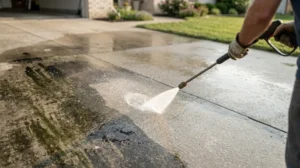
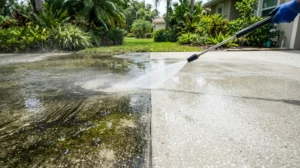
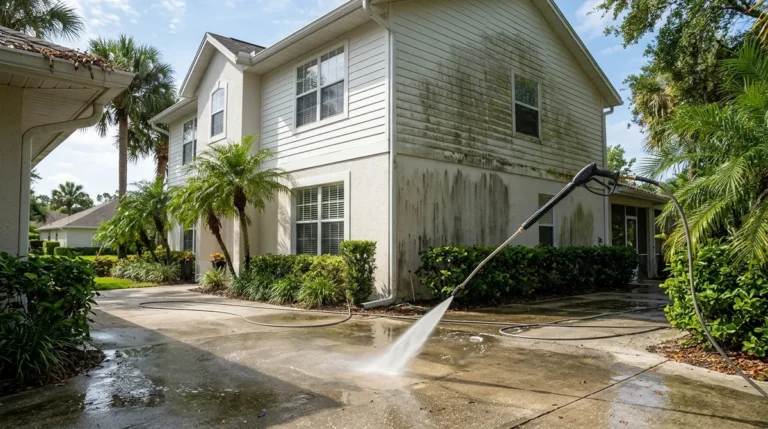
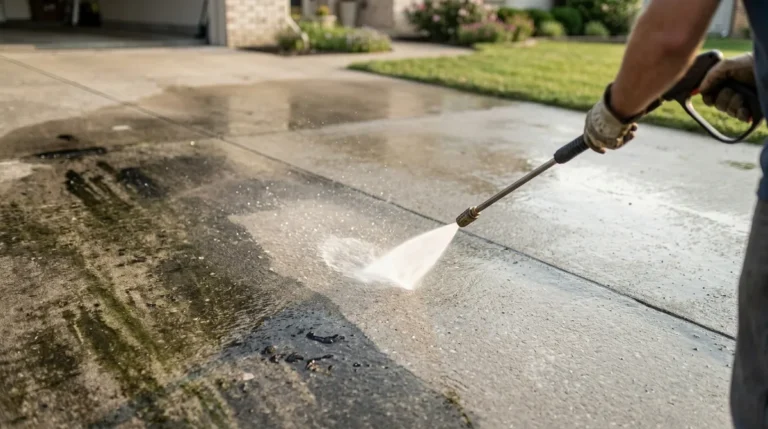
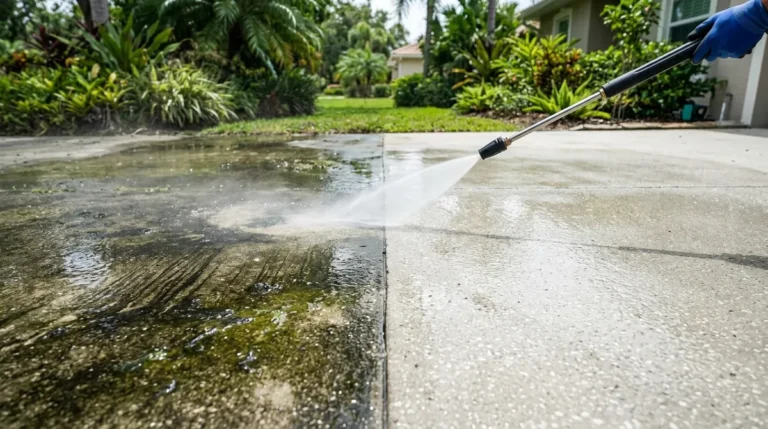
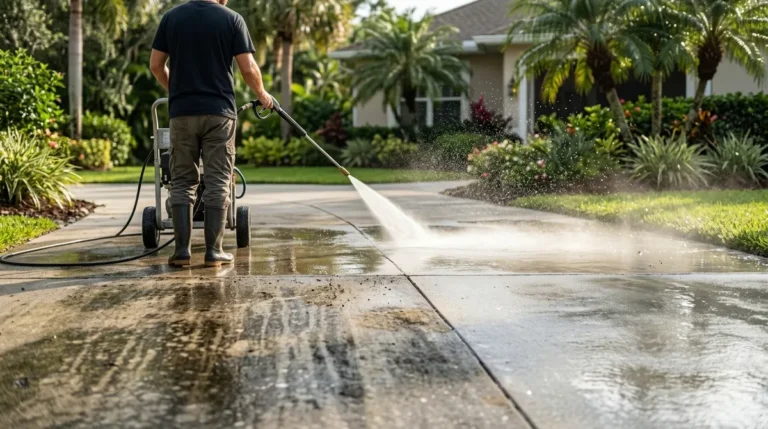
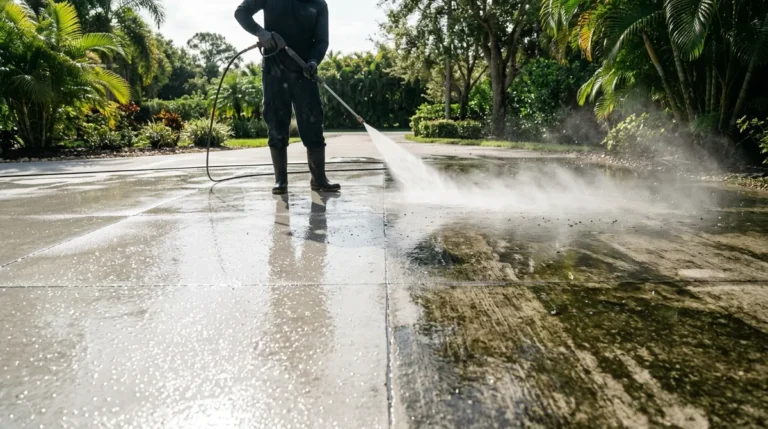
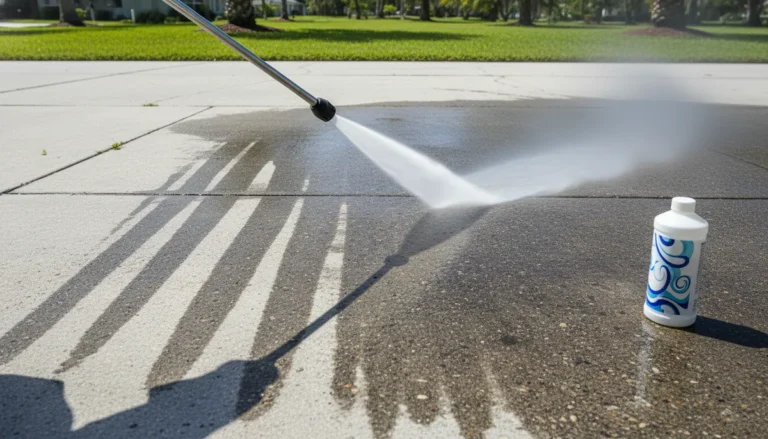
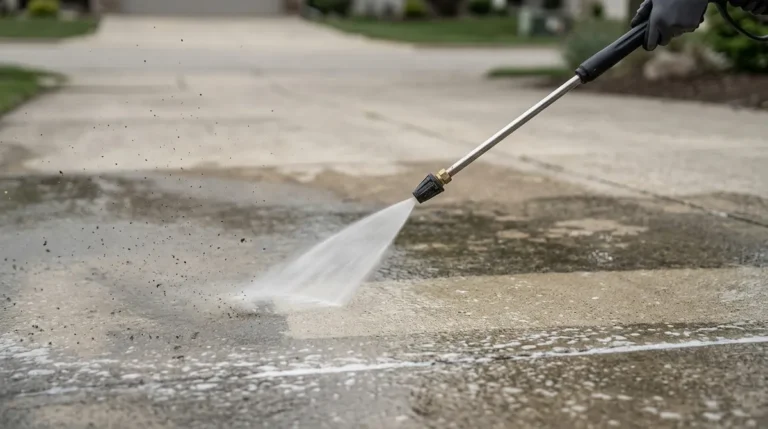
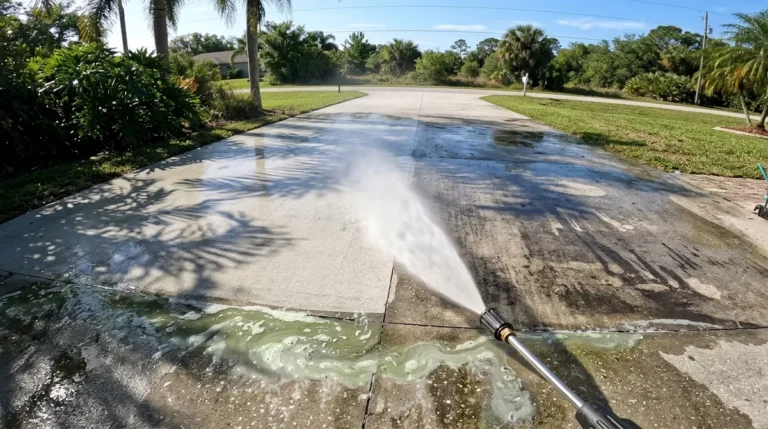
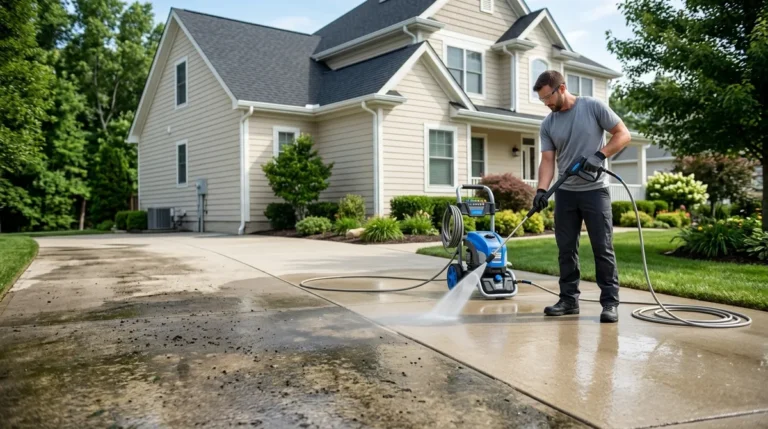
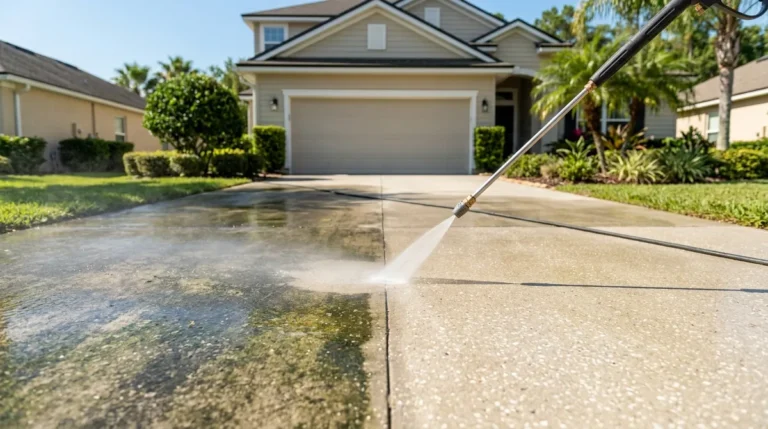
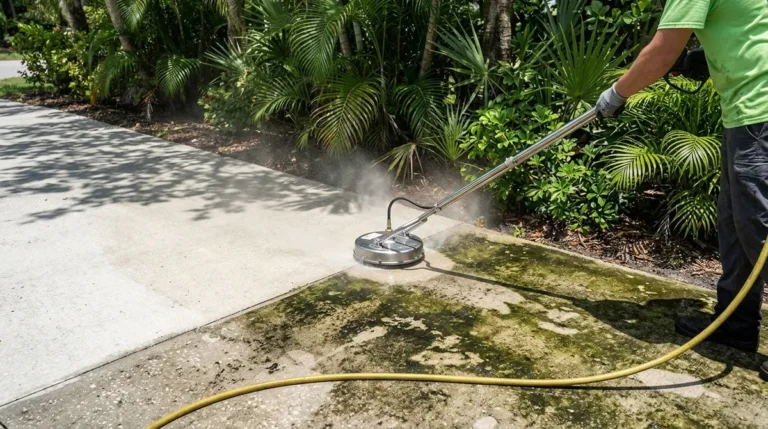
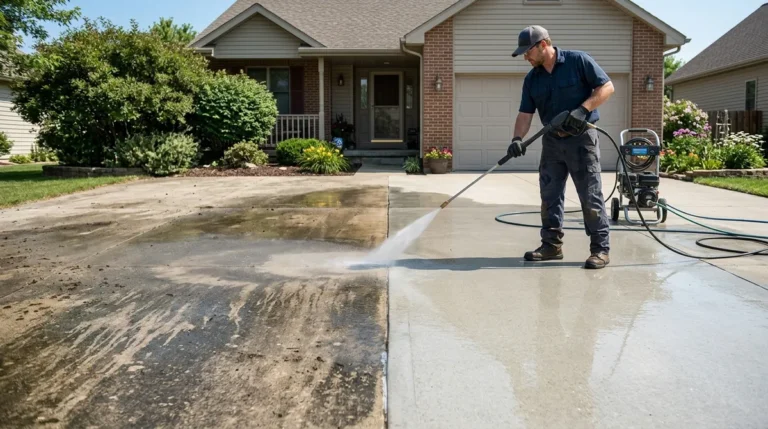
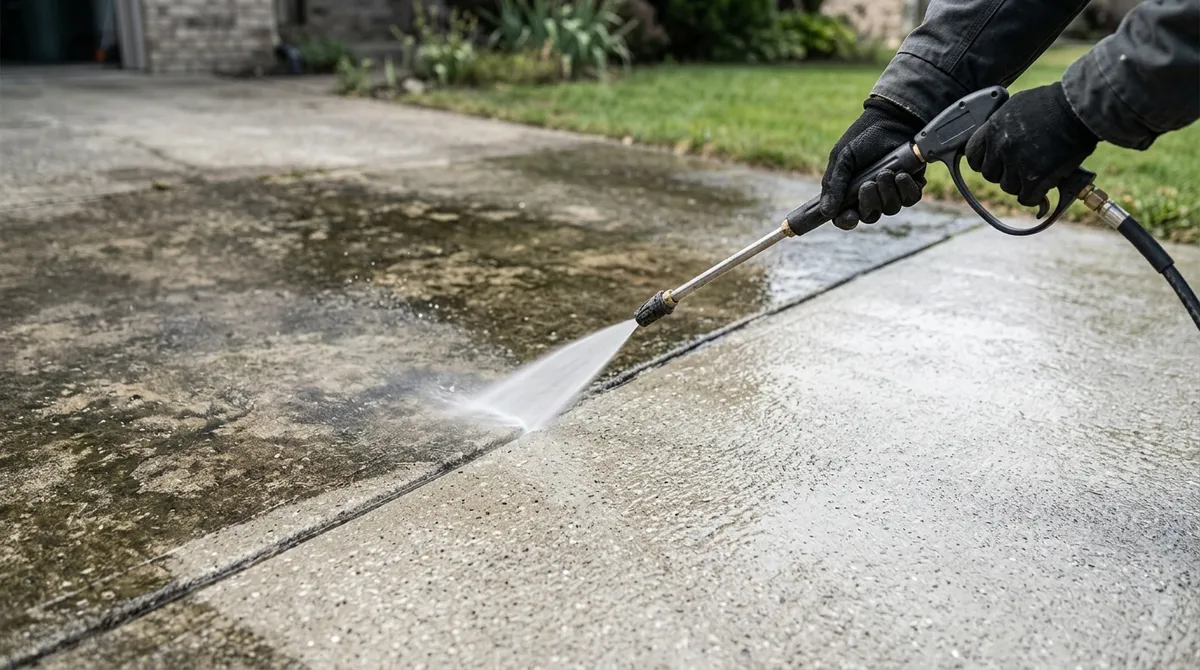
A pressure washer blasts water at high force to strip away surface contaminants. On concrete specifically, it removes mold, algae, oil stains, tire marks, dirt, and discoloration. The result? A surface that looks refreshed, brightened, and almost new again.
Concrete is a durable material, but it’s also porous. That means it traps contaminants deep below the surface. A pressure washer on concrete works best when enough PSI (pounds per square inch) is used to penetrate those pores. Too little pressure leaves behind grime. Too much can etch or damage the surface. Finding that sweet spot is where things get tricky — especially for first-timers.
Want to understand the mechanics better? Check out this helpful guide on how cleaning a driveway with a pressure washer really works.
DIY Pressure Washing on Concrete: The Full Picture
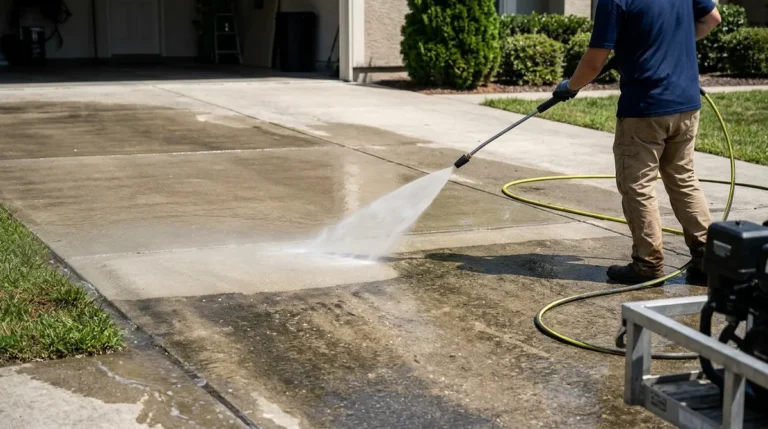
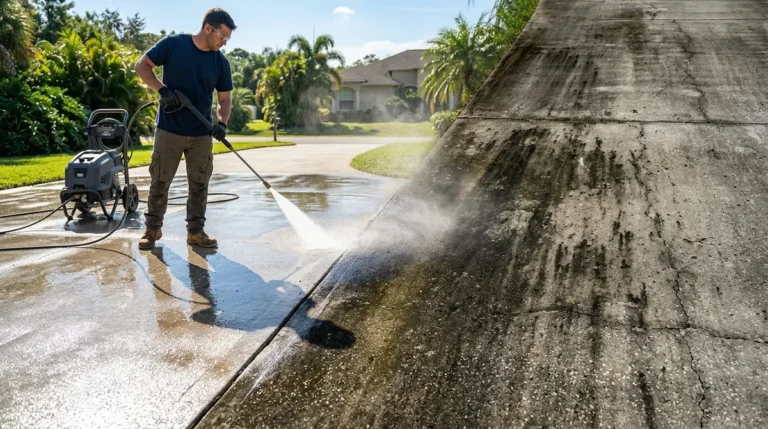
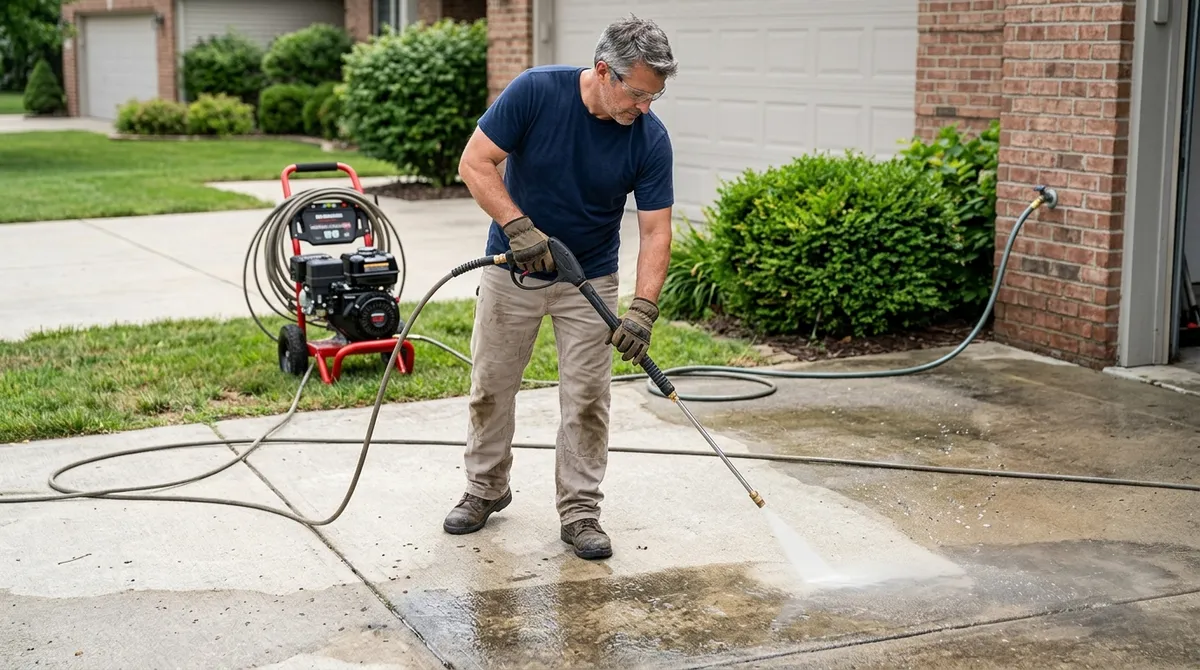
Let’s be honest — there’s something satisfying about renting a pressure washer and going to town on a grimy driveway. Many homeowners try the DIY route at least once. Here’s what that experience usually looks like.
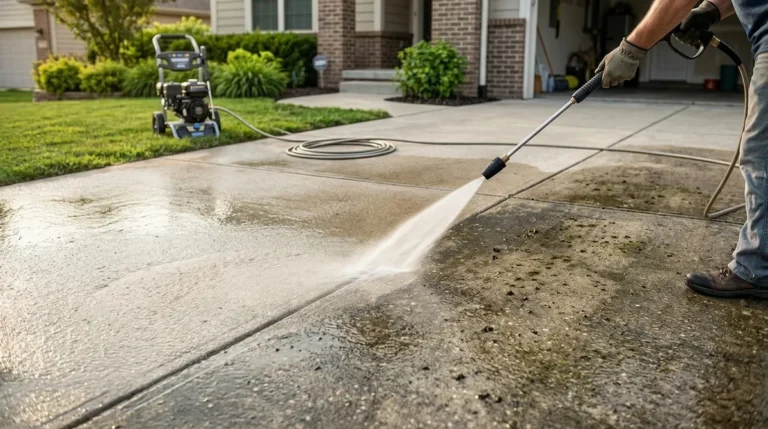
The DIY Process: Step by Step
- Rent or buy a pressure washer. Most home improvement stores offer rentals. You’ll typically want a unit with 2,500–3,000 PSI for concrete.
- Choose the right nozzle. A 25-degree nozzle is generally safe for concrete. Avoid the 0-degree tip, which can gouge the surface.
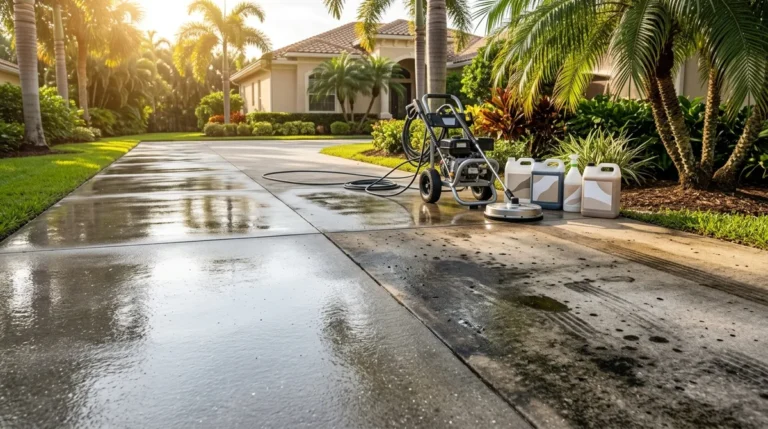
- Apply a concrete detergent. Pre-treating stains helps loosen grime before you start washing.
- Work in even, overlapping strokes. Move consistently to avoid streaky lines on your surface.
- Rinse thoroughly. Make sure no detergent residue is left behind.
Sounds straightforward, right? It can be — but there are real pitfalls. Read about 7 mistakes to avoid when using a power washer to clean concrete before you get started.
Pros of DIY Concrete Pressure Washing
- You control the schedule completely
- Can be rewarding and hands-on
- Suitable for small, lightly soiled areas
- No need to wait for a service appointment
Cons of DIY Concrete Pressure Washing
- Risk of surface damage from incorrect pressure or nozzle
- Physical strain — hours of bending and maneuvering
- Rental costs, detergent purchases, and your time all add up
- Uneven results and streaking are common for beginners
- Safety risks from high-pressure water (serious lacerations are possible)
- May not remove deep-set stains, mold, or algae effectively
If you’ve already made some DIY missteps, you might find this resource on 10 concrete pressure cleaner mistakes that ruin your driveway very eye-opening.
Professional Pressure Washing on Concrete: What You Get
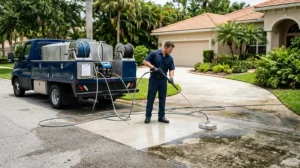
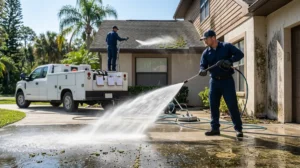
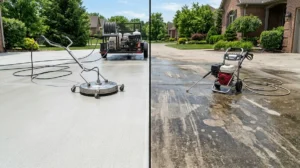
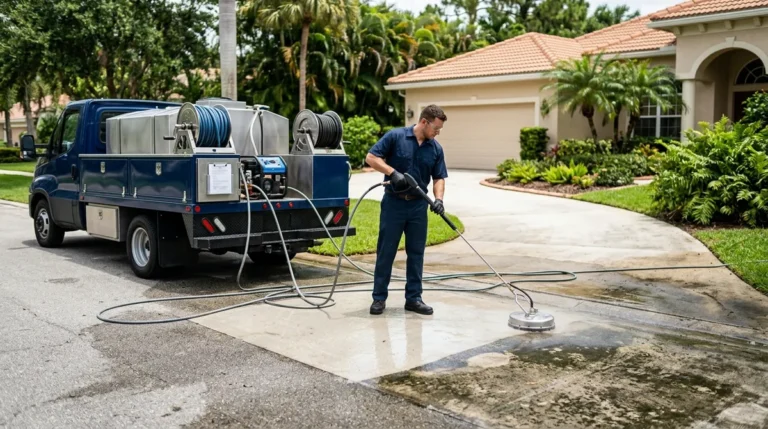
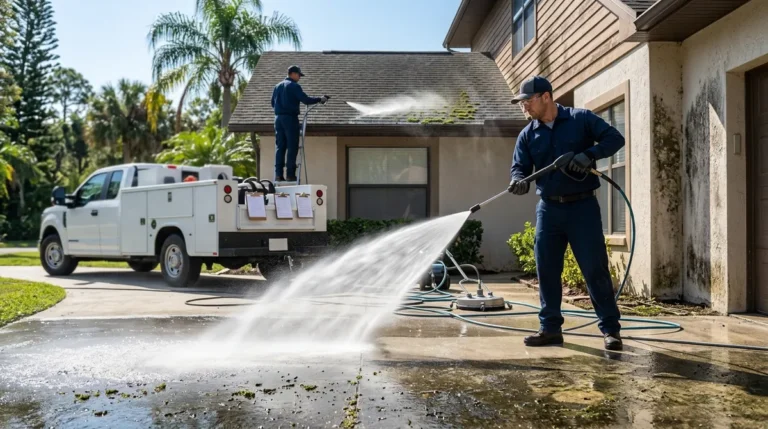
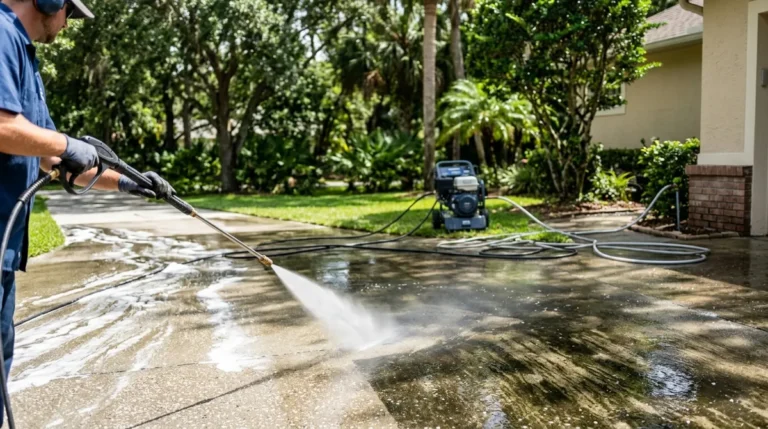
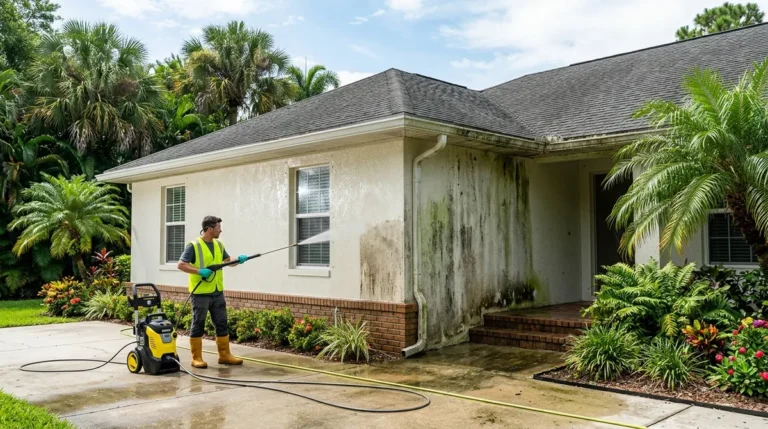
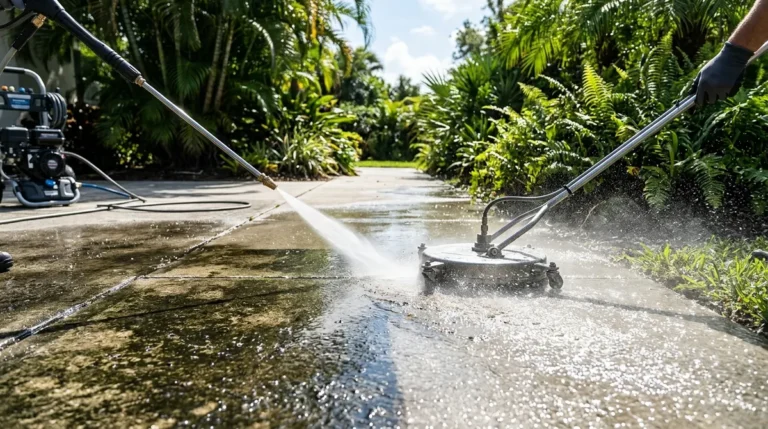
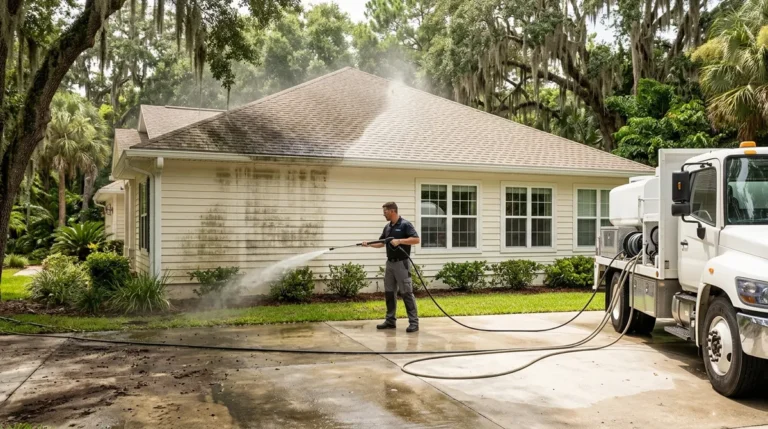
Hiring a professional to use a pressure washer on concrete is a completely different experience. Pros bring commercial-grade equipment, industry knowledge, and years of hands-on experience. The difference in results is usually visible right away.
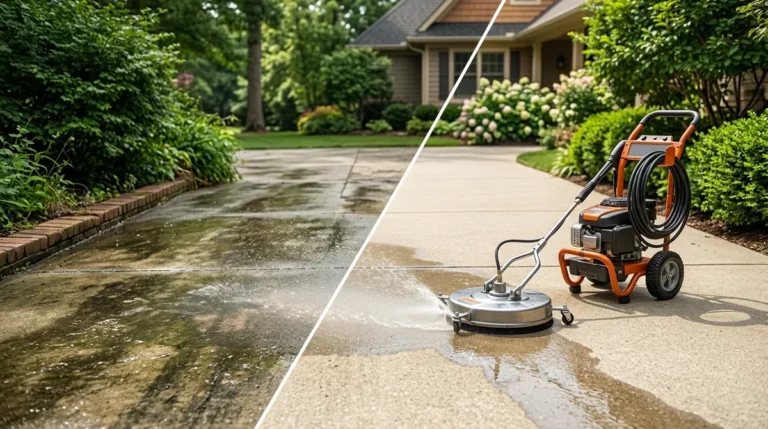
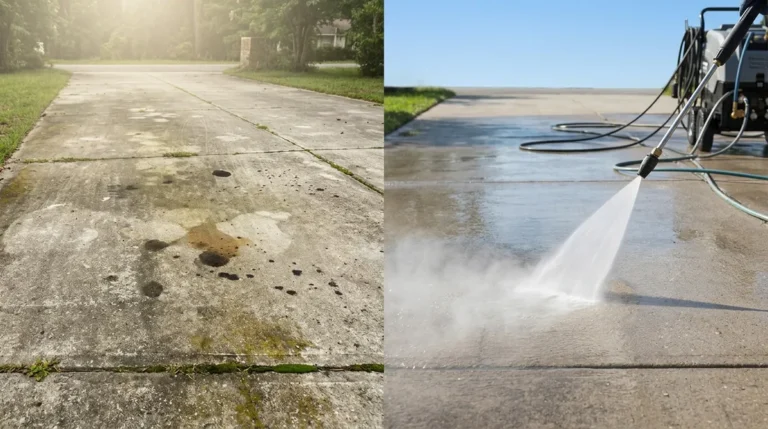
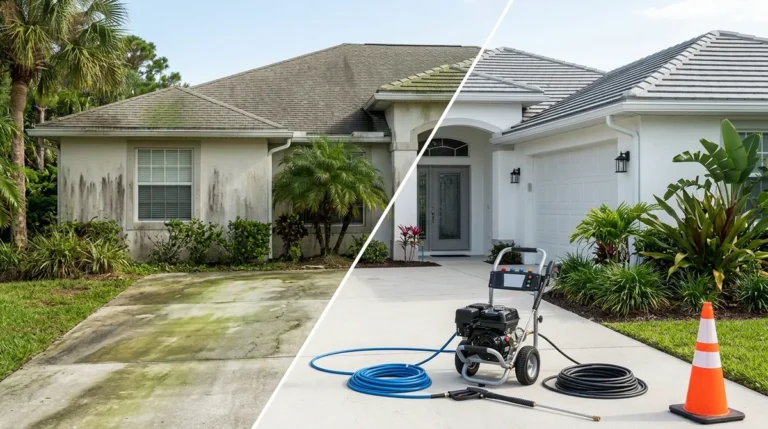
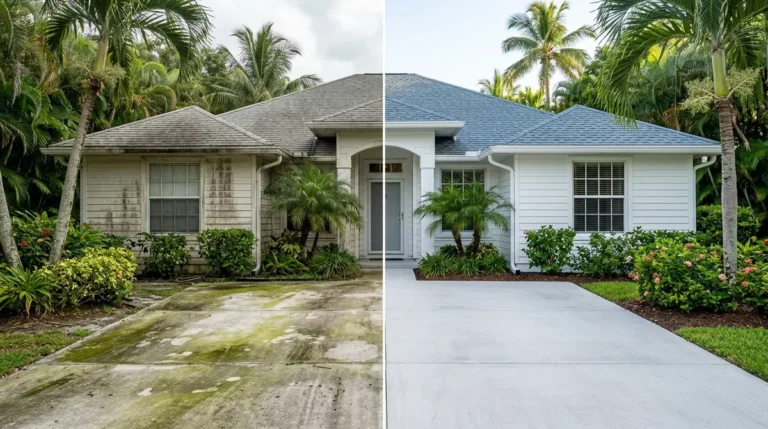
At Buckhorn Power Wash, serving homeowners across Hillsborough County, the team uses high-powered equipment and proven techniques to deep clean concrete driveways, walkways, pool decks, and patios. The results speak for themselves — you can browse the gallery of before-and-after results to see the transformation firsthand.
The Professional Process: Step by Step
- Surface assessment. A pro evaluates the concrete condition, stain types, and any existing damage before starting.
- Pre-treatment application. Professional-grade detergents are applied to break down mold, algae, and embedded grime.
- High-pressure washing. Commercial equipment delivers consistent, calibrated pressure for a thorough, even clean.
- Targeted stain treatment. Stubborn oil spots or rust stains get special attention with appropriate cleaning agents.
- Final rinse and inspection. The surface is rinsed clean and checked for any missed spots before the job is done.
Pros of Professional Concrete Pressure Washing
- Superior results — deep clean that DIY machines can’t match
- No risk of surface damage from incorrect technique
- Saves your time and physical energy
- Professionals handle all equipment, detergents, and water management
- Effective removal of mold, algae, oil, and deep-set stains
- Safe for you, your family, and surrounding landscaping
Cons of Professional Concrete Pressure Washing
- Requires scheduling ahead of time
- You’re not personally in control of the process
Curious what a professional driveway cleaner actually does during a service visit? This article explains what a professional driveway cleaner actually does from start to finish.
DIY vs. Pro: Side-by-Side Comparison
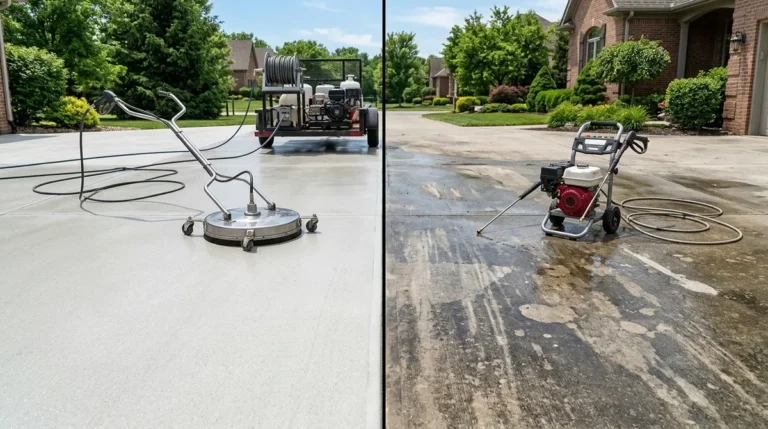
Let’s put both options side by side so you can see the key differences at a glance.
| Factor | DIY Pressure Washing | Professional Service |
|---|---|---|
| Equipment Quality | Consumer or rental-grade | Commercial-grade, high-powered |
| Risk of Surface Damage | Moderate to high (inexperience) | Very low (trained technicians) |
| Cleaning Results | Good for light surface dirt | Deep clean, including embedded stains |
| Time Investment | Several hours of your time | Minimal — pro handles everything |
| Physical Effort | High — tiring and physically demanding | None — sit back and relax |
| Safety | Risk of injury from high-pressure water | Handled by trained, insured pros |
| Mold and Algae Removal | Partial — may return quickly | Full removal with proper treatment |
| Overall Value | Lower for large or heavily soiled areas | Higher — lasting results and protection |
For an even deeper dive into how this comparison plays out in real scenarios, read about DIY concrete pressure washer vs. pro service and which wins.
When Should You Choose Professional Service?
Some situations clearly call for a professional. Here’s when skipping the DIY route is the smarter call.
- Your concrete has heavy mold or algae growth. These organisms root themselves deep into porous concrete. Without the right detergents and pressure, you’ll only remove the surface layer — and the problem comes back fast.
- You have large areas to clean. A long driveway, patio, or multiple surfaces? That’s hours of exhausting work for a DIYer but a quick, efficient job for a pro.
- Your concrete has oil stains or rust marks. These stains require specific treatment agents that most homeowners don’t have access to.
- You value your free time. Let’s be real — weekends are precious. Professionals handle the whole job while you spend time on what matters most.
- You want results that last. Professional equipment and technique produce a cleaner result that stays clean longer.
You can also learn more about why concrete pressure washing near you is worth it for Hillsborough County homeowners.
Concrete Surfaces Professionals Commonly Clean
When you hire a professional pressure washing team, concrete is just one of many surfaces they can restore. Here’s what’s typically covered:
- Driveways — the most common concrete surface that homeowners want cleaned
- Walkways and sidewalks — often overlooked but highly visible to visitors and passersby
- Patios and entertainment areas — where family and guests gather, so appearance really matters
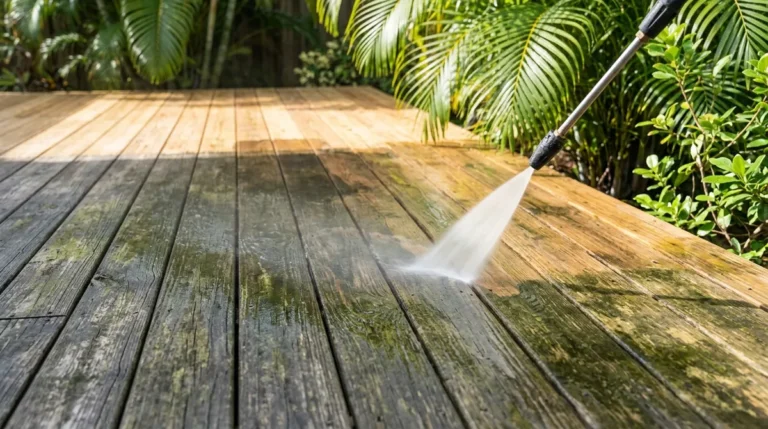
- Pool decks — wet surfaces breed algae and mold quickly, creating both an eyesore and a slip hazard
- Garage floors — oil drips and tire marks accumulate fast
If your pool deck is on the list, you’ll love reading about how pressure washing transforms your outdoor space. And for those in the Valrico area, there’s a great resource on 9 reasons to get pool deck pressure washing in Valrico.
What to Look for in a Professional Pressure Washing Service
Not all services are created equal. Here’s what to look for when choosing a pro to use a pressure washer on your concrete surfaces.
- Licensed and insured — this protects both you and the technician
- Positive customer reviews — check platforms like Buckhorn Power Wash on Yelp for real homeowner feedback
- Transparent service options — a good company explains exactly what they’ll do and how
- Eco-conscious practices — look for services that use safe detergents and responsible water usage
- Local reputation — a company rooted in the community cares more about results
You can also follow Buckhorn Power Wash on Facebook to see recent work, seasonal tips, and community updates. And if you’re ready to connect directly, visit us on Google — Buckhorn Power Wash to read customer reviews and get directions.
Looking for more tips? The guide on how to clean concrete with a pressure washer the right way is a great starting point whether you go DIY or pro.
A Note on Protecting Your Investment
Concrete might seem tough, but it can be damaged by improper pressure washing. Etching, surface cracking, and joint erosion are all real risks when the wrong technique is used. Professionals know exactly how to avoid these issues.
Your home is likely your biggest investment. Keeping the exterior — including concrete surfaces — in great shape protects property value and boosts curb appeal. If you’re planning a move, companies like DynaMight Movers know how much first impressions matter when it comes to a home’s exterior. And if you have a pool area that needs attention alongside your concrete, Panther Pools is a trusted name for pool care in the region.
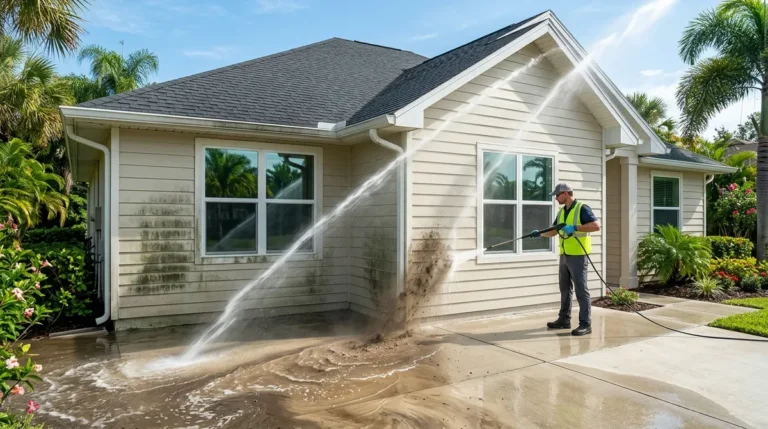
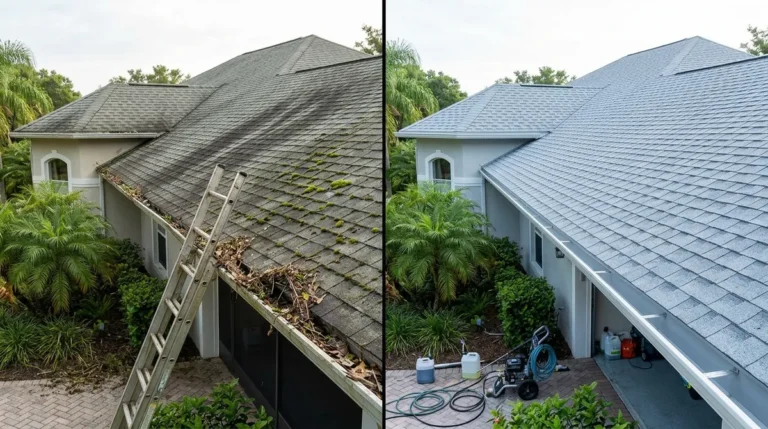
Also, don’t forget: clean concrete is just the beginning. Many Hillsborough County homeowners also schedule professional house washing and roof cleaning at the same time for a complete exterior refresh.
The Verdict: Which Option Wins?
For small areas with light grime, a careful DIY attempt can work — if you follow the right steps and avoid the common mistakes. But for most homeowners in Hillsborough County, professional service wins hands down. You get better results, zero risk of damage, and your free time stays free.
The real question isn’t just about clean concrete. It’s about what your time, safety, and home’s appearance are worth to you. Most homeowners agree: professional results are absolutely worth it.
Ready to see what a professional pressure washer on concrete can do for your home? Request your free quote from Buckhorn Power Wash today and discover how easy it is to get that like-new concrete look without lifting a finger.
FAQs
Q: Is it safe to use a pressure washer on concrete?
A: Yes — but it depends on the pressure settings and technique used! Too much pressure or the wrong nozzle can etch or damage the surface. Professionals know exactly how to calibrate equipment for concrete, which is one big reason so many homeowners prefer to leave it to the pros.
Q: How often should I have my concrete pressure washed?
A: Most homeowners benefit from having their driveways, patios, and walkways professionally pressure washed once a year. In Florida’s humid climate, mold and algae can grow faster, so some surfaces may benefit from cleaning every six to twelve months.
Q: Can a pressure washer remove oil stains from concrete?
A: It can help, but oil stains require more than just water pressure! Professionals use specialized degreasers and targeted cleaning techniques to break down oil and lift it from porous concrete. DIY attempts with water alone often leave stains behind.
Q: Will pressure washing damage my concrete driveway?
A: Not when done correctly! The key is using the right PSI, the right nozzle, and the right distance from the surface. Professionals are trained to clean concrete effectively without causing etching, cracking, or joint erosion — so the results look great and the surface stays intact.
Q: How long does a professional concrete pressure washing service take?
A: Most residential driveways or patios can be cleaned in one to two hours by a professional crew. Larger areas or heavily stained surfaces may take a bit longer, but the whole process is quick, efficient, and completely handled for you — no effort required on your part!