Key Takeaways
-
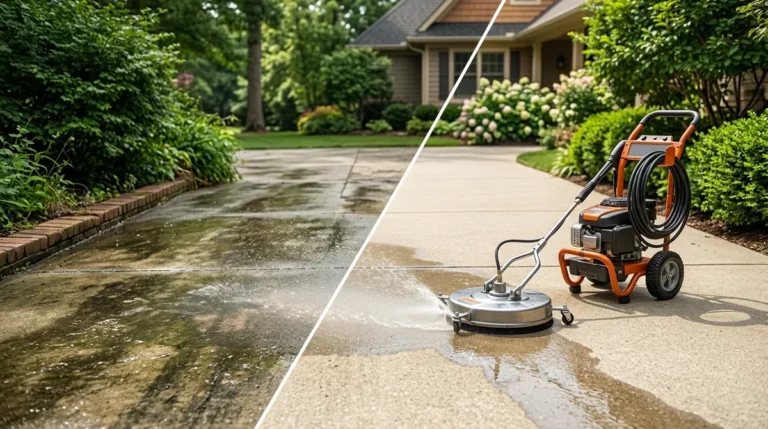
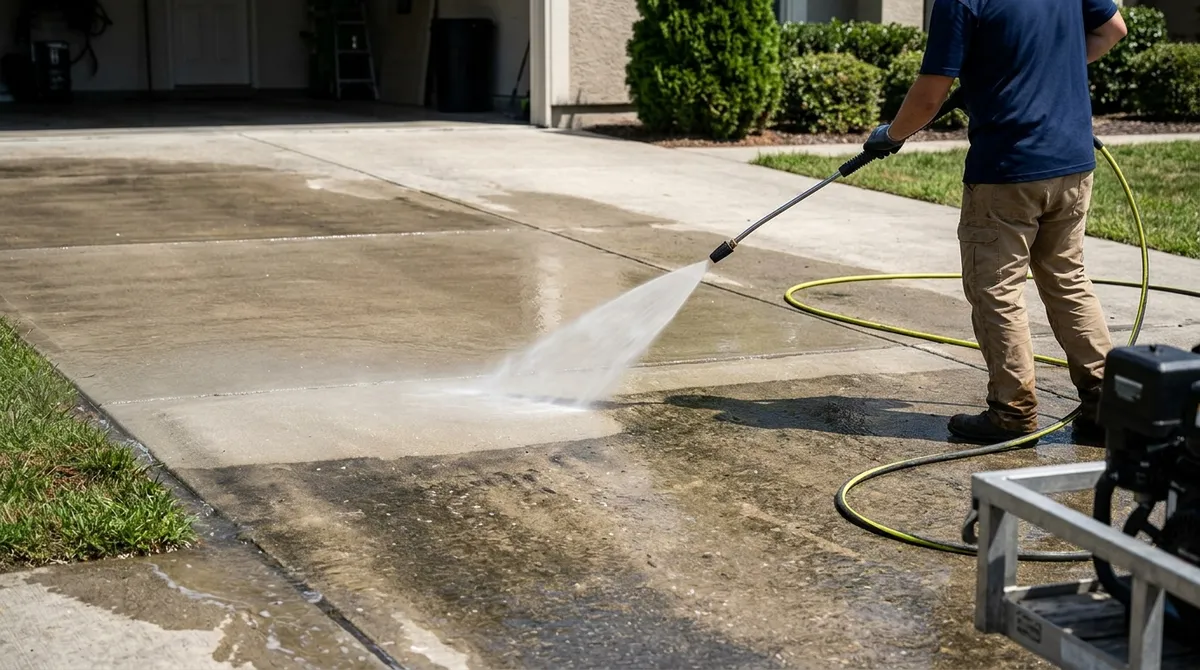
Use 2,000-3,000 PSI for concrete pavement and always employ a surface cleaner attachment to avoid etching or streaking the surface during power washing.
-
Pre-treat stubborn stains like oil, rust, and algae with appropriate degreasers or detergent solutions 5-10 minutes before washing to improve results significantly.
-
In Florida's humid climate, power wash pavement at least once yearly, or every 6 months for shaded areas prone to algae and mold growth.
-
Work in sections from highest to lowest point with 30% overlapping passes at a consistent 6-12 inch nozzle distance to achieve even, streak-free results.
-
Seal concrete 24-48 hours after power washing with a quality sealer that repels oil and water, extending the clean appearance for 2-3 years.
-
Hire professionals for large areas, persistent stains, HOA deadlines, or slippery surfaces where DIY equipment rental and time investment outweigh the service cost.
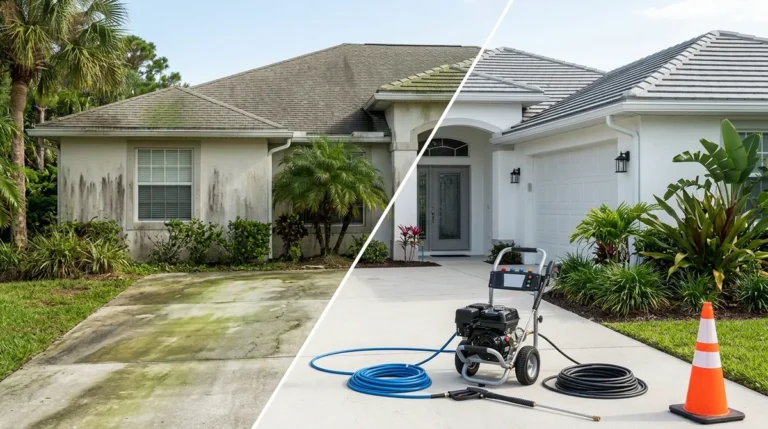
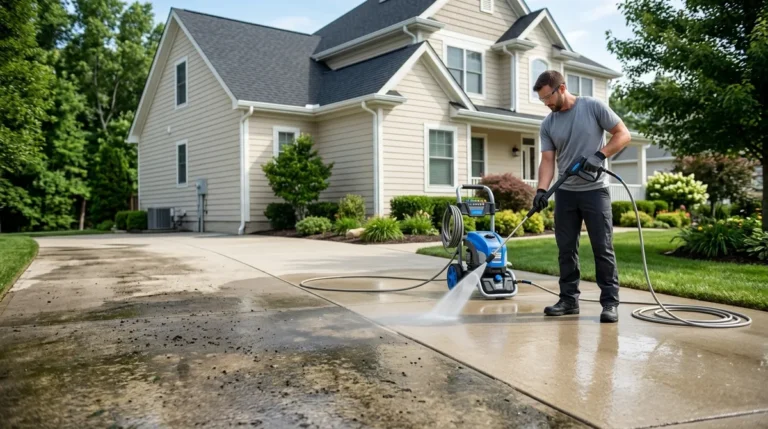
Your pavement takes a beating every single day. Oil drips, mold patches, tire marks, and Florida’s relentless humidity all team up to turn a once-clean driveway or walkway into an eyesore. The good news? Power washing pavement is one of the fastest ways to restore your home’s curb appeal and protect your investment. Whether you’re dealing with a grimy concrete driveway, a slippery sidewalk, or a stained patio, the right approach makes all the difference. In this guide, we’ll walk you through everything you need to know — from prep work to technique — so your pavement looks its absolute best. And if the job feels bigger than a weekend project, we’ll share when it makes total sense to call in the pros.
Why Power Washing Pavement Matters More Than You Think
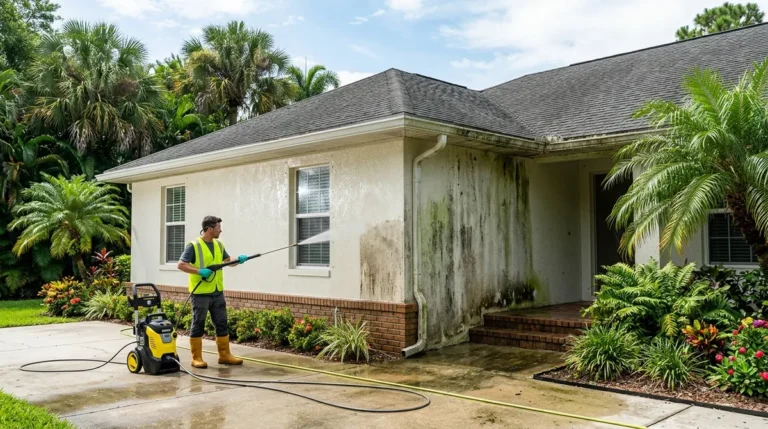
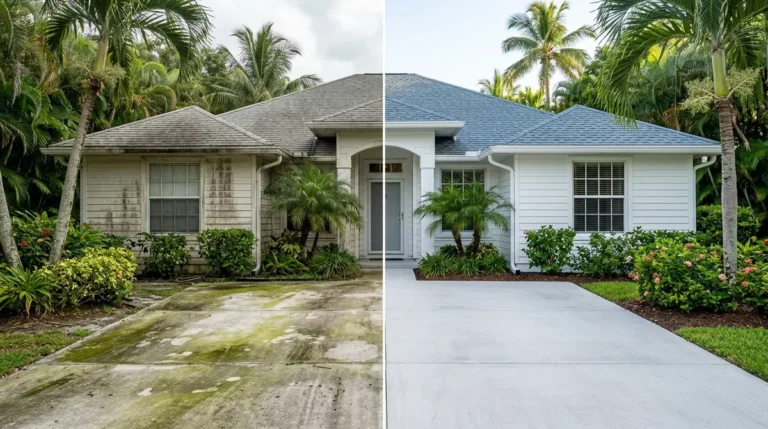
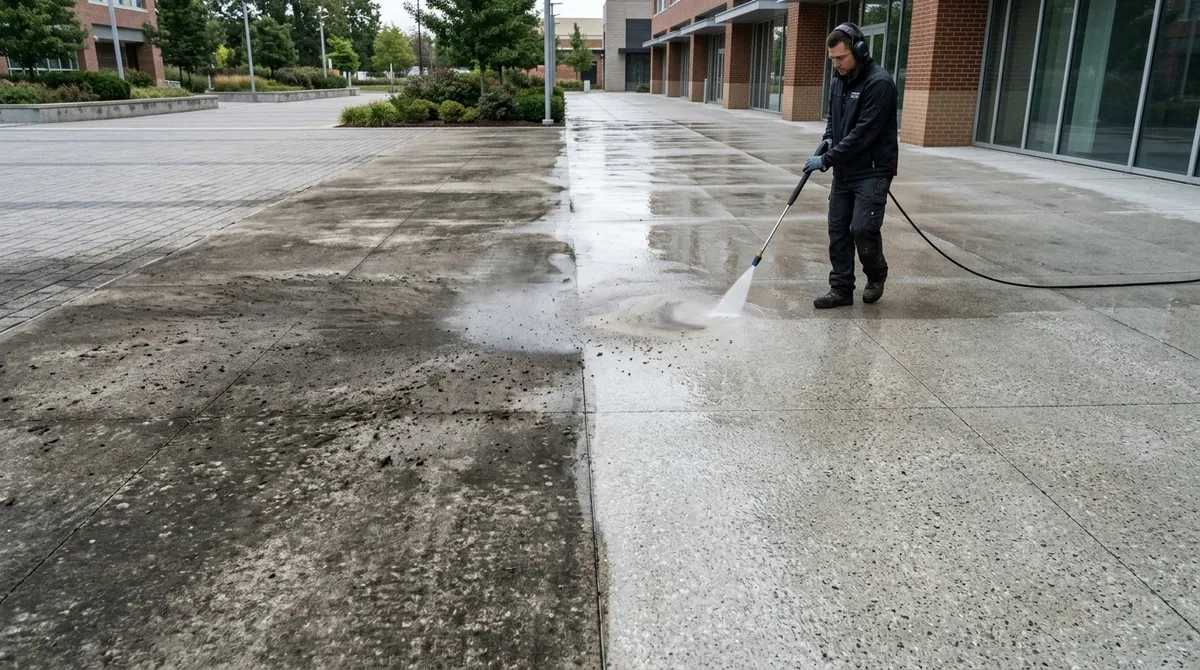
Most homeowners underestimate just how much dirty pavement affects their property. It’s not just about looks, either. Built-up algae and mold make pavement dangerously slippery. Embedded grime can actually break down concrete over time. And in Hillsborough County’s warm, wet climate, organic growth spreads fast if left untreated. If you’ve ever wondered why driveway cleaning matters more than you think, the answer comes down to safety, structure, and property value.
Clean pavement also signals to neighbors — and potential buyers — that you take pride in your home. HOA communities especially know this pressure well. A stained driveway or green-tinged walkway can mean a notice in the mail faster than you’d expect.
What You’ll Need Before You Start
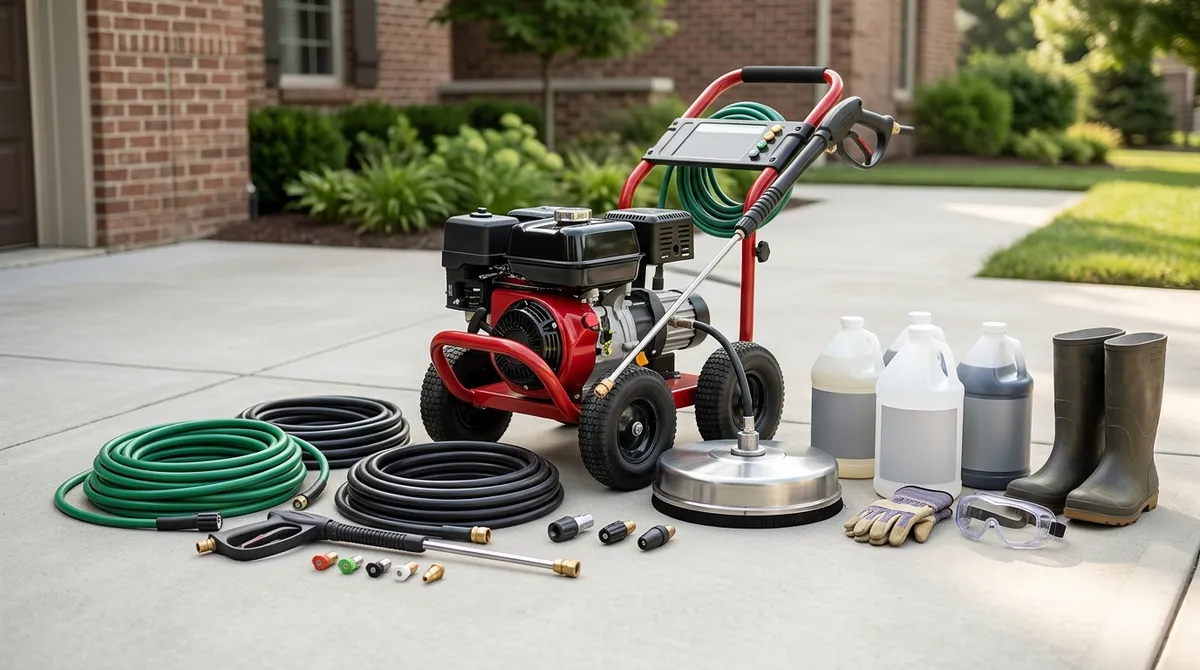
Good results start with good preparation. Rushing into power washing pavement without the right setup leads to uneven cleaning, surface damage, or wasted effort. Here’s what to gather before you get started.
Essential Equipment Checklist
- A pressure washer with at least 2,000–3,000 PSI for concrete surfaces
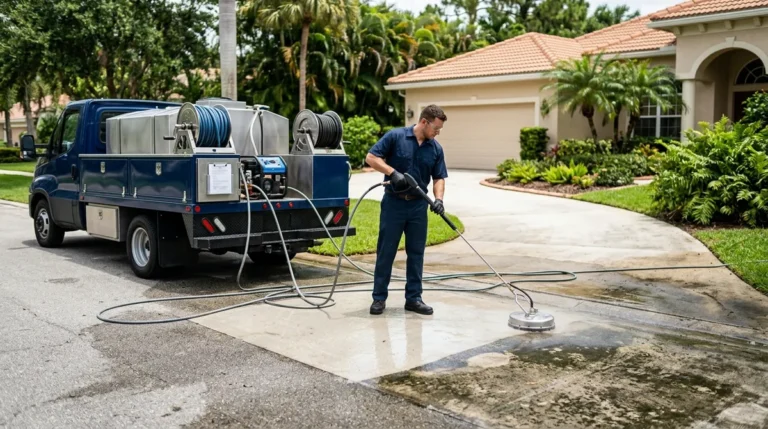
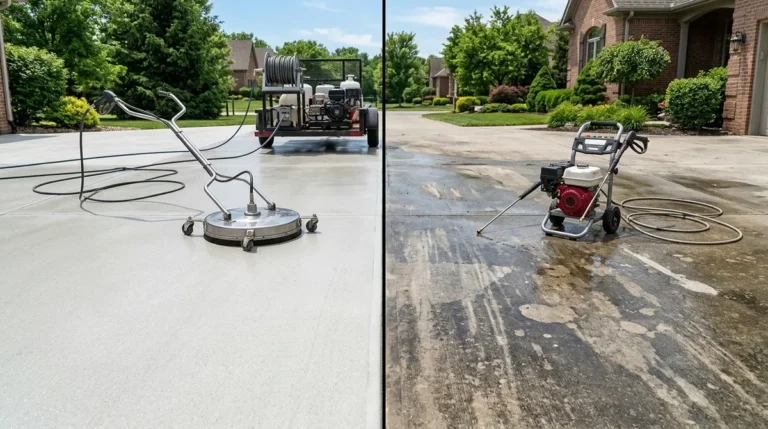
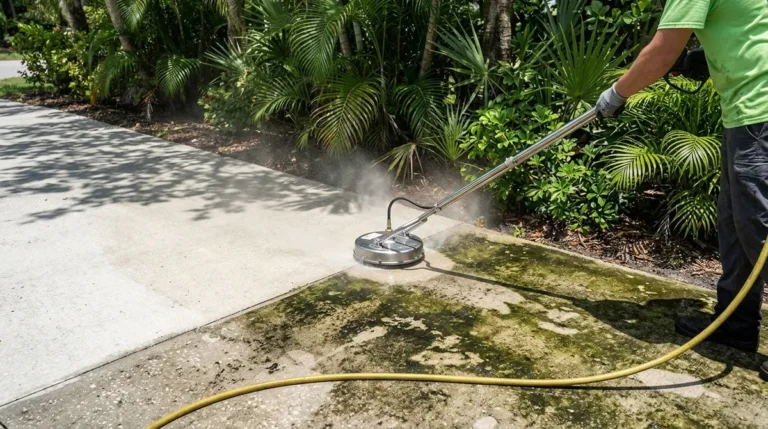
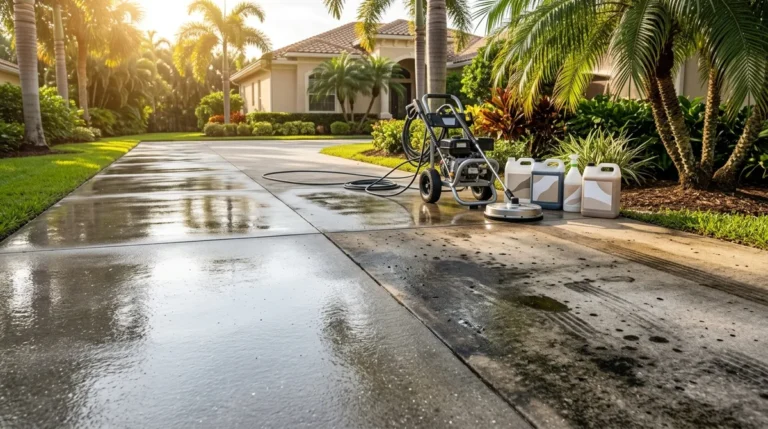
- A surface cleaner attachment for even, streak-free results
- Appropriate nozzles (25-degree for general cleaning, 15-degree for stubborn stains)
- Concrete-safe degreaser or detergent for oil stains
- Safety glasses and waterproof boots
- A stiff broom or leaf blower to clear loose debris
- Garden hose with enough reach to rinse runoff
Using the right PSI matters a lot. Too low and you won’t lift embedded dirt. Too high and you risk etching or pitting your concrete. If you’re unsure about settings, it helps to read up on mistakes to avoid when using a power washer to clean concrete before picking up that wand.
Step-by-Step Guide to Power Washing Pavement
Follow these steps in order for the best results. Skipping steps — especially prep — is where most DIYers run into trouble.
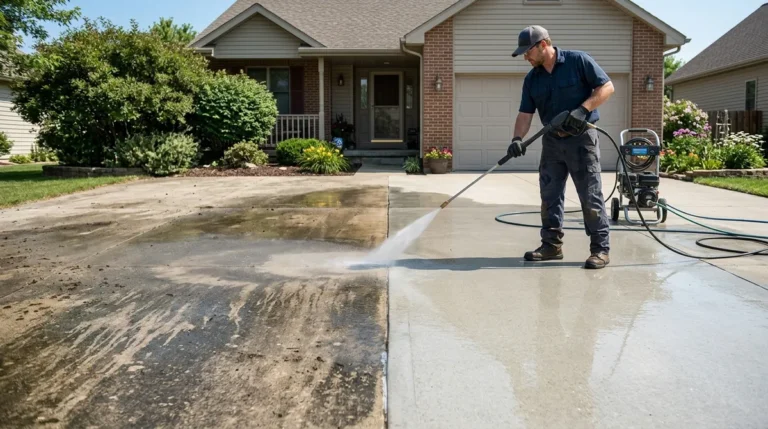
- Clear the area. Move vehicles, furniture, potted plants, and any other items off the pavement. You want a completely open surface to work on.
- Sweep or blow off loose debris. Remove leaves, dirt, and gravel with a broom or leaf blower. This prevents clogging your pressure washer and keeps the cleaning more efficient.
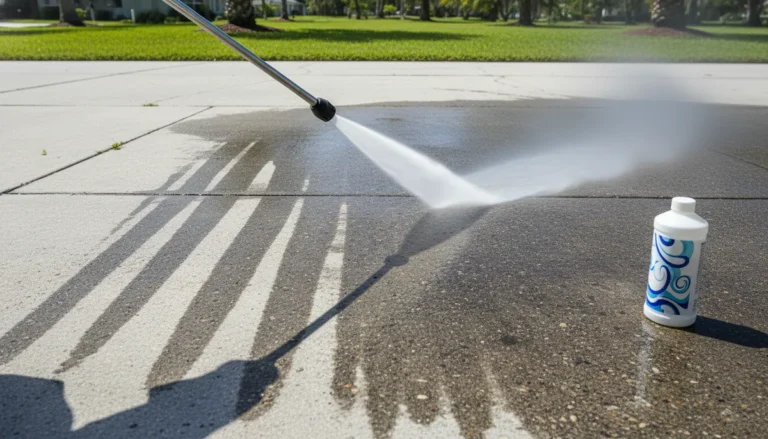
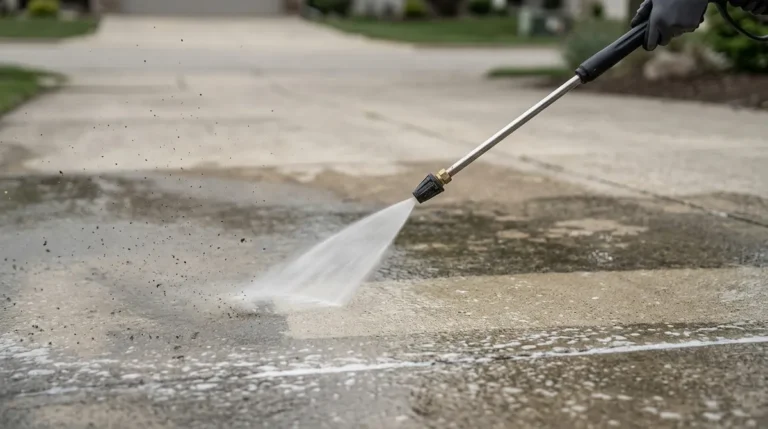
- Pre-treat stains. Apply a concrete degreaser or detergent to oil spots, rust stains, or heavy organic growth. Let it sit for 5–10 minutes before washing.
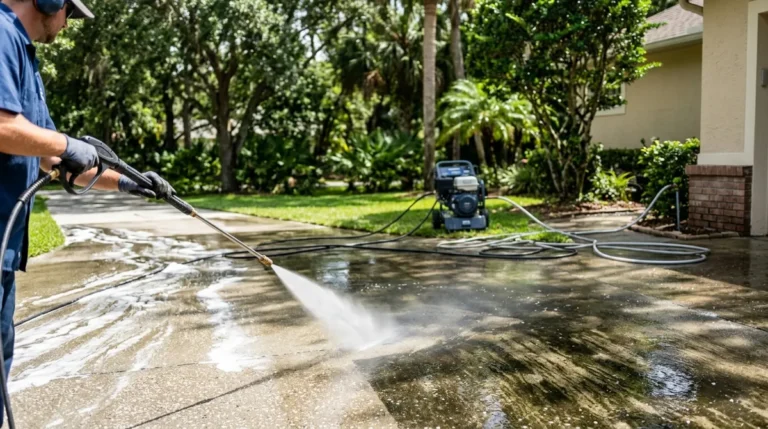
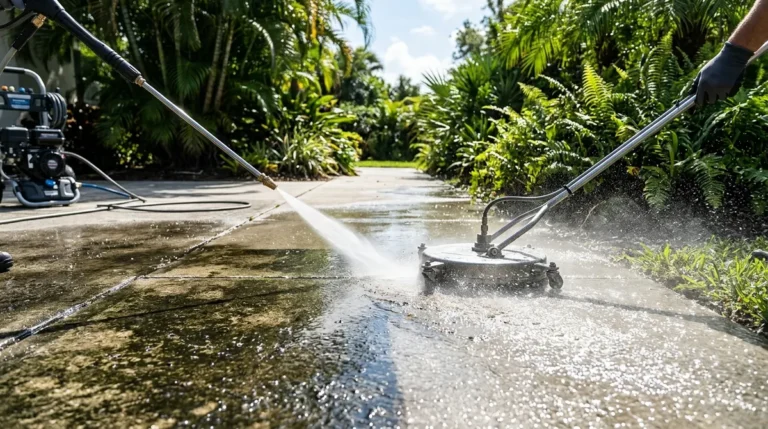
- Set up your pressure washer. Connect your hose, attach the right nozzle, and do a quick test spray on an inconspicuous area to confirm your settings.
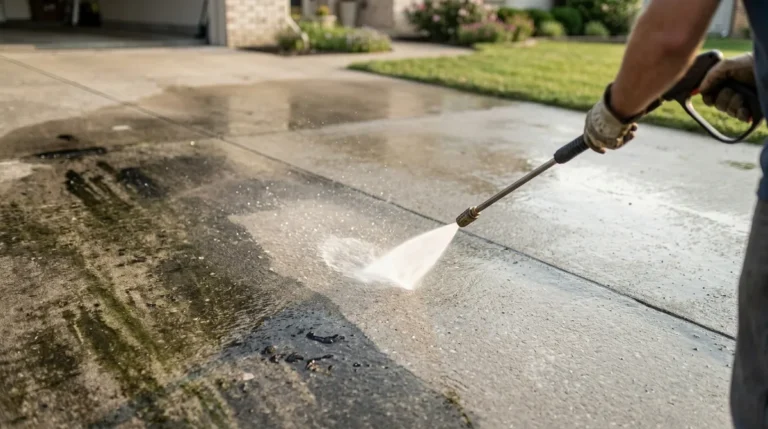
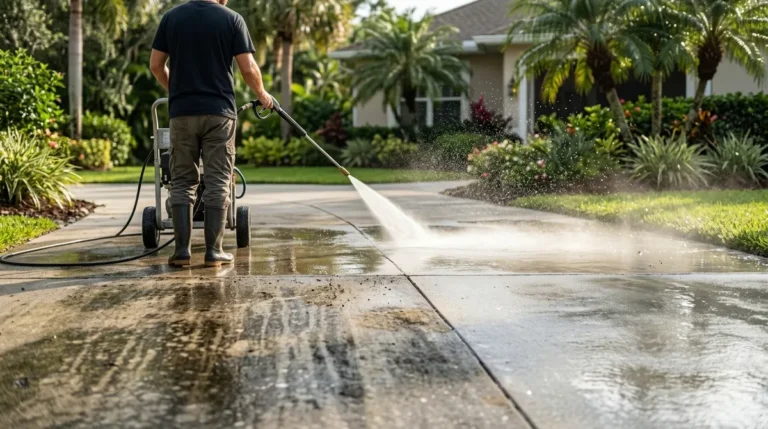
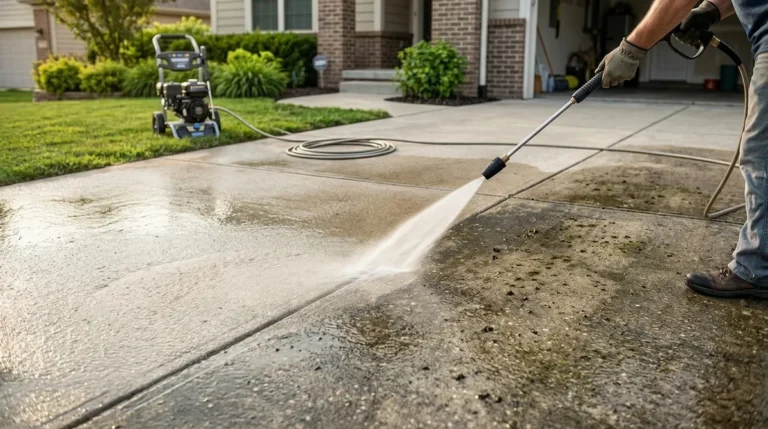
- Work in sections. Start at the highest point and work downward so dirty water flows away from already-cleaned areas. Use overlapping passes to avoid streaks.
- Apply detergent (if needed). Switch to a low-pressure soap nozzle, apply your cleaning solution, and let it dwell for a few minutes.
- Rinse thoroughly. Switch back to your cleaning nozzle and rinse the entire surface completely. Make sure no soap residue remains, as it can attract more dirt.
- Inspect and repeat if needed. Walk the surface once it’s rinsed and look for missed spots or stubborn stains. A second pass is totally normal for heavily soiled pavement.
If you want a deeper dive into the technique, check out this helpful resource on how to clean concrete with a pressure washer the right way. It covers nozzle angles, detergent choices, and dwell times in more detail.
Common Pavement Stains and How to Tackle Them
Not all stains respond the same way to power washing. Here’s a quick breakdown of the most common pavement problems and the best approach for each one.
| Stain Type | Cause | Recommended Treatment |
|---|---|---|
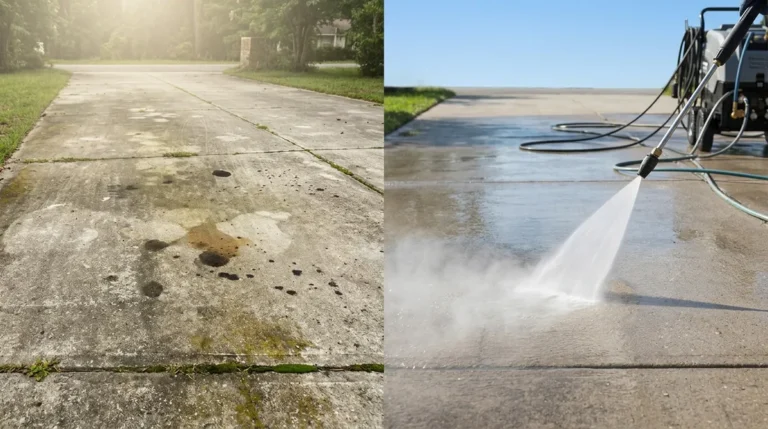
| Oil & Grease | Vehicle leaks | Degrease first, then high-pressure wash |
| Green Algae / Mold | Moisture and shade | Detergent pre-treatment + surface cleaner |
| Tire Marks | Hot rubber on concrete | High-pressure wash with narrow nozzle |
| Rust Stains | Metal furniture or tools | Oxalic acid-based cleaner before washing |
| Dirt & Mud | General foot/vehicle traffic | Standard pressure wash with surface cleaner |
| Paint or Sealant | Spills or old coatings | Stripping agent + hot water pressure wash |
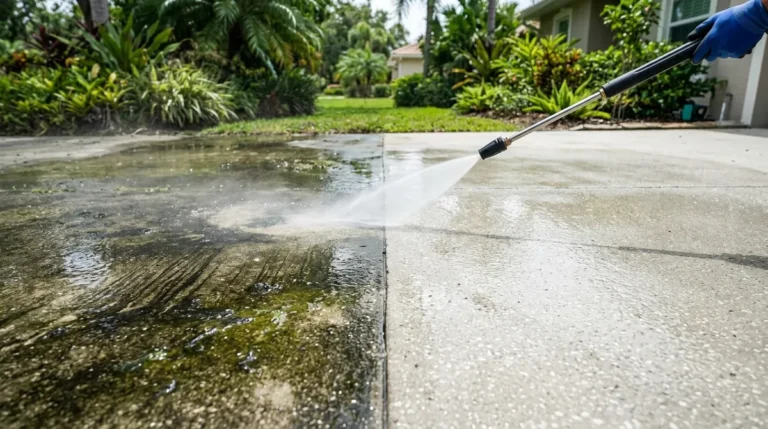
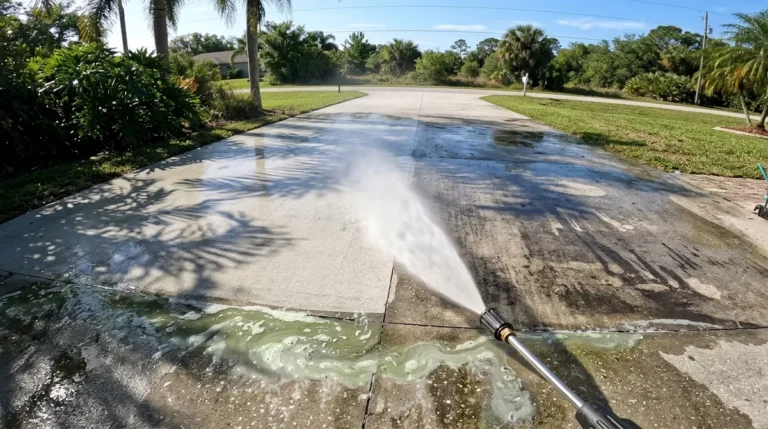
For algae and mold specifically, pre-treating with a detergent solution is key. Simply blasting with water often smears the growth rather than removing it. And in Florida, where algae on exterior surfaces is practically a year-round issue, this step really pays off.
Tips for Getting Even, Streak-Free Results
Nothing is more frustrating than finishing a driveway only to see uneven lines or missed patches once it dries. These tips will help you get a consistently clean finish.
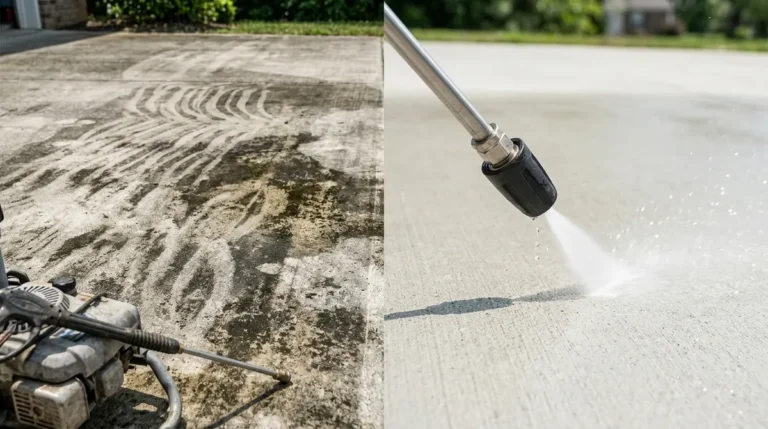
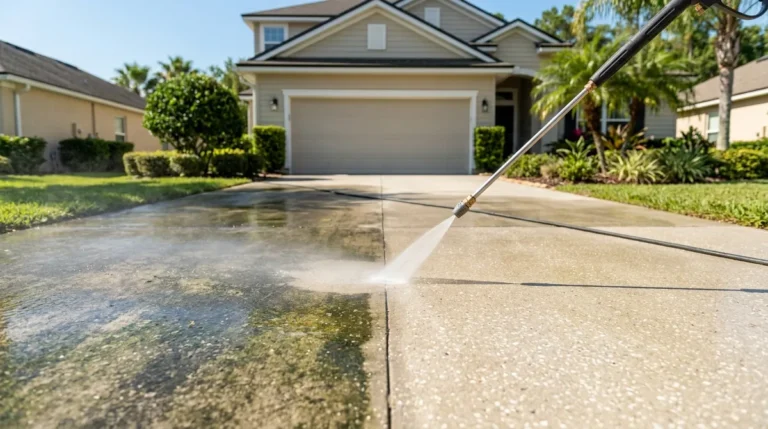
- Always use a surface cleaner attachment instead of just the wand — it spins and covers more area evenly
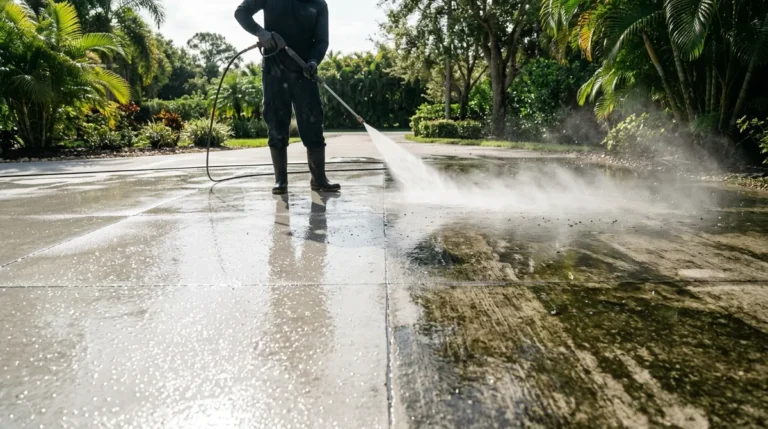
- Overlap each pass by about 30% to avoid visible seams
- Keep the nozzle at a consistent distance from the surface (usually 6–12 inches)
- Work at a steady, even pace — moving too fast leaves dirt behind
- Avoid stopping in one spot too long, which can etch or damage concrete
- Do the job on a cloudy day or in the shade when possible so detergent doesn’t dry too quickly
Want to see what a professional finish looks like? Take a peek at the gallery of completed projects to get an idea of the results that are possible with the right technique and equipment.
When DIY Power Washing Pavement Isn’t Enough
There are times when renting a pressure washer and spending your Saturday afternoon on the driveway just doesn’t make sense. Here are a few situations where calling a professional is the smarter move.
Signs You Need a Pro
- Persistent staining. If oil, rust, or organic growth keeps coming back no matter how many times you wash, a professional has stronger treatments and equipment to break the cycle.
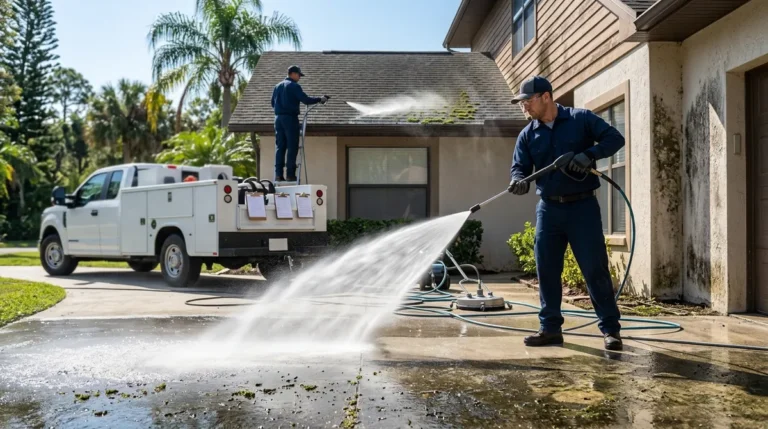
- Large surface areas. Cleaning an expansive driveway, multiple walkways, and a patio in one go can take hours and strain rental equipment. Pros have commercial-grade gear that gets it done faster.
- HOA deadlines or inspections. When you need results fast and guaranteed, a professional service removes the guesswork entirely.
- Safety concerns. Steep driveways or algae-covered surfaces can be slippery and dangerous. Leave those to someone with the right equipment and experience.
If any of these sound familiar, it might be time to explore what makes professional pressure washing services worth it. You might be surprised how affordable and convenient it is compared to doing it yourself — especially when you factor in equipment rental, detergent costs, and your time.
How Often Should You Power Wash Pavement?
Frequency depends on your property’s specific conditions. Here’s a general guide based on the most common factors in Hillsborough County homes.
| Condition | Recommended Frequency |
|---|---|
| Standard residential driveway | Once a year |
| Shaded driveways with algae growth | Every 6 months |
| High-traffic walkways | Every 6–12 months |
| Pool deck or patio areas | Every 6 months |
| HOA communities with appearance requirements | Every 6 months or per HOA schedule |
Florida’s humidity and heat mean organic growth can reappear faster than in cooler climates. A regular schedule keeps problems manageable and avoids the kind of deep buildup that takes multiple passes — or professional intervention — to remove. You can also learn more about professional driveway and concrete cleaning services to understand what a scheduled maintenance plan might look like for your home.
Should You Seal Pavement After Washing?
Sealing your concrete after a thorough power wash is a great way to extend the clean look and protect against future staining. A good concrete sealer creates a barrier that repels oil, water, and organic material. Most sealers last two to three years before needing reapplication.
Always let the pavement dry completely before sealing — usually 24 to 48 hours after washing. Applying sealer to damp concrete traps moisture and can lead to cracking or discoloration. For a complete solution, look into driveway cleaning and sealing near you to see if a combined service makes sense for your property.
Eco-Friendly Tips for Power Washing Pavement
If you’re mindful about your environmental footprint, there are easy ways to make pavement cleaning greener without sacrificing results.
- Choose biodegradable, phosphate-free detergents that won’t harm your lawn or local waterways
- Direct runoff away from storm drains when possible — especially when using degreasers or heavy-duty cleaners
- Use a surface cleaner attachment, which uses water more efficiently than an open wand
- Avoid over-washing — once a year is enough for most surfaces and reduces unnecessary water use
- Consider soft washing for surfaces near garden beds or landscaping to minimize chemical runoff
Many homeowners in Hillsborough County are pleasantly surprised to learn that professional services like Buckhorn Power Wash use eco-friendly detergents as part of their standard process. You get a deep clean without worrying about harming your garden or the surrounding environment. You can check out Buckhorn Power Wash on Facebook to see customer stories and learn more about their approach.
Getting a Professional Quote for Pavement Cleaning
Wondering what it would cost to have your pavement professionally cleaned? Getting a quote is easier than ever. You don’t need a home visit or a long phone call to find out your options. Many homeowners are relieved to discover how straightforward — and budget-friendly — professional power wash driveway services can be.
You can also read real homeowner experiences on Yelp reviews for Buckhorn Power Wash to see what kind of results other Hillsborough County residents have enjoyed. And if you’d like to connect in person, visit us on Google — Buckhorn Power Wash to find our location details and read more customer reviews.
Conclusion: Clean Pavement Is Closer Than You Think
Power washing pavement doesn’t have to be a mystery or a weekend-ruining chore. With the right preparation, technique, and equipment, you can achieve genuinely impressive results. And when the job calls for professional-grade cleaning, you don’t have to look far. Whether you’re a busy homeowner, part of an HOA community, or just someone who wants a beautiful, well-maintained property, clean pavement is absolutely within reach.
Ready to see what a difference it makes? Request your free pavement cleaning quote today and let Buckhorn Power Wash handle the hard work while you enjoy the results.
FAQs
Q: How much PSI do I need to power wash pavement?
A: For most concrete driveways and walkways, you’ll want a pressure washer with at least 2,000 to 3,000 PSI. That’s strong enough to lift embedded dirt, oil, and algae without damaging the surface. If you’re unsure, start lower and work your way up — it’s always easier to add pressure than to fix a pitted driveway!
Q: Can power washing pavement damage concrete?
A: It can, if done incorrectly! Using too high a PSI, holding the nozzle too close, or concentrating on one spot too long can etch or pit concrete. Using a surface cleaner attachment and keeping a consistent distance of 6 to 12 inches will help you get great results safely.
Q: How long does it take for pavement to dry after power washing?
A: Most concrete pavement dries within 4 to 8 hours in warm, sunny conditions — which is great news if you live in sunny Hillsborough County! If you plan to apply a sealer afterward, give it a full 24 to 48 hours to ensure the surface is completely dry before you begin.
Q: Is it worth hiring a professional to power wash my pavement?
A: Absolutely, especially for large driveways, stubborn stains, or when you’re short on time. Professionals have commercial-grade equipment, the right detergents for different stain types, and the experience to deliver streak-free results quickly. Many homeowners find it’s more cost-effective than renting equipment and spending a whole Saturday doing it themselves.
Q: How often should I power wash my driveway or walkway in Florida?
A: In Florida’s humid climate, most driveways benefit from power washing at least once a year. Shaded areas or driveways near trees that develop algae or mold quickly may need cleaning every six months. Staying on a regular schedule prevents heavy buildup and keeps your pavement looking its best year-round.