Key Takeaways
-
In Florida's humid climate, clean driveways prevent dangerous mold and algae buildup that makes surfaces slippery, especially during rainy seasons.
-
Pre-treat tough stains with degreaser for 10-15 minutes before pressure washing to significantly improve cleaning effectiveness and stain removal.
-
Use appropriate PSI based on surface type: concrete handles 2,500-4,000 PSI, while pavers and stamped concrete need gentler 1,500-2,000 PSI to avoid permanent damage.
-
Apply concrete sealer after cleaning to protect against future stains, moisture, and UV damage while making next cleaning much easier.
-
Clean your driveway every 6-12 months in Florida's climate, or every 3-6 months if you have heavy shade where algae grows faster.
-
Avoid common mistakes like using wrong nozzle angles, skipping pre-treatment, working in direct sunlight, and neglecting edge cracks where mold hides.
Your driveway is the first thing people see when they pull up to your home. A clean driveway makes a great first impression. But over time, concrete and pavers collect dirt, oil stains, mold, algae, and tire marks that are tough to remove. If you live in Hillsborough County, Florida, the warm and humid climate makes things even worse. Mold and algae thrive here year-round.
The good news? Getting a spotless driveway is easier than you think — especially when you know the right steps. Whether you want to tackle it yourself or hire a professional, this guide walks you through everything you need to know. We’ll cover the tools, techniques, and tips that actually work. Let’s get started!
Why a Clean Driveway Matters More Than You Think
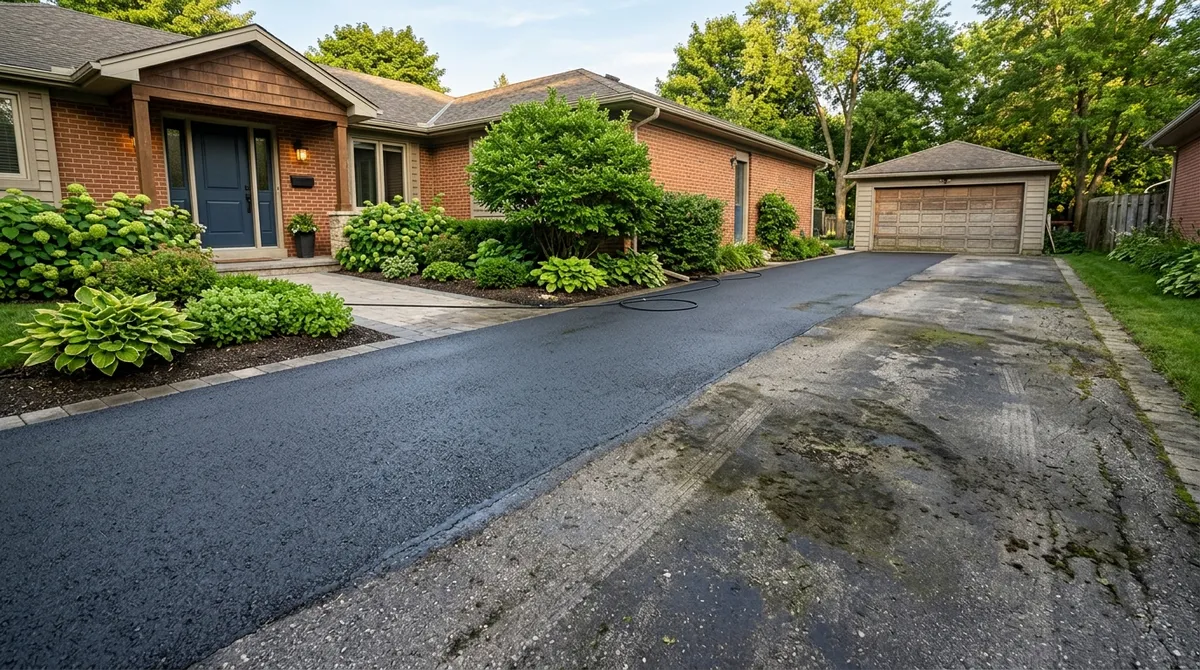
Most homeowners focus on the inside of their home. But your driveway takes up a big chunk of your property’s visible exterior. A dirty driveway can drag down your entire curb appeal. According to studies by the National Association of Realtors, curb appeal can directly influence home values and buyer interest.
Beyond looks, a dirty driveway can be a safety hazard. Algae and mold make surfaces slippery. This is especially dangerous during Florida’s rainy season. Regular cleaning keeps your driveway safe and looking great year-round. Check out this article on why driveway cleaning matters more than you think for an even deeper look at the benefits.
Common Driveway Stains and What Causes Them
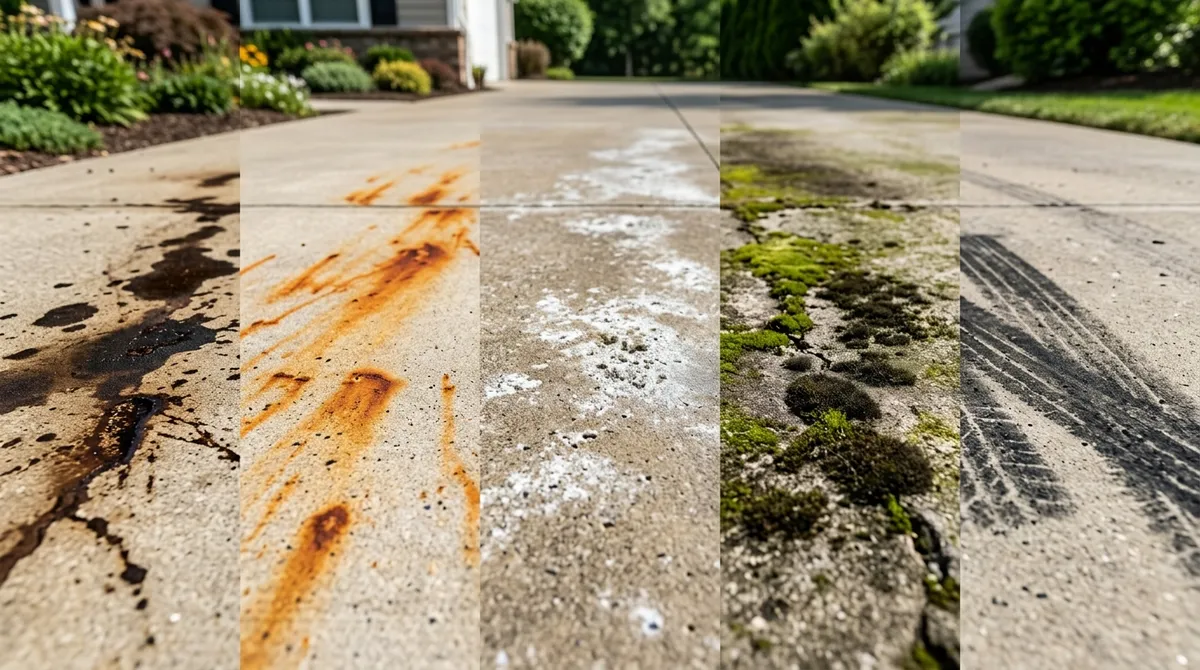
Before you start cleaning, it helps to know what you’re dealing with. Different stains require different approaches. Here’s a quick breakdown of what you’ll likely find on a typical driveway:
- Oil and grease stains — Left behind by leaking vehicles
- Algae and green mold — Thrives in Florida’s humidity
- Tire marks — Black rubber deposits from braking
- Rust stains — From metal furniture or fertilizer runoff
- Dirt and mud buildup — Accumulates in cracks and surface pores
- Efflorescence — White mineral deposits that rise to the surface
Knowing your stain type helps you choose the right cleaning method. Algae and mold usually respond well to detergent-based treatments. Oil stains often need a degreaser first. For a full breakdown of how professionals handle each stain type, read about what a professional driveway cleaner actually does.
Step-by-Step Guide to Cleaning Your Driveway
Ready to get your driveway looking fresh? Follow these steps for the best results. This process works for concrete, brick, and paver driveways.
Step 1: Clear the Area
Move vehicles, bikes, trash cans, and any other items off your driveway. You want a completely clear surface before you begin. This also prevents dirt from spraying onto nearby plants or vehicles.
Step 2: Pre-Treat Tough Stains
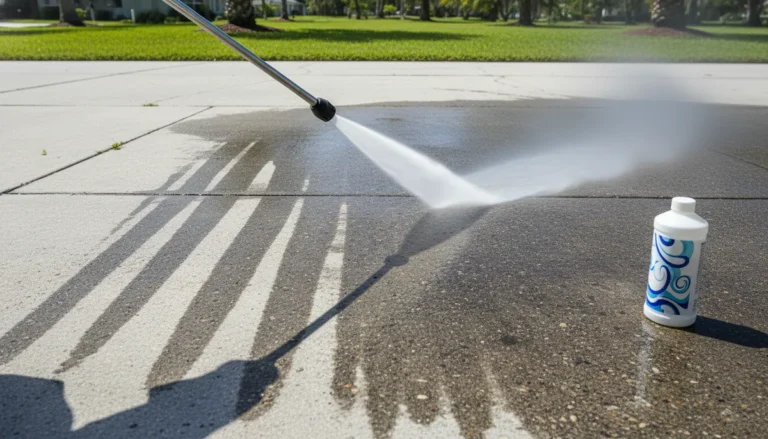
Apply a degreaser or concrete cleaner to oil spots and heavy stains. Let it sit for 10 to 15 minutes. This loosens the grime and makes the pressure washing step much more effective.
Step 3: Apply Detergent
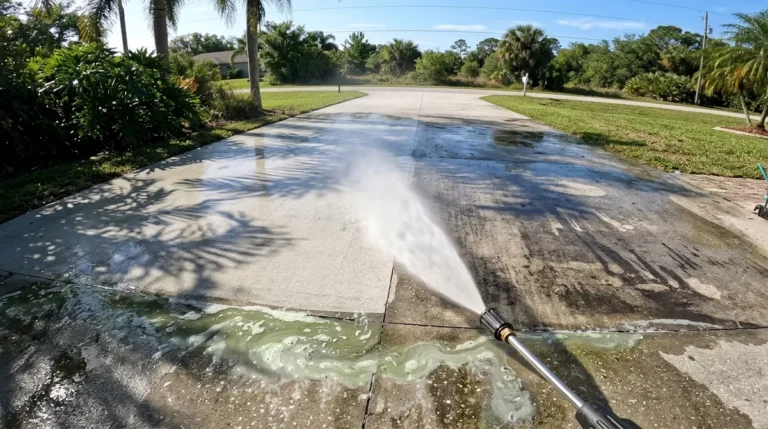
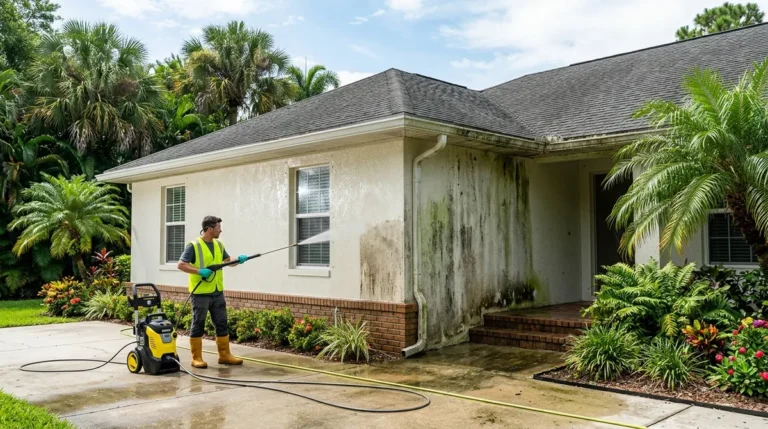
Use an eco-friendly detergent designed for concrete surfaces. Spray it evenly across the entire driveway. This step is especially important for killing mold, algae, and organic growth. Let it dwell for a few minutes before rinsing.
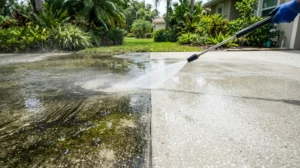
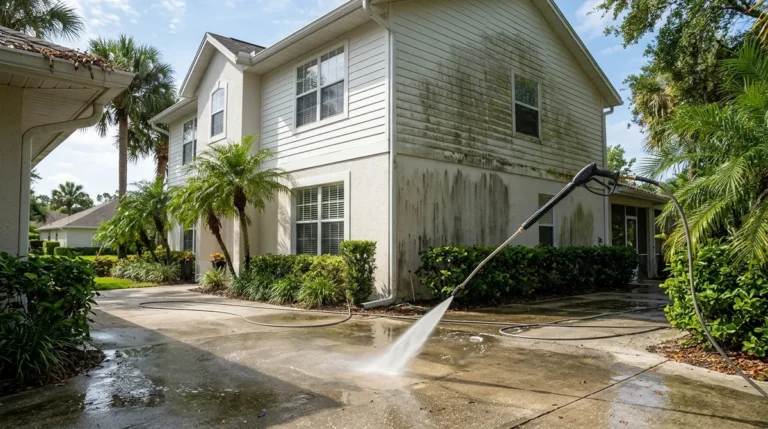
Step 4: Pressure Wash the Surface
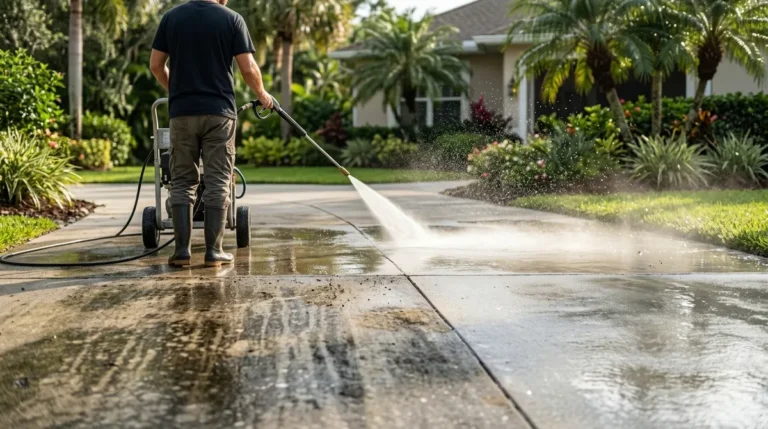
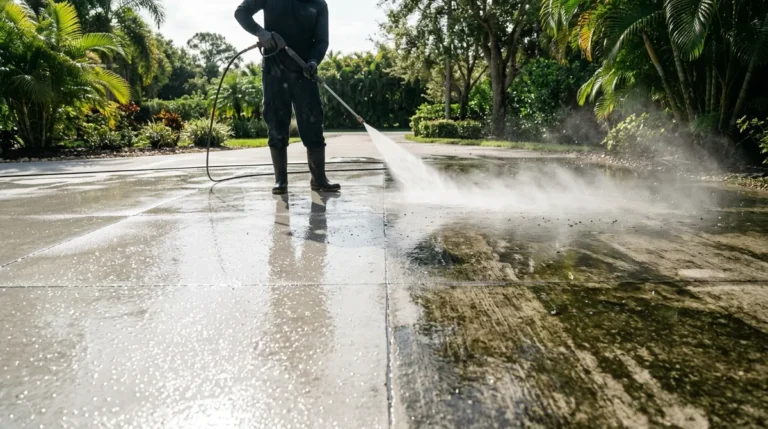
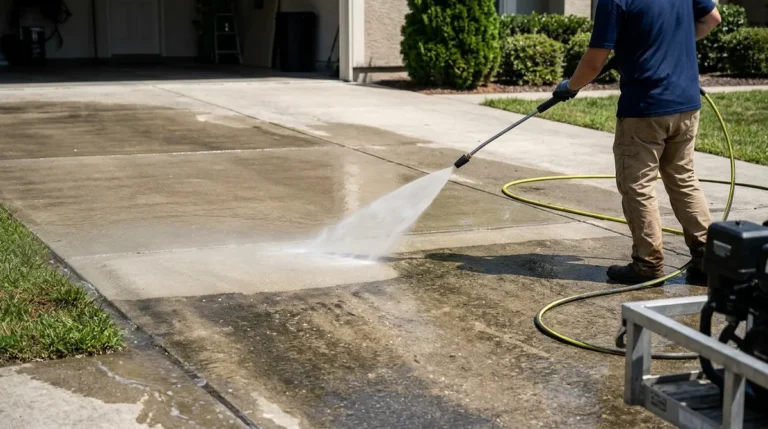
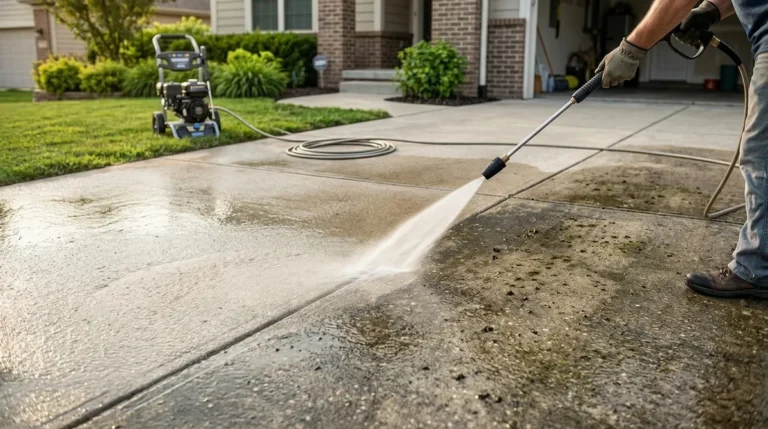
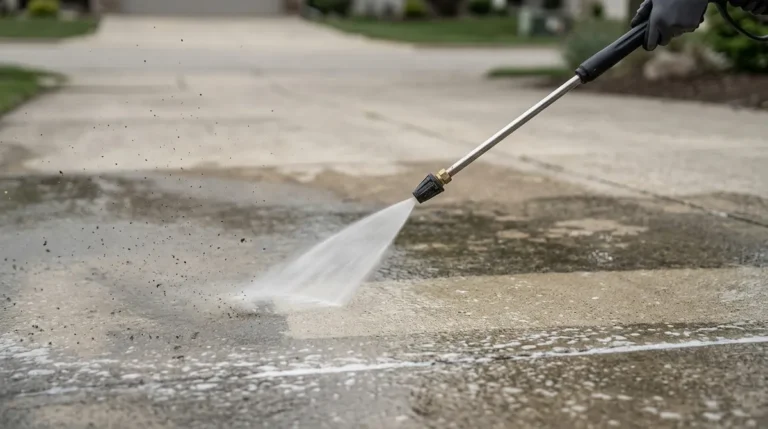
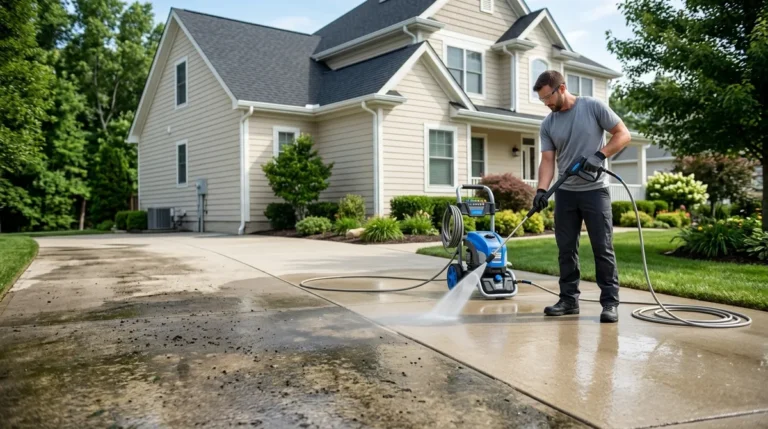
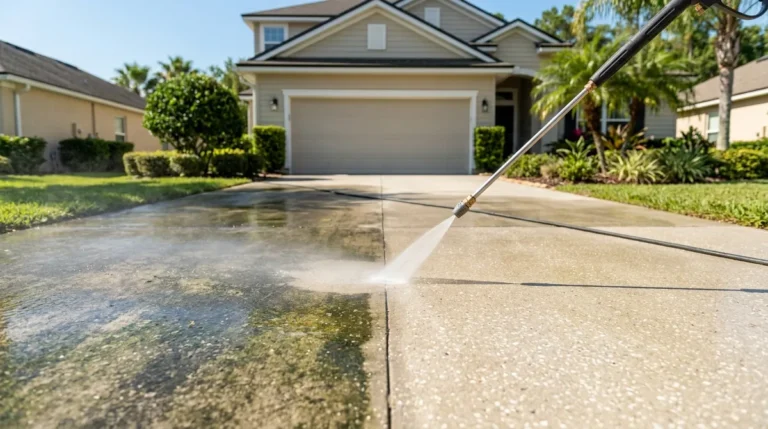
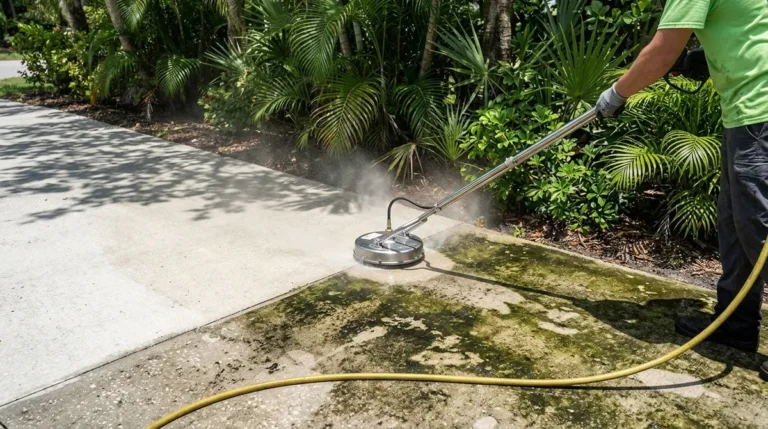
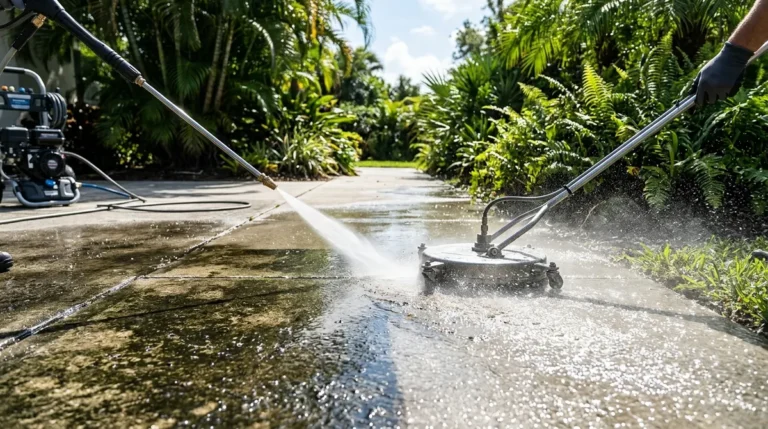
Use a pressure washer with the right PSI for your driveway type. Concrete can handle higher pressure. Pavers and older surfaces may need a gentler approach. Work in long, even strokes moving away from your home. Keep the nozzle at a consistent distance to avoid streaks or surface damage. Learn more about the proper technique in this guide on how to clean concrete with a pressure washer the right way.
Step 5: Rinse Thoroughly
After pressure washing, rinse the entire surface with clean water. Make sure all detergent residue is removed. Leftover soap can attract more dirt over time.
Step 6: Seal the Surface (Optional but Recommended)
After your driveway is fully dry, consider applying a concrete sealer. Sealing protects against future stains, moisture, and UV damage. It also makes your next cleaning much easier. For more on this topic, explore driveway cleaning and sealing options near you.
Choosing the Right Pressure Washing Equipment
Using the right equipment makes a huge difference. Here’s a simple comparison to help you choose the best tool for your driveway cleaning project:
| Equipment Type | Best For | PSI Range | Skill Level |
|---|---|---|---|
| Electric Pressure Washer | Light cleaning, small driveways | 1,500–2,000 PSI | Beginner |
| Gas Pressure Washer | Heavy stains, large concrete areas | 2,500–4,000 PSI | Intermediate |
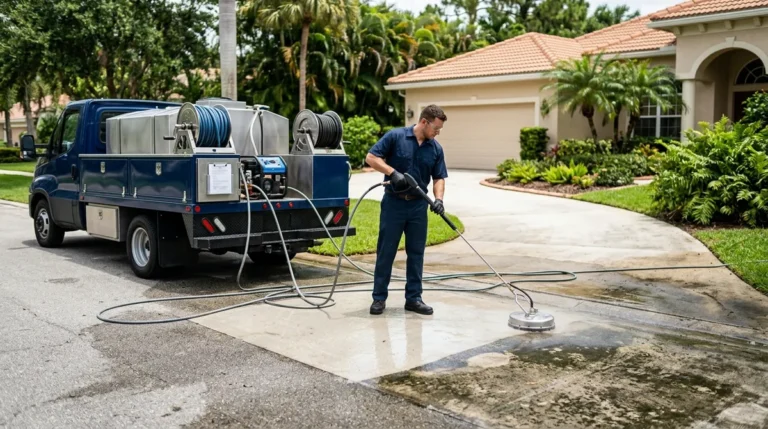
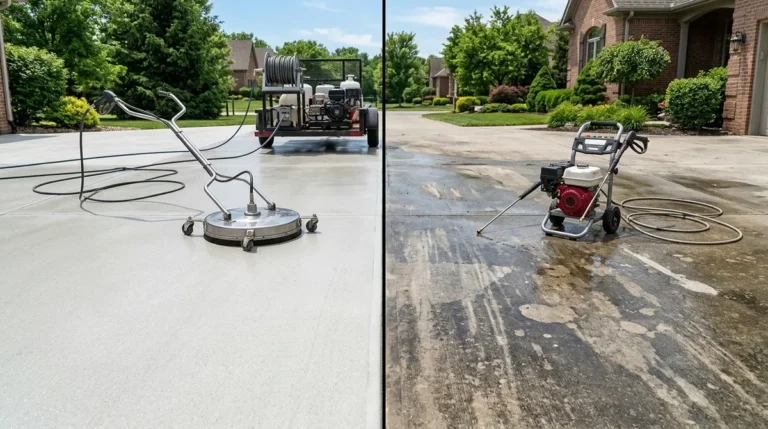
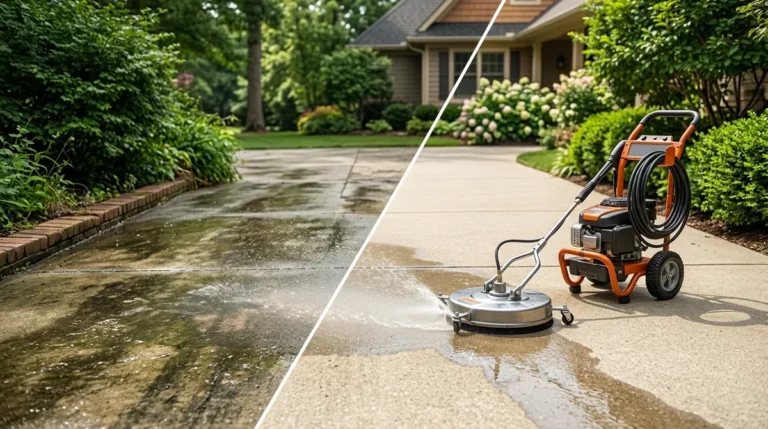
| Surface Cleaner Attachment | Even cleaning across large flat surfaces | 2,000–3,500 PSI | Beginner–Intermediate |
| Soft Wash System | Algae, mold, organic stains | 100–500 PSI | Professional |
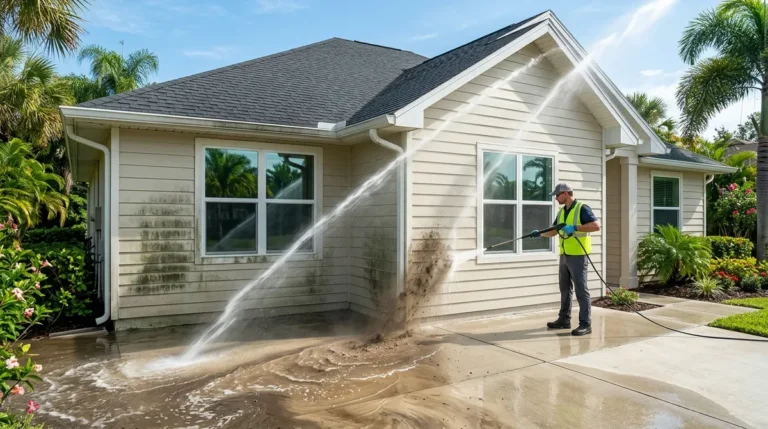
For most homeowners, a gas-powered pressure washer with a surface cleaner attachment gives the best results on driveways. However, using too much pressure on the wrong surface can cause damage. That’s one reason many homeowners in Hillsborough County prefer to hire a professional to pressure wash their driveway instead.
DIY vs. Professional Driveway Cleaning
Not sure whether to DIY or call in the pros? Here’s an honest comparison to help you decide:
| Factor | DIY Cleaning | Professional Cleaning |
|---|---|---|
| Time Required | 2–4 hours | 30–60 minutes |
| Equipment Needed | Must rent or buy | Fully equipped team |
| Results | Good with practice | Consistently excellent |
| Risk of Damage | Moderate without experience | Very low |
| Stain Removal | Limited on tough stains | Commercial-grade removal |
Many busy homeowners find that professional cleaning simply saves more time and delivers better results. If you’re curious about this comparison in more detail, read this article on DIY driveway pressure washer vs. pro service. You might be surprised by the outcome!
Top Mistakes to Avoid When Cleaning a Driveway
Even experienced DIYers make mistakes. Here are the most common errors to avoid when you clean a driveway:
- Using too much pressure — High PSI on stamped concrete or pavers can etch and damage the surface permanently.
- Skipping the pre-treatment step — Jumping straight to pressure washing without applying detergent leaves stains behind.
- Using the wrong nozzle — A zero-degree nozzle concentrates pressure into a single point and can gouge concrete.
- Working in direct sunlight — Detergent dries out too quickly in hot sun, leaving streaks and residue.
- Neglecting the edges and cracks — Mold hides in crevices. Don’t just clean the flat surface.
- Not rinsing thoroughly — Soap left behind attracts more dirt and can discolor the surface over time.
- Skipping sealing after cleaning — An unsealed driveway gets dirty faster and is more vulnerable to staining.
Avoiding these mistakes will save you time and protect your driveway from damage. For a comprehensive guide, check out these 10 concrete pressure cleaner mistakes that ruin your driveway.
How Often Should You Clean Your Driveway?
In Florida’s climate, driveways get dirty fast. Algae, mold, and mildew can return within just a few months. Here’s a general cleaning schedule to follow:
- Every 6–12 months — Full pressure washing for most Hillsborough County homeowners
- Every 3–6 months — If you have heavy shade (algae grows faster under trees)
- After major storms — Storm debris and runoff can leave behind stains and organic matter
- Before selling your home — A clean driveway boosts curb appeal and perceived home value
- After an HOA notice — Many HOA communities require clean driveways to meet appearance standards
Staying consistent with your cleaning schedule prevents buildup from getting out of control. It also extends the life of your concrete or paver surface significantly.
Benefits of Hiring a Professional for Driveway Cleaning
Hiring a professional isn’t just about convenience. There are real benefits that go beyond saving time. Here’s what you gain when you bring in the experts:
- Commercial-grade equipment — Professionals use powerful machines that remove stains most consumer tools can’t touch.
- Eco-friendly detergents — Reputable companies use safe, biodegradable cleaning solutions that protect your landscaping and nearby waterways.
- Expertise and experience — Professionals know exactly how much pressure to use on each surface type.
- Time savings — What takes you half a day takes a pro team an hour or less.
- Long-lasting results — Professional cleaning removes root-level mold and algae, not just surface dirt.
Buckhorn Power Wash proudly serves homeowners across Hillsborough County with expert driveway and concrete cleaning services that deliver real, visible results. Our team uses professional-grade equipment and eco-friendly methods to get your driveway looking its absolute best. You can visit us on Google — Buckhorn Power Wash to read reviews from happy homeowners in your area, or check out our work on Buckhorn Power Wash on Facebook.
What to Expect During a Professional Driveway Cleaning Appointment
First-timers often wonder what the process looks like. Here’s a simple numbered walkthrough of a professional driveway cleaning visit:
- The crew arrives and assesses your driveway surface and stain types.
- They pre-treat stubborn stains and apply eco-friendly detergent.
- A commercial-grade pressure washer or surface cleaner removes embedded dirt.
- The crew does a final rinse to remove all soap and loosened debris.
- They do a walk-through inspection to make sure every inch looks great.
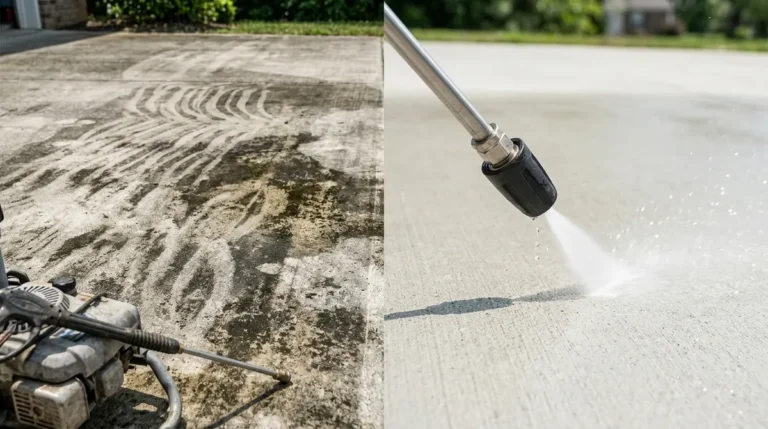
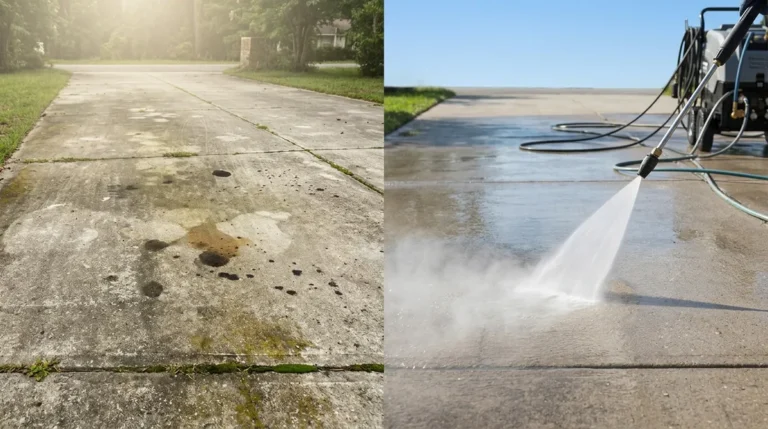
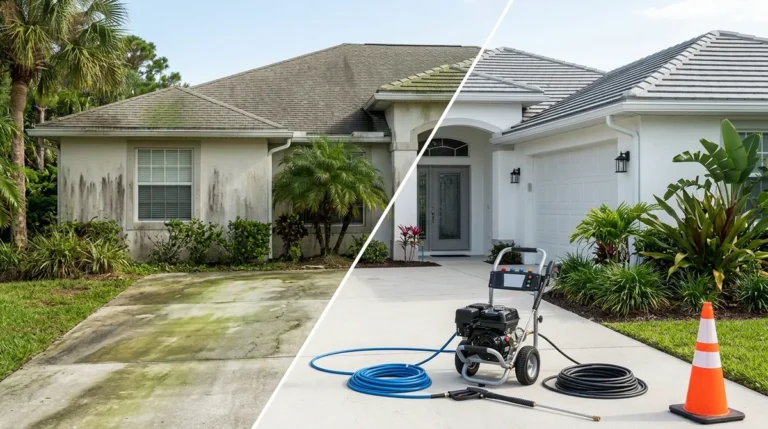
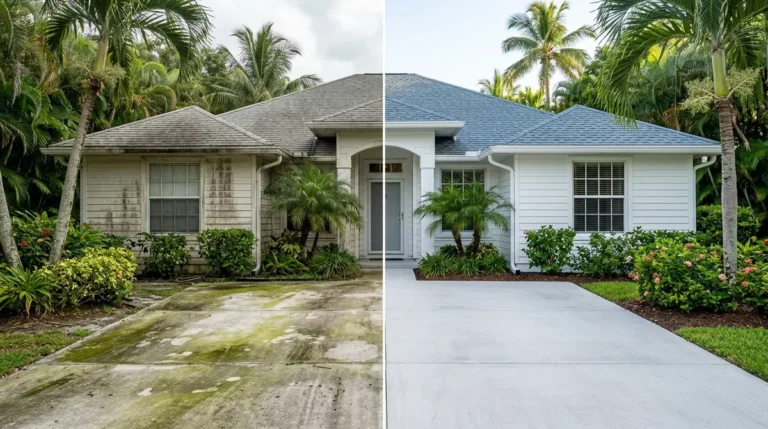
The whole process typically takes under an hour for an average residential driveway. You get the whole weekend back! To see real before-and-after results, browse the Buckhorn Power Wash project gallery.
Tips for Keeping Your Driveway Clean Longer
After putting in the effort to clean your driveway, you’ll want to keep it looking great as long as possible. Here are some smart maintenance tips:
- Seal your driveway after every professional cleaning to block future stains
- Address oil leaks from vehicles promptly with an absorbent like kitty litter
- Rinse your driveway with a garden hose monthly to slow algae buildup
- Trim overhanging trees and shrubs to reduce shade and organic debris
- Avoid using harsh chemical cleaners that can discolor or pit concrete
These small habits go a long way toward extending the time between professional cleanings. For even more advice, explore this helpful guide on how to pressure clean your driveway for lasting results. You can also check out the Buckhorn Power Wash Yelp page to see what local homeowners are saying about professional driveway cleaning services.
Is Pressure Washing Safe for All Driveway Types?
This is a great question! Not all driveways are the same. Here’s a quick guide to pressure washing safety by surface type:
- Concrete — Very durable, handles high pressure well
- Brick pavers — Needs moderate pressure to avoid dislodging the jointing sand
- Stamped concrete — Requires careful, lower pressure to protect the decorative finish
- Asphalt — Use low to moderate pressure to avoid stripping the surface
- Exposed aggregate — Medium pressure is best to preserve the aggregate texture
If you’re unsure about your surface type, it’s always safer to consult a professional. You can learn more about method differences in this helpful comparison of soft wash vs. pressure wash for Florida homes.
Ready to Get a Spotless, Like-New Driveway?
A clean driveway is more than just a nice-to-have. It protects your investment, boosts your curb appeal, and keeps your property safe. Whether you’re a busy professional, an HOA homeowner, or just someone who takes pride in their property, a clean driveway makes a real difference.
If you’re ready to skip the hard work and get professional results without the hassle, Buckhorn Power Wash is here to help. We serve homeowners throughout Hillsborough County with friendly, reliable, and affordable pressure washing services. Don’t wait for stains to get worse — request your free driveway cleaning quote today and see just how easy it is to love your driveway again!
FAQs
Q: How often should I clean my driveway in Florida?
A: In Florida’s warm, humid climate, we recommend cleaning your driveway at least once a year — and every 6 months if you have heavy shade or tree coverage. Mold and algae grow fast here, so staying on schedule keeps your driveway looking great and prevents buildup from getting out of hand!
Q: Can pressure washing damage my concrete driveway?
A: It can, if done incorrectly! Using too much pressure or the wrong nozzle can etch or pit your concrete surface. That’s why it’s so important to use the right PSI and technique — or let a professional handle it to make sure your driveway comes out clean and undamaged.
Q: What removes oil stains from a driveway before pressure washing?
A: A concrete degreaser works great on oil and grease stains! Apply it directly to the stain, let it sit for 10 to 15 minutes to break down the grease, then follow up with a thorough pressure wash. For really stubborn stains, a professional cleaning crew has commercial-grade degreasers that go even deeper.
Q: Is it worth sealing my driveway after pressure washing?
A: Absolutely — sealing is one of the smartest things you can do after a professional cleaning! A good concrete sealer locks out moisture, repels future stains, and keeps your driveway looking cleaner for longer. It also makes your next cleaning session much easier.
Q: How long does a professional driveway cleaning take?
A: For most residential driveways in Hillsborough County, a professional cleaning typically takes 30 to 60 minutes. The exact time depends on the size of your driveway and the severity of the staining. Either way, it’s way faster than doing it yourself — and the results are hard to beat!