Key Takeaways
-
Use 2,500-3,500 PSI pressure for concrete driveways with a 25-degree nozzle for general cleaning and 15-degree for stubborn stains to avoid surface damage.
-
Apply a concrete degreaser and let it sit 10-15 minutes before pressure washing to effectively remove oil stains that won't budge with water alone.
-
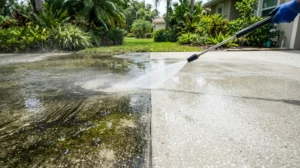
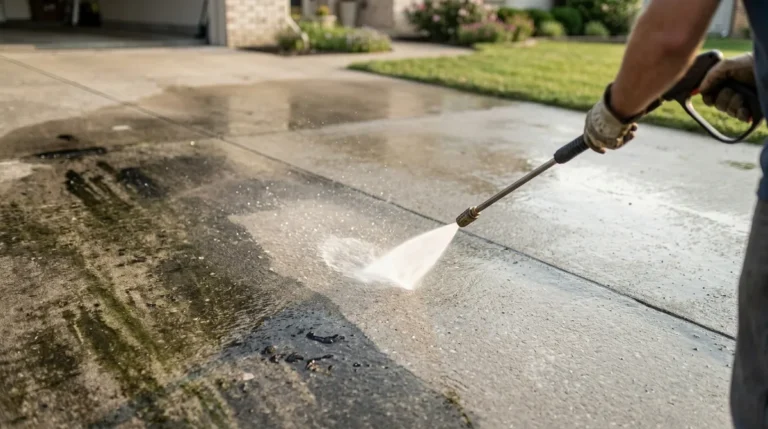
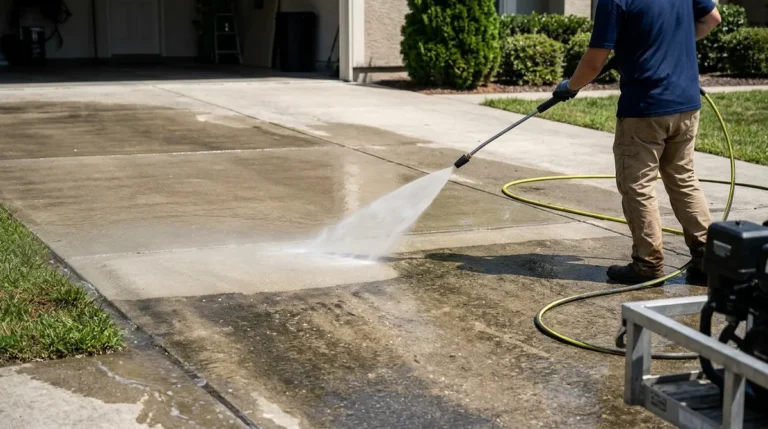
Work in overlapping straight passes 6-12 inches from the surface, keeping the nozzle moving consistently to prevent streaking and etching of the concrete.
-
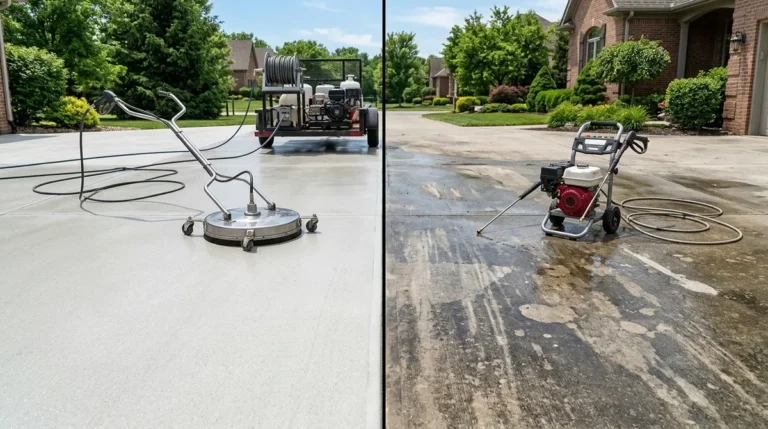
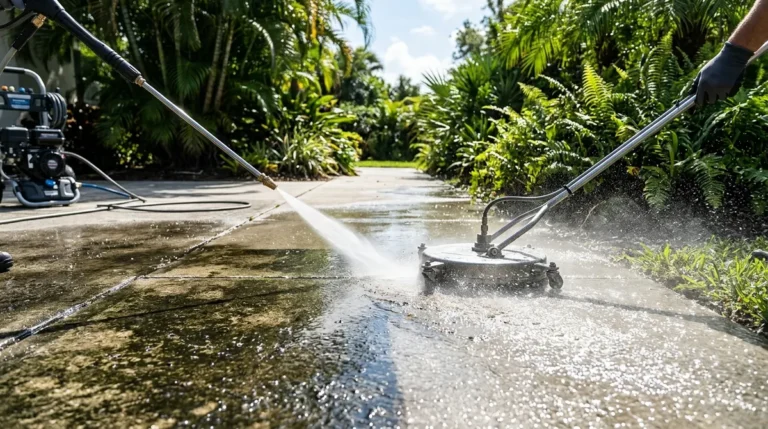
Use a surface cleaner attachment for large areas as it cleans faster and more evenly than a standard wand, leaving significantly fewer streaks.
-
In Florida's humid climate, clean driveways at least once yearly (twice for shaded areas) and consider sealing after cleaning to protect against future staining and algae growth.
-
Hire professionals for heavily stained concrete, widespread discoloration, or stubborn algae growth since commercial-grade equipment and proper training deliver superior results safely.
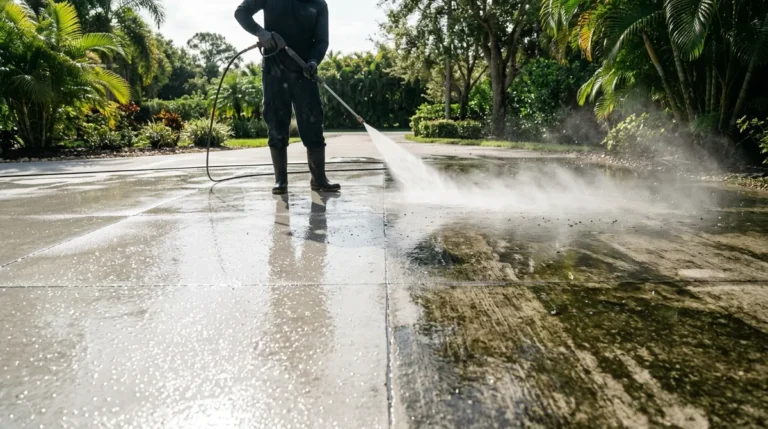
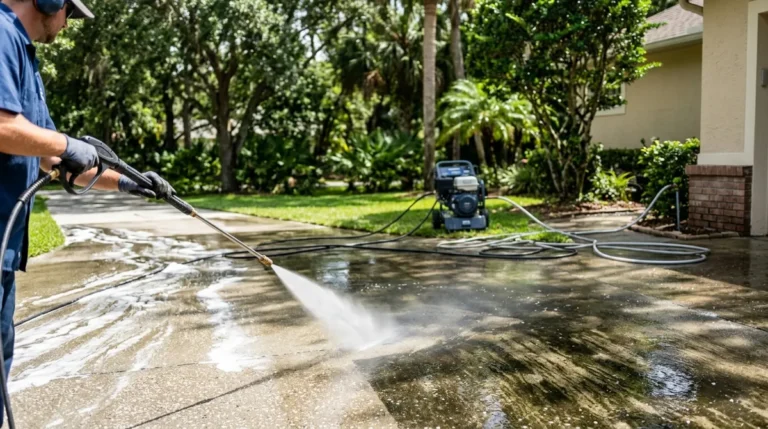
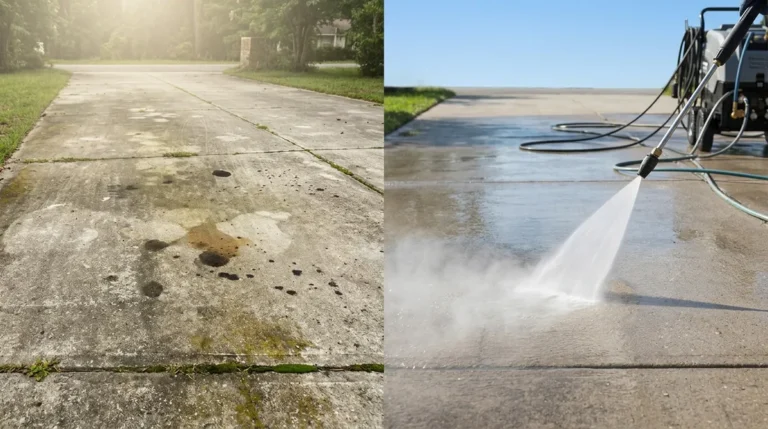
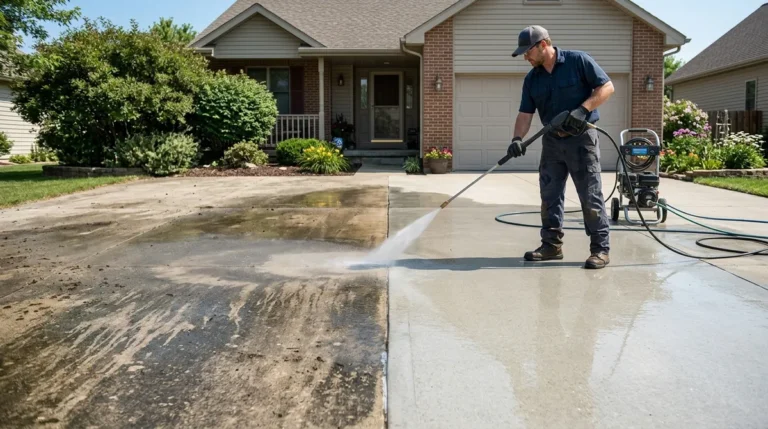
Your concrete driveway looked great when it was new. But now? It’s covered in dark stains, green algae, and tire marks that just won’t budge. Sound familiar? You’re definitely not alone. Concrete is one of the most common — and most neglected — surfaces around a home. The good news is that a pressure cleaner for concrete can work absolute wonders. Whether you’re a busy homeowner in Hillsborough County or someone who simply wants their property looking its best, these tips will help you understand exactly what it takes to get concrete truly clean. We’ll walk you through everything from prep work to professional tricks that make a real difference. And if you decide the job is bigger than you want to tackle yourself, we’ll point you in the right direction too. Let’s dive in!
Why Concrete Gets So Dirty (And Why It Matters)
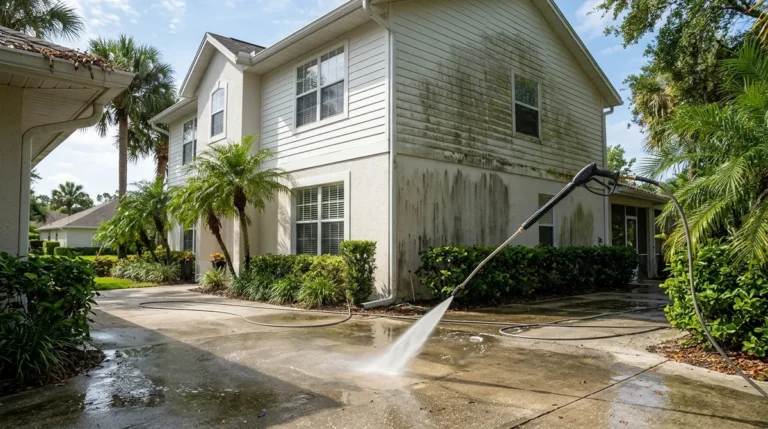
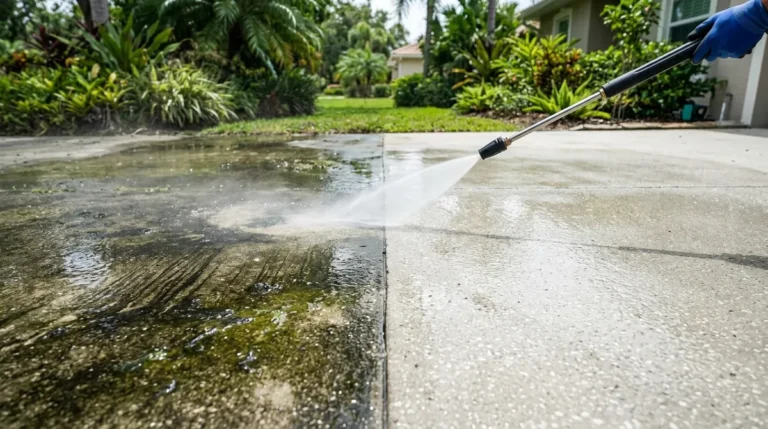
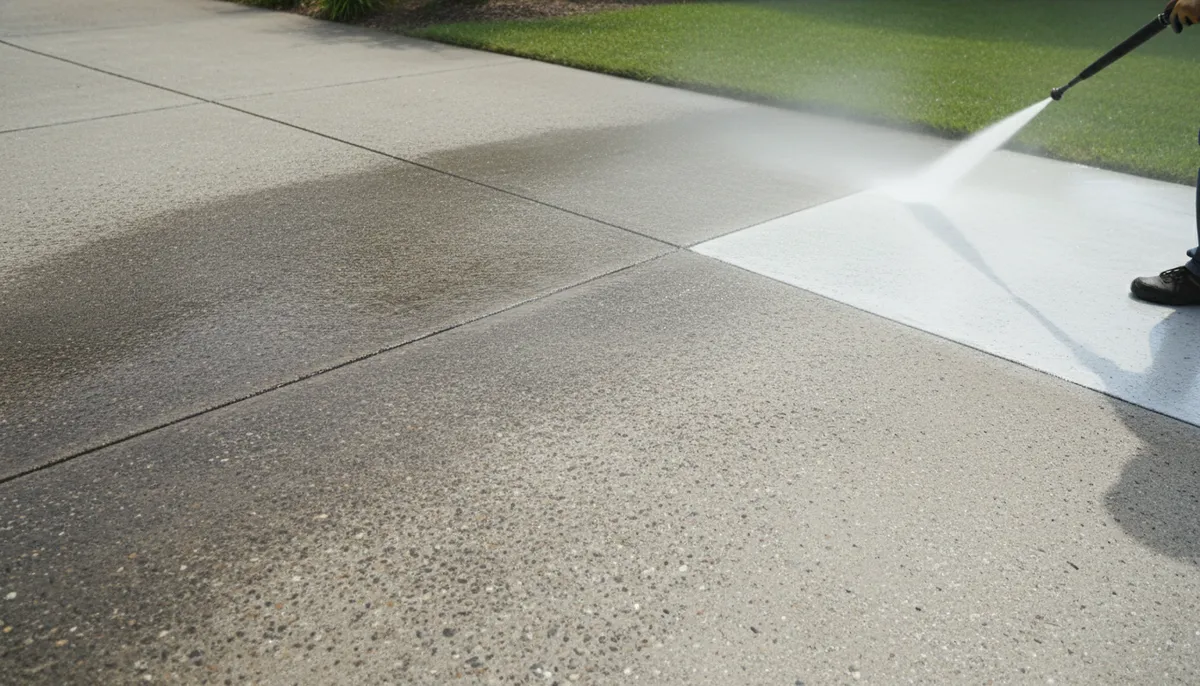
Concrete is porous. That means it soaks up everything — oil, dirt, algae, mold, and more. Over time, these stains become deeply embedded. In Florida’s humid climate, algae and mold grow even faster than in cooler states. This doesn’t just look bad. It can also make your surfaces slippery and unsafe. Driveway cleaning matters more than most homeowners think — it protects your investment and keeps your family safe.
Dirty concrete can also lower your home’s curb appeal and value. If you live in an HOA community, it might even earn you a fine. Regular cleaning with the right pressure cleaner for concrete keeps all of these problems at bay.
12 Pressure Cleaner for Concrete Tips That Actually Work
1. Always Start With a Thorough Sweep
Before you even turn on a pressure cleaner, sweep the concrete completely. Remove all loose debris — leaves, dirt, gravel, and twigs. This simple step makes the entire cleaning process more effective. It also prevents debris from clogging your equipment.
2. Choose the Right Pressure Level
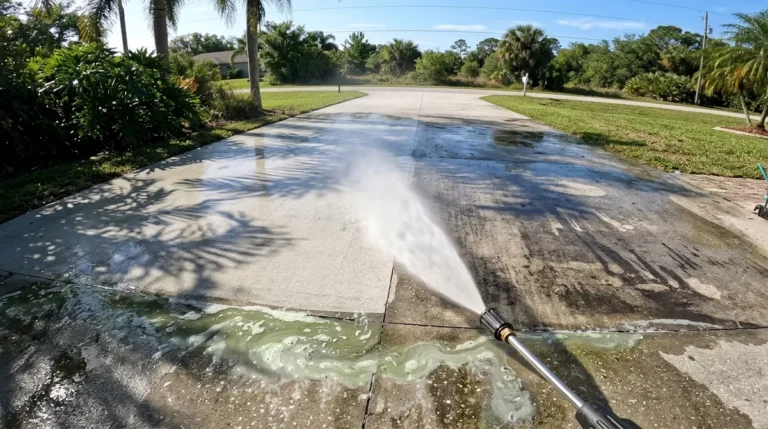
Concrete can handle higher pressure than softer surfaces like wood or painted siding. For driveways and sidewalks, a pressure cleaner set between 2,500 and 3,500 PSI works best. Going too low won’t remove embedded stains. Going too high can etch or pit the surface. Cleaning concrete with a pressure washer the right way means finding that sweet spot.
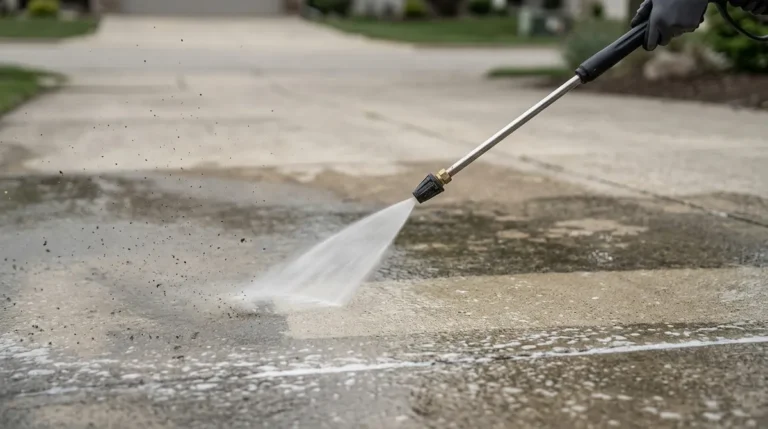
3. Use the Right Nozzle
Nozzles make a huge difference. Here’s a quick guide:
- 25-degree (green) nozzle — Great for general concrete cleaning
- 15-degree (yellow) nozzle — Better for stubborn stains and grime
- 0-degree (red) nozzle — Very intense; use only on extremely tough spots
- Rotary/turbo nozzle — Spins water for faster, more even cleaning
For most concrete jobs, stick with the 25-degree nozzle and switch to a 15-degree for problem areas.
4. Apply a Concrete Degreaser First
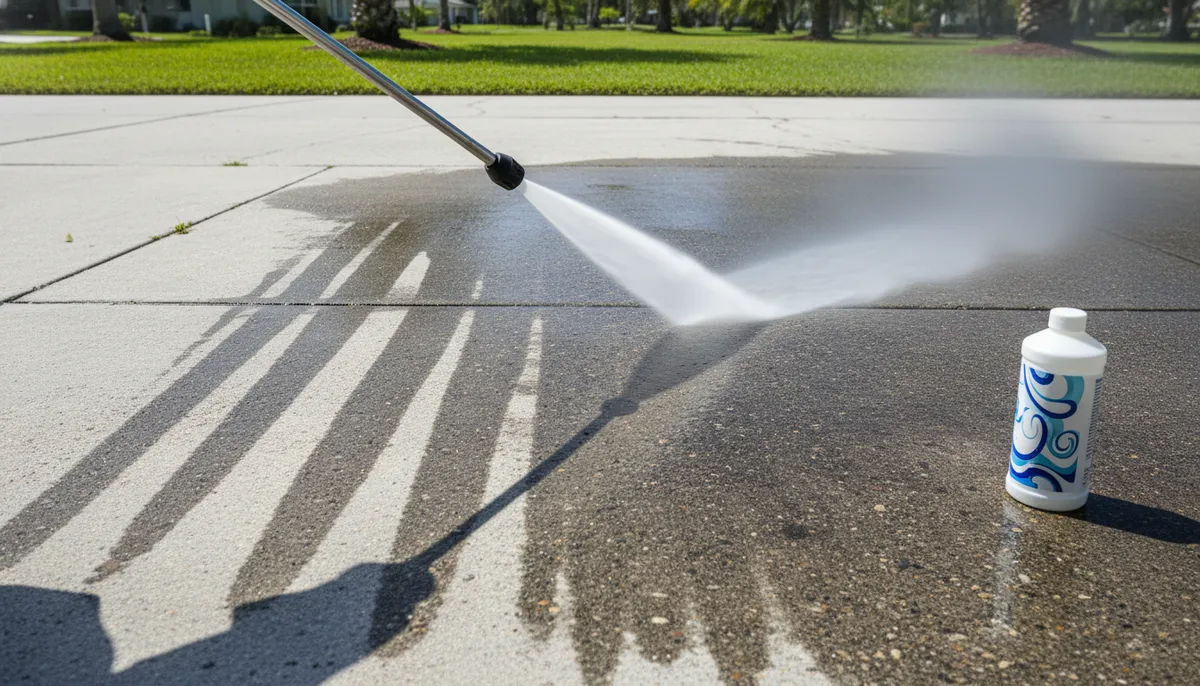
Oil stains from cars are one of the hardest things to remove from concrete. Applying a degreaser before using your pressure cleaner for concrete breaks down the oil at the surface level. Let it sit for at least 10–15 minutes before you start washing. This extra step makes a noticeable difference in results.
5. Work in Overlapping Passes
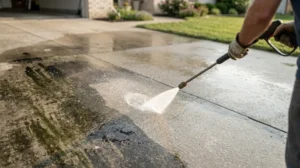
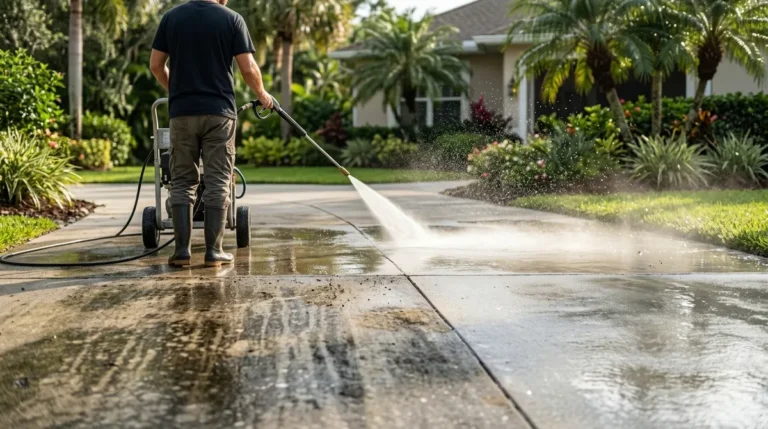
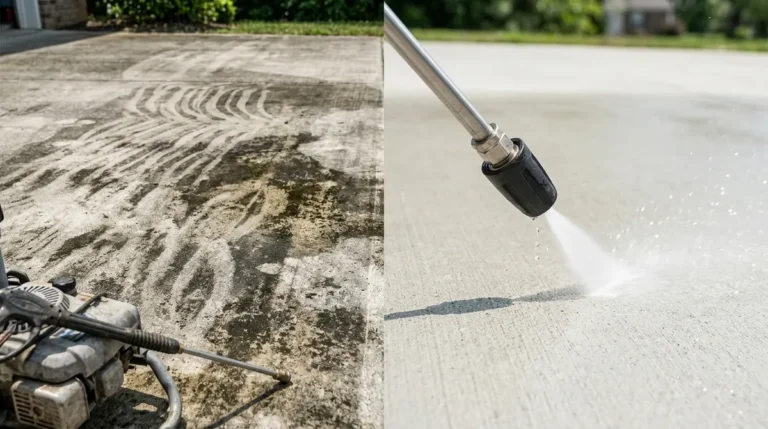
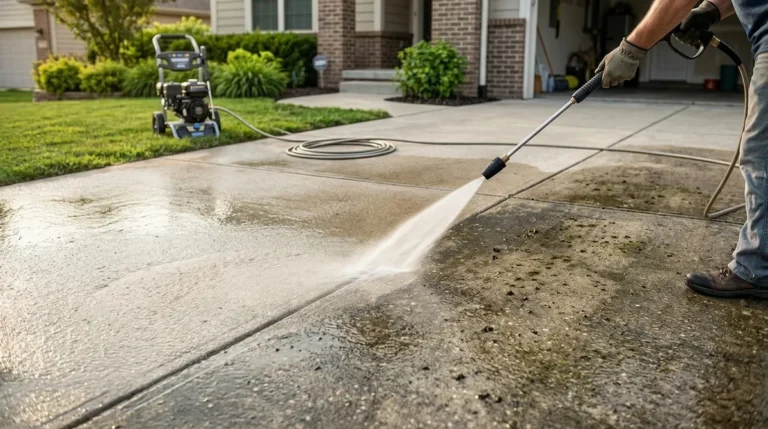
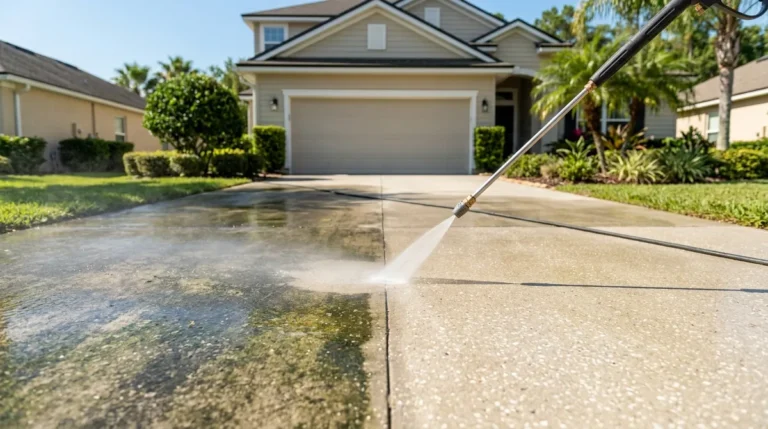
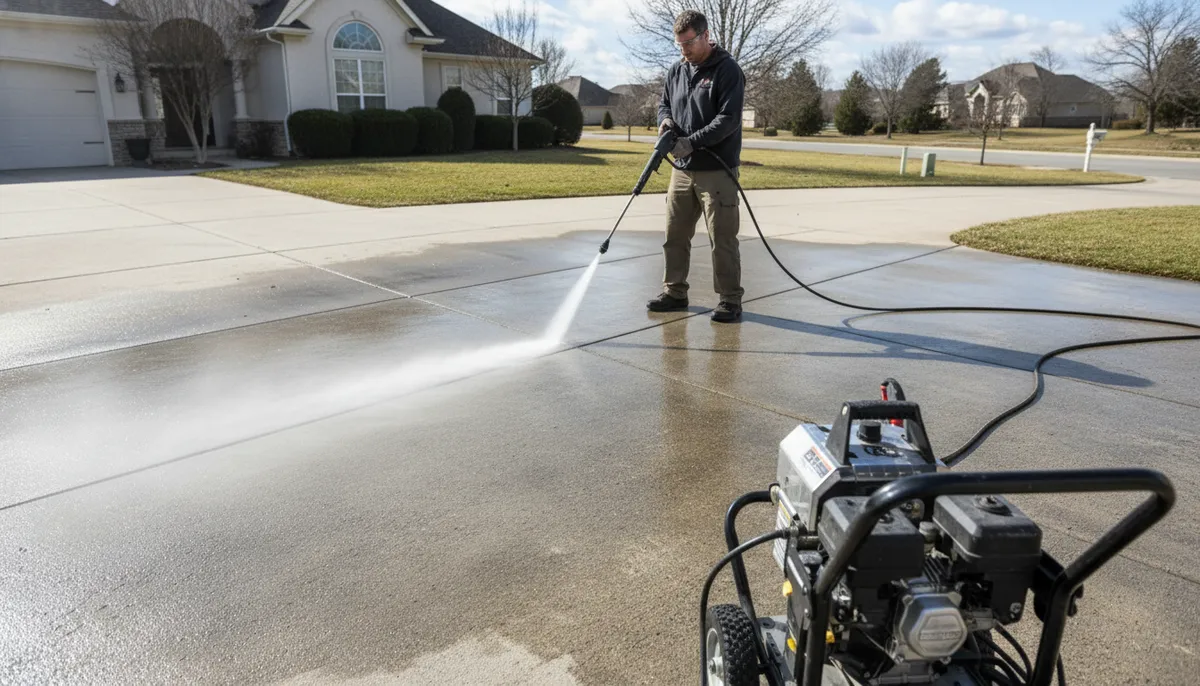
Don’t just spray randomly. Work in straight, overlapping passes — like mowing a lawn. Overlap each pass by about 50%. This ensures even cleaning and prevents streaky results. Always keep the nozzle moving to avoid damage.
6. Keep a Consistent Distance
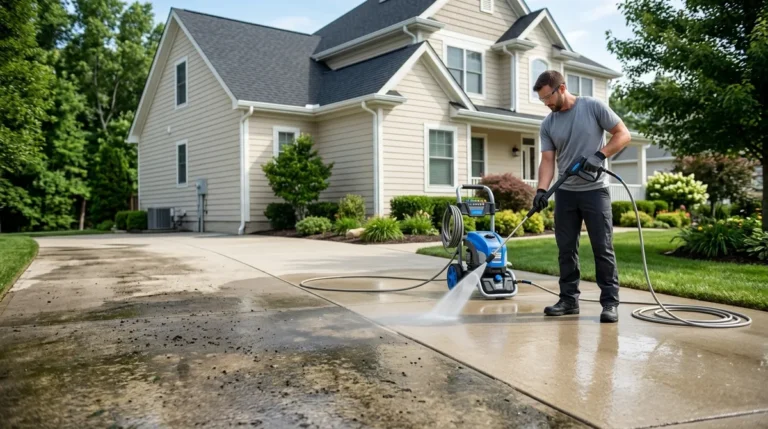
Hold the nozzle about 6 to 12 inches from the concrete surface. Getting too close can gouge the surface. Staying too far away reduces your cleaning power. Consistent distance gives you consistent results every time.
7. Use a Surface Cleaner Attachment
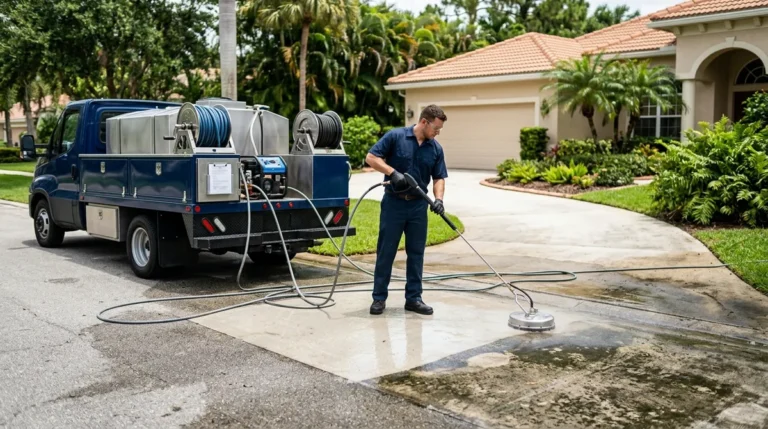
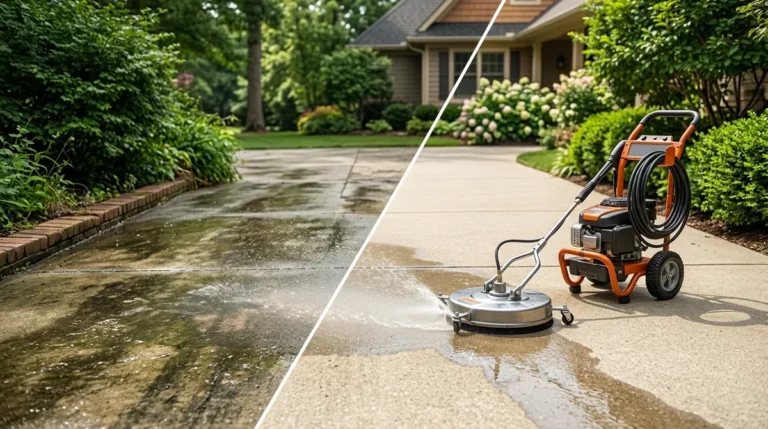
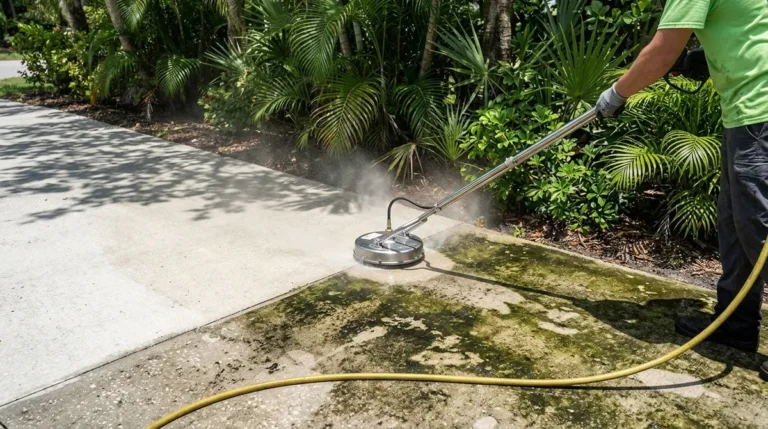
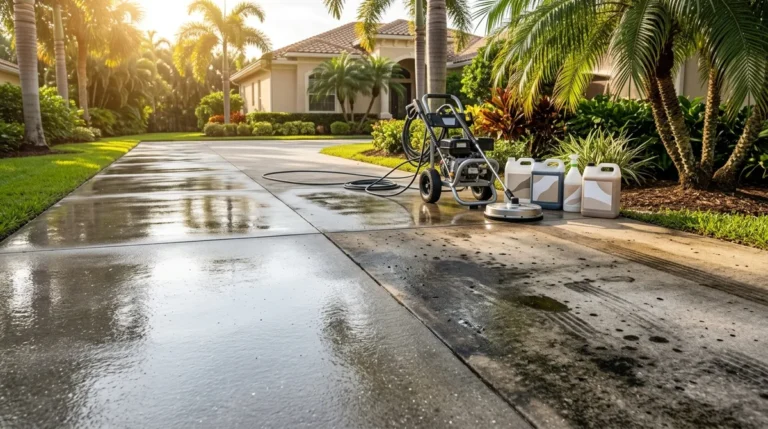
A surface cleaner attachment is a game-changer for large concrete areas. It attaches to your pressure cleaner and uses spinning jets to clean a wide path evenly. It’s faster and leaves far fewer streaks than a standard wand. This is exactly what makes a power washer sidewalk cleaner so effective for big jobs.
8. Pre-Wet the Surface
Before applying any cleaning solution, wet the concrete first. This prevents the detergent from drying too fast in Florida’s heat. It also helps lift surface-level dirt so your cleaner can focus on deeper grime. Pre-wetting is a small step that improves your final results significantly.
9. Use Eco-Friendly Cleaning Solutions
Not all detergents are created equal. Look for biodegradable, eco-friendly options that won’t harm your lawn or landscaping. This is especially important in Hillsborough County where runoff can affect local waterways. Professional services like Buckhorn Power Wash’s Driveway & Concrete Cleaning use safe, effective products that protect your property and the environment.
10. Rinse in the Right Direction
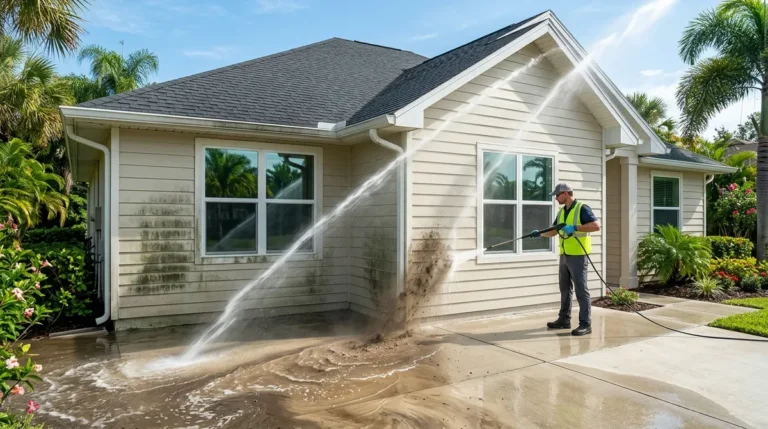
Always rinse away from your home, garden, and landscaping. Dirty water contains contaminants you don’t want pooling near your foundation or plants. Work from the highest point of your driveway down toward the street. This keeps the cleaning process neat and efficient.
11. Don’t Skip the Edges
The edges of driveways and sidewalks collect some of the worst buildup. Weeds, moss, and dark staining love to hide along the borders. Pay extra attention to these areas with a focused nozzle. Edge cleaning ties the whole job together and makes the finished result look sharp and complete.
12. Consider Sealing After Cleaning
Once your concrete is clean, sealing it protects it from future staining. A quality sealer penetrates the porous surface and creates a barrier against oil, water, and organic growth. It extends the life of your cleaning results dramatically. Driveway cleaning and sealing near you is a smart investment that pays off over time.
Common Mistakes to Avoid
Even with the best intentions, homeowners make mistakes when using a pressure cleaner for concrete. Here are the most common ones to watch out for:
- Using too much pressure on newer or cracked concrete
- Holding the nozzle in one place too long (causes etching)
- Skipping the pre-treatment step on oil stains
- Neglecting safety gear like goggles and closed-toe shoes
- Using hot water on concrete that’s been sealed (can strip the sealer)
Want to see more? Check out this detailed look at 10 concrete pressure cleaner mistakes that can ruin your driveway.
DIY vs. Hiring a Professional
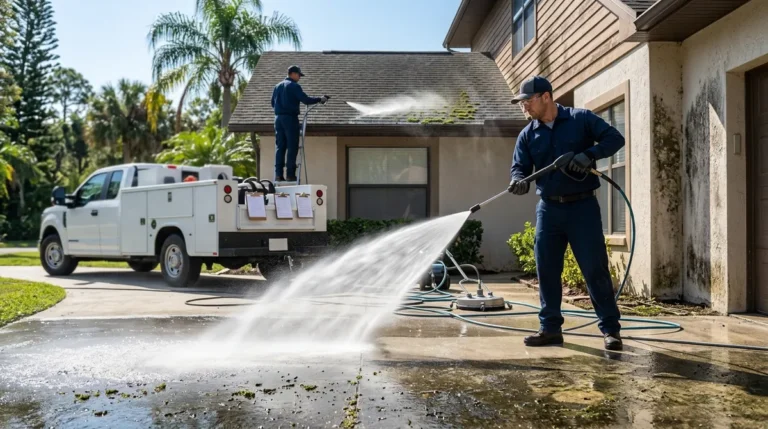
This is the big question, isn’t it? DIY pressure cleaning can work for small jobs. But for large driveways, heavily stained concrete, or stubborn algae and mold growth, professional results are hard to match. Pros have commercial-grade equipment, proper training, and the right solutions for every type of stain.
| Factor | DIY Cleaning | Professional Service |
|---|---|---|
| Equipment Power | Consumer-grade (1,500–2,000 PSI) | Commercial-grade (3,000–4,000 PSI) |
| Cleaning Solutions | Basic store-bought detergents | Professional-grade, eco-safe treatments |
| Time Required | Several hours for average driveway | 45–90 minutes typically |
| Risk of Damage | Higher without training | Very low with experienced technicians |
| Final Results | Good for light stains | Deep clean, like-new appearance |
| Convenience | Equipment rental required | They handle everything |
For homeowners in Hillsborough County who value their weekends, hiring a professional is often the smarter choice. You can read more about this in our guide on DIY concrete pressure washer vs. pro service.
What Surfaces Can a Pressure Cleaner Handle?
A pressure cleaner for concrete isn’t just for driveways. Many concrete and hard surfaces around your home can benefit from professional cleaning. Here’s a quick rundown:
- Driveways — The most common concrete surface that benefits from pressure cleaning
- Sidewalks and pathways — High foot traffic means faster buildup
- Pool decks — Algae, mildew, and sunscreen residue build up quickly
- Patios — Great for outdoor entertainment spaces that need a refresh
- Garage floors — Oil and grease stains are a perfect match for pressure cleaning
Each of these surfaces needs a slightly different approach. Patio cleaning through pressure washing can completely transform your outdoor space. And for pool areas, check out why pool cage cleaning deserves your attention in 2026.
How Often Should You Clean Concrete?
In Florida, concrete tends to get dirty faster than in other parts of the country. The humidity, heat, and rain all speed up algae and mold growth. Here’s a simple frequency guide:
- Driveways — Clean at least once a year; twice yearly in shaded areas
- Pool decks — Every 6 months, or more often if heavily used
- Sidewalks and pathways — Once a year is usually enough
- Patios — Once or twice a year depending on shade and foot traffic
- Garage floors — Clean whenever oil spots appear, plus an annual deep clean
Sticking to a regular schedule prevents buildup from becoming a much bigger (and harder) problem. Pressure cleaning your driveway regularly is one of the best habits you can develop as a homeowner.
Signs Your Concrete Needs Professional Help
Sometimes a regular rinse just won’t cut it. Here are clear signs it’s time to call in the pros:
- Dark green or black staining that keeps coming back
- Slippery surfaces even when dry (sign of algae or mold)
- Stubborn oil stains that DIY methods haven’t removed
- Widespread discoloration across the driveway or patio
- HOA notice about your driveway or exterior appearance
If any of these sound familiar, it’s worth reaching out. You can get a fast, free quote online in just a few minutes — no home visit required.
Why Hillsborough County Homeowners Trust the Pros
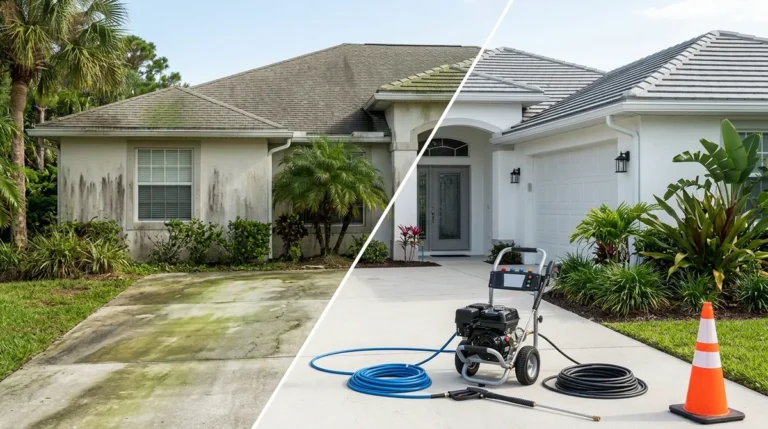
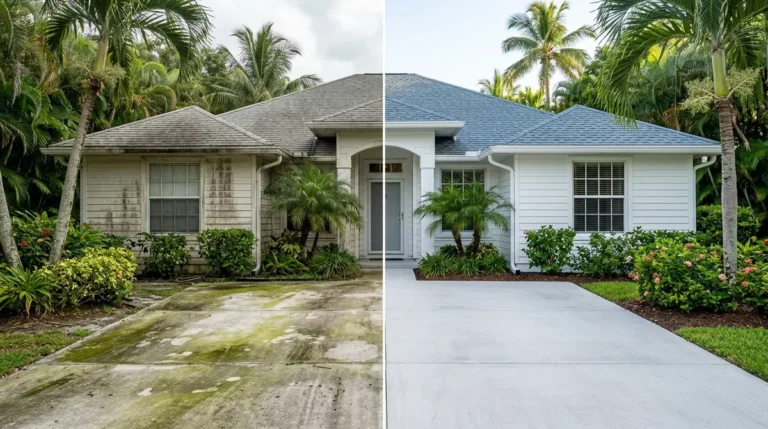
Here in Hillsborough County, homeowners deal with some of the toughest outdoor cleaning conditions in the country. The Florida sun, humidity, and frequent rain make concrete maintenance a year-round job. That’s why so many residents turn to professional services rather than fighting it alone. Buckhorn Power Wash serves homeowners across Hillsborough County with expert driveway and concrete cleaning that delivers real, lasting results. You can also check out our work in the before-and-after gallery to see what a professional clean really looks like.
We’ve also earned great reviews from happy homeowners — feel free to visit us on Google — Buckhorn Power Wash to see what your neighbors are saying. You can also find us on Yelp and Facebook for more reviews and updates.
Quick Reference: Pressure Settings for Concrete Surfaces
| Surface Type | Recommended PSI | Best Nozzle | Notes |
|---|---|---|---|
| Standard Concrete Driveway | 2,500–3,000 PSI | 25-degree green | Use surface cleaner for best results |
| Stamped/Decorative Concrete | 1,500–2,000 PSI | 40-degree white | Lower pressure to protect finish |
| Pool Deck Concrete | 2,000–2,500 PSI | 25-degree green | Rinse away from pool water |
| Concrete Sidewalk | 2,000–3,000 PSI | 25-degree green | Work in overlapping straight passes |
| Concrete with Oil Stains | 3,000–3,500 PSI | 15-degree yellow | Pre-treat with degreaser first |
Keep this chart handy the next time you tackle a concrete cleaning project. The right settings make all the difference between good results and great ones. For even more detail, visit our full guide on why a pressure washer is the right tool for concrete driveway cleaning.
Final Thoughts and Next Steps
A pressure cleaner for concrete is one of the most powerful tools for restoring your home’s curb appeal. Whether you’re dealing with stubborn oil stains, green algae, or years of Florida grime, the right approach makes all the difference. Use these 12 tips to get better results — and know when to call in the experts for a truly professional finish.
Maintaining clean concrete isn’t just about looks. It’s about protecting your property value, keeping your surfaces safe, and staying in good standing with your community. You deserve a home that looks as good as the effort you put into it.
Ready to see what a professional clean can do for your concrete? Request your free quote from Buckhorn Power Wash today and discover just how easy it is to get stunning results without lifting a finger. Your concrete will thank you!
FAQs
Q: What PSI should I use on a pressure cleaner for concrete?
A: For most concrete surfaces like driveways and sidewalks, 2,500 to 3,000 PSI works really well. If you’re dealing with tough oil stains, you can go up to 3,500 PSI — but always use a 25-degree or 15-degree nozzle and keep the wand moving to avoid surface damage!
Q: How do I remove oil stains from concrete with a pressure cleaner?
A: The trick is to pre-treat the stain with a concrete degreaser before you start pressure washing. Let it soak in for 10–15 minutes, then use a 15-degree nozzle at higher pressure to blast the stain away. For really stubborn spots, a second treatment may be needed.
Q: How often should I pressure clean my concrete driveway in Florida?
A: Because of Florida’s humidity and heat, we recommend cleaning your concrete driveway at least once a year — and twice a year if it’s shaded or prone to algae growth. Regular cleaning keeps mold and staining from getting out of hand and is much easier than trying to tackle years of buildup!
Q: Is it safe to pressure wash stamped or decorative concrete?
A: Yes, but you need to use a lower pressure setting — around 1,500 to 2,000 PSI — and a wide 40-degree nozzle to protect the finish. High pressure can damage the decorative surface or strip any sealant. When in doubt, hiring a professional is the safest option.
Q: Should I seal my concrete after pressure washing it?
A: Absolutely — sealing after cleaning is one of the smartest things you can do! A good concrete sealer fills in the porous surface and creates a protective barrier against future stains, oil, and algae. It extends the life of your clean and makes future maintenance much easier.