Key Takeaways
-
Soft washing with lower water pressure and specialized cleaning solutions is safer and more effective for most fence materials than high-pressure washing.
-
DIY fence cleaning carries hidden risks like equipment damage, personal injury, and inconsistent results, making professional services often more cost-effective.
-
Different fence materials (wood, vinyl, metal) require unique cleaning approaches, with soft washing generally recommended for delicate surfaces like wood.
-
Proper fence cleaning removes harmful organic growth, restores original color, extends fence life, and helps identify potential repair needs before they become expensive.
-
Regular fence maintenance, including periodic rinsing and annual sealant application, can significantly extend the time between deep cleaning services.
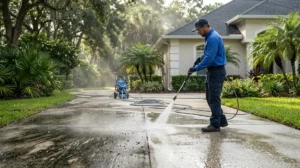
Your fence stands guard every day, protecting your property and adding curb appeal to your home. But over time, dirt, mold, mildew, and algae turn that once-beautiful barrier into an eyesore. If you’re in Hillsborough County, Florida, you’ve probably noticed how quickly these problems appear thanks to our humid climate. The good news? Cleaning your fence with a pressure washer can bring it back to life. The big question is whether you should tackle this project yourself or call in the professionals.
In this guide, we’ll walk you through everything you need to know about cleaning your fence with a pressure washer. We’ll compare the DIY approach to hiring experts like Buckhorn Power Wash, so you can make the best choice for your home and budget. Let’s dive in and get your fence looking fresh again!
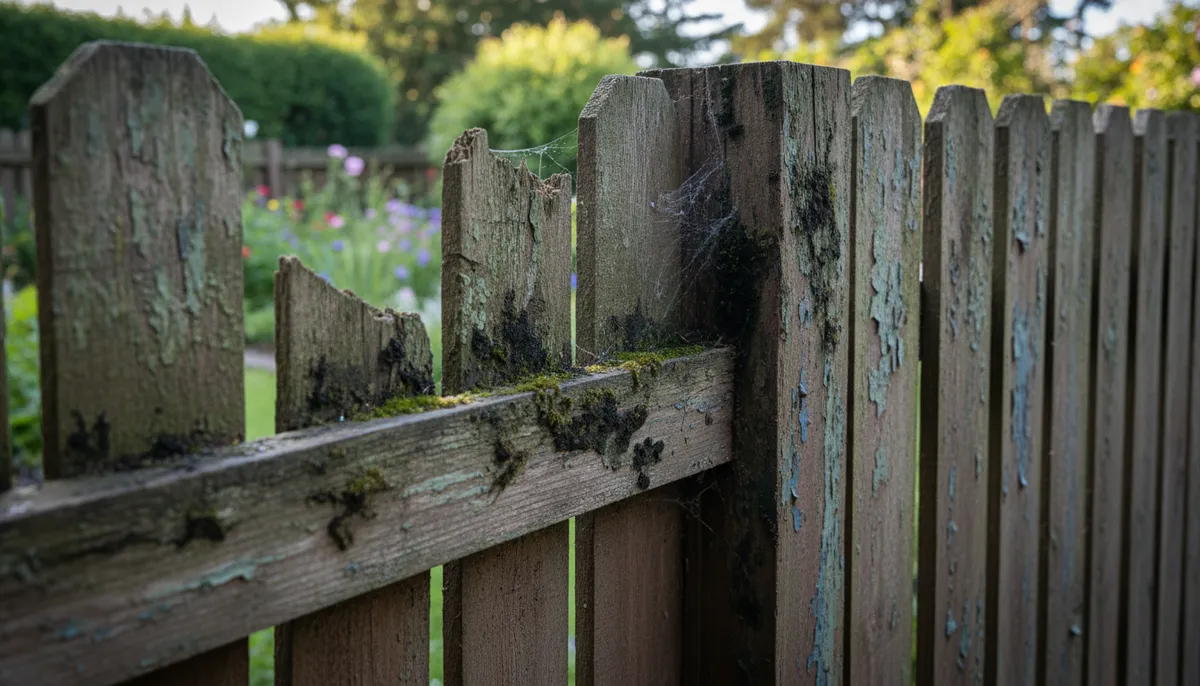
Why Your Fence Needs Regular Cleaning
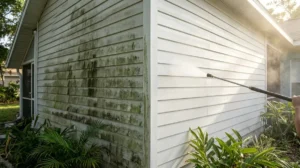
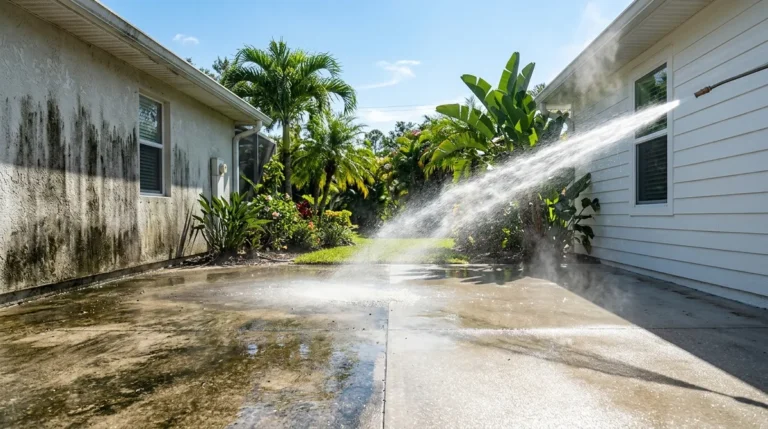
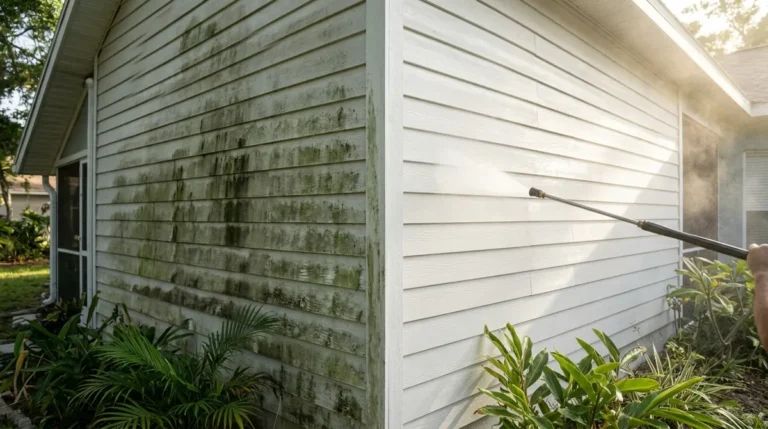
Fences take a beating from the elements. Sun, rain, humidity, and pollen all leave their mark. In Florida, the warm, moist air creates the perfect breeding ground for mold, mildew, and algae. These aren’t just ugly—they can actually damage your fence over time.
Wood fences are especially vulnerable. Organic growth can seep into the wood grain, causing rot and weakening the structure. Vinyl and metal fences aren’t immune either. Dirt and grime build up in the textured surfaces, making them look dull and dingy. Regular cleaning protects your investment and keeps your property looking its best.
Here are the main reasons to clean your fence regularly:
-
Removes harmful mold, mildew, and algae that cause damage
-
Restores original color and beauty to all fence materials
-
Extends the life of your fence by preventing rot and decay
-
Maintains curb appeal and property value
-
Helps you spot repairs before they become expensive problems
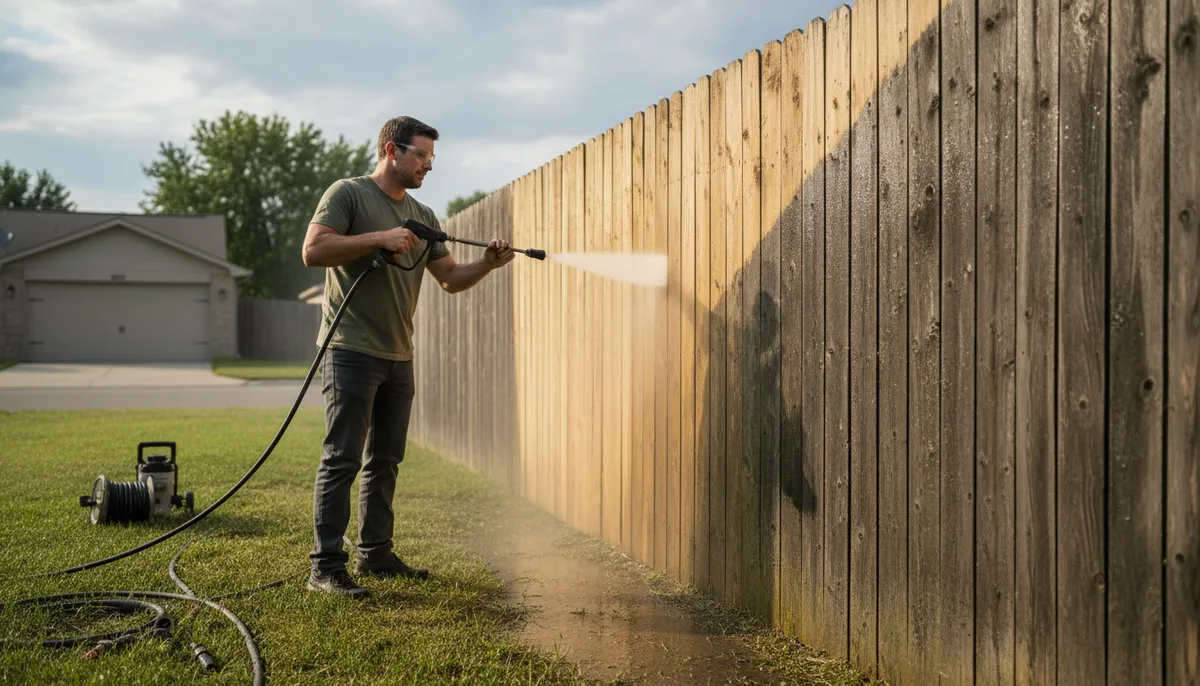
Understanding Pressure Washing vs. Soft Washing for Fences
Not all cleaning methods are the same. When it comes to cleaning your fence with a pressure washer, you need to understand the difference between high-pressure washing and soft washing. Using the wrong method can cause serious damage.
High-Pressure Washing
This method uses water at high PSI (pounds per square inch) to blast away dirt and grime. It works great on concrete, brick, and some metal surfaces. However, it can be too harsh for many fence materials. High pressure can splinter wood, strip paint, damage vinyl, and force water into places it shouldn’t go.
Soft Washing
Soft washing uses lower water pressure combined with specially formulated cleaning solutions. This gentle approach is perfect for delicate surfaces like painted wood, vinyl, and older fences. The cleaning solution does the heavy lifting, breaking down mold, algae, and dirt without physical force. This method is safer and often more effective for fence cleaning services.
|
Feature |
High-Pressure Washing |
Soft Washing |
|---|---|---|
|
Water Pressure |
2000-4000 PSI |
100-500 PSI |
|
Best For |
Concrete, brick, stone |
Wood, vinyl, painted surfaces |
|
Cleaning Method |
Physical force |
Chemical breakdown |
|
Risk of Damage |
Higher on delicate surfaces |
Lower overall |
|
Longevity of Clean |
Shorter (surface only) |
Longer (kills organic growth) |
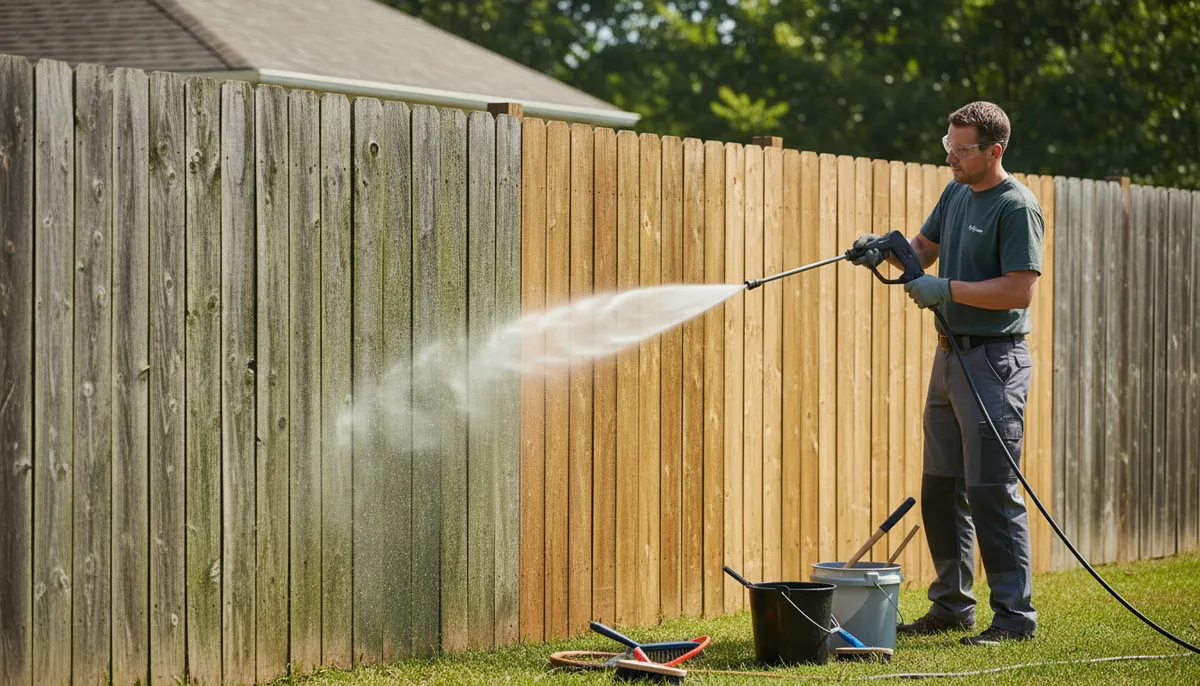
The DIY Approach: Cleaning Your Fence Yourself
Many homeowners consider renting or buying a pressure washer to clean their fence themselves. This can save money upfront, but it comes with challenges. Let’s look at what DIY fence cleaning really involves.
Equipment You’ll Need
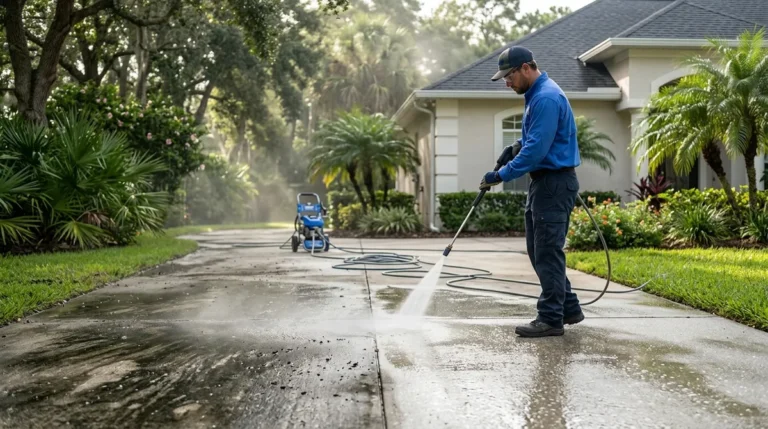
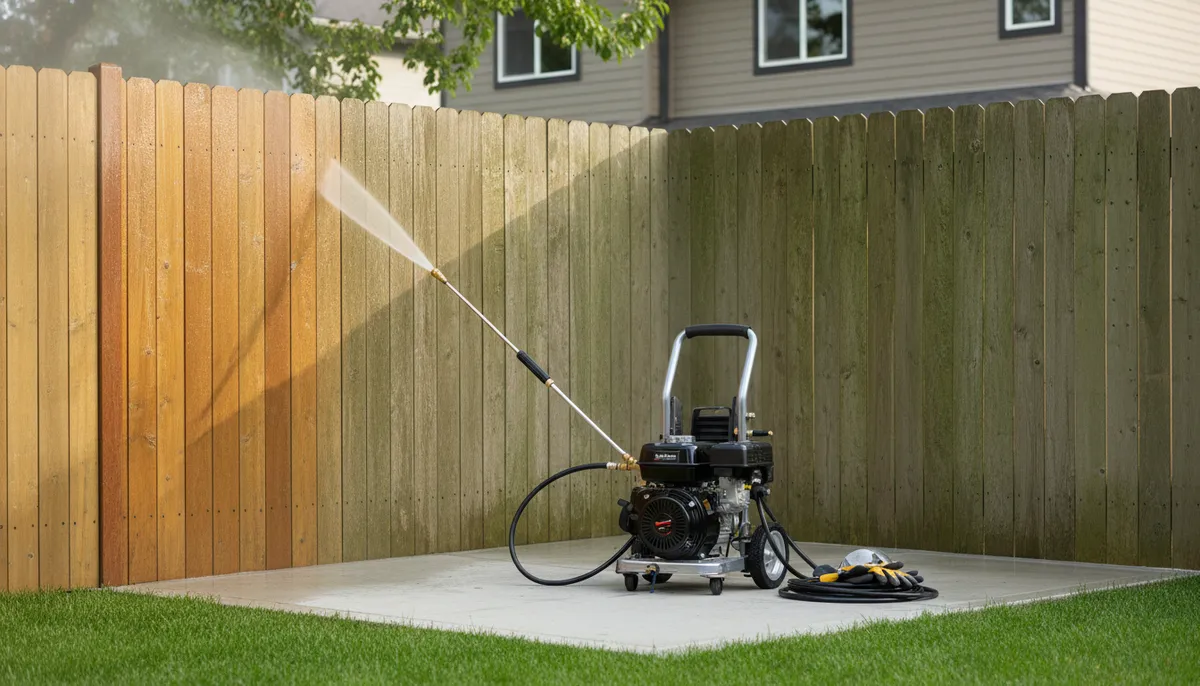
To clean your fence with a pressure washer on your own, you’ll need several items:
-
Pressure washer with adjustable PSI settings (1500-2000 PSI for most fences)
-
Appropriate nozzle tips (25-degree or 40-degree for fences)
-
Cleaning solution safe for your fence material
-
Safety gear (goggles, gloves, closed-toe shoes)
-
Garden hose and water source
-
Ladder for taller sections
The DIY Process Step-by-Step
If you decide to go the DIY route, follow these steps carefully:
-
Clear the area around your fence of furniture, plants, and decorations
-
Pre-rinse the fence with a regular garden hose to remove loose debris
-
Apply cleaning solution and let it sit for the recommended time
-
Test the pressure washer on a small, hidden section first
-
Start at the top and work your way down, keeping the nozzle at least 12 inches away
-
Use smooth, sweeping motions and overlap each pass slightly
-
Rinse thoroughly to remove all cleaning solution
-
Allow the fence to dry completely before applying any sealant or stain
Common DIY Mistakes and Risks
Even with the best intentions, DIY fence cleaning can go wrong. Here are the most common problems:
-
Using too much pressure and splintering or gouging the wood
-
Holding the nozzle too close and creating permanent marks
-
Not testing the pressure first and damaging visible areas
-
Applying cleaning chemicals incorrectly and harming plants
-
Inconsistent cleaning patterns that leave streaks and spots
-
Personal injury from equipment mishaps or ladder falls
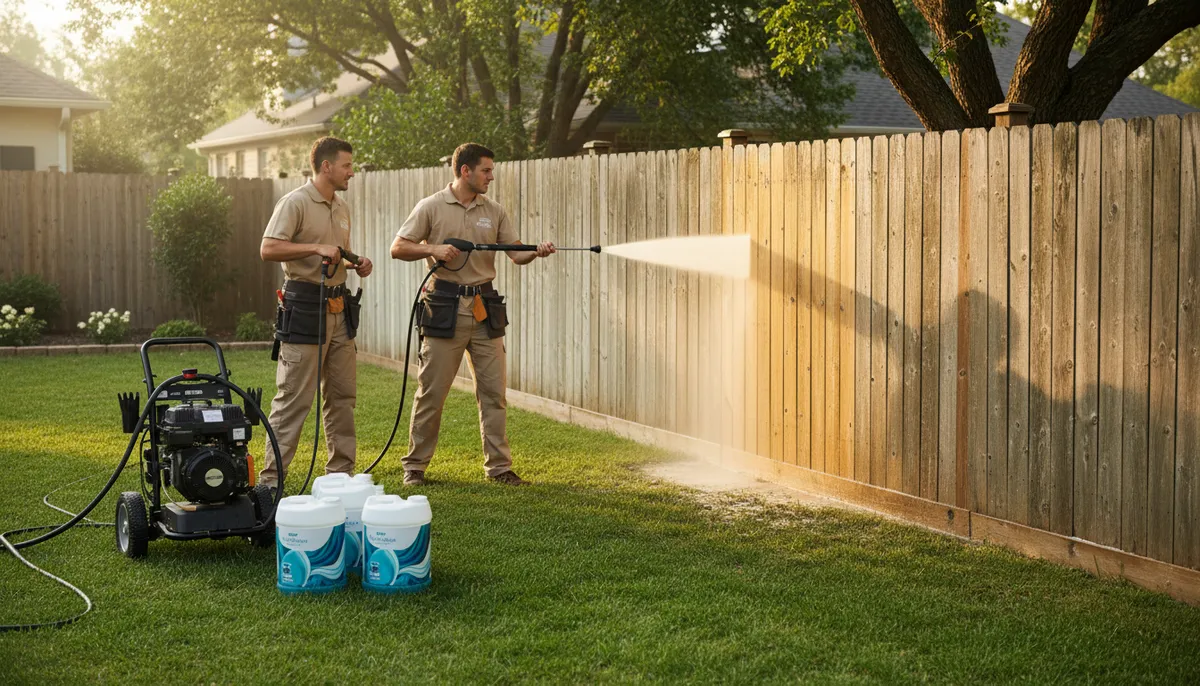
The Professional Approach: Hiring Expert Fence Cleaners
Professional pressure washing companies bring experience, proper equipment, and insurance to the job. They understand which techniques work best for different fence materials and conditions. Let’s explore what makes professional fence cleaning worth considering.
What Professionals Bring to the Table
When you hire a company like Buckhorn Power Wash, you get more than just equipment. You get expertise and peace of mind. Professional cleaners know exactly how much pressure to use on wood versus vinyl. They have commercial-grade equipment that’s more powerful and efficient than rental units. They also carry insurance to protect your property.
Professional services typically include:
-
Complete assessment of fence material and condition
-
Pre-treatment with appropriate cleaning solutions
-
Proper pressure settings for your specific fence type
-
Even, streak-free cleaning results
-
Protection for surrounding landscaping and property
-
Post-cleaning inspection and recommendations
The Professional Process
Here’s what happens when you hire professionals to clean your fence:
-
Initial consultation and fence inspection
-
Detailed quote based on fence size, material, and condition
-
Scheduled appointment at your convenience
-
Professional crew arrives with all necessary equipment
-
Thorough cleaning using appropriate methods for your fence
-
Quality check and final walkthrough
-
Optional staining or sealing services if needed
Cost Comparison: DIY vs. Professional Fence Cleaning
Money matters, so let’s break down the real costs of both approaches. DIY seems cheaper at first glance, but hidden expenses add up quickly.
|
Cost Factor |
DIY Approach |
Professional Service |
|---|---|---|
|
Equipment Rental |
$60-100 per day |
Included in service |
|
Cleaning Solutions |
$20-50 |
Included in service |
|
Safety Gear |
$30-60 |
Not needed |
|
Your Time |
4-8 hours |
1-2 hours (supervision only) |
|
Risk of Damage |
Potential repair costs |
Covered by insurance |
|
Results Quality |
Variable |
Consistent and professional |
Hidden Costs of DIY
Beyond the obvious expenses, DIY fence cleaning carries hidden costs that many homeowners overlook. Your weekend time has value—would you rather spend eight hours wrestling with a pressure washer or enjoying time with family? There’s also the risk of damage. One wrong move can mean costly fence repairs that far exceed professional cleaning fees.
Different Fence Materials: What Works Best
Not all fences are created equal. The material of your fence determines the best cleaning approach. Let’s look at the most common fence types in Hillsborough County and how to handle each one.
Wood Fences
Wood fences are popular but require the most care when cleaning. Too much pressure can splinter the wood, strip away the grain, and force water deep into the material, leading to rot. Soft washing is almost always the best choice for wood fences. Use a cleaning solution designed for wood, apply it gently, let it work for 10-15 minutes, then rinse with low pressure.
Vinyl Fences
Vinyl fences are more forgiving than wood, but they can still be damaged by excessive pressure. High PSI can crack vinyl panels, especially if they’re older or sun-damaged. Moderate pressure (1500-2000 PSI) with a wide-angle nozzle works well. Focus on removing mold and mildew from the textured surface. Check out our house washing services to see how we handle similar materials.
Metal Fences
Chain link and aluminum fences can usually handle higher pressure. However, be careful around rust spots or painted areas. Too much pressure can peel paint or spread rust. A medium-pressure wash with rust-removing solution works best for metal fences showing signs of oxidation.
When to Call the Professionals
Some situations clearly favor professional help. Knowing when to call in experts can save you time, money, and frustration. Consider professional fence cleaning services if any of these apply to you:
-
Your fence is over six feet tall and requires ladder work
-
You have a large property with extensive fencing
-
Your fence is old or shows signs of damage
-
You’ve never used a pressure washer before
-
You don’t have time for a full weekend project
-
Your fence material is delicate or expensive (like cedar or redwood)
Safety Considerations
Safety is a huge factor that often gets overlooked. Pressure washers can cause serious injuries. The high-pressure water stream can cut skin, knock you off balance, or cause you to fall from a ladder. Professional crews have training, experience, and proper safety equipment. They also carry liability insurance in case something goes wrong.
Preparing Your Fence for Cleaning
Whether you choose DIY or professional cleaning, proper preparation makes a big difference. Here’s how to get ready:
-
Remove all decorations, planters, and furniture from the fence line
-
Trim back bushes and plants to create at least two feet of clearance
-
Cover delicate plants with plastic sheeting to protect them from overspray
-
Check for loose boards, missing screws, or damaged sections that need repair first
-
Notify neighbors if you share a fence line so they can move their items
Maintaining Your Clean Fence
Once your fence is clean, you want to keep it that way. Regular maintenance extends the time between deep cleanings and protects your investment. Here are simple tips to maintain your freshly cleaned fence:
-
Rinse your fence with a garden hose every few months to remove surface dirt
-
Trim vegetation away from the fence to improve air circulation
-
Apply a protective sealant to wood fences annually
-
Spot-clean mold or mildew as soon as you notice it
-
Schedule professional deep cleaning every 1-2 years
Signs Your Fence Needs Cleaning Again
Watch for these warning signs that it’s time for another cleaning:
-
Visible green or black streaks (algae and mold)
-
Faded or discolored areas
-
Rough texture from dirt buildup
-
Water beading issues on treated wood (sealant wearing off)
-
Musty smell near the fence
Environmental Considerations
Cleaning your fence responsibly protects Florida’s beautiful environment. The cleaning solutions and runoff from pressure washing can affect your yard, local waterways, and wildlife. Professional companies like Buckhorn Power Wash use eco-friendly cleaning products that break down naturally and won’t harm your lawn or garden.
If you’re going the DIY route, choose biodegradable cleaning solutions specifically designed for outdoor use. Never use bleach or harsh chemicals near storm drains or water features. The runoff from your fence cleaning eventually reaches Tampa Bay and other local waterways, so be mindful of what you’re washing into the environment.
Real Results: What to Expect from Professional Fence Cleaning
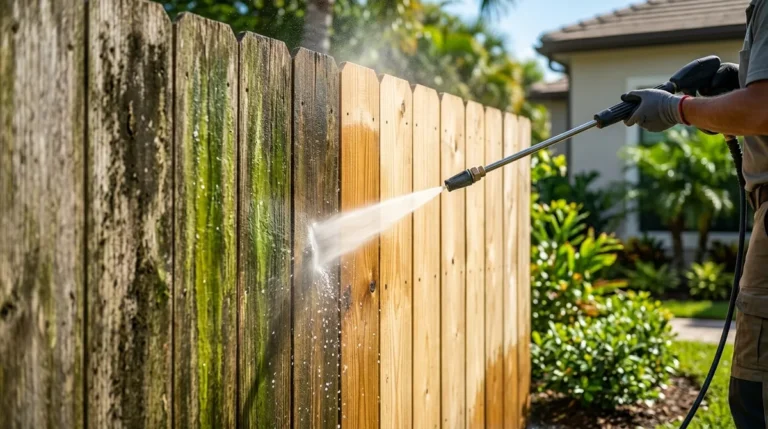
Professional fence cleaning delivers consistent, impressive results. Your fence will look years younger, with original colors restored and all organic growth removed. The cleaning process also reveals any repairs needed before they become serious problems. You can see examples of professional work in our gallery showing before-and-after transformations.
Most professional jobs take just a few hours, depending on fence size. The fence will be damp for several hours afterward but typically dries within 24 hours in Florida’s warm climate. If you’re planning to stain or seal your fence, pros recommend waiting 2-3 days after cleaning to ensure the wood is completely dry.
Making Your Decision: DIY or Professional?
Both approaches have their place. DIY works if you have the right equipment, experience, time, and a small fence that’s easy to reach. It makes sense for homeowners who enjoy hands-on projects and have successfully used pressure washers before. Professional cleaning is the smarter choice for most situations, especially with large fences, delicate materials, or limited time.
Consider your priorities. Do you value your weekends? Are you confident you won’t damage your fence? Is the potential cost of repairs worth the savings? For busy homeowners in Hillsborough County who want guaranteed results without the hassle, professional fence cleaning offers the best value. Companies like Buckhorn Power Wash bring expertise, efficiency, and peace of mind to every job.
Conclusion: Get Your Fence Looking Fresh Again
Cleaning your fence with a pressure washer transforms your property’s appearance and protects your investment. Whether you tackle the job yourself or hire professionals depends on your situation, but one thing is certain: a clean fence makes your entire property look better. The key is choosing the right method for your fence material and using appropriate pressure and techniques.
If you’re ready to restore your fence without the stress and risk of DIY, Buckhorn Power Wash is here to help. We serve homeowners throughout Hillsborough County with professional fence cleaning that’s safe, effective, and affordable. Our team knows exactly how to handle wood, vinyl, and metal fences, and we use eco-friendly cleaning solutions that protect your property and the environment. Request your free quote today and see how easy professional fence cleaning can be. You can also give us a call to discuss your specific needs and schedule a convenient appointment. Don’t let another season go by with a dirty, dingy fence—let us bring back its original beauty and extend its life for years to come. Check out what our satisfied customers have to say about our work by visiting our Google Business Profile. We look forward to serving you!
FAQs
Q: Can I use a regular pressure washer to clean my wood fence?
A: You can, but you need to be very careful. Wood fences require low pressure (1500-2000 PSI) and a wide-angle nozzle to avoid splintering or damaging the wood grain. Soft washing is often the safer choice for wood fences. Always test on a hidden spot first to make sure your settings won’t cause damage.
Q: How often should I clean my fence with a pressure washer?
A: Most fences in Florida benefit from professional cleaning every 1-2 years due to our humid climate that promotes mold and algae growth. If you notice green or black streaks appearing sooner, spot-clean those areas and consider scheduling your next deep cleaning. Regular light maintenance between professional cleanings helps extend the results.
Q: Is it better to clean my fence myself or hire professionals?
A: It depends on your situation. DIY makes sense if you have experience with pressure washers, a small fence, and plenty of time. Professional cleaning is better for large fences, delicate materials, tall fences requiring ladders, or if you want guaranteed results without the risk of damage. Professionals also have commercial equipment and proper insurance.
Q: What’s the difference between pressure washing and soft washing a fence?
A: Pressure washing uses high water pressure (2000-4000 PSI) to blast away dirt, which can damage delicate fence materials. Soft washing uses lower pressure (100-500 PSI) combined with cleaning solutions that break down mold, algae, and dirt chemically. Soft washing is safer for most fence types and provides longer-lasting results because it kills organic growth at the root.
Q: How long does it take to pressure wash a fence?
A: The time varies based on fence size and condition. A typical residential fence around a backyard takes 2-4 hours for DIY cleaning (including setup and cleanup). Professional crews can often complete the same job in 1-2 hours thanks to commercial equipment and experience. Larger properties with extensive fencing may take longer.