Key Takeaways
-
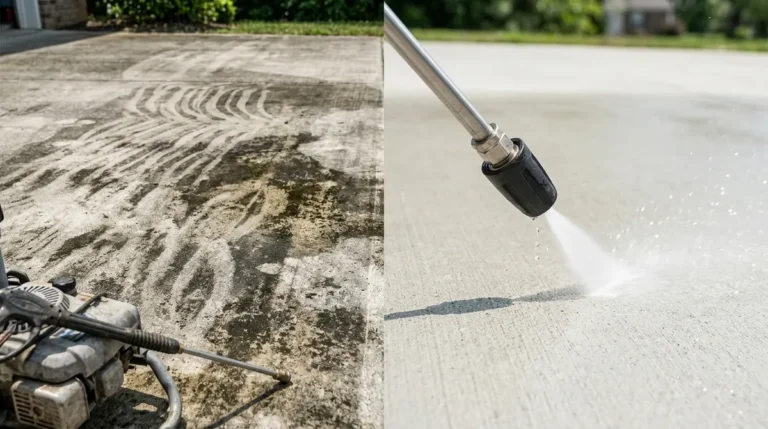
Use a pressure washer with 2,500–3,000 PSI and concrete-safe detergent, holding the nozzle 6-12 inches from the surface in overlapping passes to effectively clean concrete without causing damage.
-
Always apply detergent and let it sit 5-10 minutes before pressure washing, as water alone cannot remove oil stains, mold, and embedded grime that require chemical breakdown.
-
Avoid common mistakes like using zero-degree nozzles, holding the nozzle too close, or cleaning in direct sunlight, which can etch concrete permanently or cause detergent to dry too fast.
-
In humid climates like Florida, clean driveways twice yearly and apply concrete sealer after cleaning to repel water and stains, as algae and mold return quickly in warm, moist conditions.
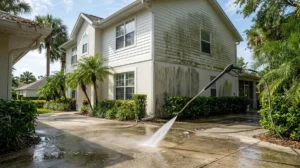
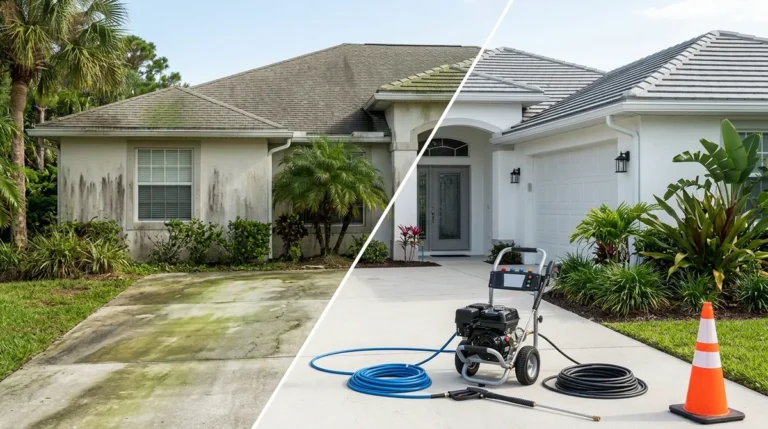
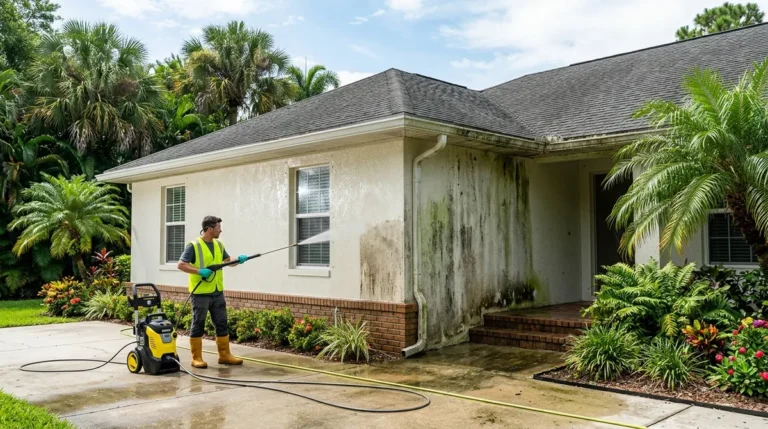
If your driveway looks more like a canvas of stains, moss, and mystery grime than a clean surface, you are not alone. Concrete is one of the toughest materials out there, but it is also a magnet for dirt, mold, algae, oil, and discoloration. The good news? Learning how to clean concrete with a pressure washer is one of the most satisfying home maintenance wins you can experience. Whether you are a busy homeowner trying to boost curb appeal or someone in an HOA community trying to stay in good standing, this guide walks you through everything you need to know. And if the DIY route feels like too much, we will touch on why calling in a professional might be your best bet.
Why Concrete Gets So Dirty So Fast
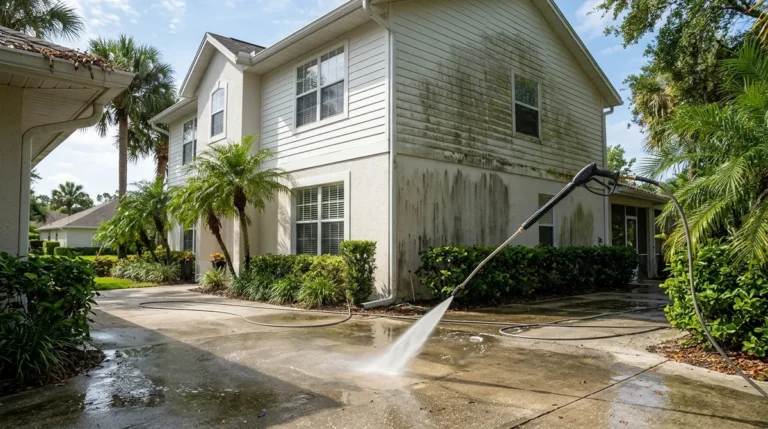
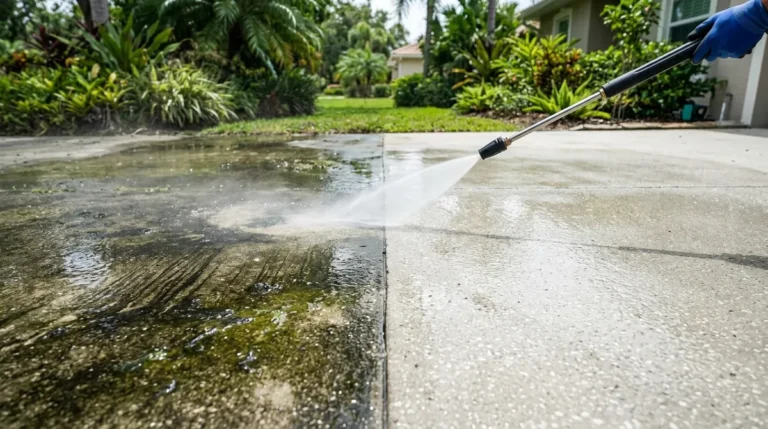
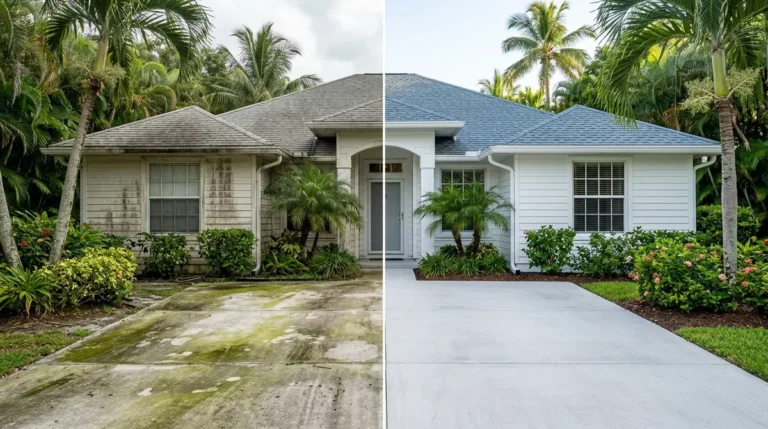
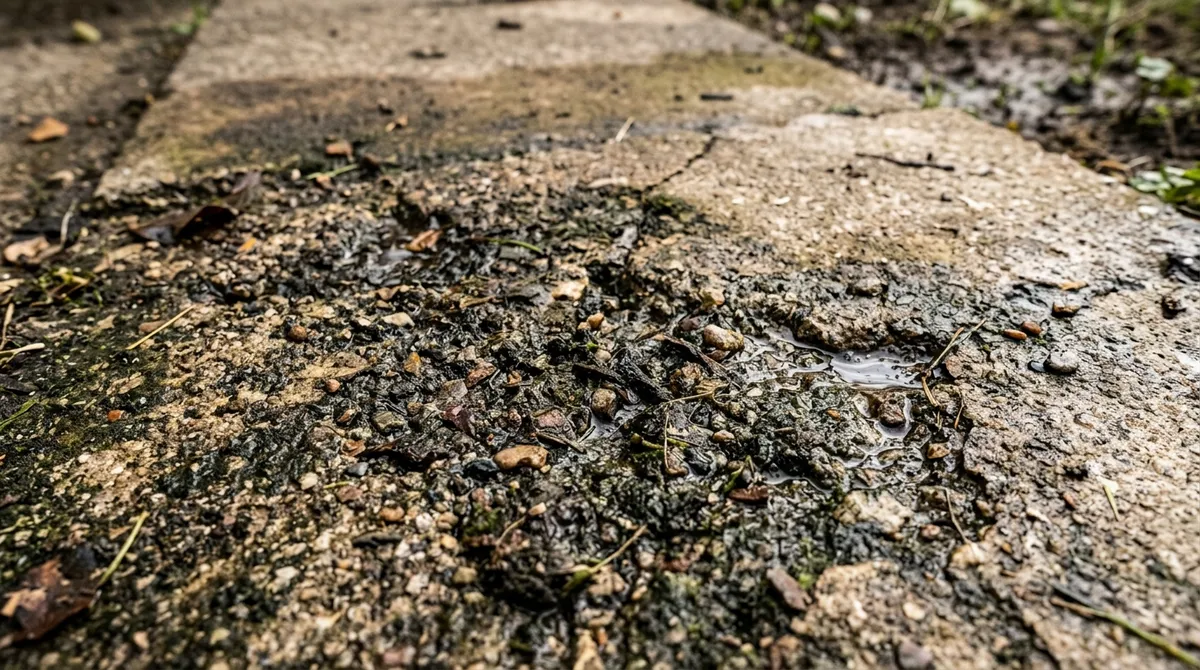
Concrete is porous. That means it soaks up everything — oil drips from your car, rainwater carrying dirt and debris, and even organic growth like mold, algae, and mildew. In Hillsborough County, Florida, the warm, humid climate makes outdoor surfaces extra vulnerable to fast-growing algae and mold. What looks like surface-level grime often goes deeper than you think.
Left untreated, dirty concrete can become slippery and even hazardous. It also lowers your home’s curb appeal and can trigger HOA violations. Regular cleaning is not just about looks — it is about protecting your investment and keeping your property safe.
Tools and Equipment You Will Need
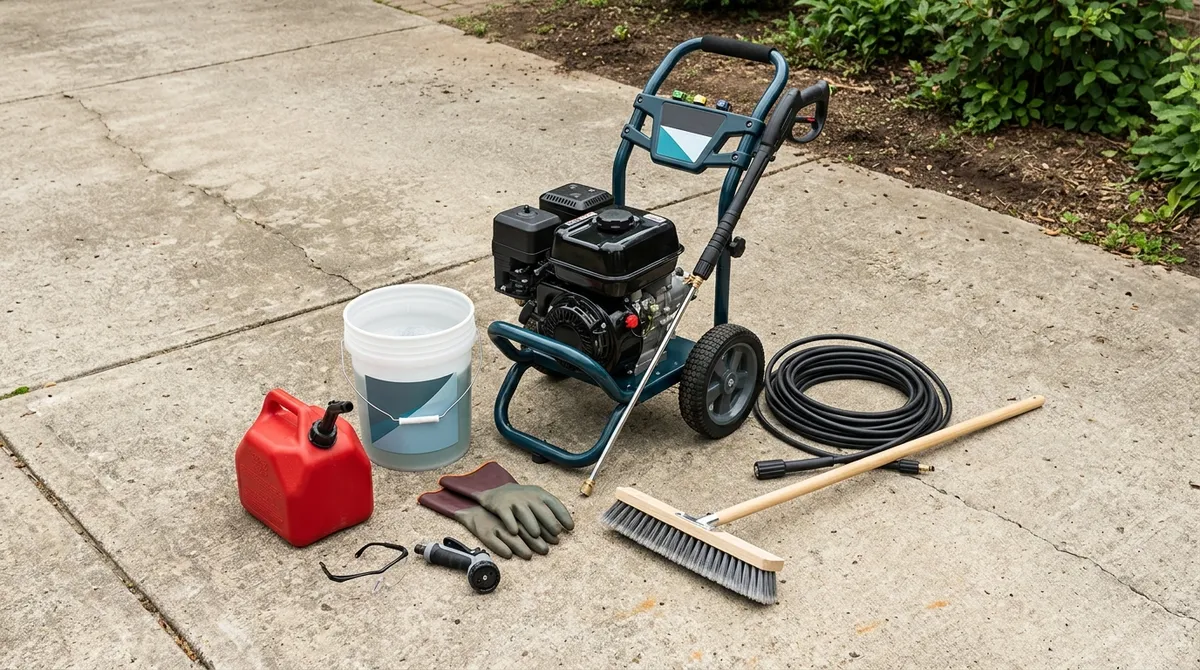
Before you start, make sure you have the right gear. Using the wrong equipment can damage your concrete or simply fail to get it clean. Here is what you need:
- A pressure washer (at least 2,500–3,000 PSI for concrete)
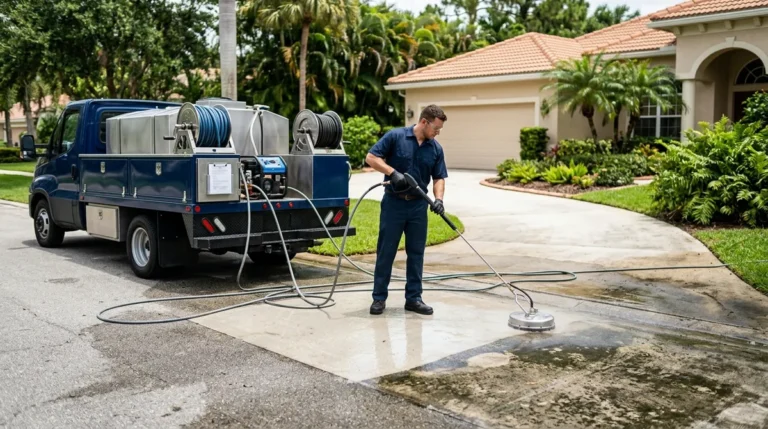
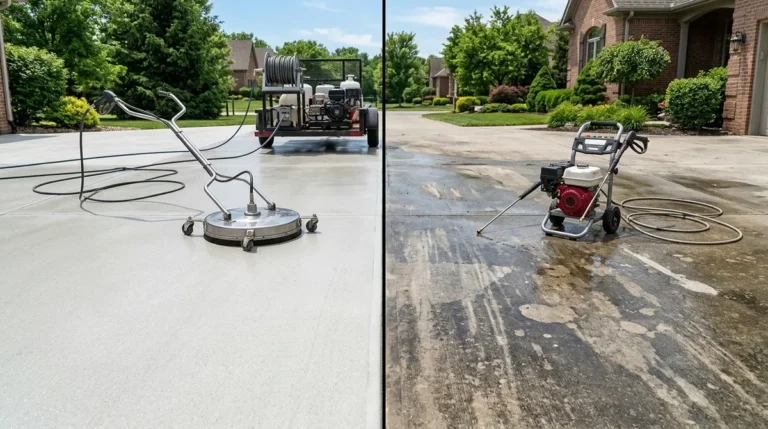
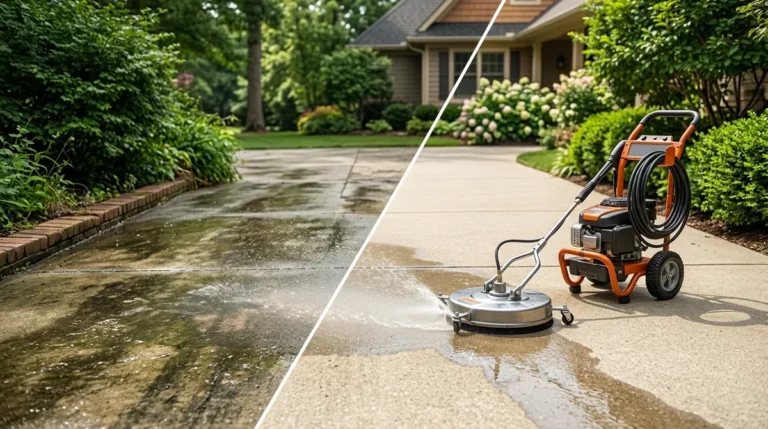
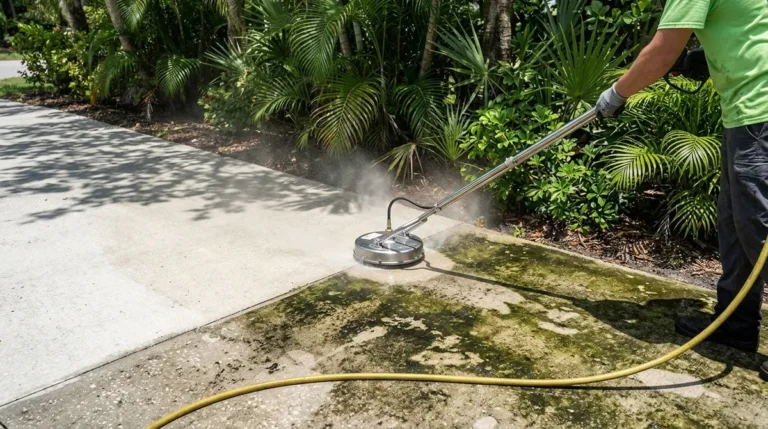
- A surface cleaner attachment for even, streak-free results
- A rotating or turbo nozzle for stubborn stains
- A wide-angle nozzle (25 to 40 degrees) for general cleaning
- Concrete-safe degreaser or detergent
- Safety goggles and closed-toe shoes
- A garden hose or water source with strong flow
If you do not own a pressure washer, rentals are available at many home improvement stores. However, keep in mind that operating a high-powered machine requires some skill. Incorrect use can etch or scar the surface of your concrete permanently.
Step-by-Step Guide to Clean Concrete with a Pressure Washer
Follow these steps carefully for the best results. Rushing through this process is one of the most common mistakes homeowners make.
- Clear the area: Remove all furniture, planters, vehicles, and other items from the concrete surface. You want a clear, open workspace.
- Pre-rinse the surface: Use a garden hose or low-pressure setting to rinse loose dirt and debris off the concrete. This makes the deep clean more effective.
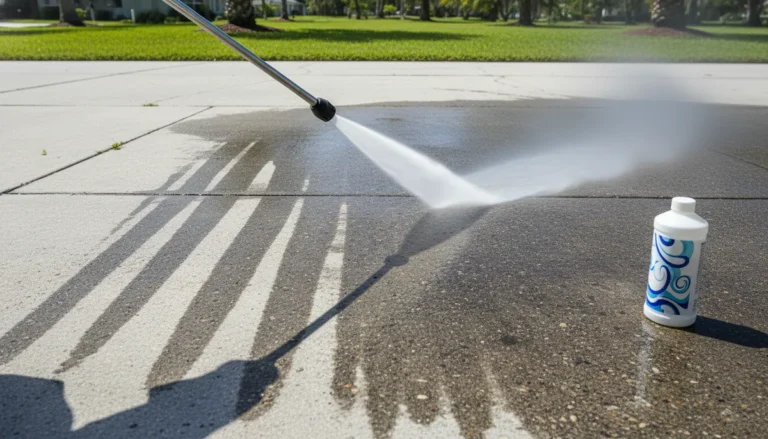
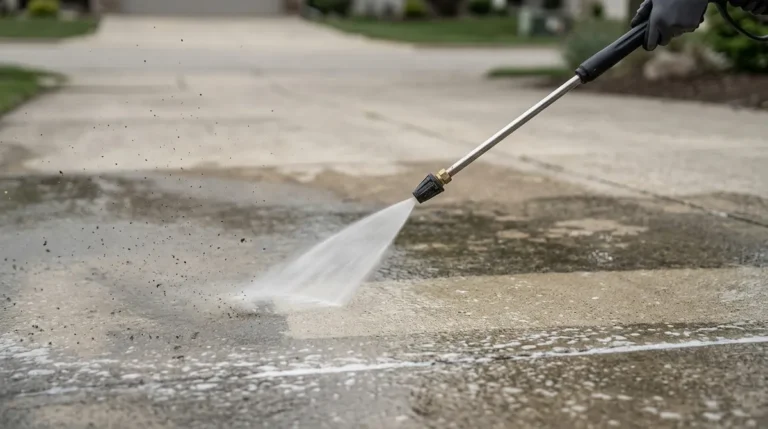
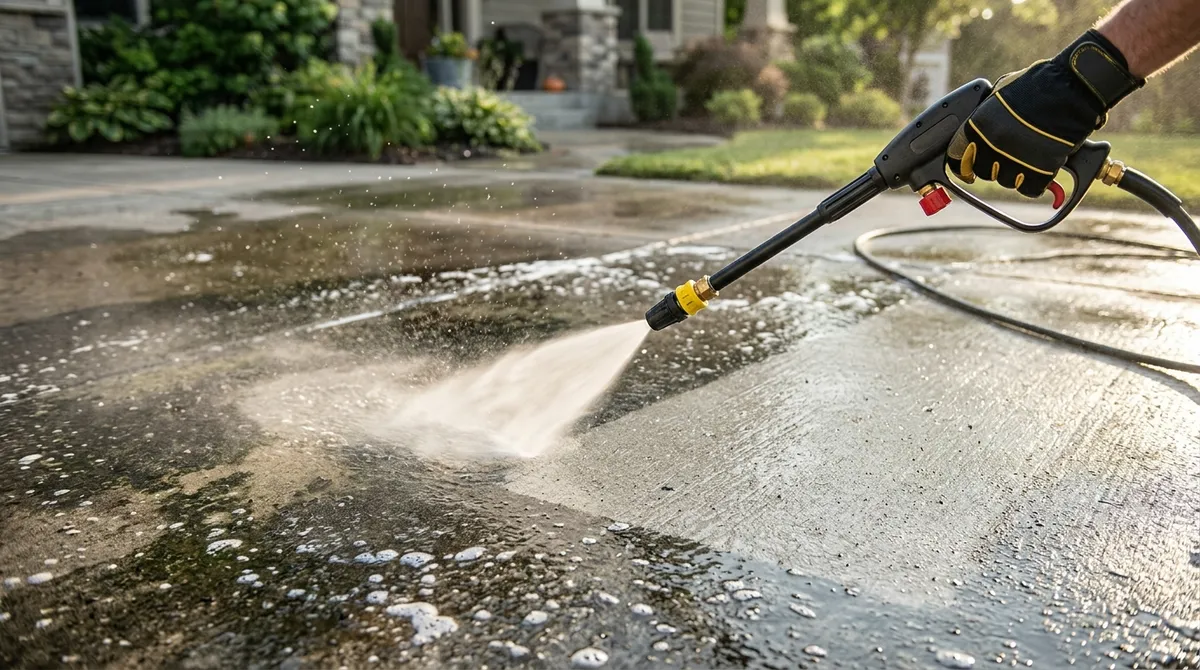
- Apply detergent: Use a concrete-safe degreaser or detergent. Apply it with the pressure washer’s soap nozzle or a pump sprayer. Let it sit for 5 to 10 minutes. Do not let it dry on the surface.
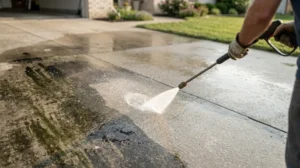
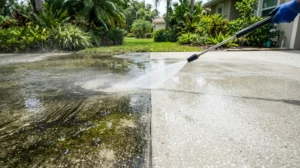
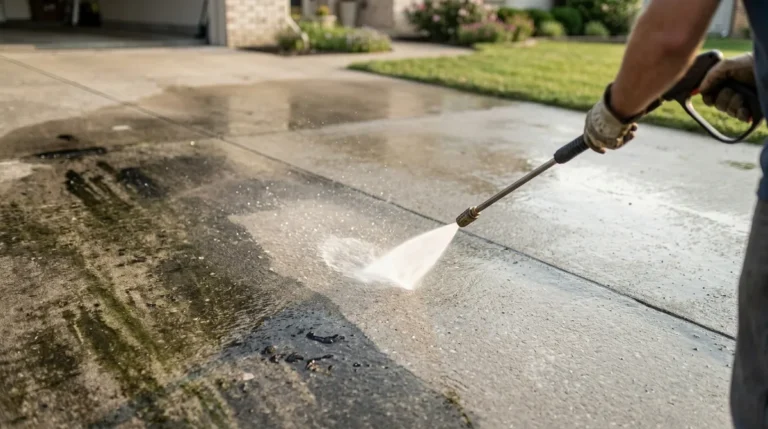
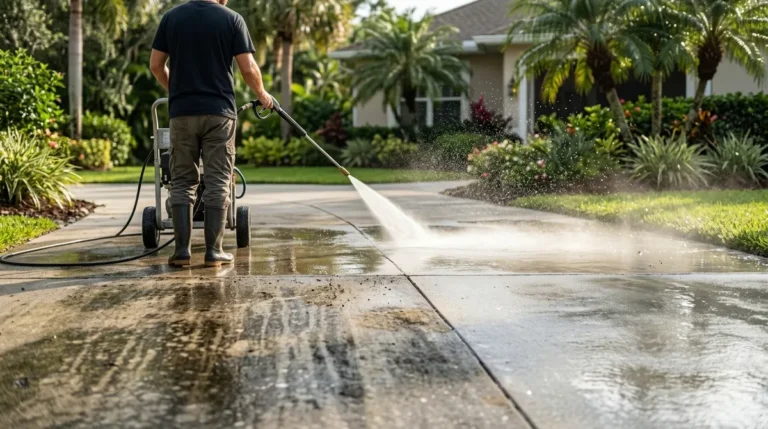
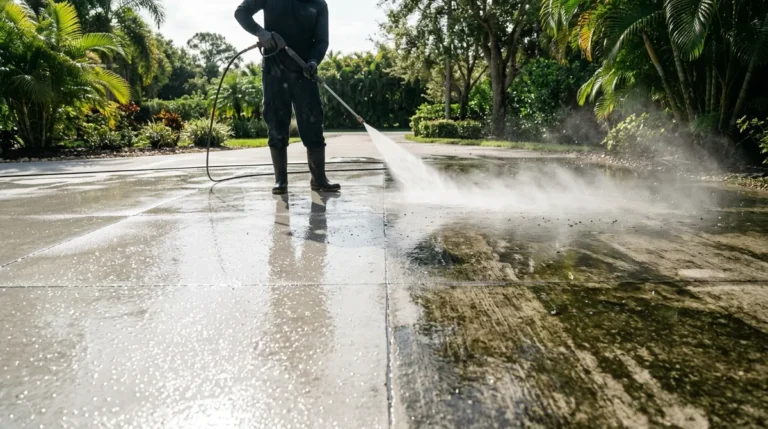
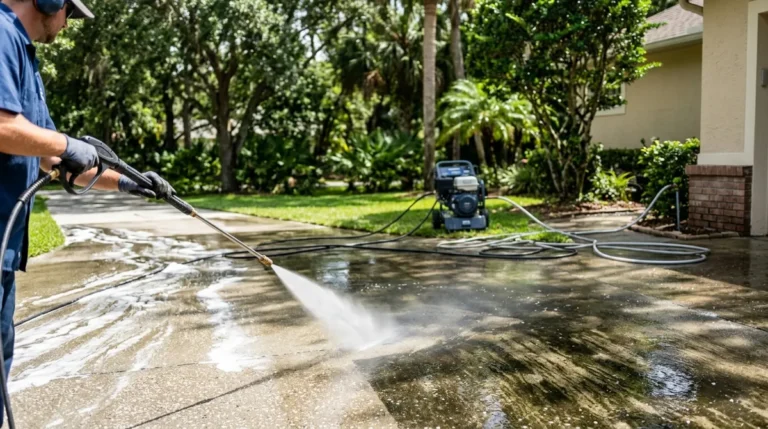
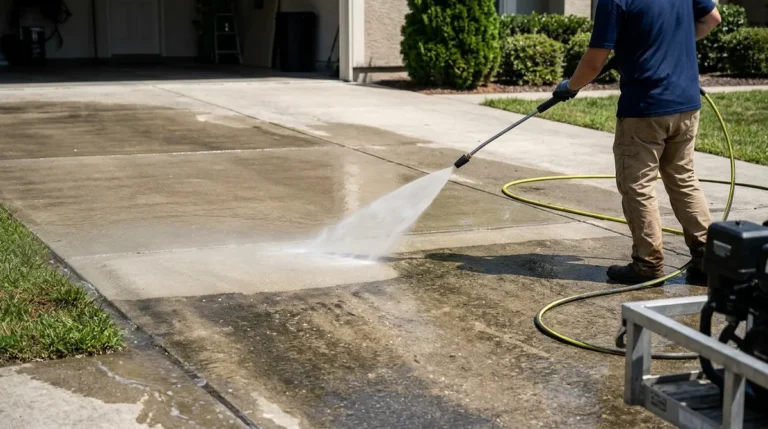
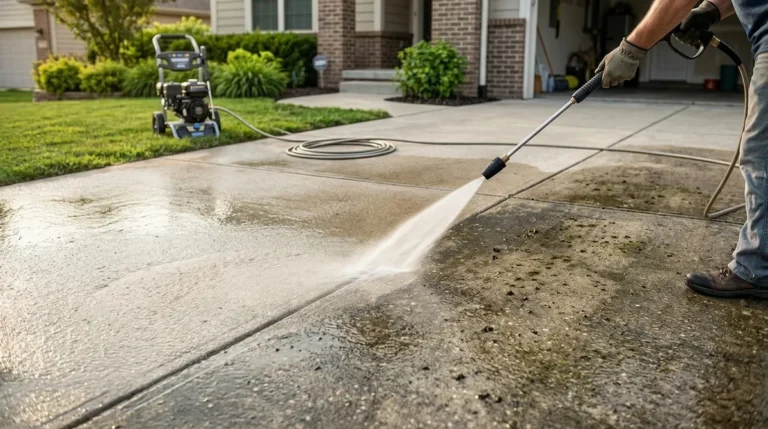
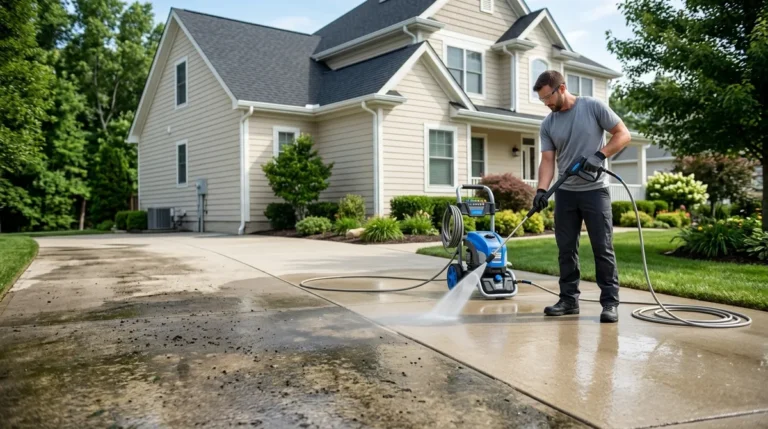
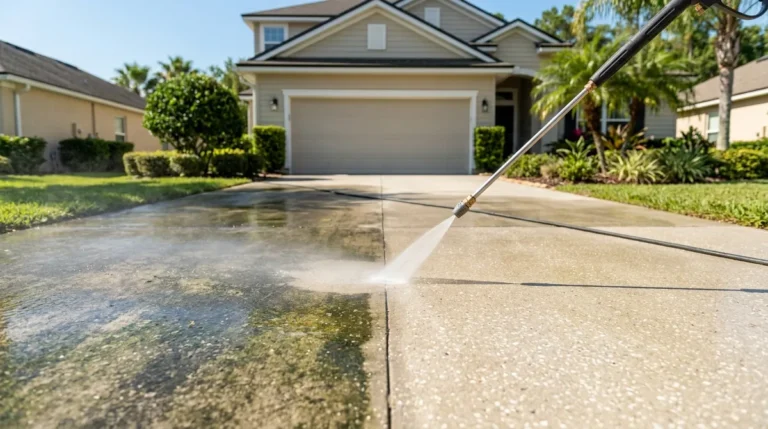
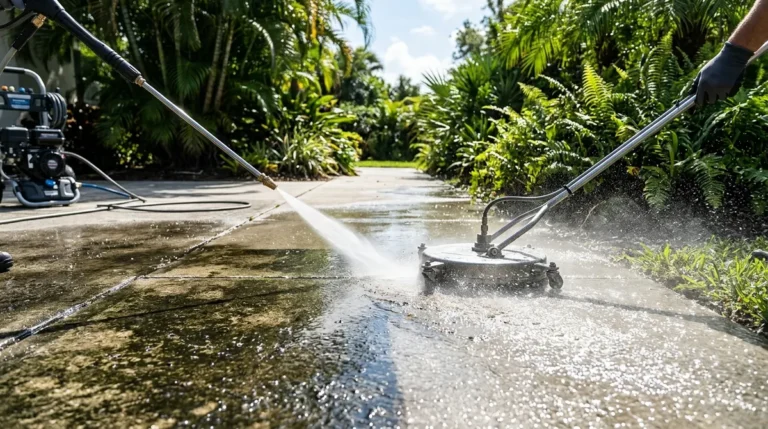
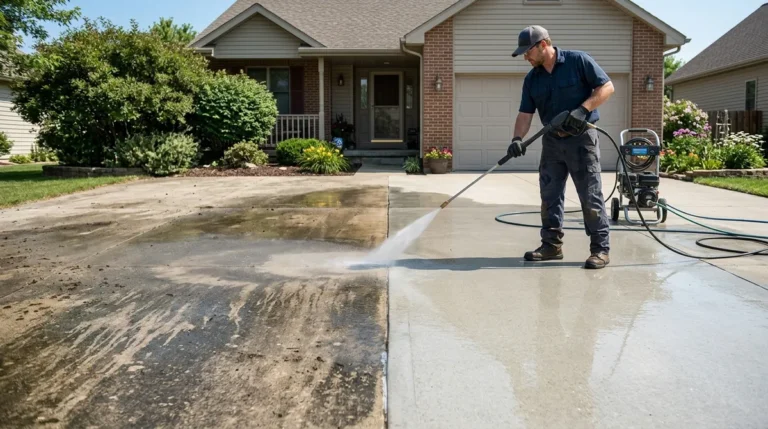
- Start pressure washing: Attach your surface cleaner or a 25-degree nozzle. Hold the wand about 6 to 12 inches from the surface and work in overlapping passes. Move in a consistent direction to avoid uneven cleaning.
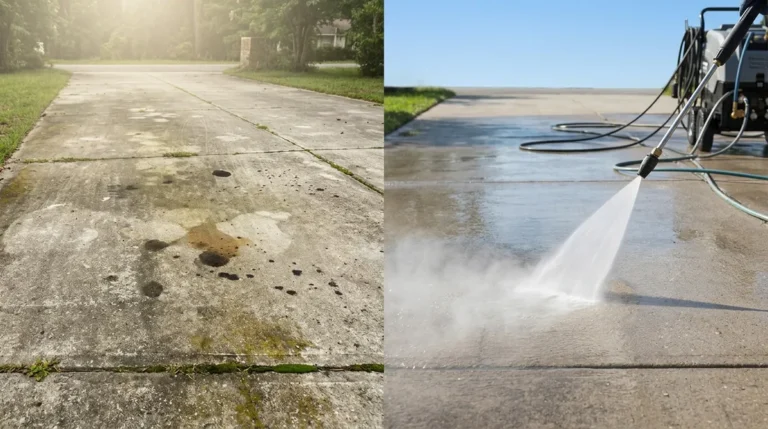
- Tackle stubborn stains: For oil stains or deeply embedded grime, switch to a turbo nozzle and make slow, deliberate passes. You may need to reapply detergent to these spots.
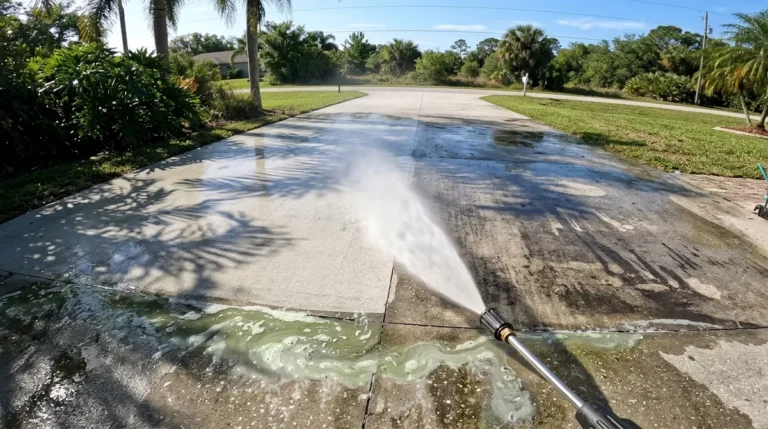
- Final rinse: Do a thorough rinse of the entire area with clean water. Make sure all detergent residue is completely removed.
- Allow drying time: Let the concrete dry fully before replacing furniture or driving on it. In Florida’s heat, this usually takes a few hours.
Common Concrete Cleaning Mistakes to Avoid
Even with the best intentions, some DIY errors can make your cleaning project harder or cause real damage. Watch out for these pitfalls:
- Using too high a pressure setting, which can pit or etch the concrete surface
- Holding the nozzle too close to the surface
- Skipping the detergent step, which leaves organic growth behind
- Using a zero-degree nozzle on flat concrete — this can cause permanent damage
- Cleaning in direct sunlight, which causes detergent to dry too fast
- Forgetting to protect nearby plants and grass from chemical runoff
Pressure Settings Guide for Different Concrete Surfaces
Not all concrete is the same. Older or more delicate surfaces need a gentler approach. Here is a quick reference table to help you choose the right pressure setting:
| Surface Type | Recommended PSI | Best Nozzle |
|---|---|---|
| Standard driveway | 2,500 – 3,000 PSI | 25-degree or surface cleaner |
| Older or cracked concrete | 1,500 – 2,000 PSI | 40-degree wide fan |
| Pool deck | 1,500 – 2,500 PSI | 25-degree or surface cleaner |
| Heavily stained areas | 3,000 PSI | Turbo or rotating nozzle |
| Concrete walkways | 2,000 – 2,500 PSI | 25-degree fan |
When Professional Concrete Cleaning Makes More Sense
DIY pressure washing works well for light to moderate cleaning. But there are times when calling a professional is the smarter, safer choice. If your concrete has deep oil stains, extensive mold growth, or years of built-up grime, a professional team has the equipment and expertise to get the job done right without causing damage.
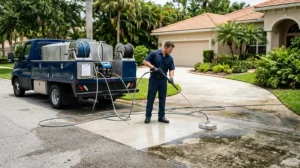
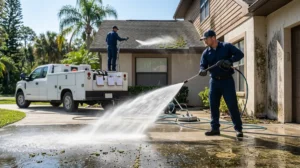
Professionals also use commercial-grade pressure washers that far exceed what you can rent at a store. They know exactly what detergents to use, how much pressure to apply, and how to protect surrounding landscaping and structures. The Driveway & Concrete Cleaning service offered by Buckhorn Power Wash is designed specifically for Hillsborough County homeowners who want deep, lasting results without the hassle or risk of going DIY.
Want to know if professional cleaning is worth it for your situation? Read this helpful article on what makes professional pressure washing services worth it to help you decide.
How Often Should You Clean Concrete Surfaces
This depends on your environment and how much use the surface gets. In humid areas like Hillsborough County, organic growth can return quickly. Here are some general guidelines:
- Driveways: Clean once or twice a year, or whenever you notice staining or slippery spots.
- Walkways and sidewalks: Once a year is usually enough unless foot traffic is heavy or algae grows quickly.
- Pool decks: Every 6 to 12 months to prevent algae buildup, which creates a slipping hazard.
If you are in an HOA community, check your governing documents. Many HOAs require homeowners to maintain clean driveways and walkways year-round. Staying on schedule helps you avoid warnings or fines. Check out our 7 signs you need a pressure washing company near me today to know when it is time to act.
Tips for Maintaining Clean Concrete Longer
After all that hard work (or after a professional visit), you want those results to last. Here are some easy habits that keep your concrete looking its best:
- Apply a concrete sealer after cleaning to repel water and stains
- Rinse your driveway with a garden hose after rainstorms to wash away debris
- Clean up oil and fluid spills immediately to prevent deep staining
- Trim overhanging trees and shrubs to reduce leaf and organic debris buildup
- Avoid using harsh deicers or salts, which can degrade concrete over time
A little maintenance goes a long way. Think of it like caring for your floors inside the house — regular upkeep is far easier than a full restoration job later.
Why Hillsborough County Homeowners Trust Buckhorn Power Wash
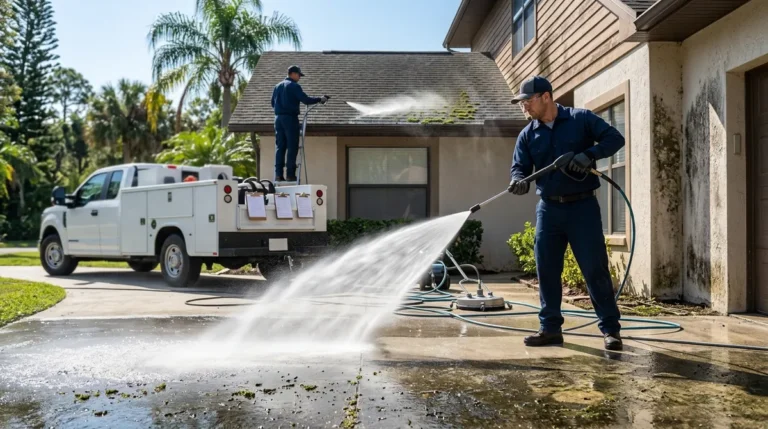
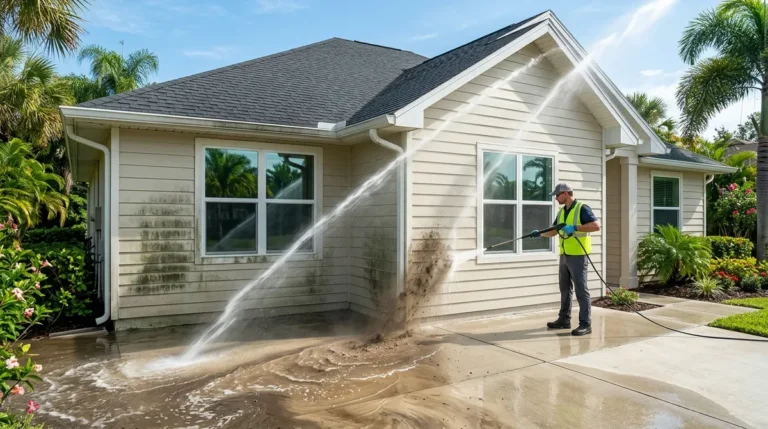
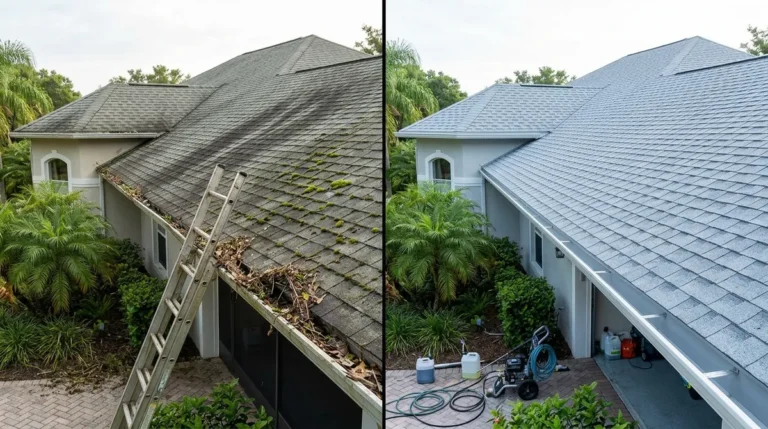
At Buckhorn Power Wash, we are proud to serve homeowners all across Hillsborough County — from Tampa and Brandon to Valrico, Riverview, and Lithia. We specialize in residential exterior cleaning, including pressure washing driveways, house washing, roof cleaning, and more. Our team uses professional-grade equipment and eco-friendly solutions to deliver results that last.
You can check out our work in our gallery or see what our happy customers have to say on our Yelp page and Google Business Profile. You can also follow our latest updates and project photos on our Facebook page.
And if your body is sore from all that DIY pressure washing, you might want to treat yourself — the team at Mobile Area Massage of Tampa Bay offers convenient mobile massage services to help you recover and recharge.
When it comes to choosing between cleaning methods, it helps to understand your options. Read our guide on soft wash vs pressure wash — which is best for your Florida home to learn more about which approach is right for each surface.
Ready to Get Your Concrete Looking Like New?
Cleaning concrete with a pressure washer is absolutely doable on your own, but nothing beats the results of a trained professional with commercial equipment. Whether you want to tackle it yourself or hand it off to experts, the most important thing is that you take action before the grime gets worse.
If you are ready to skip the hassle and get professional results fast, we make it easy. Request your free quote today and find out how affordable it is to have your driveway, walkways, and concrete surfaces looking their absolute best. Our online quoting tool takes just minutes — no home visit needed. We would love to help you fall back in love with your home’s exterior!
FAQs
Q: What PSI do I need to clean concrete with a pressure washer?
A: For most standard concrete driveways and walkways, you will need at least 2,500 to 3,000 PSI to get a thorough clean. If your concrete is older or has cracks, dial it back to around 1,500 to 2,000 PSI to avoid causing any damage.
Q: Do I need to use detergent when pressure washing concrete?
A: Yes, using a concrete-safe detergent or degreaser makes a huge difference! Water alone can remove loose dirt, but detergent helps break down oil stains, mold, algae, and embedded grime that plain pressure washing might miss.
Q: How long does it take to pressure wash a driveway?
A: A typical two-car driveway takes about one to two hours for a thorough DIY clean, including prep, washing, and rinsing. A professional team with commercial equipment can often finish the job faster and with better results.
Q: Is it safe to pressure wash a pool deck?
A: Absolutely, but use a moderate pressure setting between 1,500 and 2,500 PSI to avoid damaging the surface or any surrounding tile. A surface cleaner attachment works great for even, streak-free results on pool decks.
Q: How often should I pressure wash my concrete driveway in Florida?
A: In Hillsborough County’s warm and humid climate, we recommend cleaning your driveway at least once or twice a year. Florida’s weather encourages fast algae and mold growth, so staying on a regular schedule keeps your concrete safe, clean, and looking great year-round.