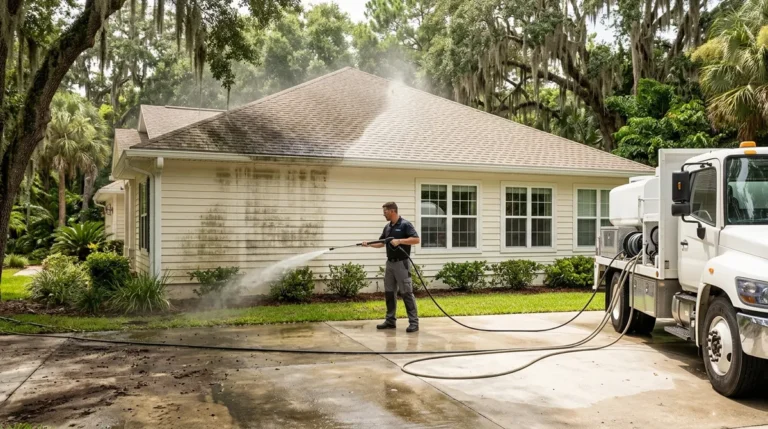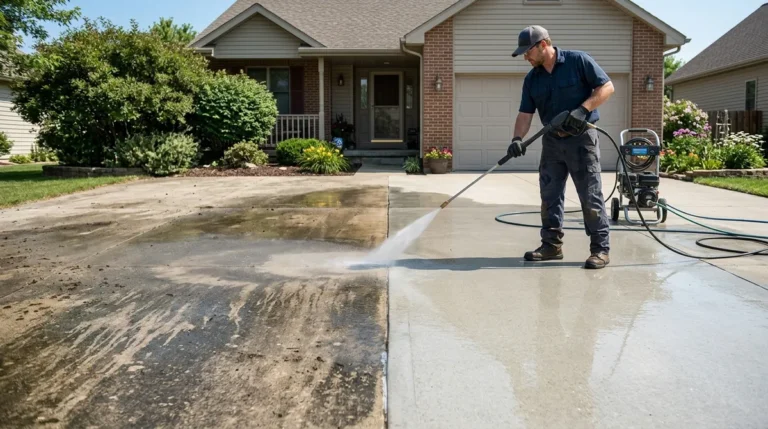
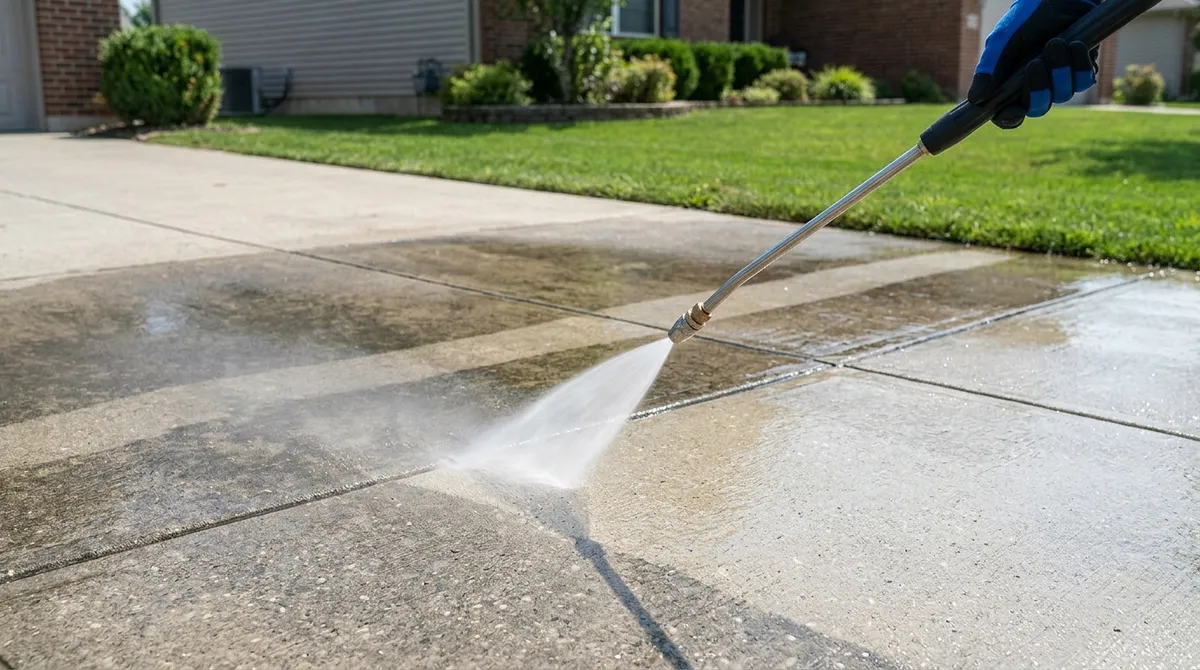
Key Takeaways
-
Use 2,000 to 3,000 PSI for residential concrete; too much pressure causes etching, pitting, and cracks that are costly to repair.
-
Use a 25-degree (green) nozzle for general cleaning; avoid 0-degree and 15-degree nozzles as they cause serious surface damage.
-
Pre-treat stubborn stains with appropriate cleaning solutions and let sit 5-10 minutes before pressure washing to improve effectiveness and reduce passes needed.
-
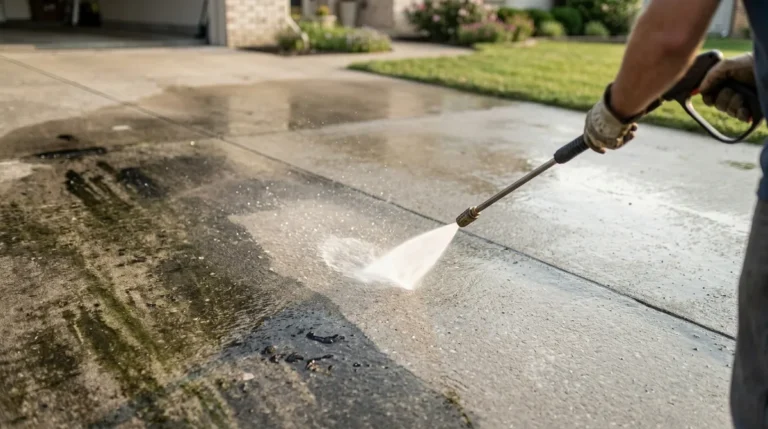
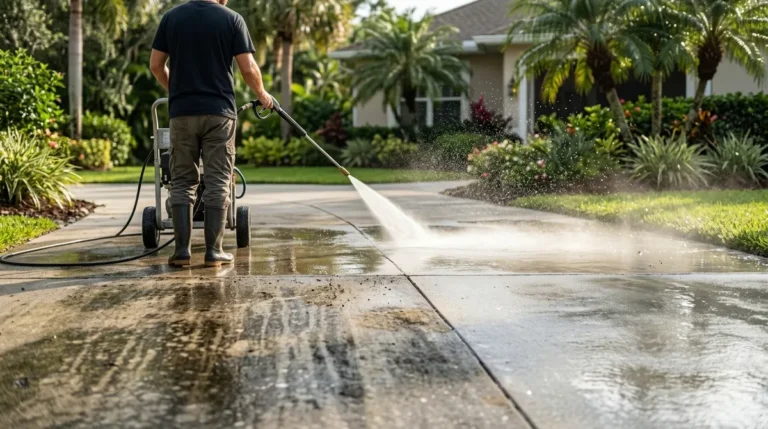
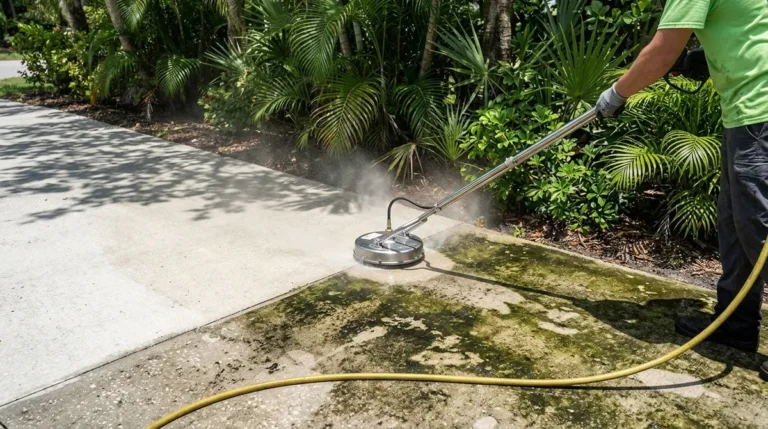
Maintain 12-18 inches distance from concrete and use slow, overlapping strokes; holding the wand too close amplifies pressure and creates uneven cleaning patterns.
-
Seal concrete after pressure washing to fill pores, prevent algae regrowth, protect against stains, and make future cleaning faster and easier.
-
Call a professional for heavy oil stains, significant mold growth, large areas, or if DIY attempts have failed; professional equipment and expertise deliver better results faster.
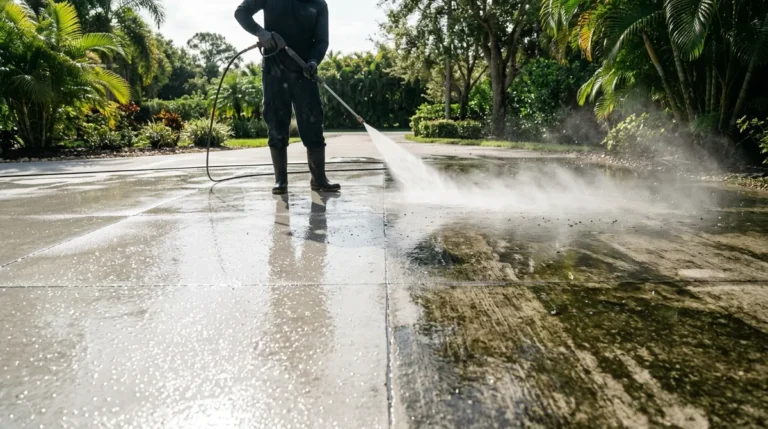
Your concrete driveway or patio looks dingy, stained, and covered in green algae. You decide to grab a power washer to clean concrete and handle it yourself. Sounds simple enough, right? But here’s the thing — concrete cleaning is trickier than most people expect. One wrong move and you can end up with etched surfaces, streaky finishes, or even cracks that cost a fortune to repair.
Whether you’re a busy homeowner in Hillsborough County trying to keep your property looking sharp, or someone who just wants clean concrete before guests arrive, this guide is for you. We’re going to walk through the most common mistakes people make — and how to avoid them. By the end, you’ll know exactly what it takes to get concrete truly clean, safely and effectively.
Why Concrete Cleaning Goes Wrong So Often
Concrete looks tough. And it is! But it’s also porous, uneven, and surprisingly easy to damage if you’re not careful. Most DIY concrete cleaning mistakes come down to using the wrong pressure, the wrong nozzle, or skipping key preparation steps. The result? Surfaces that look worse than before — or damage that’s impossible to undo.
Understanding these pitfalls ahead of time saves you time, money, and headaches. Let’s dive in.
Mistake 1: Using Too Much Pressure
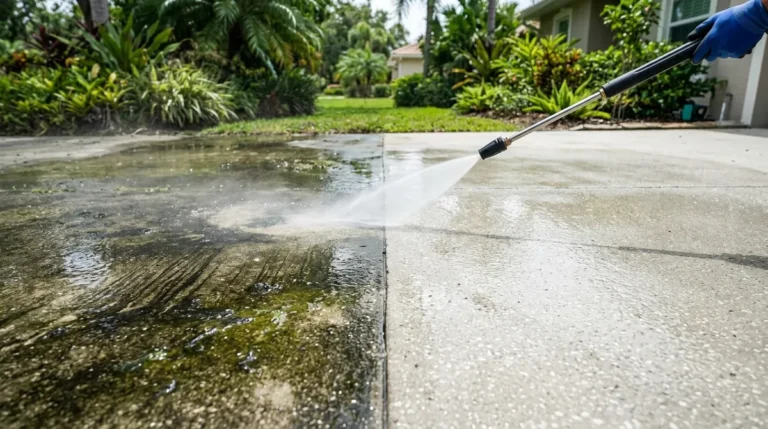
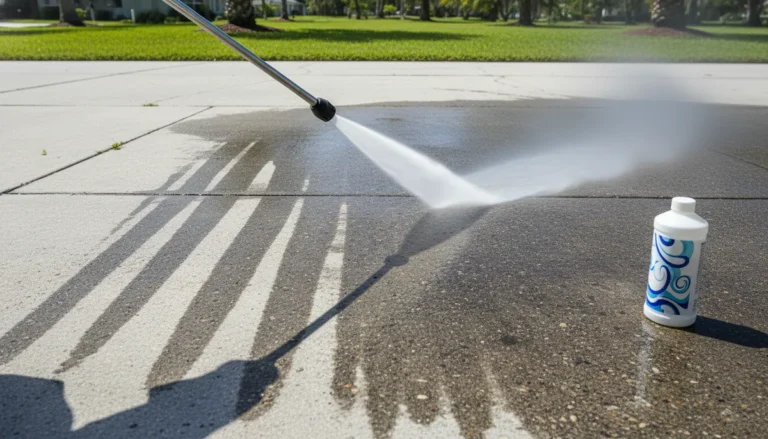
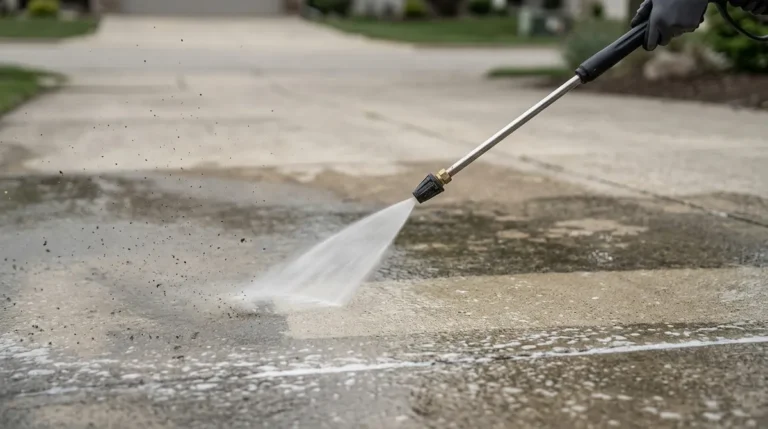
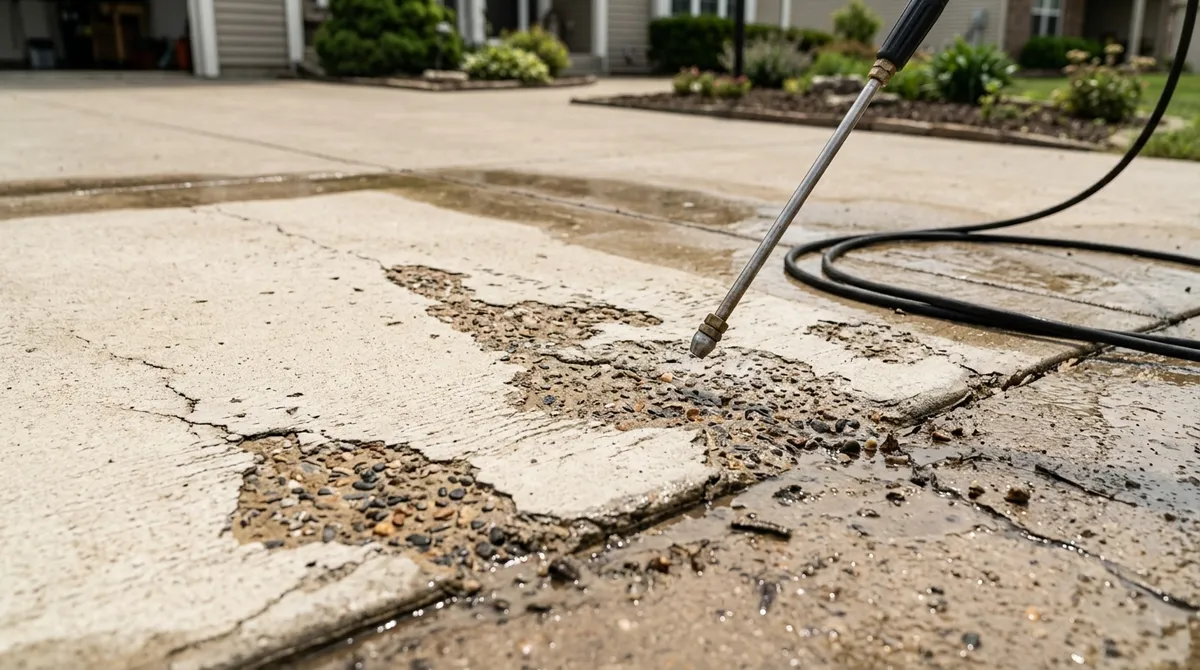
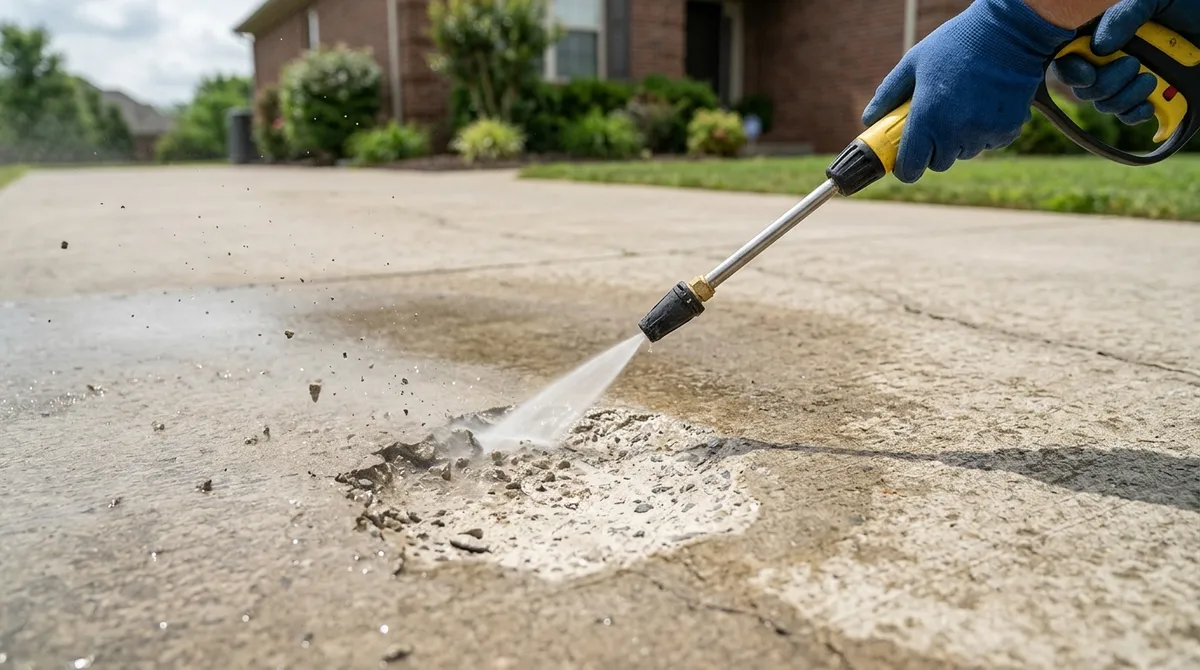
More pressure doesn’t mean cleaner concrete. This is probably the most common mistake people make. When you crank the pressure too high, you can etch lines into the surface, strip away the top layer of cement, or even crack older concrete.
For most residential concrete surfaces, a pressure range of 2,000 to 3,000 PSI works well. Older or more delicate concrete may need even less. If you’re unsure, always start lower and work your way up. A Driveway & Concrete Cleaning professional knows exactly how to dial in the right pressure for each surface type.
Signs You’ve Used Too Much Pressure
- Visible white or gray lines across the surface
- Pitting or rough texture that wasn’t there before
- Chunks of concrete breaking off near edges
- Hairline cracks appearing after drying
Mistake 2: Choosing the Wrong Nozzle
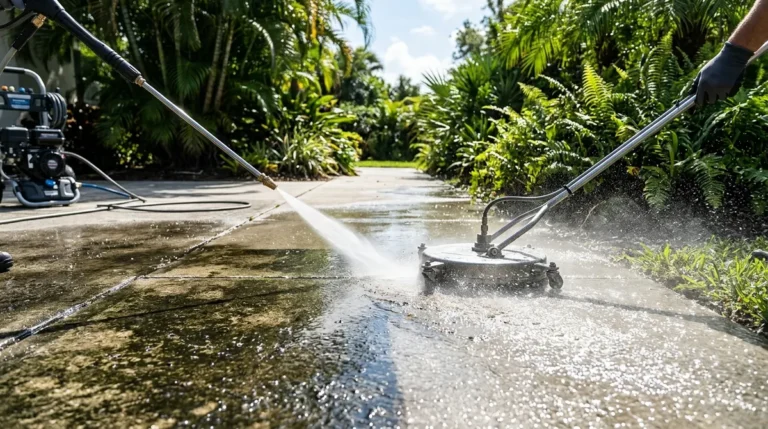
Power washers come with several different nozzle tips, each spraying water at a different angle. The narrower the angle, the more concentrated and powerful the spray. Using a 0-degree or 15-degree nozzle on concrete can cause serious damage.
For general concrete cleaning, a 25-degree (green) nozzle is usually a safe starting point. For tougher stains, a rotating or turbo nozzle can help without being as aggressive as a zero-degree tip. Always check what nozzle you have before you start spraying.
Quick Nozzle Guide for Concrete
| Nozzle Color | Spray Angle | Best Use for Concrete |
|---|---|---|
| Red | 0 degrees | Avoid — too aggressive |
| Yellow | 15 degrees | Only for very stubborn stains, with care |
| Green | 25 degrees | General concrete cleaning |
| White | 40 degrees | Light rinsing and prep |
| Turbo/Rotating | Variable | Tough stains without etching |
Mistake 3: Skipping Pre-Treatment for Stains
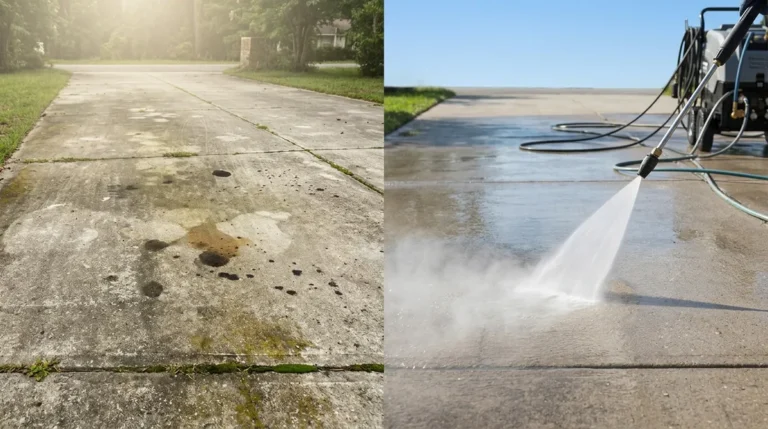
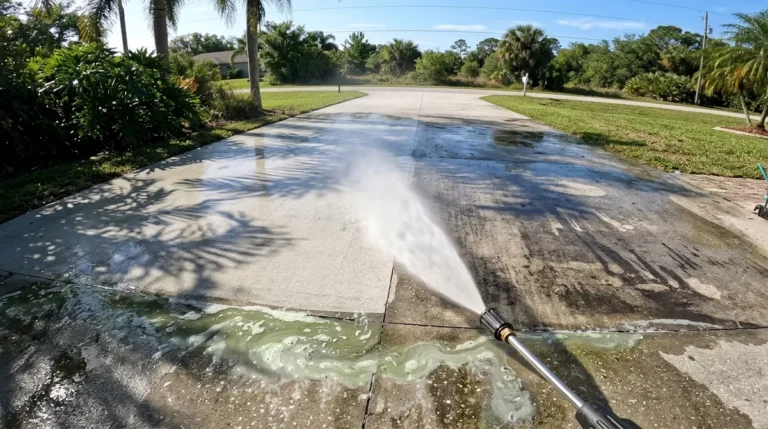
If you just spray water over oil stains, rust marks, or deep algae growth, you’ll be disappointed. Water alone won’t break down these stubborn substances. You need to pre-treat the surface with an appropriate cleaning solution first.
Let the cleaner sit for a few minutes (usually 5 to 10 minutes) before rinsing. This loosens the gunk and makes the power washing far more effective. Skipping this step means more passes with the wand, more water usage, and often a mediocre result. If you want to know how professionals handle it, check out what makes professional pressure washing services worth it.
Mistake 4: Holding the Wand Too Close
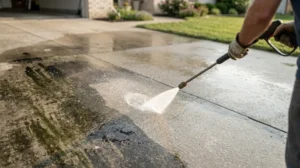
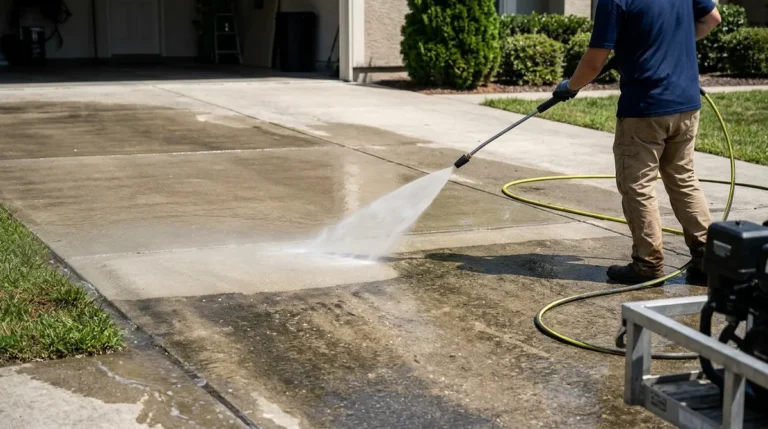
Standing too close to the surface amplifies the pressure impact dramatically. Even at a moderate PSI setting, holding the wand just a few inches away can cause damage or uneven cleaning patterns.
Recommended Distance Guidelines
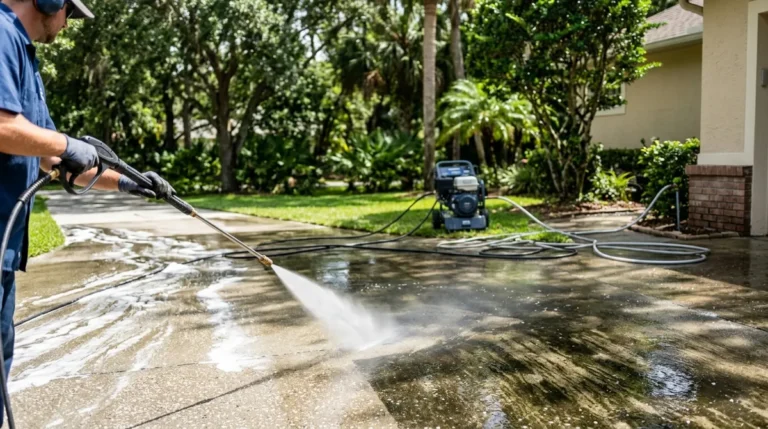
- Start at least 12 to 18 inches away from the concrete surface.
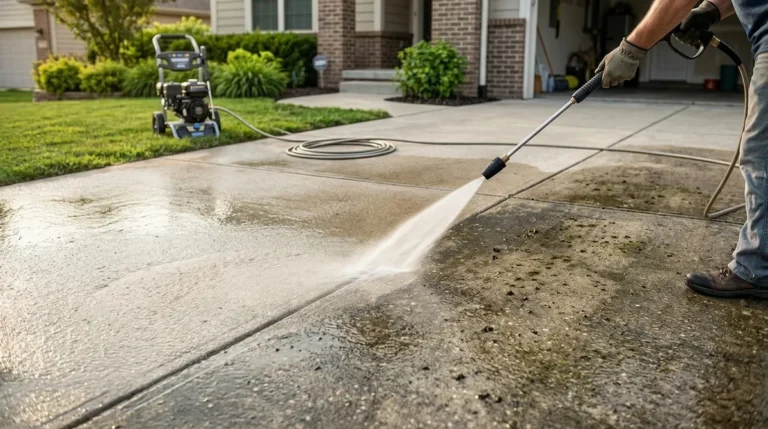
- Move the wand in slow, overlapping strokes to ensure even coverage.
- If the surface looks clean from that distance, don’t move closer.
- Only step closer for truly stubborn spots, and reduce pressure first.
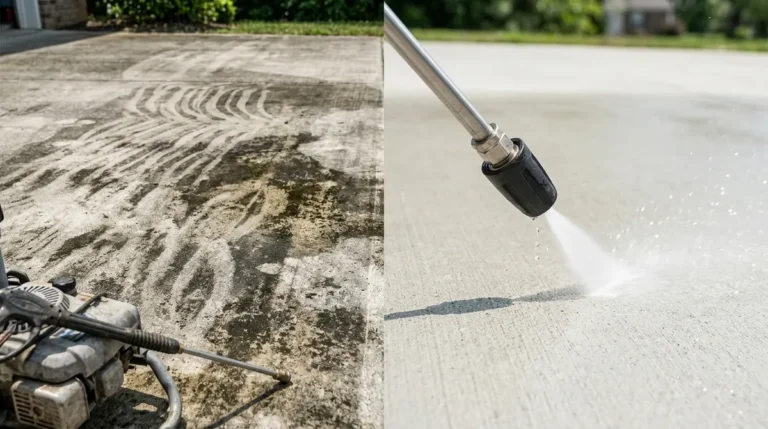
Consistency in your distance matters a lot. Uneven distance creates visible streaks and inconsistent cleaning — a telltale sign of a DIY job gone wrong.
Mistake 5: Ignoring Safety Precautions
Power washers are powerful machines. That stream of water can cut through skin or cause serious injury if it makes contact with your body. Many DIYers underestimate the risk, especially if it’s their first time using equipment like this.
Safety Checklist Before You Start
- Wear closed-toe shoes or boots — never sandals or bare feet
- Use safety glasses to protect your eyes from debris
- Keep children and pets well away from the work area
- Never point the wand at people, animals, or glass
- Be careful on wet surfaces — they become very slippery
- Always use both hands to control the wand
For time-poor professionals and busy families, the risk alone is a great reason to call in a pro. You can learn more about the benefits of hiring experts by reading 7 signs you need a pressure washing company near you today.
Mistake 6: Not Sealing Concrete After Cleaning
You’ve done the hard work. The concrete looks great. But if you skip sealing it afterward, you’re leaving it wide open for stains and damage to come right back. Concrete is porous, which means it absorbs everything — oil, water, algae, and more.
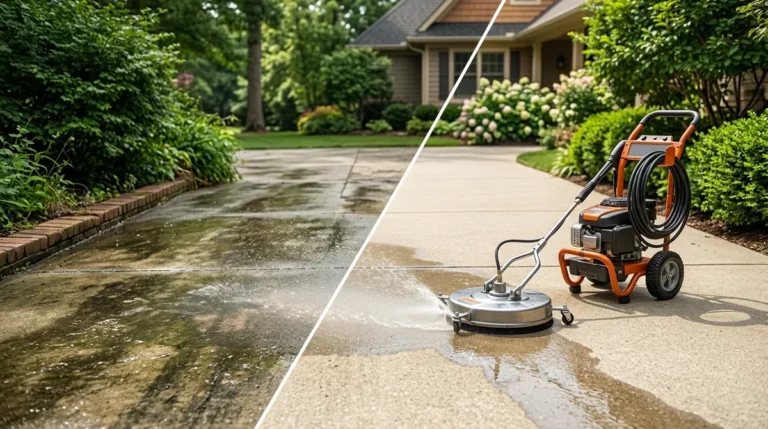
Applying a quality concrete sealer after cleaning fills those pores and creates a protective barrier. This makes future cleaning much easier and keeps the surface looking fresh longer. Most homeowners in Hillsborough County deal with a humid climate that speeds up algae regrowth — sealing helps a lot.
Benefits of Sealing Concrete After Pressure Washing
- Slows down algae and mold regrowth
- Protects against oil and fuel stains
- Extends the life of the surface
- Makes routine cleaning much faster and easier
- Enhances the overall appearance and curb appeal
Mistake 7: Doing It All Yourself When the Job Is Too Big
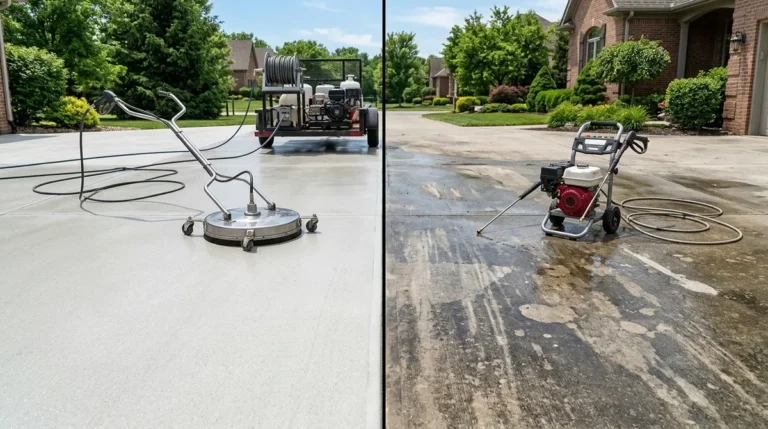
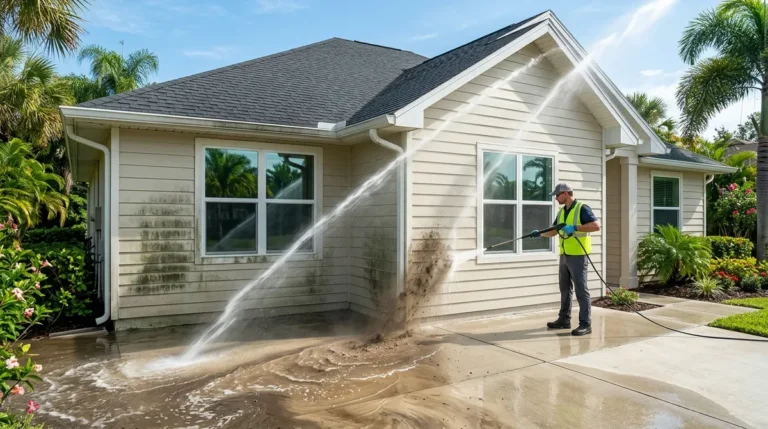
Some concrete cleaning jobs are genuinely beyond what a DIYer should attempt. Large driveways, heavily stained pool decks, or surfaces with deep mold and algae growth need professional-grade equipment and expertise. Renting a consumer-grade machine and spending your whole weekend on it is rarely worth it.
Professional pressure washing services use commercial equipment that’s far more powerful and efficient than anything you’d rent at a hardware store. They also know how to treat different types of staining safely and effectively. If you’re in Hillsborough County, power washing near you is easier to find than you might think.
If you’re curious about the difference between methods, it’s worth reading about soft wash vs pressure wash and which is best for your Florida home. Not every surface needs high pressure — and knowing that can save you from making costly mistakes.
When to Call a Professional Instead
Sometimes the smartest move is simply to hand the job over to someone who does this every day. Here are clear signs you should hire a pro:
- Your concrete has heavy oil or chemical stains that haven’t responded to basic cleaning.
- There’s significant algae or black mold growth spreading across the surface.
- You’re not confident in your equipment or technique.
- You’ve already tried DIY cleaning and it didn’t work.
- You simply don’t have the time or energy for a big outdoor project.
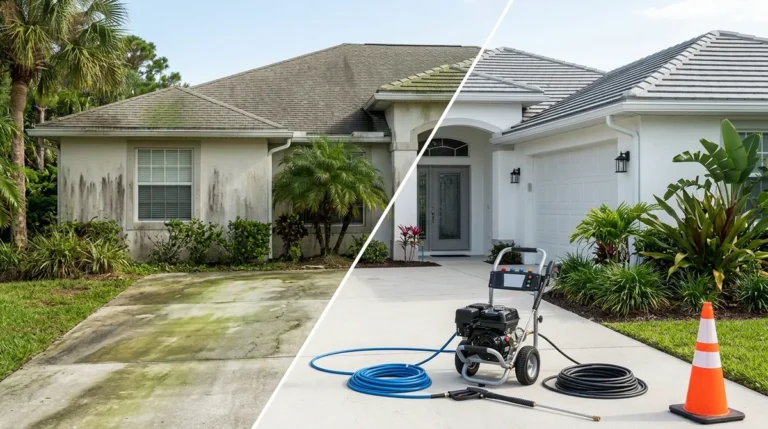
A professional pressure wash driveway service can typically handle a full driveway in a fraction of the time it would take you. Plus, the results are consistently better. You can also browse the gallery to see what a professional clean actually looks like.
Why Hillsborough County Homeowners Trust Professional Concrete Cleaning
Florida’s warm, humid climate is basically a paradise for mold, algae, and mildew. Concrete surfaces here can go from clean to green in just a few months. That’s why regular professional cleaning isn’t a luxury for Hillsborough County homeowners — it’s practically a necessity.
Buckhorn Power Wash specializes in residential pressure washing services across Hillsborough County, including Tampa, Brandon, Valrico, Riverview, and Lithia. From driveways and pool decks to house washing and roof cleaning, their team handles it all safely and efficiently. You can even get an instant quote online without needing a home visit — pretty convenient for busy households.
Neighbors in the community consistently share positive experiences. You can read real homeowner reviews on Buckhorn Power Wash’s Yelp page or visit their Google Business Profile to see what customers are saying. You can also keep up with their latest work on their Facebook page.
For homeowners who also care about the rest of their property’s exterior, pairing concrete cleaning with other lawn and landscaping services makes a big difference. The team at All Trusted Lawn Care is a great resource for keeping your yard looking just as sharp as your freshly cleaned driveway. And when you’re looking for a trusted local business in another area of your life, Charming Smiles of Ocoee is a well-regarded option worth knowing about.
A Quick Summary of Mistakes to Avoid
- Too much pressure — Start low and work up carefully.
- Wrong nozzle — Use a 25-degree tip for general concrete cleaning.
- Skipping pre-treatment — Always treat stains before washing.
- Holding the wand too close — Stay 12-18 inches away.
- Ignoring safety — Protective gear is non-negotiable.
- Skipping sealing — Protect your clean surface afterward.
- Going DIY on jobs that need a pro — Know when to call for help.
Conclusion
Using a power washer to clean concrete can deliver amazing results — but only when it’s done right. The mistakes above are incredibly common, and most of them are easy to avoid once you know what to look for. Whether you tackle the job yourself or call in a professional, going in prepared makes all the difference.
If you’re ready to skip the guesswork and get a flawlessly clean driveway, patio, or pool deck without lifting a finger, we’d love to help. Request your free quote today and see how easy it is to get professional results for your Hillsborough County home.
FAQs
Q: What PSI should I use with a power washer to clean concrete?
A: For most residential concrete, 2,000 to 3,000 PSI works really well! If your concrete is older or more delicate, starting on the lower end is always the safer choice. When in doubt, a professional can take the guesswork out of it entirely.
Q: Can a power washer damage concrete if used incorrectly?
A: Absolutely — using too much pressure or the wrong nozzle can etch, pit, or even crack concrete surfaces. That’s why technique matters just as much as equipment. Starting with the right settings and keeping a safe distance goes a long way toward protecting your surface.
Q: How often should I pressure wash my concrete driveway?
A: In Florida’s humid climate, most driveways benefit from a professional clean at least once or twice a year. Algae and mold grow fast in the heat, so staying on top of it keeps your curb appeal looking great and prevents long-term surface damage.
Q: Do I need to seal concrete after pressure washing?
A: Sealing is highly recommended! After using a power washer to clean concrete, applying a sealer fills those porous gaps and helps block future stains, moisture, and algae growth. It also makes your next cleaning session much quicker and easier.
Q: Is it worth hiring a professional to clean my concrete instead of DIY?
A: For most homeowners, hiring a professional saves time, avoids equipment mistakes, and delivers better results — especially for large or heavily stained surfaces. Professionals in Hillsborough County, like the team at Buckhorn Power Wash, have the right tools and experience to get the job done right the first time.