Key Takeaways
-
Concrete is porous and easily traps dirt, oil, algae, and organic matter, which can damage the surface if not regularly cleaned
-
Choose between high-pressure washing and soft washing techniques based on your specific concrete surface and stain type
-
Pre-treat stubborn stains with appropriate solutions before cleaning to improve overall results and effectiveness
-
Use the right equipment like pressure washers, surface cleaner attachments, and concrete-safe detergents for best cleaning outcomes
-
Maintain concrete surfaces by sweeping weekly, rinsing monthly, and immediately addressing spills to prevent deep-set staining
-
Apply a concrete sealer after cleaning to create a protective barrier that repels water, oil, and future stains
-
Professional cleaning services are recommended for extensive areas, delicate surfaces, or when DIY methods have failed to produce satisfactory results
Picture this: you pull into your driveway, and instead of seeing a clean, welcoming surface, you’re greeted by dark oil stains, patches of green algae, and a layer of grime that’s been building up for months. It’s not exactly the first impression you want for your home, right? The good news is that concrete cleaning doesn’t have to be a backbreaking chore or an expensive mystery. Whether you’re tackling your driveway, walkway, patio, or pool deck, learning how to clean concrete the right way can transform your outdoor spaces and boost your home’s curb appeal dramatically.
In this friendly guide, we’ll walk you through everything you need to know about concrete cleaning in 2026. From understanding why your concrete gets so dirty in the first place to choosing the best cleaning methods for your specific situation, you’ll discover practical tips that actually work. We’ll cover common mistakes to avoid, the tools you’ll need, and when it’s smart to call in the pros. By the end, you’ll feel confident about keeping your concrete surfaces looking fresh and clean year-round.
Why Concrete Gets Dirty and Why It Matters
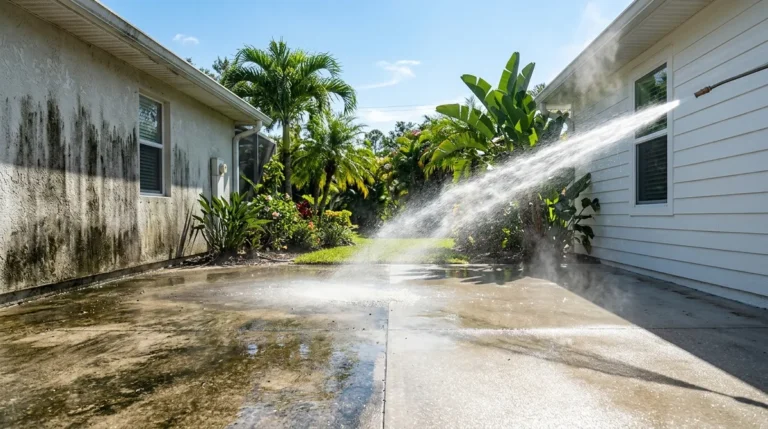
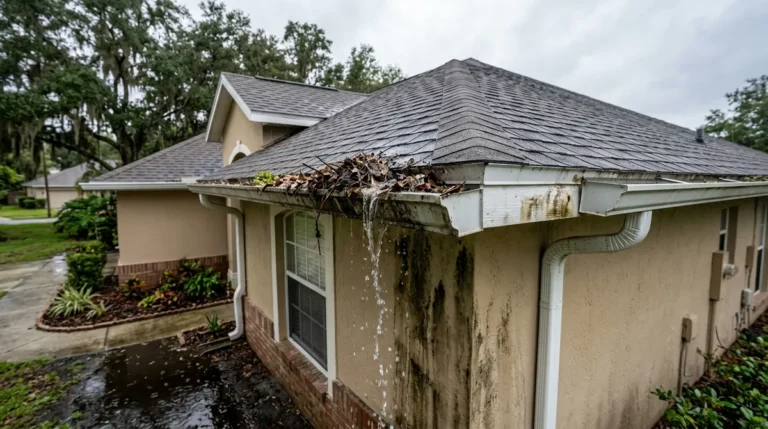
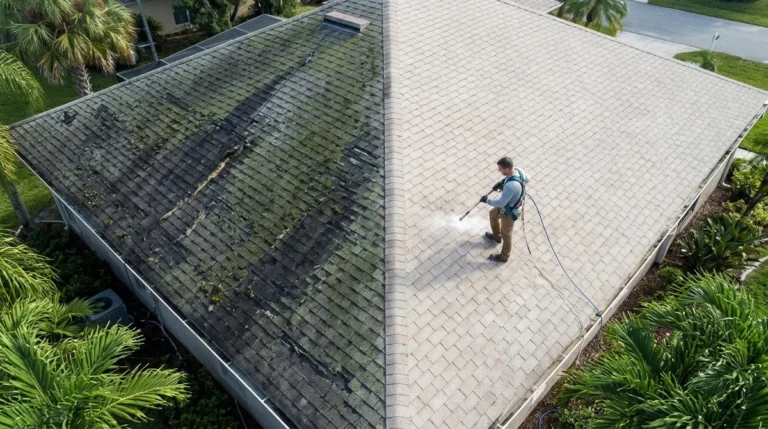
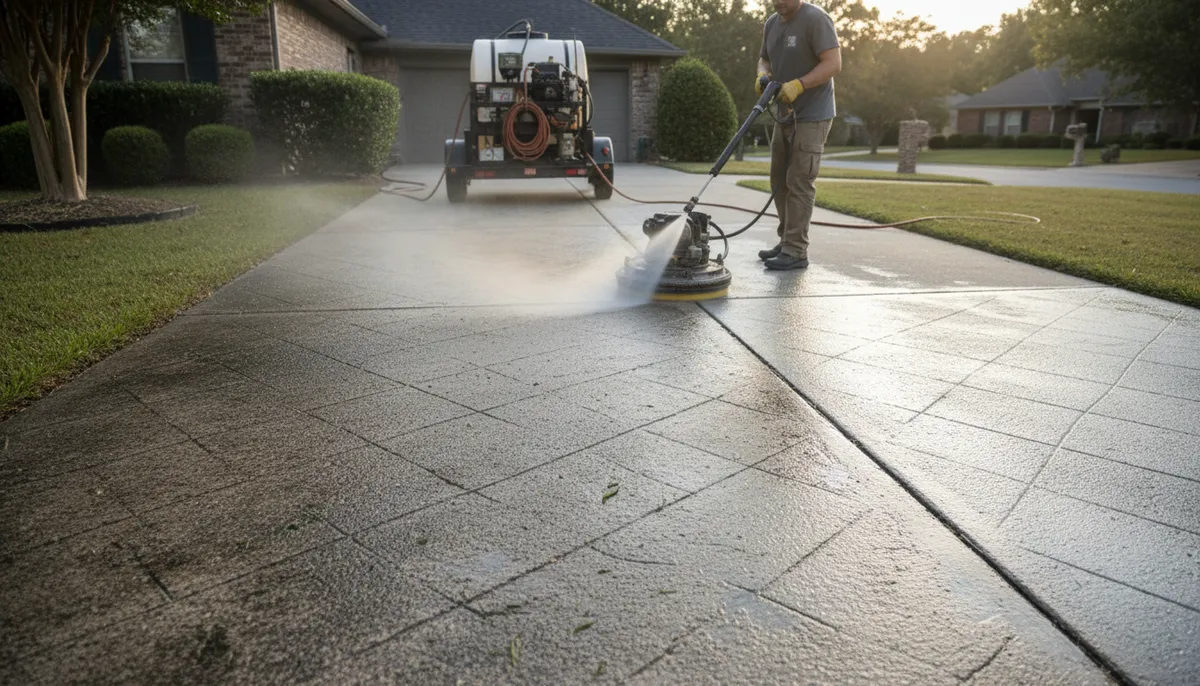
Let’s start with the basics. Concrete might look solid and impenetrable, but it’s actually quite porous. Those tiny holes and spaces in the surface act like magnets for dirt, oil, algae, mold, and all sorts of organic matter. In Florida’s humid climate, especially here in Hillsborough County, these problems multiply quickly. The combination of heat, moisture, and organic debris creates the perfect breeding ground for unsightly stains and slippery surfaces.
But this isn’t just about looks. Dirty concrete can actually damage your property over time. Algae and mold make surfaces dangerously slippery, increasing the risk of falls. Oil stains penetrate deep into the pores, weakening the concrete’s structure. Mildew and organic growth can eat away at the surface, leading to premature deterioration and costly repairs down the road. Regular cleaning protects your investment and keeps your family safe.
Here are the most common concrete problems homeowners face:
- Oil and grease stains from vehicles that seep deep into the porous surface
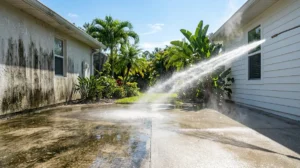
- Green or black algae growth in shaded or damp areas
- Rust stains from metal furniture, tools, or lawn equipment
- Tire marks that leave stubborn black streaks
- Mold and mildew in humid climates
- General dirt and grime buildup from foot traffic and weather
Understanding Your Concrete Cleaning Options
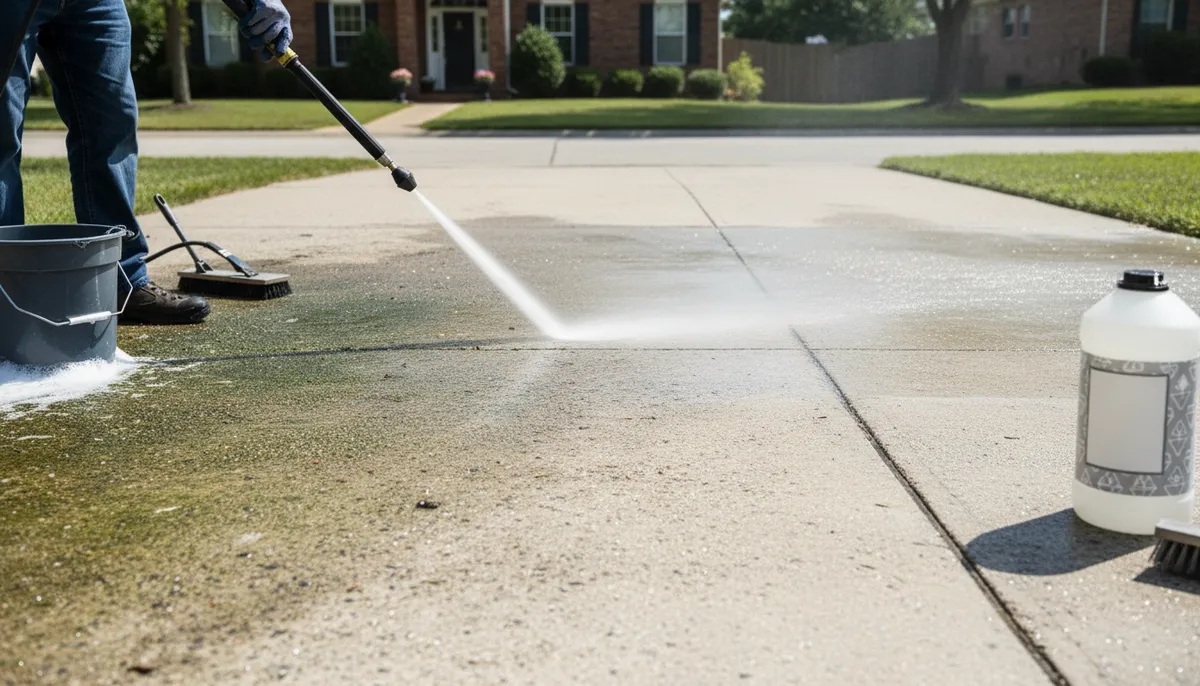
Not all concrete surfaces are created equal, and not all cleaning methods work the same way. Before you grab a hose or rent equipment, it’s important to understand your options. The two main approaches to concrete cleaning are traditional pressure washing and soft washing with specialized detergents. Each has its place, and choosing the right one depends on your specific situation.
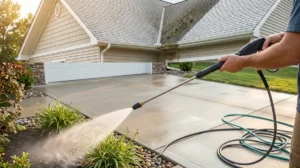
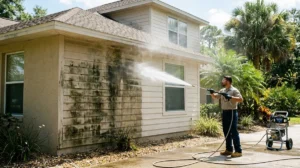
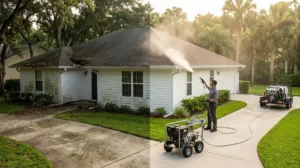
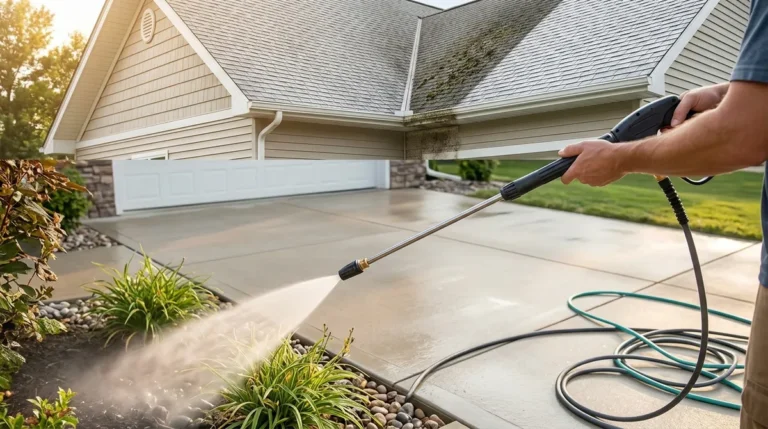
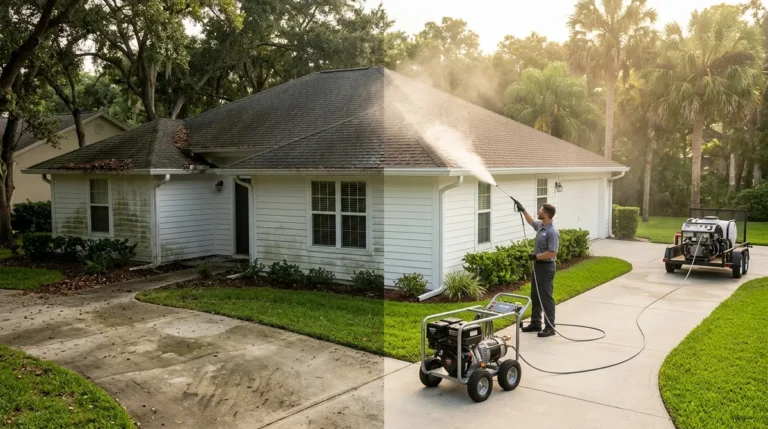
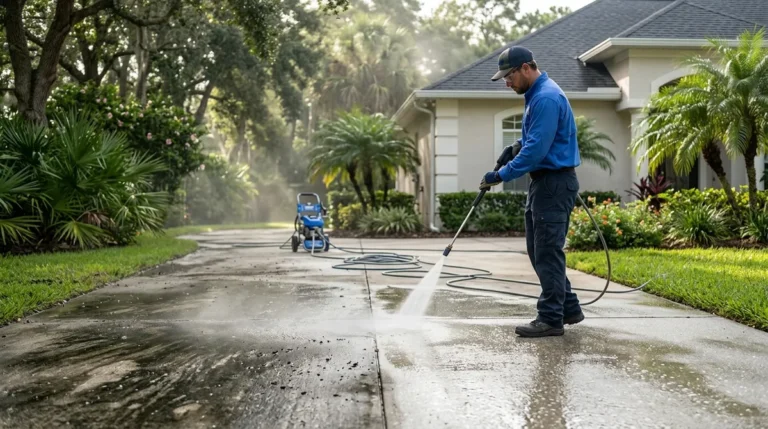
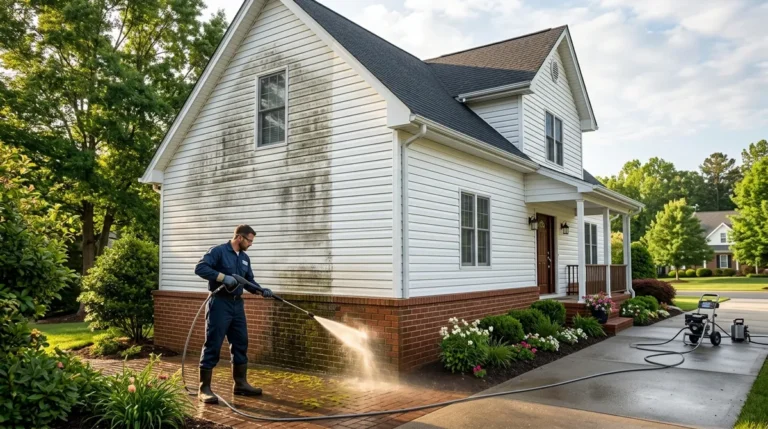
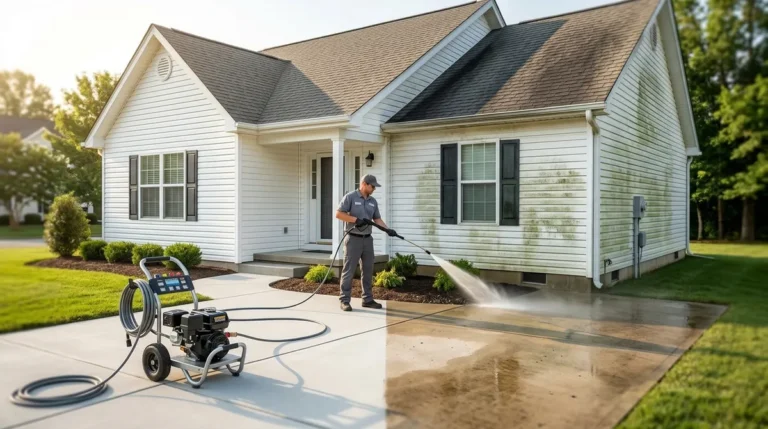
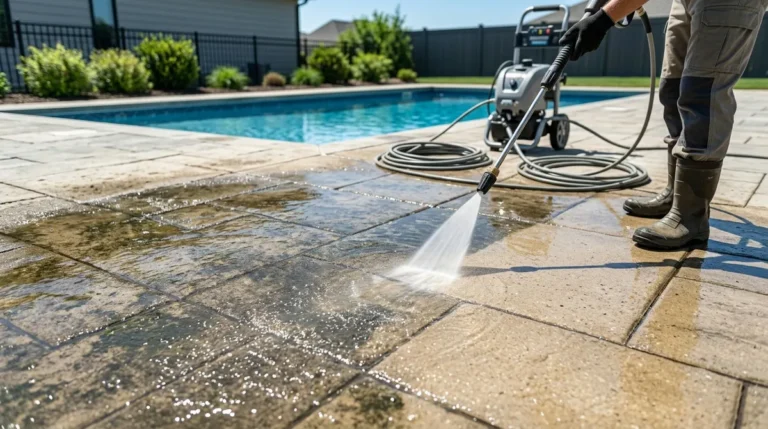
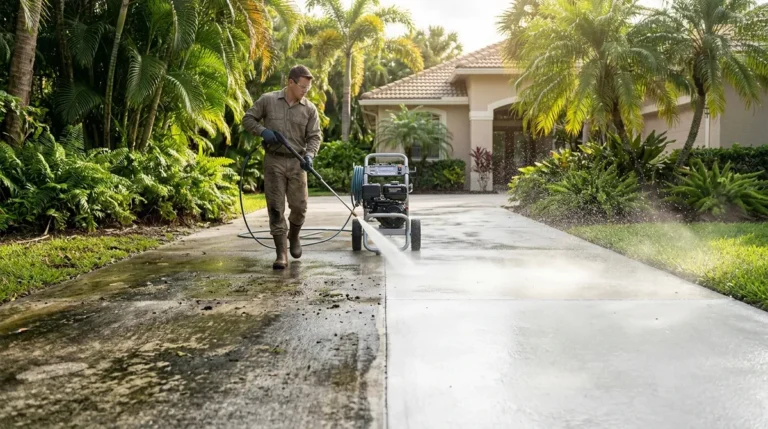
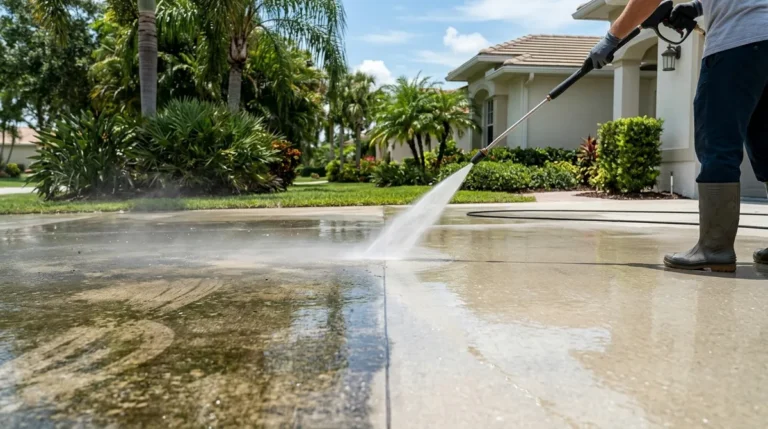
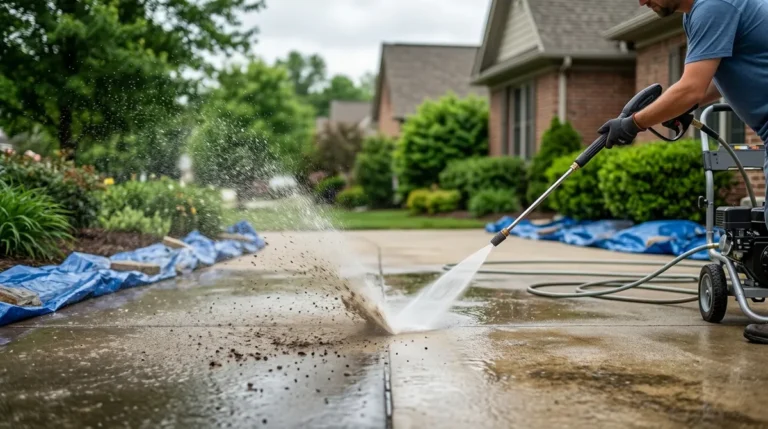
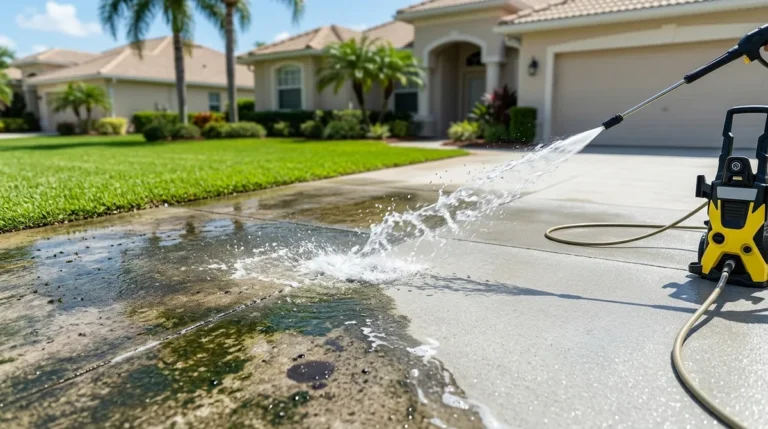
High-Pressure Cleaning is the powerhouse method that most people think of first. This approach uses water blasted at high PSI (pounds per square inch) to literally strip away dirt, stains, and organic growth. It’s incredibly effective for driveways, walkways, and other horizontal concrete surfaces that can handle the intensity. The force of the water dislodges even stubborn stains and leaves concrete looking nearly new. However, this method requires skill and the right equipment to avoid damage.
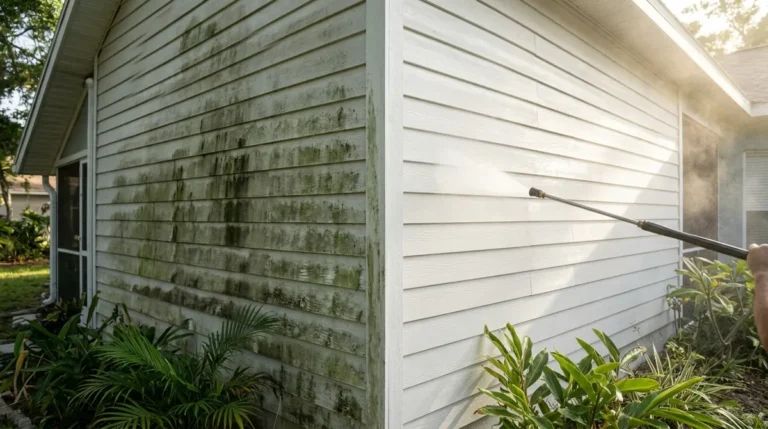
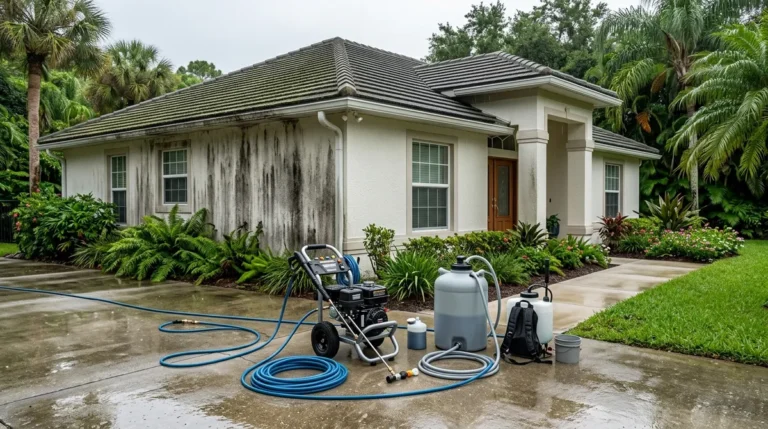
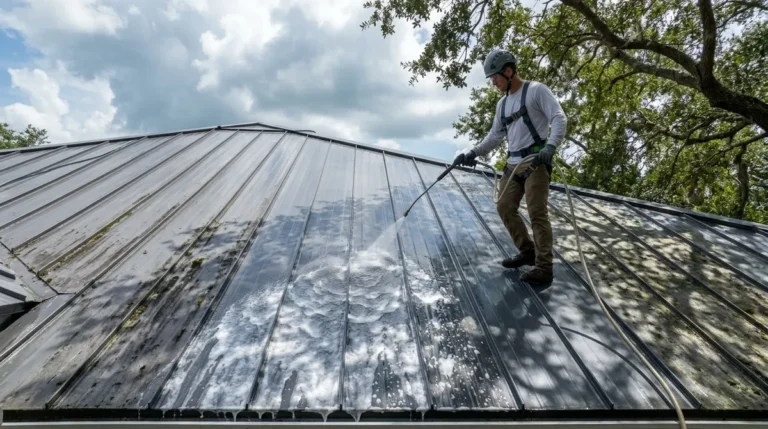
Soft Washing with Detergents takes a gentler approach that’s becoming increasingly popular in 2026. This method combines low-pressure water with eco-friendly cleaning solutions that break down organic matter, algae, and stains chemically rather than mechanically. The detergents do the heavy lifting, and the low-pressure rinse washes everything away. This approach is safer for older concrete, decorative surfaces, and areas near plants or sensitive landscaping.
The Step-by-Step Process for Cleaning Concrete
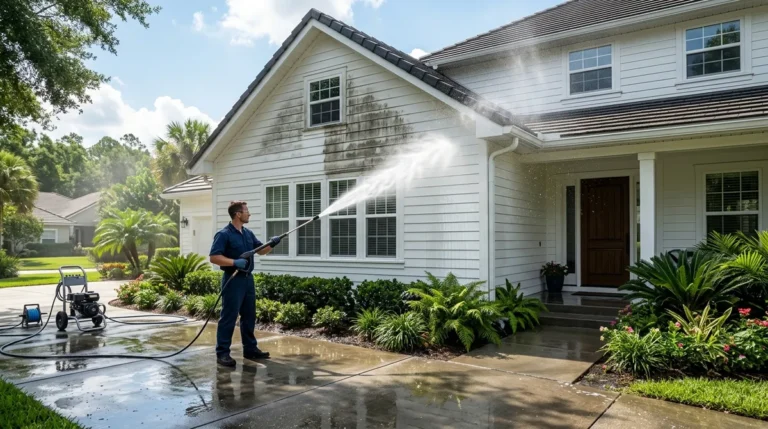
Ready to tackle your concrete cleaning project? Here’s a straightforward process that works whether you’re doing it yourself or understanding what professionals like Buckhorn Power Wash will do for you. Following these steps in order ensures the best results and protects your surfaces from damage.
- Clear and Prepare the Area: Remove all furniture, potted plants, vehicles, and debris from the concrete surface. Sweep away loose dirt and leaves with a stiff broom. This prevents these items from being blasted around and ensures you can access the entire surface evenly.
- Pre-Treat Stubborn Stains: Identify problem areas like oil stains, rust spots, or heavy algae growth. Apply appropriate pre-treatment solutions and let them sit for the recommended time (usually 10-15 minutes). For oil stains, a degreaser works wonders. For organic growth, a mildew remover helps break down the buildup.
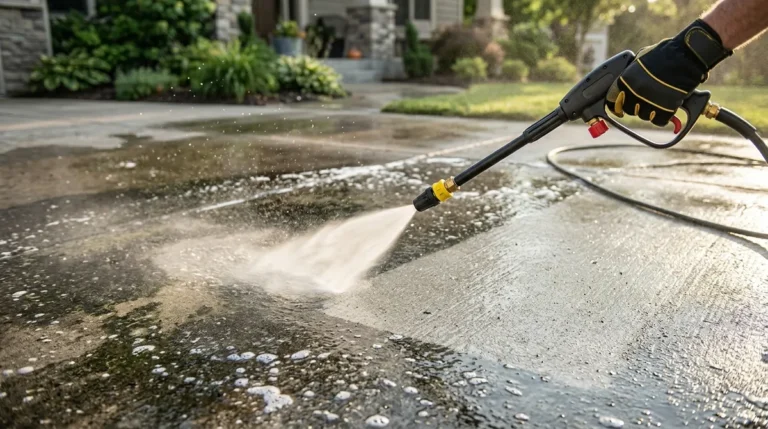
- Apply Cleaning Solution: Whether you’re using a pressure washer with detergent or applying a soft wash solution, cover the entire surface evenly. Work in sections if you’re dealing with a large area. Let the solution dwell for several minutes to penetrate the pores and break down stains chemically.
- Scrub High-Traffic or Stained Areas: For particularly stubborn spots, use a stiff-bristled brush to work the cleaning solution deeper into the concrete. This manual effort helps lift embedded dirt that might resist water pressure alone.
- Rinse Thoroughly: Using appropriate water pressure for your surface type, rinse away all cleaning solution, dirt, and loosened debris. Work from one end to the other in overlapping passes to ensure complete coverage. Make sure all detergent is removed to prevent residue buildup.
- Allow Proper Drying Time: Let the concrete dry completely before replacing furniture or parking vehicles. This typically takes 24-48 hours depending on weather conditions. Proper drying prevents new stains from forming and allows you to assess whether additional spot treatment is needed.

Essential Tools and Equipment You’ll Need
If you’re considering tackling concrete cleaning yourself, having the right tools makes all the difference between frustration and success. Here’s what you’ll need to gather before starting your project. Keep in mind that quality equipment delivers better results and actually makes the job easier and safer.
| Tool | Purpose | DIY Consideration |
|---|---|---|
| Pressure Washer (2500-3000 PSI) | Main cleaning power for concrete | Can rent or buy; requires practice to use safely |
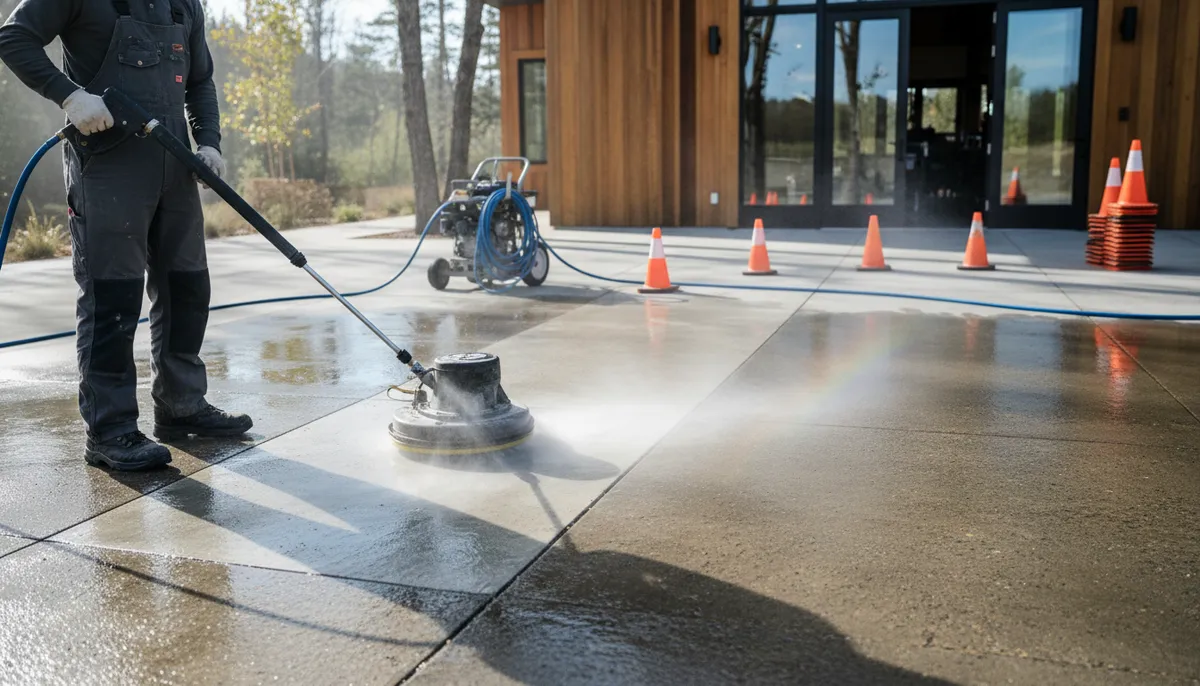
| Surface Cleaner Attachment | Even cleaning without streaks | Highly recommended for driveways and large areas |
| Concrete-Safe Detergent | Breaks down stains and organic matter | Must be environmentally friendly and safe for plants |
| Stiff-Bristled Brush | Scrubbing stubborn spots | Manual but essential for pre-treatment |
| Safety Gear | Protects eyes, skin, and hearing | Non-negotiable for safe operation |
| Garden Hose with Nozzle | Pre-wetting and final rinse | Standard equipment most homeowners have |
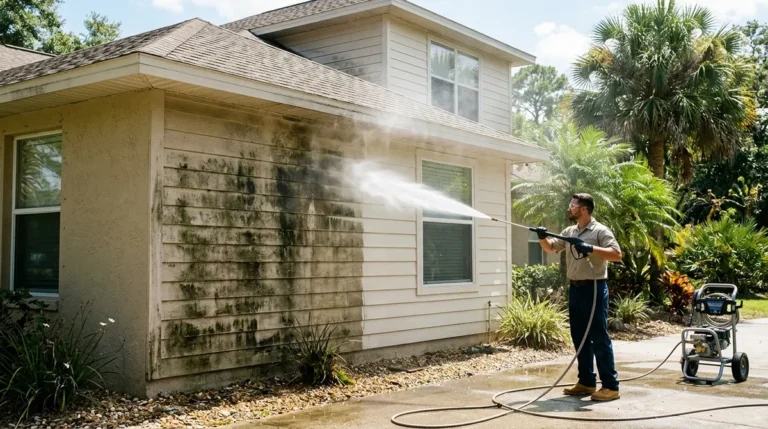
One important note about equipment: pressure washers can be dangerous if you’re not experienced. The high-pressure stream can etch concrete, strip paint, damage wood, and cause serious injuries. Many homeowners in Tampa, Brandon, and Valrico find that the cost and hassle of renting equipment, plus the risk of damaging their property, makes professional service a smarter choice. You can get a quote instantly to compare costs before making your decision.
Common Concrete Cleaning Mistakes to Avoid
Even with the best intentions, it’s easy to make mistakes that can damage your concrete or produce disappointing results. Let’s talk about the most common errors people make and how you can avoid them. Learning from others’ mistakes is always easier than learning from your own!
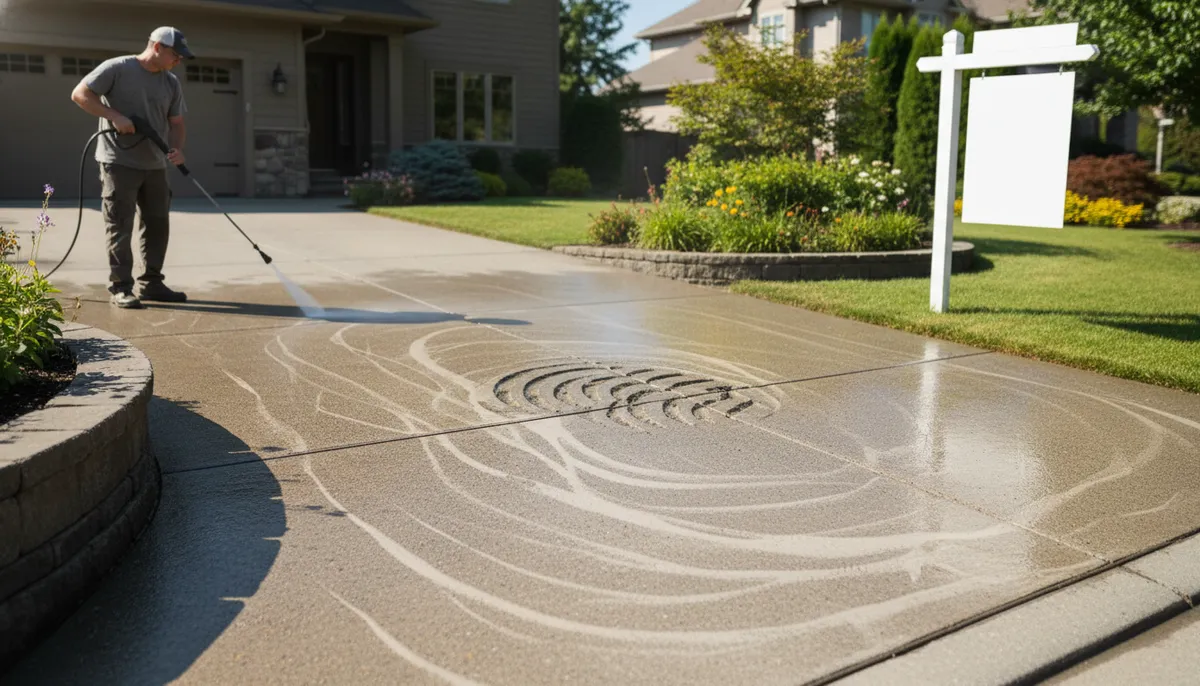
- Using Too Much Pressure: More pressure doesn’t always mean better cleaning. Excessive PSI can etch the concrete surface, creating rough spots that collect dirt even faster. It can also expose aggregate and create an uneven appearance that’s permanent.
- Holding the Nozzle Too Close: Keep the spray wand at least 6-12 inches from the surface. Getting too close concentrates the pressure in one spot and can gouge the concrete, leaving visible marks and damage.
- Cleaning in Direct Sunlight: Hot concrete causes cleaning solutions to dry too quickly, leaving streaks and reducing effectiveness. Work in the early morning or late afternoon, or on overcast days for best results.
- Ignoring Safety Precautions: Pressure washers produce enough force to cause serious injuries. Always wear safety goggles, closed-toe shoes, and protective clothing. Never point the spray at people, pets, or windows.
- Using Harsh Chemicals: Bleach and harsh acids can damage concrete over time and harm surrounding plants. Stick with products specifically designed for concrete cleaning that are environmentally safe.
- Skipping the Pre-Treatment Step: Jumping straight to pressure washing without pre-treating stains often means you’ll need multiple passes, wasting time and water. Pre-treatment dramatically improves results.
Different Concrete Surfaces Require Different Approaches
Not all concrete is the same, and understanding these differences helps you choose the right cleaning method. Stamped concrete, decorative finishes, sealed surfaces, and plain concrete all require slightly different care. Here’s what you need to know about the most common types you’ll encounter around your home.
Standard Driveway Concrete is the toughest and most forgiving surface. This plain, smooth concrete can handle higher pressure and aggressive cleaning because it’s designed to support vehicles. It’s the ideal candidate for traditional pressure wash driveway services. The thick, durable surface resists damage from high-PSI cleaning and bounces back looking fresh and clean.
Stamped or Decorative Concrete features patterns and textures that mimic stone, brick, or tile. These surfaces often have protective sealers that can be damaged by excessive pressure. They require lower PSI settings and gentler techniques to preserve the decorative finish. The crevices and patterns also trap more dirt, so thorough pre-treatment with appropriate detergents is essential.
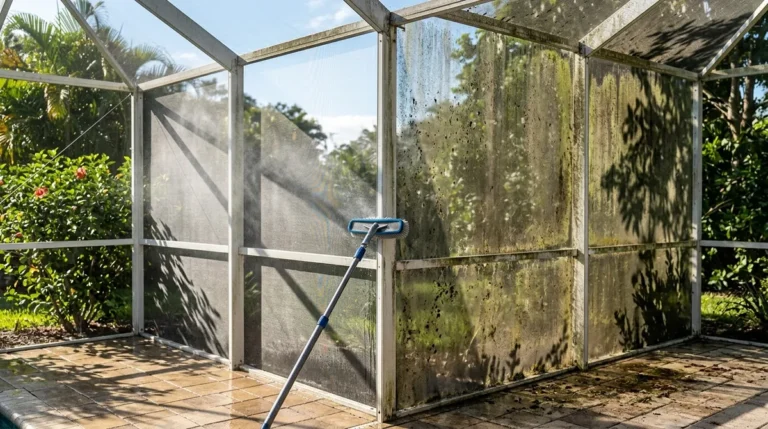
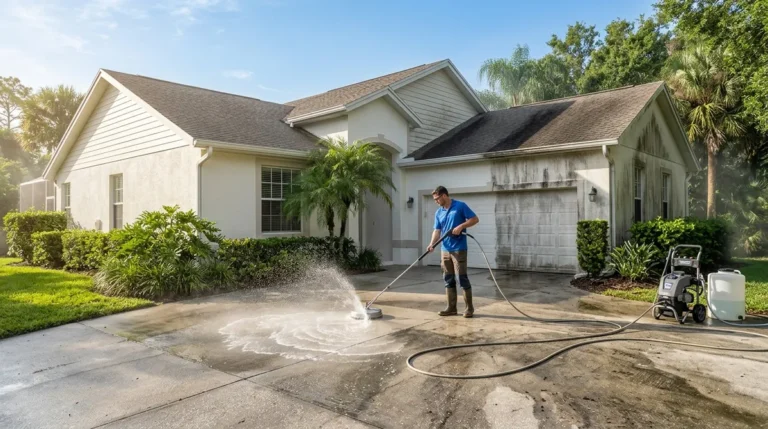
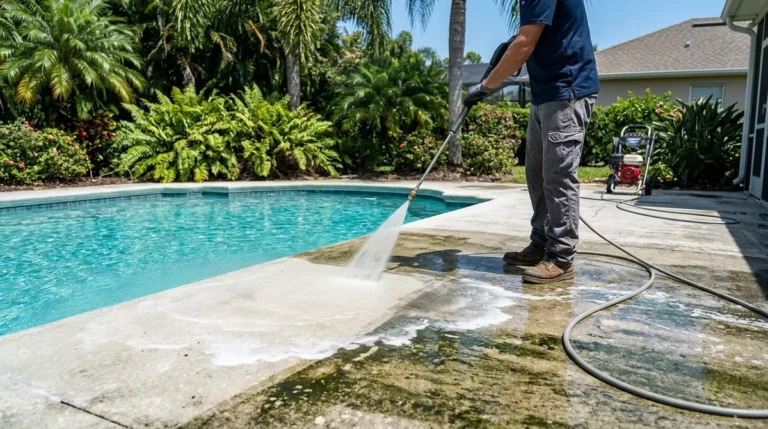
Pool Decks and Patios are horizontal surfaces that people walk on barefoot, so they need to be thoroughly cleaned but not stripped of their non-slip texture. These areas are prone to algae growth due to moisture and require regular maintenance to stay safe. A combination approach of soft washing followed by light pressure rinsing works best for these surfaces.
When to Call Professional Concrete Cleaners
There’s absolutely nothing wrong with being a DIY enthusiast, but sometimes calling in the professionals is the smarter move. Professional concrete cleaning services have the experience, equipment, and insurance to handle tough jobs safely and efficiently. Let’s talk about when it makes sense to hand over the job to experts like Buckhorn Power Wash.
Consider professional help if your concrete has deep-set oil stains that have been there for months or years. These require specialized degreasers and techniques that go beyond what typical homeowners have access to. Professionals also have commercial-grade surface cleaners that cover large areas quickly and evenly, preventing the streaking and tiger-striping that often happens with DIY attempts. If you’re dealing with delicate decorative concrete, old or crumbling surfaces, or areas near sensitive landscaping, the expertise of professionals prevents costly mistakes.
Here are clear signs it’s time to bring in the pros:
- Your concrete hasn’t been cleaned in years and has heavy buildup
- You notice structural issues like cracks or crumbling that need assessment
- The area to be cleaned is extensive (multiple driveways, large patios)
- You’ve tried DIY cleaning with disappointing results
- You value your time more than the cost of service
- You want guaranteed results without risk of property damage
Professional services also offer valuable time savings. What might take you an entire weekend can be completed by experienced crews in just a few hours. They arrive with all necessary equipment, handle all the pre-treatment and cleanup, and guarantee their work. For busy professionals and families in Hillsborough County, this convenience factor alone makes professional cleaning worthwhile.
Protecting Your Concrete After Cleaning
You’ve invested time, effort, or money into getting your concrete sparkling clean. Now let’s talk about keeping it that way! Proper maintenance and protection extend the life of your cleaning and keep surfaces looking great between deep cleans. These simple steps make a huge difference in how long your concrete stays clean and attractive.
Apply a Concrete Sealer once your surface is completely clean and dry. Quality sealers create a protective barrier that repels water, oil, and stains. They make future cleaning much easier because dirt can’t penetrate as deeply into the pores. Sealer typically needs reapplication every 2-3 years depending on traffic and weather exposure. This single step dramatically extends the time between major cleaning sessions.
Regular Maintenance Makes Deep Cleaning Easier when you stay on top of small problems. Sweep your concrete weekly to remove leaves, dirt, and debris before they break down and stain. Hose down high-traffic areas monthly to prevent buildup. Spot-treat spills immediately, especially oil and grease. These simple habits prevent the kind of deep-set staining that requires aggressive cleaning to remove.
- Sweep concrete surfaces weekly with a stiff outdoor broom
- Rinse with a garden hose monthly to remove surface dirt
- Clean up oil drips and spills immediately with absorbent material
- Trim back vegetation that shades concrete and promotes algae growth
- Schedule professional cleaning annually or as needed
- Reapply sealer every 2-3 years for optimal protection
The Environmental Side of Concrete Cleaning
In 2026, we’re all more aware of how our choices impact the environment. The good news is that concrete cleaning can be done responsibly without harming plants, pets, or waterways. Understanding the environmental aspects helps you make informed decisions and choose services that align with your values.
The biggest environmental concern with concrete cleaning is runoff. When you wash away dirt, oil, and cleaning chemicals, that water has to go somewhere. It typically flows into storm drains, which often lead directly to local waterways without treatment. That’s why choosing biodegradable, eco-friendly cleaning solutions is so important. These products break down naturally and don’t harm aquatic life or contaminate water supplies.
Professional services are often better equipped to handle runoff responsibly. They can capture and dispose of heavily contaminated water properly, especially when dealing with oil stains or hazardous materials. Companies like Buckhorn Power Wash use environmentally safe products and follow best practices to protect the Florida ecosystem while delivering excellent cleaning results. When you call professional cleaners, ask about their environmental practices to ensure they align with your concerns.
Cost Considerations for Concrete Cleaning
Let’s talk money, because that’s usually a major factor in deciding between DIY and professional cleaning. Understanding the true costs helps you make a smart decision that considers both your budget and the value of your time. The answer isn’t always as straightforward as you might think.
| Option | Typical Cost Range | Pros and Cons |
|---|---|---|
| DIY Equipment Rental | $50-$150 per day | Lower upfront cost but requires your time and effort; risk of damage |
| Buying Equipment | $300-$800 one-time | Good if you’ll use it regularly; requires storage and maintenance |
| Professional Service | Varies by size | No equipment hassles; expert results; fully insured; saves your weekend |
| Cleaning Products | $20-$75 | Necessary for either approach; quality matters for results |
When calculating DIY costs, don’t forget to factor in your time. If it takes you 6-8 hours to clean your driveway and patio, plus another hour for equipment pickup and return, that’s a significant chunk of your weekend. What’s your free time worth? For many homeowners, especially busy professionals, the convenience of professional service more than justifies the cost difference. You can get an instant quote online to see exactly what professional cleaning would cost for your specific property.
Concrete Cleaning Frequency Recommendations
How often should you clean your concrete surfaces? The answer depends on several factors including location, weather exposure, tree coverage, and how much traffic the area receives. Here in Florida’s humid climate, concrete typically needs more frequent attention than in drier regions. Let’s break down the recommendations by surface type and use.
High-Traffic Areas like main driveways and front walkways benefit from annual professional cleaning at minimum. These surfaces face constant exposure to vehicle fluids, foot traffic, and weather. If you notice visible staining, algae growth, or slippery spots, don’t wait for your annual cleaning schedule. Many homeowners in Riverview, Lithia, and surrounding areas find that scheduling service in early spring prepares their property for the busy outdoor season.
Moderate-Use Surfaces such as side walkways, back patios, and garage floors can often go 18-24 months between deep cleanings if they’re maintained regularly. These areas still need monthly hosing and sweeping, but they don’t accumulate grime as quickly as primary surfaces. Watch for signs of algae or mildew growth, which indicate it’s time for cleaning regardless of your schedule.
You can visit Buckhorn Power Wash on Google to see how other Hillsborough County homeowners rate their concrete cleaning experience. Real reviews from neighbors give you confidence that you’re making the right choice for your property maintenance needs.
Special Considerations for Florida’s Climate
Living in Florida presents unique challenges for concrete maintenance that homeowners in other regions don’t face. The combination of intense heat, high humidity, frequent rain, and year-round growing conditions for algae and mold means concrete surfaces need extra attention. Understanding these regional factors helps you develop a maintenance plan that actually works for your location.
Florida’s humidity creates the perfect environment for organic growth on concrete. That green or black discoloration you see isn’t just dirt—it’s living algae and mold that can spread quickly if left untreated. The constant moisture, especially in shaded areas, means these problems develop faster and more aggressively than in drier climates. Regular cleaning isn’t just cosmetic; it’s essential for maintaining safe, non-slip surfaces around your home.
Hurricane season brings additional challenges with debris, standing water, and increased moisture that accelerate concrete degradation. Many homeowners schedule post-hurricane cleaning to remove accumulated organic matter and prevent long-term staining. The intense UV exposure from Florida’s strong sun can also break down protective sealers faster, requiring more frequent reapplication to maintain protection. These climate-specific factors make professional pressure washing services particularly valuable for local homeowners.
Your Path to Cleaner, Safer Concrete
You now have a solid understanding of how to clean concrete properly, from the basic science of why it gets dirty to the specific steps and methods that deliver great results. Whether you decide to tackle the job yourself or bring in professional help, you’re equipped with the knowledge to make an informed decision that protects your property and fits your budget. Remember that clean concrete isn’t just about appearance—it’s about safety, property value, and long-term maintenance of one of your home’s most visible features.
The key takeaway is this: regular maintenance prevents major problems. A little attention throughout the year, combined with periodic deep cleaning, keeps your concrete looking great and lasting longer. Don’t let stains and organic growth become overwhelming problems that require extreme measures to fix. Stay proactive, address issues early, and your concrete surfaces will reward you with years of attractive, functional service.
Ready to transform your driveway, walkway, or patio? Request your free instant quote from Buckhorn Power Wash and discover how affordable professional concrete cleaning can be. With easy online quotes, reliable service throughout Hillsborough County, and expert results you can count on, there’s never been a better time to give your property the fresh, clean look it deserves. Your concrete surfaces work hard for you every day—isn’t it time to show them some love?
FAQs
Q: How often should I clean my concrete driveway?
A: In Florida’s humid climate, most driveways benefit from professional cleaning at least once per year. High-traffic areas or those with heavy tree coverage may need cleaning every 6-8 months to prevent algae buildup and maintain appearance. Regular sweeping and monthly hosing between deep cleans helps extend the time between professional services.
Q: Can I use bleach to clean my concrete surfaces?
A: While bleach can kill mold and algae, it’s not recommended for regular concrete cleaning. Bleach can discolor concrete over time, harm surrounding plants and landscaping, and doesn’t actually remove embedded dirt and oil stains. Specialized concrete cleaning solutions are more effective and environmentally safer for your property.
Q: Will pressure washing damage my concrete?
A: When done correctly with appropriate pressure settings, pressure washing is safe for concrete. However, using too much pressure, holding the nozzle too close, or using improper techniques can etch the surface and cause permanent damage. This is why many homeowners choose professional services that have the experience to clean effectively without causing harm.
Q: What’s the difference between pressure washing and soft washing for concrete?
A: Pressure washing uses high-pressure water to mechanically remove dirt and stains, ideal for durable surfaces like driveways. Soft washing uses low-pressure water combined with specialized cleaning solutions that chemically break down dirt, algae, and stains, making it gentler for decorative or older concrete. Both methods can be effective depending on your specific surface and condition.
Q: How long does professionally cleaned concrete stay clean?
A: With proper sealing and regular maintenance, professionally cleaned concrete typically stays noticeably clean for 12-18 months in Florida’s climate. Factors like tree coverage, weather exposure, and traffic levels affect this timeline. Regular sweeping and monthly rinsing can extend the fresh appearance between professional cleanings, helping you get the most value from the service.